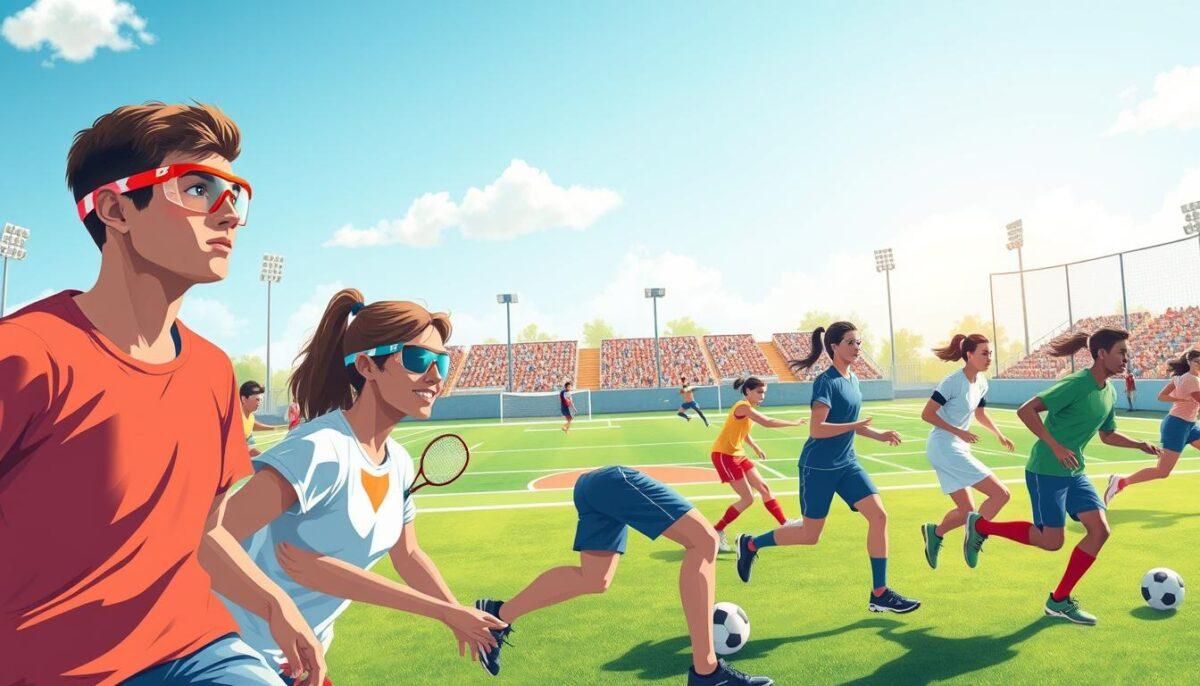
Athletes often face a hidden danger on the field: sports-related eye trauma. It’s a risk that’s easy to overlook, but the consequences can be severe.
According to the American Family Physician, the United States sees over 40,000 cases of sports eye injuries each year. The good news is that about 90 percent of these incidents are preventable with the right precautions and protective gear.
So, why should athletes take eye safety seriously? The answer lies in the long-term effects of these injuries. Vision loss can end an athlete’s career.
Most Common Eye Injuries by Sport
Athletes in different sports face eye injury risks. The types of injuries vary by sport.
Basketball Injuries
Basketball is fast and physical, leading to eye injuries. Corneal abrasions and hyphemas are common among players.
Racquet Sports Injuries
Tennis and squash players risk eye injuries from fast balls and racquets. Retinal detachment and orbital fractures are possible.
Wearing protective eyewear and safe playing techniques can help prevent these injuries.
Protective Eyewear & Gear
Protective eyewear is a must in many sports. The right gear can prevent serious injuries. It’s important to know the different types and safety standards.
Choosing the Right Protective Eyewear
Finding the right protective eyewear can be tough. But, knowing what you need is key. For example, sports like racquetball and hockey need strong eyewear.
Polycarbonate lenses are great because they’re tough and light. They’re also comfortable to wear for a long time. The American Society for Testing and Materials (ASTM) sets safety standards for sports eyewear.
Standards for Protective Eyewear in Sports
ASTM standards are key for sports eyewear. They ensure eyewear is safe for different sports. For instance, racquetball eyewear must handle fast-moving balls.
“The right protective eyewear can significantly reduce the risk of eye injuries in sports. It’s not just about compliance with safety standards; it’s about protecting the athlete’s vision and, by extension, their career.”
Here’s a table showing different sports and their eyewear standards:
| Sport | ASTM Standard | Key Feature |
|---|---|---|
| Racquetball | F803 | High impact resistance |
| Baseball | F910 | Projectile resistance |
| Hockey | F513 | High velocity puck resistance |
Different sports need different eyewear. Athletes and coaches must know these standards to stay safe.
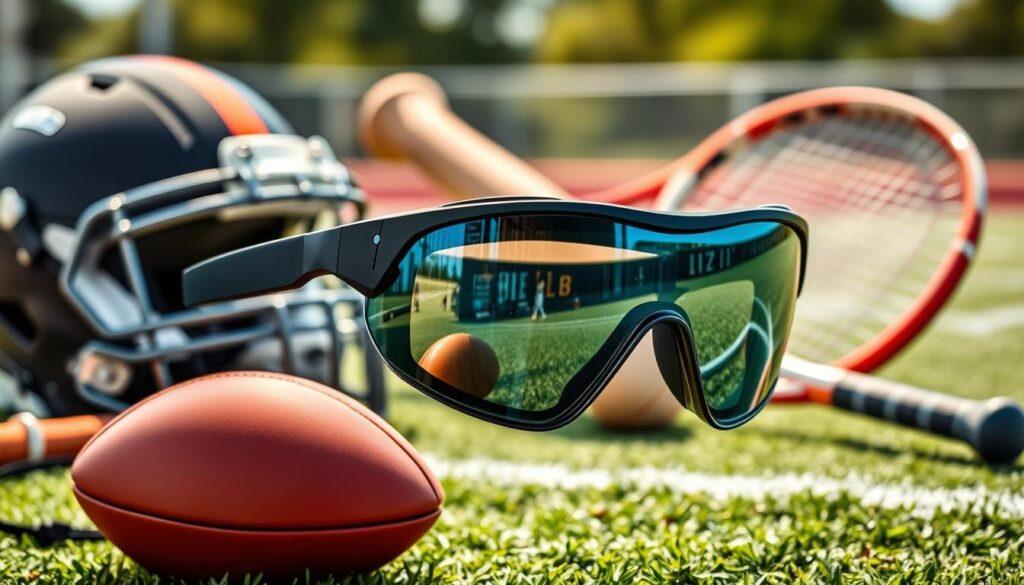
In conclusion, protective eyewear is essential for eye safety in sports. By picking the right eyewear and following safety standards, athletes can lower their injury risk. It’s a simple way to prevent injuries.
Prevention Strategies
Preventing eye injuries in sports needs a mix of education, the right gear, and being aware. Athletes and coaches must know the risks in their sport. They should take steps to lower these risks.
Wearing protective eyewear is key. Polycarbonate lenses are a top pick because they’re light and can withstand impacts. It’s also important to get regular eye exams to catch any problems early.
By using education, the right equipment, and being aware, we can cut down eye injury risks in sports. It’s vital for athletes, coaches, and parents to grasp the importance of eye safety. They should act early to prevent eye injuries.
First Aid & Recovery
When an eye injury happens, quick action is key. The first steps are vital to avoid more harm and help the eye heal fast.
Initial Assessment and Treatment
Start by checking how bad the injury is. Look for signs like bleeding, a lot of pain, or trouble seeing. If you see these, get help right away.
For minor injuries, clean the eye with water to get rid of dirt. But don’t press on the eye or rub it. This could make things worse.
Knowing when to get medical help is important. Here’s a table with common eye injuries and what to watch for:
| Eye Injury | Symptoms |
|---|---|
| Chemical Burn | Severe pain, redness, vision loss |
| Foreign Object | Pain, discomfort, tearing |
| Blunt Trauma | Swelling, bruising, vision disturbances |
Preventing eye injuries is better than treating them. Eye safety is very important for athletes. Knowing how to handle eye injuries can help avoid serious problems later.
Expert Tips
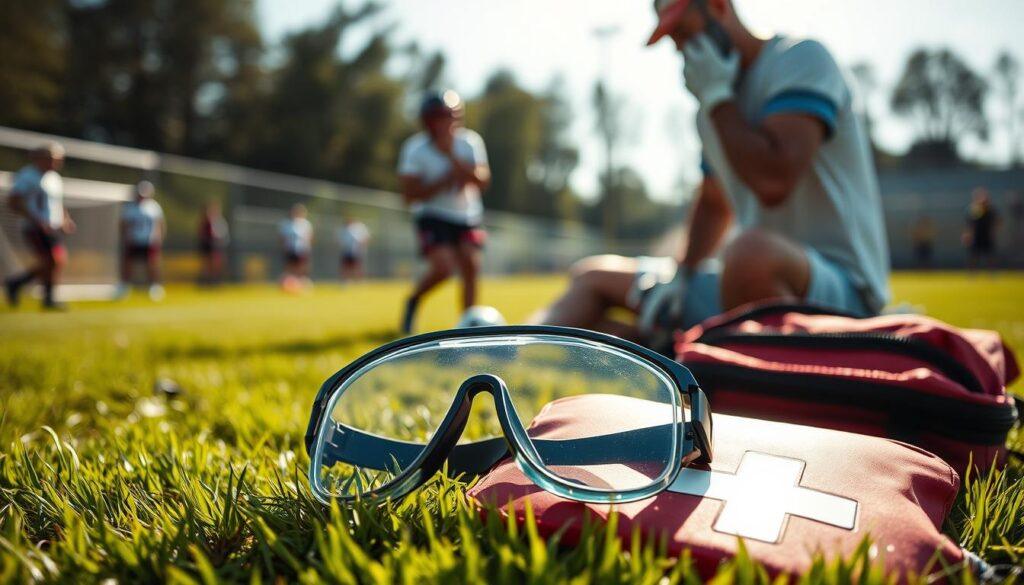
Eye health is key for athletes to perform well. Regular eye exams can spot problems early. Athletes should wear proper protective eyewear to avoid eye injuries.
Best Practices for Eye Safety
A healthy lifestyle helps keep eyes healthy. Eating foods rich in omega-3, lutein, and zeaxanthin is good for the eyes. Athletes should also know how to prevent eye injuries.
By getting regular eye exams, wearing protective eyewear, and living healthy, athletes can keep their eyes safe. This way, they can enjoy sports without worrying about their vision.