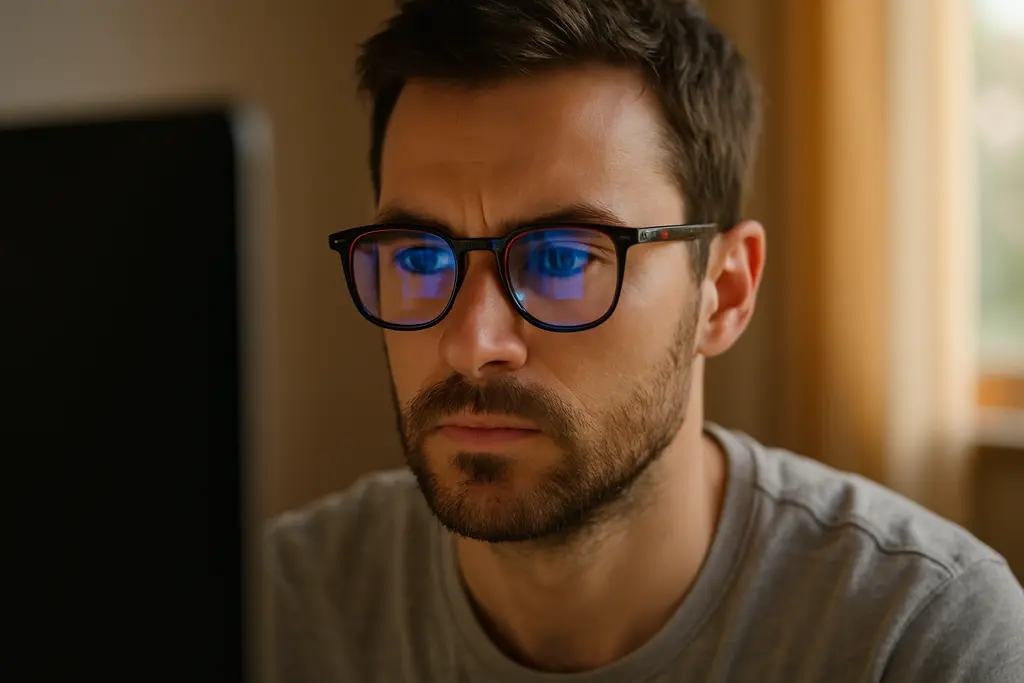
Blue-light filters sit at a crowded intersection of sport, screen time, sleep habits, and eye safety. For athletes reviewing video after practice, students training after long study blocks, and office workers trying to reduce visual discomfort, the promise sounds simple: filter part of the light, protect the eyes, feel better. The evidence through September 14, 2026, supports a more cautious reading. Some filters may change light exposure in measurable ways, but many common claims about digital eye strain, sleep, and long-term retinal protection remain weak or uncertain.
That matters because vision is not a side issue in sport. Ball tracking, contrast detection, color judgment, and low-light awareness can affect safety and performance. A lens that feels helpful in one setting may be less useful during night training, indoor competition, or fast play under low contrast. The best question is not whether filtered lenses are good or bad. It is what outcome is being measured, under what light exposure, in which population, and with what trade-off.
What Blue-Light Filters Can And Cannot Show
Blue-Light Filters And Visual Performance
The broadest takeaway from recent evidence is that ordinary filtering lenses do not appear to damage high-contrast visual acuity under normal conditions. That is useful for athletes and coaches who worry that a mild tint might blur a scoreboard, a ball, or a teammate’s movement. The caution arrives with stronger filtering. A review published on August 30, 2026, found that stronger filters impaired color discrimination and performance in low-light or low-contrast settings. In sport terms, that could matter on a shaded field, during evening drills, or in indoor arenas where color cues and contrast are already limited.
Color and contrast are not cosmetic details. A tennis player reading a yellow ball against a green court, a cyclist judging pavement changes at dusk, or a goalkeeper tracking a ball through shadows may rely on small visual differences. If filtering shifts those cues, the gain in comfort may come with a practical cost. That does not mean every user should avoid filtered lenses. It means testing should occur in the real environment where the lens will be used, not only at a desk or in a store.
Short-Term Eye Strain Findings
The evidence for short-term digital eye strain is less supportive than marketing often suggests. The August 30, 2026, review reported that randomized trials and Cochrane reviews showed no clinically meaningful average reduction in short-term digital eye strain when blue-light-filtering spectacle lenses were compared with non-filtering lenses. The Cochrane review searched through March 22, 2022, and included 17 randomized controlled trials with sample sizes from 5 to 156 participants and follow-up periods from less than one day to five weeks. It found little or no effect on visual fatigue, critical flicker-fusion, or best-corrected visual acuity, while sleep-quality evidence was mixed and of very low certainty.
For readers who want a plain-language companion on screen claims and practical limits, our related evidence review of screen-light filters makes a similar point: lens choice is only one part of visual comfort. Breaks, blink rate, dry-eye risk, screen distance, lighting, and glare control may all matter, though the exact mix differs from person to person.
Where The Evidence Is Strongest
Laboratory Findings On Corneal Oxidative Stress
A May 2026 experimental mouse study added useful laboratory detail. In controlled conditions, exposure to blue light in the 410–480 nm range increased reactive oxygen species and led to oxidative stress in corneal tissue. A commercially available lens blocking about 50% of blue light reduced some markers of oxidative damage in that model, according to the Scientific Reports study. This is biologically interesting, but it should not be read as proof that the same lens prevents disease in people using phones, tablets, or training-room displays.
Animal models help researchers isolate mechanisms that cannot be easily tested in humans. They also have limits. Exposure conditions, tissue response, and dose may differ from typical human screen use. A finding in mouse corneal tissue is not the same as a field-tested prevention strategy for athletes or a routine recommendation for the general public. The value of the study is that it identifies a plausible pathway under controlled exposure. The missing step is clear human evidence showing meaningful outcomes in daily life.
Retinal Safety Under Typical Use
A narrative review published in June 2026 reached a firm caution against routine claims. It concluded that there was no evidence supporting the routine use of blue-blocking glasses for preventive or therapeutic purposes, and that under typical lighting and screen use, retinal exposure remains well below levels that cause photochemical damage in laboratory models, as summarized in the PubMed review. That statement does not say light exposure is irrelevant. It says the leap from laboratory hazard thresholds to everyday screen damage has not been supported.
This distinction is central to evidence-based eye health reporting. A wavelength can cause harm at a high enough dose under experimental conditions, while ordinary exposure remains below known damaging levels. Confusing those two situations can push people toward products with uncertain benefit and away from clearer habits, such as reducing glare, adjusting room lighting, taking breaks, and seeking professional care for persistent symptoms.
Limits For Athletes, Coaches, And Screen Users
Low-Light Trade-Offs In Sport
The sports setting exposes one of the main limitations of blue-light filters: a lens that reduces selected wavelengths can also alter perception. Reported adverse effects from blue-light filtering lenses are infrequent but include headache, discomfort, mood changes, and poorer color or contrast perception, especially in low light. Available trials were small, and long-term safety data remained sparse as of September 14, 2026.
For a community team, that does not call for alarm. It calls for trial use during practice before competition. A runner may find a mild filter comfortable on a bright recovery walk, then dislike it during evening speed work. A baseball player may tolerate a lens during dugout tablet review but reject it while tracking pitches under mixed sun and shade. Comfort is real, but performance and safety checks should travel with it.
Reading And Near-Work Signals
Some newer human data suggests filtered lenses can change visual behavior without improving task results. A reading-task study published online on March 12, 2026, included 34 participants and compared blue-light filtering lenses with placebo lenses. It found neurophysiological changes, including fewer and longer saccades, shorter fixations, and altered EEG alpha and delta power. Yet it did not show immediate improvements in reading performance or comprehension.
That pattern is common in early applied research: a measurable signal appears, but the practical outcome is unchanged. For athletes reviewing scouting notes, students reading playbooks, or coaches working through video clips, that means the presence of a brain or eye-movement change should not be treated as proof of better performance. It is a signal worth studying, not a settled reason to recommend routine use.
Practical Decisions Without Overclaiming

A Cautious Checklist For Lens Choice
People choose filtered lenses for many reasons: comfort, glare reduction, habit, or advice from a clinician. The safest evidence-based approach is to match the lens to a defined problem and check whether it helps without creating a new one. Anyone with eye pain, halos, sudden vision change, severe headache, or persistent symptoms should seek qualified eye care rather than relying on consumer lenses as a fix.
- Define the goal: comfort during screen work, glare reduction, sleep routine, or sport-specific vision are different targets.
- Test in real light: try lenses in the setting where they will be used, including low light and low contrast.
- Watch color cues: stronger filters may affect color discrimination, which can matter in sport and driving.
- Track symptoms: note headache, discomfort, mood changes, or poorer contrast perception.
- Avoid disease claims: current evidence does not support routine preventive or therapeutic use for the general population.
There are special cases where the evidence remains more specific and less settled. In an observational cohort with neovascular age-related macular degeneration, blue-light-filtering intraocular lenses were linked with slower rates of macular atrophy enlargement compared with lenses without blue filtering. Yet no general difference in new-onset macular atrophy incidence was found in non-neovascular age-related macular degeneration populations. That is not a reason for broad self-prescribing; it is a research signal in a defined clinical context.
Across our science network, including Harvard Science Review, the same reporting principle applies: a measured effect is not automatically a public recommendation. Scale, population, exposure, and outcome decide how far a finding can reasonably travel.
Blue-Light Filters In Eye Health And Safety
Blue-light filters are best understood as tools with possible narrow uses, not universal eye protection. The evidence supports caution: high-contrast acuity is generally preserved under normal conditions, stronger filters can reduce color and low-contrast performance, average short-term digital eye strain benefits have not been clinically meaningful in randomized comparisons, and routine preventive claims remain unsupported for typical users.
For athletes and active communities, the sensible path is practical and testable. If a filter improves comfort without dulling contrast, distorting color cues, or interfering with low-light performance, it may be reasonable for that setting. If it does not help, the evidence does not support forcing the habit. Eye health decisions should stay tied to measured needs, real environments, and professional advice when symptoms persist.
