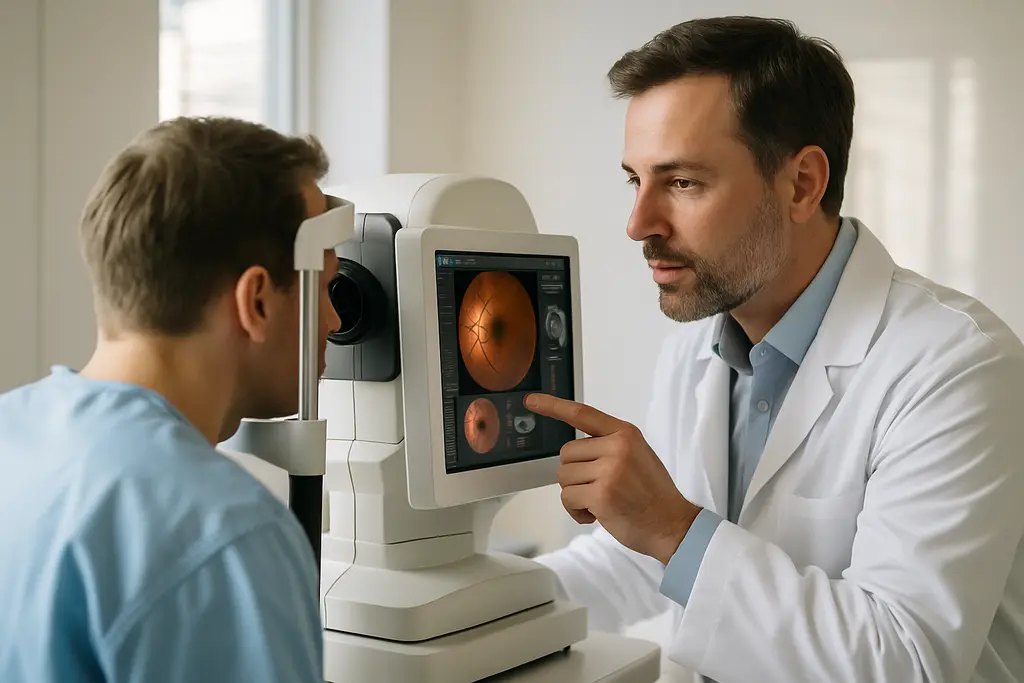
The AlloFlo Implant has attracted attention because early clinical data linked it with lower intraocular pressure in open-angle glaucoma. For athletes, the relevance is not that an implant improves sports performance. The more careful question is whether pressure-lowering evidence, medication reduction, and safety signals may affect long-term vision planning in people who train, compete, and rely on peripheral awareness, contrast, and rapid visual processing. As of October 1, 2026, the strongest public evidence remained clinical follow-up data rather than athlete-specific trials.
What The AlloFlo Implant Data Showed
The main standalone evidence came from the CREST real-world evidence study, registered as NCT05506423. In a 12-month analysis of 41 eyes treated with standalone cyclodialysis plus the device, mean intraocular pressure fell from 21.6 ± 5.0 mmHg at baseline to 14.7 ± 6.9 mmHg at 12 months, a 31% reduction with p < 0.001 PubMed abstract. That is a meaningful pressure change in the study population, but it should not be read as a guaranteed result for every patient.
AlloFlo Implant Results At 12 Months
The same standalone cohort reported that 71% of eyes achieved at least a 20% IOP reduction at 12 months, while 53% achieved that threshold without increasing glaucoma medications full study report. The distinction matters. A pressure drop that depends on more medications is not the same as a pressure drop with stable or reduced medication burden, especially for active patients who must manage travel, sweat, dry eye symptoms, dosing schedules, and anti-doping documentation when relevant.
Medication Burden In The CREST Cohort
Medication use also decreased in the 12-month standalone data, from 2.8 ± 1.3 agents to 1.9 ± 1.6 agents, a 32% reduction. For a competitive athlete with glaucoma, fewer drops could reduce practical friction, but the evidence does not prove better athletic function, clearer vision during play, or fewer ocular surface symptoms. Those outcomes were not the central endpoints described in the research notes. The data support a pressure and medication signal; they do not answer every day-to-day performance question.
Why Uveoscleral Outflow Matters For Athletes
The surgical concept sits in the broader category of uveoscleral outflow enhancement. Rather than focusing only on conventional trabecular outflow, this approach attempts to improve an alternate fluid pathway. For a narrower explanation of the pathway, see our review of the uveoscleral outflow method. The mechanism is clinically interesting because intraocular pressure remains a central modifiable risk factor in glaucoma care, yet athletes should interpret the finding through the lens of medical evidence, not product enthusiasm.
Sport Vision Stakes Are Mostly Indirect
Glaucoma can affect visual field, contrast sensitivity, and confidence in visually crowded settings. Those domains matter in ball sports, combat sports, cycling, skiing, and court-based competition. Still, the AlloFlo Implant studies did not test batting averages, reaction timing, balance under game pressure, or collision risk. Any athletic relevance is indirect: lower pressure may be part of a clinician’s plan to reduce risk of glaucoma progression, but sports participation decisions require individualized assessment of visual field status, disease stage, medication effects, protective eyewear needs, and the demands of the sport.
Why Study Population Limits Matter
The standalone CREST cohort was not a young athletic cohort. Participants averaged about 70 to 71 years old, and most were pseudophakic. About 66% were described as treatment-refractory at baseline, meaning many had failed at least one incisional surgery or cilioablative procedure, or were on maximally tolerated medical therapy. Many had prior interventions such as MIGS, selective laser trabeculoplasty, tube surgery, or trabeculectomy. That makes the pressure reduction signal notable, but it also means the findings may not transfer neatly to newly diagnosed patients, younger competitors, or people with mild disease.
Safety Signals And Evidence Limits
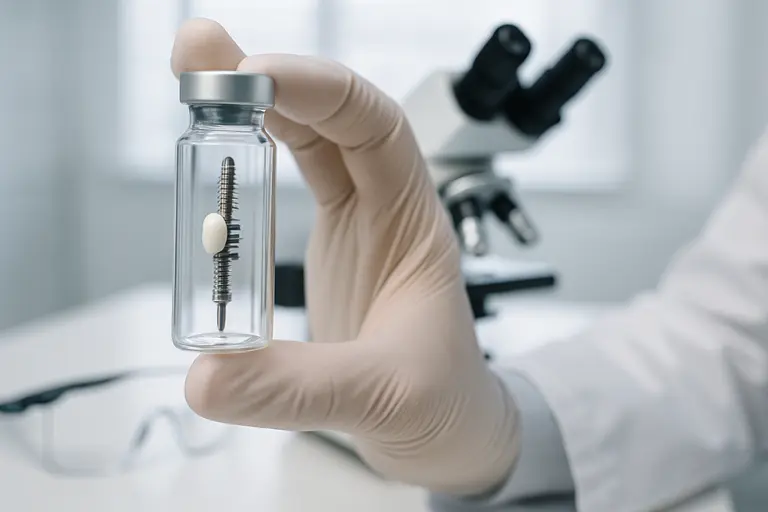
Safety interpretation should be measured. In the standalone study, postoperative IOP spikes of at least 10 mmHg occurred in about 17% of eyes, and most resolved within 30 days. The research notes also reported no persistent inflammation, implant rejection, clinically significant hyphema, or scaffold migration. Those are reassuring observations within the reported follow-up, but the cohort size was limited, and rare complications may not appear in small samples.
Short-Term Pressure Spikes
For athletes, transient IOP spikes are not a small detail. Training loads, return-to-play timing, travel, altitude exposure, and head or eye trauma risk can complicate postoperative planning. The available data do not define a universal safe return schedule after this procedure. That is a clinical decision, not a coaching decision, and it should account for eye healing, pressure stability, disease severity, and sport-specific contact risk.
What The Data Did Not Prove
The evidence did not establish that the device is superior to every other glaucoma intervention, nor did it prove long-term protection from visual field loss. A separate cataract-combined cohort in the research notes reported two-year reductions in mean IOP and medication use, but those data involved combined surgery rather than the standalone procedure, so interpretation differs. Readers interested in implant materials may find further information on device behavior and biomaterial performance at Kilburn Chemicals.
- Supported by current evidence: pressure reduction and lower medication use were reported in the studied cohorts.
- Still uncertain: athlete-specific outcomes, long-term visual field protection, comparative ranking against other procedures, and rare adverse events.
- Clinical boundary: treatment choice should remain with an ophthalmologist familiar with the patient’s disease stage and sport demands.
AlloFlo Implant For Athlete Eye Monitoring
The most defensible athlete-centered reading is cautious. The AlloFlo Implant data suggested meaningful IOP reduction in a real-world open-angle glaucoma cohort, with medication reduction and a defined short-term safety profile. That matters because athletes with glaucoma often need durable eye-pressure control without unnecessary disruption to training and daily routines. Yet the available evidence does not replace standard glaucoma monitoring: optic nerve evaluation, visual field testing, OCT imaging, medication review, and individualized risk assessment remain central.
For sports vision science, the key lesson is not that one device answers the athlete-glaucoma problem. The lesson is that pressure-lowering research should be translated into functional questions: Does the patient have stable peripheral vision? Are drops affecting the ocular surface? Is the sport likely to involve blunt eye trauma? Are protective lenses needed? Can follow-up be maintained during travel? Until athlete-specific trials are available, the AlloFlo Implant should be discussed as a glaucoma intervention with promising early pressure data, not as a performance tool or a one-size option.