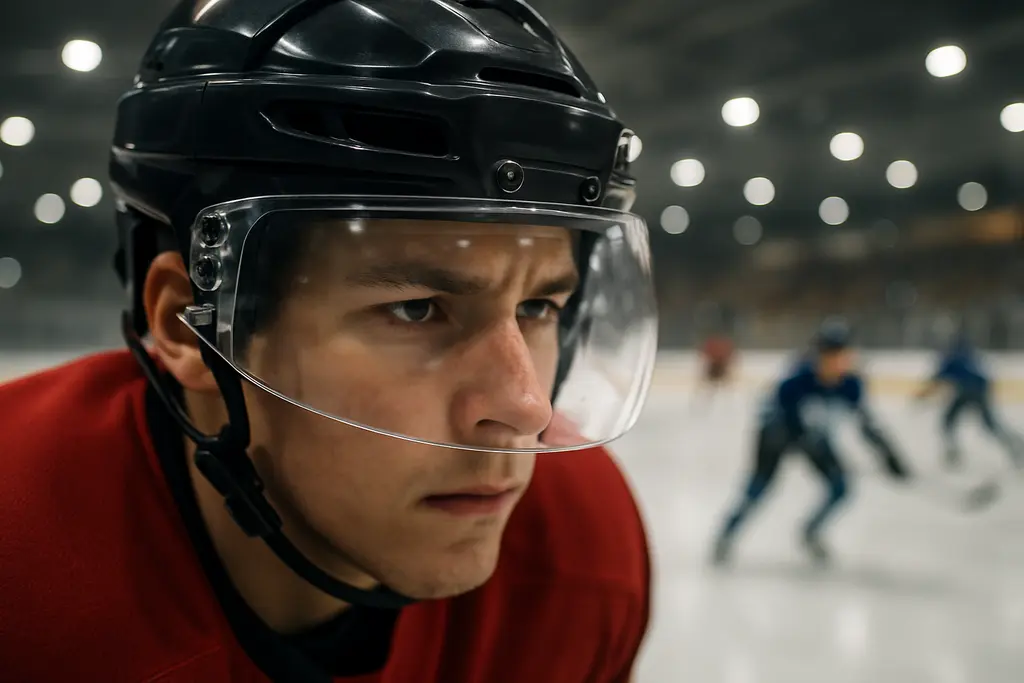
Hockey Eye Trauma is not just a rare sideline concern for families in youth sports. A 2026 JAMA Ophthalmology study estimated about 6,466 hockey-related ocular injuries treated in U.S. emergency departments from January 2004 through December 2023, with a 95% confidence interval of 3,736 to 9,195 cases; about 69% involved pediatric patients under 18, and 79% involved males JAMA Ophthalmology study. Those numbers point to a prevention problem that sits close to the rink, the driveway, and the community league meeting room.
The best reading of the evidence is cautious. Emergency department data capture many serious and sudden injuries, but they can miss cases handled in clinics, urgent care centers, athletic training rooms, or not reported at all. Still, the pattern is useful: many injuries were linked to equipment or incidental contact involving sticks, pucks, and related play. For coaches and parents, that means the discussion should not stop at talent development or ice time. Eye safety belongs in the same conversation as skating skill, checking rules, and helmet fit.
Hockey Eye Trauma By The Numbers
What The 2004–2023 Data Show
The 20-year injury estimate gives youth hockey a clearer safety signal. The study reported that 83% of the injuries were equipment-related trauma. Minor anterior segment injuries, involving structures such as the cornea or eyelid, were most common at 63.3% of cases. That should not be misread as reassurance. The same report classified 12% of total diagnoses as vision-threatening, which is a meaningful share for any youth sport where participation is often framed around confidence, friendships, and long-term physical activity.
Age differences also matter. Among patients younger than 18, 64% had minor anterior segment injuries, compared with 46% among adults. Adults had 6% major posterior segment injuries, compared with 0% in children in the cited data. The absence of major posterior segment injuries among children in this dataset does not mean risk is absent; it means that, in this sample and time frame, the most severe posterior patterns were seen in adults. Prevention planning should still treat any direct eye impact as potentially serious until assessed by qualified medical personnel.
Hockey Eye Trauma In Youth Players
For youth players, the public health concern is partly about timing. Children and adolescents are still building habits around gear, peer norms, and how quickly they report symptoms. If a young athlete learns early that eye and face protection are normal parts of the sport, the equipment may feel less like an add-on and more like skates or gloves. That cultural shift is not a medical treatment, but it is a practical prevention strategy supported by the injury pattern.
One notable detail from the 2026 paper is that only 2% of reported cases involved use of protective goggles or eye shields. This figure should be interpreted with care because emergency department records may not always capture protective equipment use fully. Even so, it raises a reasonable question for community programs: are shields, cages, and properly fitted face protection being worn, checked, and replaced when damaged?
Gear, Rules, And Real-World Compliance
Protection Is A System, Not A Single Item
Hockey safety is often discussed one piece of gear at a time, but eye protection works best as part of a system. Helmet fit, face shield or cage integrity, chin strap position, mouth protection, and rule enforcement all interact. A loose helmet can shift during contact. A damaged cage may not perform as intended. A player who removes or alters protection for comfort can create a gap that coaches may not see unless checks are routine.
For Hockey Eye Trauma prevention, the most realistic community approach is repeated, visible compliance. Coaches can inspect face protection before practice. Parents can look for cracks, loose hardware, or poor fit before a child leaves home. League officials can set expectations before games rather than waiting until after an injury. None of these steps eliminates risk, but they make preventable exposures harder to ignore.
Lessons From Neck Protection Policy
Policy does not solve every safety issue, yet it can reset the standard of care in youth sport. USA Hockey mandated neck laceration protection for players and on-ice officials under age 18, effective August 1, 2024 USA Hockey mandate. That rule addressed neck injury rather than eye trauma, but it offers a useful comparison: when a governing body makes protection mandatory, families and teams have a clearer baseline for compliance.
Eye and face protection may benefit from the same practical thinking. The issue is not only whether protective equipment exists. It is whether the equipment fits children well, stays comfortable during play, preserves visibility, and is accepted by teammates. A safety rule that families cannot implement consistently will be weaker than one supported by fitting guidance, coach education, and routine enforcement.
What The Evidence Can And Cannot Tell Us
Limits Of Emergency Department Surveillance
The available data are valuable, but they are not a full census of every hockey eye injury. Emergency department estimates depend on coding, sampling methods, and what details are recorded during acute care. They may undercount injuries managed outside hospitals. They may also lack detail on whether a player wore a full cage, half shield, visor, or no facial protection at the moment of injury.
This limitation matters because prevention decisions need better context. A league might want to know whether injuries cluster during games, practices, informal street hockey, or certain age divisions. The research notes indicate that street hockey has shown relatively high rates of stick- and eye-injuries compared with other hockey variants, but the strongest article-level source provided here for inline citation is the 2026 ocular trauma study. That leaves room for careful local tracking without overstating what national data can prove for every community.
Why Vision-Threatening Diagnoses Change The Discussion
The finding that 12% of diagnoses were vision-threatening should shape how adults respond to eye impacts. A player who reports pain, blurred vision, new light sensitivity, double vision, bleeding, or trouble keeping the eye open should not be pushed back into play by reassurance alone. This is not a diagnosis; it is a safety principle. Eye injuries can look minor at first, and the right response is timely assessment by a qualified clinician.
As a community sports reporter, I have seen how youth athletes often take cues from adults. If adults treat eye symptoms as weakness, young players may hide them. If adults treat reporting as smart and expected, teams gain a safer culture. For related science-minded reading across our network, the Harvard Science Review covers research topics with a similar evidence-first lens.
Prevention Steps For Youth Hockey Programs
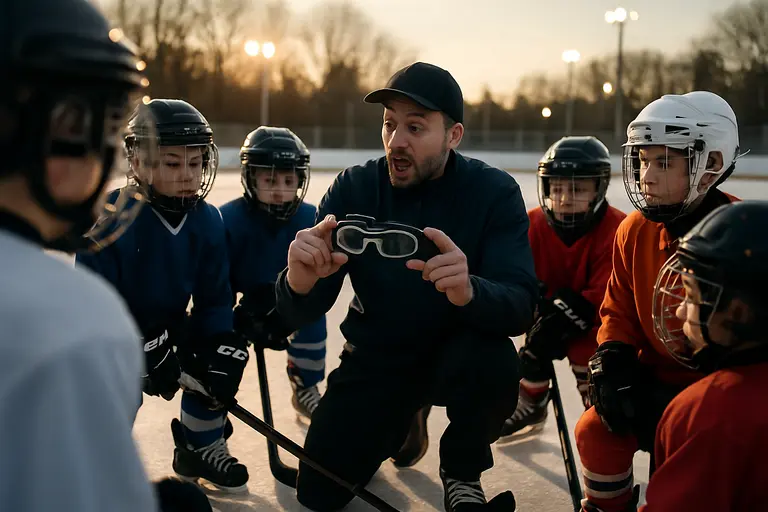
Practical Checks Before Practice And Games
A prevention plan does not need to be complicated to be useful. The evidence points toward gear-related mechanisms, pediatric exposure, and a small but serious fraction of vision-threatening diagnoses. Youth programs can act on those signals through repeated habits rather than one-time safety talks.
- Inspect face protection regularly: check for cracks, bent cages, loose screws, and poor helmet fit.
- Normalize reporting: tell players before the season that eye pain, blurred vision, or new visual symptoms should be reported right away.
- Teach stick control: reinforce penalties and practice habits that reduce high-stick and incidental contact risks.
- Include informal play: remind families that driveway, street, and pond hockey can still involve sticks, pucks, balls, and falls.
- Record incidents locally: track injury setting, equipment worn, age group, and mechanism to guide league decisions.
These steps are not a guarantee, and they should not be presented as medical care. They are reasonable prevention measures consistent with the patterns reported in the research. Local data can also help leagues see whether their injury risks match national estimates or differ because of age mix, facilities, or style of play.
Hockey Eye Trauma Prevention Priorities
Community Standards That Can Last
Hockey Eye Trauma prevention works best when it becomes a shared standard rather than a family-by-family preference. The 2026 study gives youth programs a clear prompt: most reported injuries involved children, most were male, many were equipment-related, and a meaningful minority were vision-threatening. That is enough evidence to support stronger attention to protective gear use, better compliance checks, and faster response to symptoms.
The next step is not panic. It is steady, evidence-based work. Youth hockey can preserve speed, skill, and community pride while treating eye safety as part of player development. Coaches can model compliance. Parents can ask fit questions before injuries happen. Leagues can track what occurs on their own ice and in informal play. Young athletes can learn that protecting vision is not separate from success in sport; it is one condition that helps them keep playing.