Author: Kiana Dane

  • Want Better Game Performance? Try These 7 Vision Training Exercises

    Want Better Game Performance? Try These 7 Vision Training Exercises

    Let’s be honest. Most athletic preparation feels like shouting into the void. You work hard in the gym and push yourself on the track. But what if the best way to improve isn’t in your gym bag?

    Welcome to the secret known by the elite. It’s not just about reading eye charts. It’s about seeing the visual chaos of competition fast. Think of it as a software update for your eyes.

    We’re moving beyond just seeing things clearly. We’re talking about dynamic visual acuity, depth perception, and peripheral awareness. These skills help athletes like quarterbacks spot blitzes or strikers find passing lanes.

    Forget the red pill or the blue pill. The vision training pill is the only choice for those serious about winning.

    Exercise 1-7: Detailed Instructions & Benefits

    Your eyes are like a sports team arguing over who gets the ball. These seven vision drills are like a coaching clinic that gets them working together. We’re moving from lectures to practical exercises. Here, we focus on the why behind each movement.

    Every exercise is a solution to a specific problem. You’re not just following instructions. You’re improving your perception.

    You’re not just following instructions. You’re reverse-engineering your perception. Let’s break down the foundational seven.

    The Brock String: Your Depth Perception Coach

    This drill is more than just following a colored bead on a string. It’s like a complex offensive scheme. The Brock String teaches your eyes to work together.

    You learn to judge distances accurately. This drill helps you catch fly balls or judge gaps in the line. It’s about seeing in 3D, not just 2D.

    Saccadic Training: The Visual Cornerback

    Shifting your gaze quickly between targets might seem simple. But it’s like a cornerback’s backpedal. They scan, assess threats, and change focus fast.

    This eye training sharpens your field vision. It’s essential for spotting open receivers or an opponent’s sudden move. Fast, accurate saccades give you an advantage.

    Your eye’s lens needs a workout, too. Shifting focus trains the ciliary muscle. A strong muscle adjusts quickly.

    The benefit? You see clearly without lag. Whether it’s tracking a puck or reading a sign, this drill helps.

    Peripheral Awareness Drills: Expanding Your Canvas

    Tunnel vision is a silent enemy. These exercises expand your visual field without moving your eyes. It’s like upgrading to widescreen.

    This is key for spatial awareness. A point guard feels the double-team coming. A soccer midfielder sees the overlapping run. Your central vision handles details, while your periphery manages context.

    The Equipment List: MacGyver Edition

    You don’t need fancy equipment. Most visual drills use household items. A string and beads, a pen and clock, a straw and target. The barrier to entry is low, but the benefits are high.

    Common pitfalls? Rushing, poor lighting, forgetting to breathe. Vision training is a mindfulness practice. Go slow to rewire fast.

    Putting It All Together

    These seven exercises are interconnected. They form a system that upgrades your visual system. Doing them mindlessly is like memorizing a playbook without understanding the game.

    Understanding the neural mechanics changes everything. You stop going through the motions. You start actively rewiring your perception. The goal is a faster, smarter connection between your eyes and brain.

    That’s the real win. When your visual processing becomes seamless. That’s when you’ve mastered the field.

    Athlete Testimonials

    Want to know how vision drills work? Ask a quarterback who spots a safety’s move early. The science of athletic training gives the plan. But athletes make it happen on the field.

    Mark, a 12-year veteran quarterback, used to focus on strength training. He added 15 minutes of visual drills to his routine. Now, he reads complex coverages like a movie he knows well. It’s about seeing and processing faster, turning chaos into clear action.

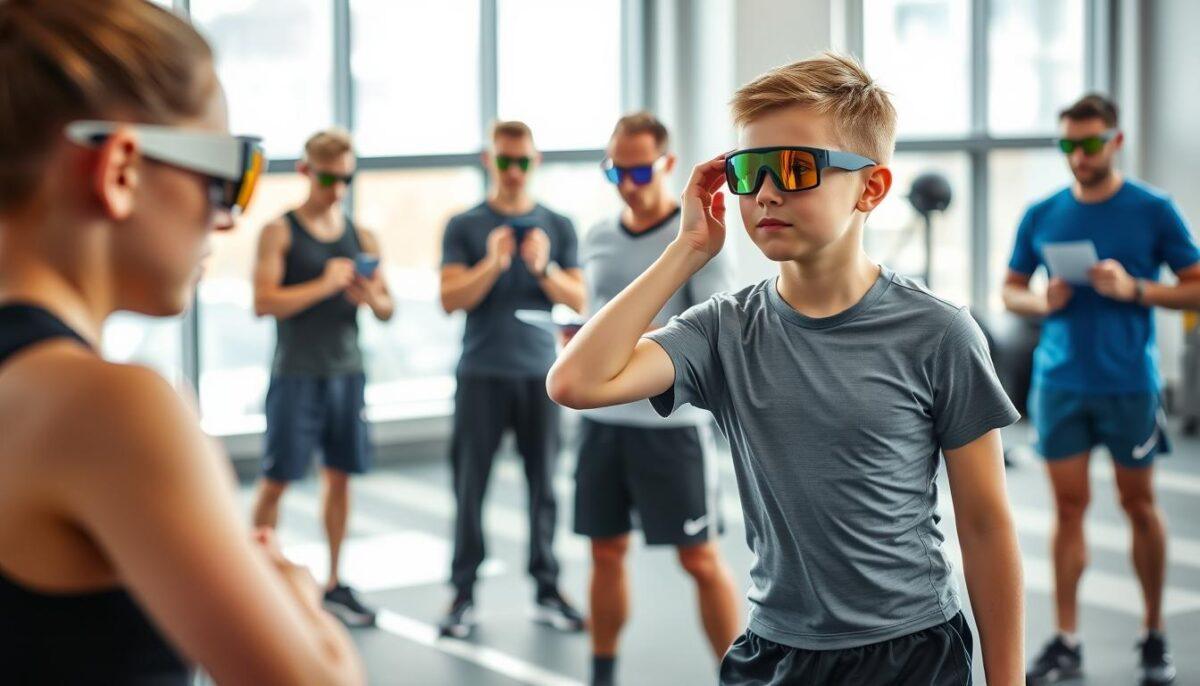
    A vibrant indoor gym setting showcasing athletes engaged in vision training drills. In the foreground, a focused athlete in modest sportswear is practicing with a high-tech reaction ball, eyes trained on the bouncing ball as they demonstrate intense concentration and quick reflexes. In the middle ground, two other athletes are positioned at different stations, one using a vision chart while the other follows the cues of a coach, who is guiding them with a clipboard in hand. The background features gym equipment and large windows letting in natural light, creating an energized atmosphere. The lighting is bright and dynamic, highlighting the determination on the athletes' faces, captured from a slightly low angle to emphasize their athleticism and commitment to training.

    Elena, a rookie wide receiver, credits her explosive training to her eyes, not just her feet. “The deep ball used to feel like a gamble,” she says. “Now, it’s a target I aim for.” Her training focused on tracking and awareness. She now feels calm, even with defenders closing in.

    These stories are more than just success tales. They show how vision training can give athletes an edge. Mark got an extra half-second to decide, and Elena gained confidence to catch the ball without losing the defender.

    High-level performance often focuses on physical strength. But vision training is key. It’s the difference between reacting and anticipating.

    The real proof of vision training’s value is in the locker room. It’s the quiet confidence of a player who knows they’ve unlocked a new level of the game. Their eyes lead their body to the right move.

    How to Measure Progress

    In the gym, progress is loud and clear. But in sports vision training, it’s quiet. You don’t feel it in your eyes like you do in your muscles.

    So, if you can’t see the results, did you really improve? The answer is yes, but you need to track your progress yourself. We’re moving beyond just feeling like you’re seeing better. We’re finding real ways to measure your visual skills.

    Think of it like tracking your investments. When your numbers go up, you’ll feel more confident on the field.

    Your main goals are contrast sensitivity, visual reaction time, and gaze stability. Contrast sensitivity is seeing details in low light. Reaction time is how fast you react to a ball. Gaze stability is keeping your eyes steady while moving.

    A dynamic, well-lit indoor sports facility showcasing a group of athletes engaged in various vision training exercises. In the foreground, a focused athlete wearing professional sports attire is performing a hand-eye coordination drill with colored reaction balls, showcasing intensity and concentration. In the middle ground, a coach is observing and taking notes on a digital tablet, measuring the athlete's performance and progress. The background features colorful training equipment, such as agility cones and balance boards, with motivational posters on the walls. The scene is illuminated by bright, natural lighting filtering through large windows, creating an inspiring and energetic atmosphere, emphasizing the importance of progress tracking in athletic training.

    Tracking these metrics doesn’t need a PhD or fancy labs. Here’s how to do it, from simple to advanced.

    Visual Metric The Garage Gym Method (Low-Tech) The Lab-Grade Dashboard (Tech-Driven)
    Contrast Sensitivity Use a vision chart in dimmer light. See how long you can read the bottom line as it gets darker. Apps like EyeChart or Peak offer tests with scores to track your progress.
    Visual Reaction Time Have a partner drop a ruler; catch it. The distance it falls shows your speed. Do this every week. Tools like the BlazePod or apps like Human Benchmark give exact times and complex tests.
    Gaze Stability Focus on a letter on a wall while shaking your head. Can you keep it clear? That’s your starting point. VR systems or software track tiny eye movements to show how steady your focus is.

    The simple methods help you find your starting point. The advanced tools help you fine-tune. You need both.

    Begin with simple tests. Use a dim light and a falling ruler. Later, try an app for detailed graphs. Watch your progress climb.

    That’s the sound of progress, speaking up at last.

    Pro Tips

    Let’s cut through the noise. Doing vision training exercises is one thing. Making them work is another.

    Your first pro tip is integration, not isolation. A pencil pushup in your living room is fine. But doing that same focus shift while mimicking your tennis serve motion? That’s how you build muscle memory for your eyeballs. The goal is to weave these drills into your sport’s specific geometry until they feel native.

    Plateaus happen when the drill becomes rote. Your visual system hits autopilot. The countermove is strategic chaos. Once you’ve mastered the foundational moves—like those detailed by optometrists for at-home practice—you must introduce unpredictability. Flick the lights. Change your stance. Have a teammate wave a hand. Force adaptation.

    The mental component is non-negotiable. Treat each repetition as a moving meditation. If your mind wanders to your grocery list during a Brock string drill, you’re just going through the motions. The focus you bring is the catalyst.

    Think of this as the applied science. These aren’t just vision training exercises; they’re your cheat code for processing the game a split-second faster. Now go integrate the chaos.

  • Game On, Eyes On: How to Choose Protective Eyewear for Your Sport

    Game On, Eyes On: How to Choose Protective Eyewear for Your Sport

    Imagine being out of the game because of an eye injury. Eye injuries are common in sports, but they can be stopped with the right sports eyewear.

    Sports eye injuries are a big worry, and they can even cause blindness in kids in the U.S. Baseball, basketball, and hockey are high-risk sports. Fast-moving objects and physical contact increase the risk. A study found that up to 90% of these injuries can be avoided with proper eye protection (Source).

    The need for eye protection is huge. The right eyewear can greatly lower the risk of eye injury. This lets athletes stay in the game. Looking at the risks in different sports shows that sports eyewear is essential, not just a precaution.

    Types of Protective Eyewear

    The world of protective eyewear is vast and varied. It offers many options for athletes to keep their vision safe. Different sports have different risks, so athletes need different types of protective eyewear.

    It’s important for athletes to know about the different types of protective eyewear. For a detailed guide on safety glasses, including their types, features, and uses, visit The Complete Guide to Safety Glasses.

    Material & Fit

    The material and fit of protective eyewear are key to its effectiveness. Polycarbonate lenses are highly recommended because they are very impact-resistant. Also, features like adjustable nose pads and straps help ensure a secure fit. This keeps the eyewear in place during intense activities.

    A close-up composition showcasing various types of protective eyewear materials laid out on a clean, white surface. In the foreground, highlight a pair of sleek, sporty goggles made from shatterproof polycarbonate with anti-fog coating, reflecting subtle light. Beside them, feature safety glasses with a durable, lightweight frame, emphasizing the reflective lenses that filter UV rays. In the middle ground, include a selection of interchangeable lenses in vibrant colors and textures, such as mirrored and tinted options. The background should be softly blurred, hinting at a well-lit sports facility, enhancing the focus on the eyewear materials. The overall mood is dynamic and professional, suggesting innovation and safety in sports settings. Midday lighting casts a natural brightness, showcasing the clarity and quality of the eyewear.

    Material Impact Resistance Weight Optical Clarity
    Polycarbonate High Lightweight Excellent
    Trivex High Lightweight Excellent
    Acetate Medium Variable Good

    When picking protective eyewear, athletes should think about both material and fit. A good pair should offer uncompromised protection without sacrificing comfort. By knowing the different materials and features, athletes can choose the best to protect their eyes.

    Material & Fit

    For athletes, the right eyewear can change the game. It’s all about protection and performance. The material and fit of sports eyewear are key for comfort and doing well in sports.

    Lens Options Based on Sport

    Different sports need different lens options to perform best. Anti-fog coatings help in humid places, while tinted lenses improve visibility in bright light.

    Lens Options for Various Sports:

    Sport Recommended Lens Option
    Swimming Anti-fog coating
    Cycling Tinted lenses for UV protection
    Skiing Polarized lenses for glare reduction

    A close-up image showcasing a variety of sports eyewear lenses, arranged on a sleek, modern display. The foreground features different lens options in vibrant colors—polarized, photochromic, and tinted lenses—highlighting their unique properties. The middle ground includes stylish frames in lightweight materials, such as polycarbonate and acetate, demonstrating ergonomic designs that emphasize fit and comfort. In the background, a softly blurred sports environment, like a running track or a biking trail, enhances the context of athleticism. The lighting is bright but diffused, accentuating the clarity and craftsmanship of the lenses. This composition conveys a dynamic and energetic atmosphere, perfect for athletes choosing the best protective eyewear for their sport.

    Athletes who need glasses can find special sports eyewear. It’s made for their vision needs. This way, they can see clearly and stay protected.

    Benefits of Prescription Sports Eyewear:

    • Customized to individual vision needs
    • Enhanced performance through clear vision
    • Protection from impact and UV radiation

    Selecting the Right Pair

    Athletes need more than just any eyewear; they need the right protection. When it comes to sports gear, eye protection is key. Choosing the right protective eyewear involves several key considerations to ensure both safety and performance.

    First and foremost, consulting with an eye care professional is advisable. They can provide expert advice tailored to your specific needs, whether you’re a seasoned athlete or just starting out. Factors to consider include:

    • Material Durability: The eyewear should be made from materials that can withstand the rigors of your sport.
    • Comfort: Comfortable eyewear is essential for performance. Look for adjustable frames and soft padding.
    • Lens Options: Different sports require different lens types. For example, polarized lenses can reduce glare in water sports.
    • Certification Standards: Ensure the eyewear meets relevant safety standards, such as ASTM F803 for sports eyewear.

    It’s not just about picking a stylish pair; it’s about ensuring they meet safety standards and fit comfortably. The right pair can enhance your performance by providing clear vision and protection, allowing you to focus on your game.

    When selecting protective eyewear, it’s also worth considering the specific demands of your sport. For instance, racquet sports players may require eyewear that can withstand high-speed impacts.

    In conclusion, selecting the right pair of protective eyewear is a critical decision for athletes. By considering the factors outlined above and consulting with professionals, athletes can ensure they’re getting the best possible protection for their eyes.

    Care & Maintenance

    To keep your sports eyewear in top shape, regular care is essential. It’s a simple step that many overlook. Keeping your eyewear in good condition is vital for ongoing protection.

    Cleaning your sports eyewear often is easy and helps it last longer. Begin by wiping it with a microfibre cloth to remove dirt or smudges. For a deeper clean, rinse it with lukewarm water. Hot water can harm some materials or bend lenses.

    After cleaning, proper storage is key to avoid damage. Keep your eyewear in a strong, protective case when not wearing it. This protects it from bumps or scratches. Also, check for wear and tear like loose frames or scratched lenses, and fix them quickly to keep your eyes safe.

    By following these easy care tips, your sports eyewear will keep protecting your eyes. Regular upkeep not only makes your eyewear last longer but also keeps your eyes safe from harm.

    Looking after your sports eyewear is a big part of eye protection. Spending a few minutes on maintenance lets you enjoy sports safely, knowing your eyes are protected.

    Top Brands/Products

    Choosing the right brand for sports eyewear is key. Brands like Nike, Oakley, and Smith Optics are top choices. They offer eyewear that meets and goes beyond safety standards.

    Going for a well-known brand means better protection. Cheaper options might look good but often lack quality and safety. Brands focused on sports gear know how important durability and performance are.

    For athletes, the right eyewear can make a big difference. It can improve performance and give you confidence. Look for brands with various styles and lens options for different sports. This way, you get eyewear that’s both safe and functional.

  • Unlocking Champion Vision: Vision Training Techniques for Peak Athletic Performance

    Unlocking Champion Vision: Vision Training Techniques for Peak Athletic Performance

    What Is Vision Training?

    Vision training is a new way to boost athletic performance. It’s not just about seeing clearly; it’s about how your brain handles what you see.Research shows that athletes with better vision skills do better in games.

    Athletes are always looking for ways to get ahead. Vision training gives them an edge. It helps them see better, move their eyes faster, and react quicker.

    The benefits of vision training for athletes are many. For example, better depth perception helps a tennis player judge a serve. Improved eye movement skills help a soccer player track the ball and opponents.

    Let’s look at how vision training changes an athlete’s skills before and after a program.

    Visual Skill Pre-Training Post-Training
    Depth Perception Average Excellent
    Eye Movement Slow Fast
    Visual Reaction Time 200 ms 150 ms

    The table shows vision training can greatly improve an athlete’s skills. This leads to better performance overall.

    Techniques for Enhancing Vision

    To improve your vision, mix eye exercises, lifestyle changes, and a diet full of nutrients. Vision training includes exercises to better eye movement, focus, and health.

    Begin with simple eye exercises. Focus on a point, then look at another. You can follow a moving object or switch between two points. For example, watch a pen tip as it moves from side to side.

    Keeping a healthy lifestyle is also key. Eat foods rich in omega-3s, lutein, and zeaxanthin. These are found in fatty fish, leafy greens, and nuts. Don’t forget regular eye check-ups to catch any problems early.

    By adding these techniques to your daily life, you can enhance your vision and keep your eyes healthy. Always take breaks and rest your eyes, mainly when using digital devices.

    Success Stories

    Athletes from different sports have used vision training to get better. Tony Fernandez, for example, saw his batting average jump from .286 to .321. He credits regular eye training for his success.

    Hensley “Bam Bam” Muellens noticed better depth perception. Kiki Vandeweghe’s game improved after vision training. Don Mattingly and Jimmy Connors also talk about the role of sharp eyesight in their sports.

    To read more inspiring stories and athlete quotes, check out Dr. Lampert’s Success Stories. These stories show how vision training can help athletes reach their peak.