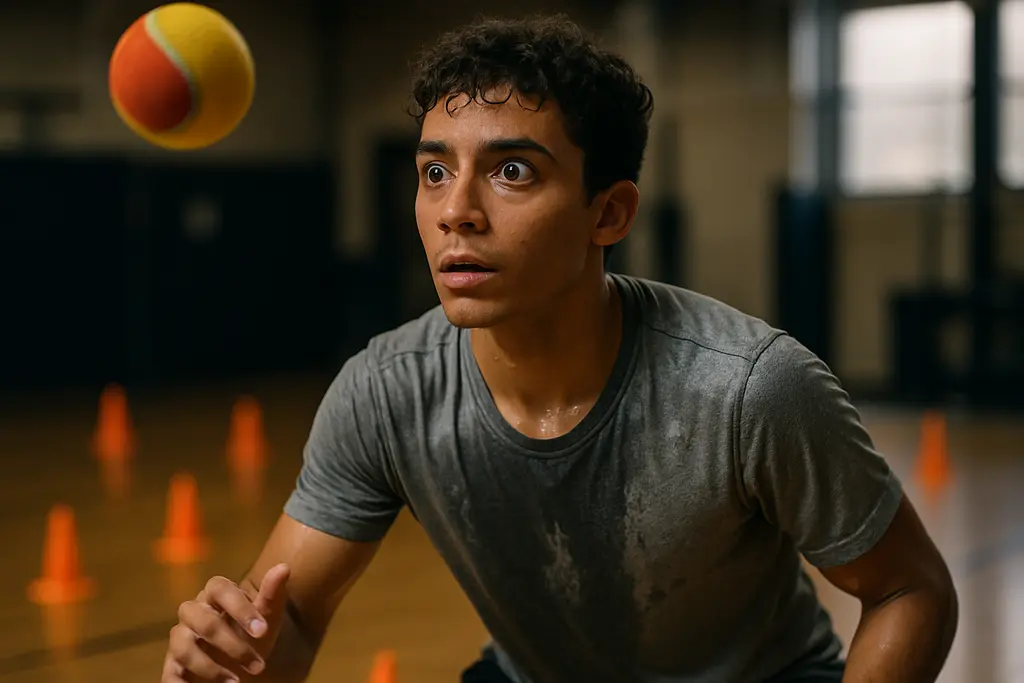
Category: Mental Conditioning

  • Digital Eye Strain And Visual-Cognitive Training

    Digital Eye Strain And Visual-Cognitive Training

    For students, athletes, esports competitors, and office workers, digital eye strain is no longer a minor sideline issue. Recent studies suggest that active visual tasks, blink awareness, and supervised sports vision drills may reduce symptoms in some screen-exposed groups. The key word is “may.” The evidence is promising, but it is still tied to specific populations, short study windows, and structured programs that are not the same as a diagnosis or treatment plan.

    What Digital Eye Strain Evidence Shows

    The strongest recent signal comes from a randomized controlled trial at Suzhou Vocational University in China. Published on July 13, 2026, the study tested a 12-week sports vision training program in 200 undergraduate students with high screen exposure. At baseline, 74.5% of participants were classified as computer vision syndrome-positive, with high rates of eye fatigue or soreness, difficulty focusing, and distraction or reduced concentration. After the intervention, the sports vision training group showed a drop of about 33 percentage points in computer vision syndrome-positive prevalence, according to the peer-reviewed report in Frontiers in Neuroscience.

    That finding matters for community sport because training rooms, classrooms, scouting video sessions, and online coursework often blend into one screen-heavy day. Yet the trial was conducted in undergraduate students, not across professional athletes, older adults, or patients with eye disease. The result should be read as field-tested evidence in a campus setting, not proof that the same program works equally well for every team or workplace.

    Digital Eye Strain Symptoms In The Trial

    The trial reported symptom-specific improvements after the 12-week program. Distraction or reduced concentration fell by 34 percentage points, headache by 30 percentage points, neck, shoulder, or back pain by 29 percentage points, eye fatigue or soreness by 30 percentage points, red eyes by 28 percentage points, and difficulty focusing by 23 percentage points. These changes are large enough to deserve attention, but the study design does not answer every practical question: how long the benefits last, whether unsupervised athletes would adhere to the drills, or whether results transfer to high-pressure competition and long travel schedules.

    Visual-Cognitive Training In The Trial

    The program used weekly 90-minute sessions for 12 weeks during regular physical education. Activities included visual-occlusion tasks, Fitlight reaction tasks, strobe-glasses training, multi-target tracking, sports-based cognitive-motor drills, and after-school HOME vision drills. Compliance was reported as high, with about 85% completing at least 80% of assigned tasks. That detail is central: the intervention was active and supervised, not a one-time tip sheet or a pair of glasses handed out without follow-up.

    How Visual-Cognitive Training May Help

    Visual-cognitive training is designed to challenge visual attention, gaze shifts, reaction timing, and coordination between what the eyes detect and how the body responds. In a sports context, that sounds familiar: a midfielder scanning passing lanes, a batter reading pitch release, or a goalkeeper tracking a deflection. In screen-heavy settings, the same broad systems may be stressed by sustained near focus, small text, repeated switching between windows, and high cognitive load.

    A 2025 systematic review described several domains that contribute to screen-related symptoms: ocular surface and blinking, accommodation and vergence, musculoskeletal load, device optical stress, cognitive load, and neural markers. The practical interpretation is not that one drill fixes everything. A more cautious reading is that symptoms can arise from overlapping visual, postural, attentional, and task-design factors.

    That helps explain why active interventions may look more useful than passive advice alone. A program that changes gaze behavior, encourages dynamic visual attention, and breaks up static near work addresses more than one stress pathway. Still, the studies do not show that every form of training is equal, or that benefits require high-tech equipment. Cost, staff training, and session time remain real barriers for schools and community clubs.

    • Most supported so far: supervised active drills in student or screen-exposed groups over weeks, not days.
    • Still uncertain: long-term durability, use in older adults, and transfer to competitive sport performance.
    • Implementation barrier: trained supervision and consistent participation may matter as much as the drill type.

    Blink Training And Active Breaks

    Another line of evidence points toward blinking and ocular surface stability. A prospective randomized trial in Wenzhou, China, published on November 20, 2025, tested a smartphone-based blink-training app over 30 days in screen-exposed users. The app was associated with improved blink rate, fewer incomplete blinks, better tear-film stability, and lower Ocular Surface Disease Index scores, according to npj Digital Medicine.

    This is relevant because visual attention often suppresses blinking during demanding screen tasks. For an athlete watching video breakdowns, a student writing under deadline, or a coach working through scouting clips, concentration can come with fewer full blinks and longer periods of fixed near focus. Blink training is not a substitute for professional care when symptoms are persistent or severe, but it adds a plausible active tool to the discussion.

    Break schedules also matter. A 2025 study of prolonged near work found that breaks every 10 minutes or self-paced breaks lessened symptoms, stabilized accommodation, and reduced near work-induced transient myopia in that task setting. The commonly repeated 20-20-20 rule was not sufficiently effective in that specific 40-minute reading task. That does not make the rule useless in all contexts; it means break timing and task type need more careful testing.

    What This Means For Mental Conditioning

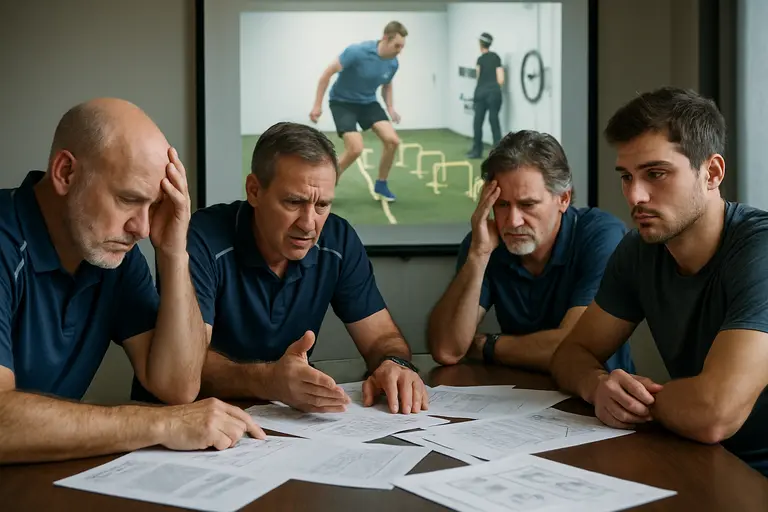
    Coach and athlete reviewing video clips after practice

    Mental conditioning often focuses on attention, reaction speed, resilience, and decision-making. The recent research suggests that eye comfort and visual workload should be part of that conversation. If an athlete is expected to study film, complete schoolwork, and train reactive skills on the same day, coaches should be alert to the cumulative load from screens and near work.

    One cautious approach is to combine active visual tasks with realistic rest periods, posture checks, and symptom tracking. For example, a team could avoid placing long video sessions directly before reaction-heavy practice if players repeatedly report fatigue or focusing difficulty. A school could test short, supervised visual drills during physical education while tracking adherence and symptom reports. None of these steps require claiming that digital eye strain has a single cause.

    For readers interested in the intersection of community sport and athlete development, Li Live Steam is part of a similar network covering these insightful sports conversations. The shared lesson here is simple: performance support should include the visual demands athletes face away from the field, not only what happens during competition.

    For more on how trial evidence should be interpreted cautiously, this related analysis of student screen-strain studies reviews why promising results still need replication across broader settings.

    Limits, Safety, And Practical Caution

    The available evidence supports interest in structured training, not sweeping claims. The 2026 sports vision study was a 12-week campus trial. The 2025 blink-app study lasted 30 days. Other studies cited in recent research included an 8-week device-based vision relaxation intervention and a small 4-week massage trial in young adults. These time frames are useful for early evaluation, but they do not settle questions about year-long adherence, cost-effectiveness, or which groups benefit most.

    There is also a safety boundary. Persistent eye pain, new vision loss, severe headaches, halos, marked redness, or symptoms that keep worsening should not be treated as a training problem. Those signs call for evaluation by a qualified clinician. Coaches, trainers, and journalists should avoid turning early intervention studies into medical advice.

    The better takeaway is measured: active, supervised, visually engaging programs appear more promising than passive advice alone for some screen-exposed groups. That finding fits what athletes already know about skill work. Practice needs structure, feedback, and recovery. The eye and brain systems involved in screen use may be no different, but the science still needs larger, longer, and more diverse studies.

    Digital Eye Strain And Training Decisions

    For community teams and schools, the most defensible step is not to buy the newest device first. It is to map the visual load athletes already carry: class screens, phones, film review, gaming, travel, and homework. From there, low-risk changes can be tested: shorter screen blocks, more frequent active breaks, blink reminders, and supervised visual drills where staff can monitor response.

    Digital eye strain research is now close enough to sport to inform mental conditioning, but not mature enough to promise universal relief. The recent studies give coaches and health teams a sharper question to ask: are we training attention while ignoring the visual fatigue that attention can create? Answering that question with careful tracking may help athletes work smarter, without overstating what the evidence can yet prove.
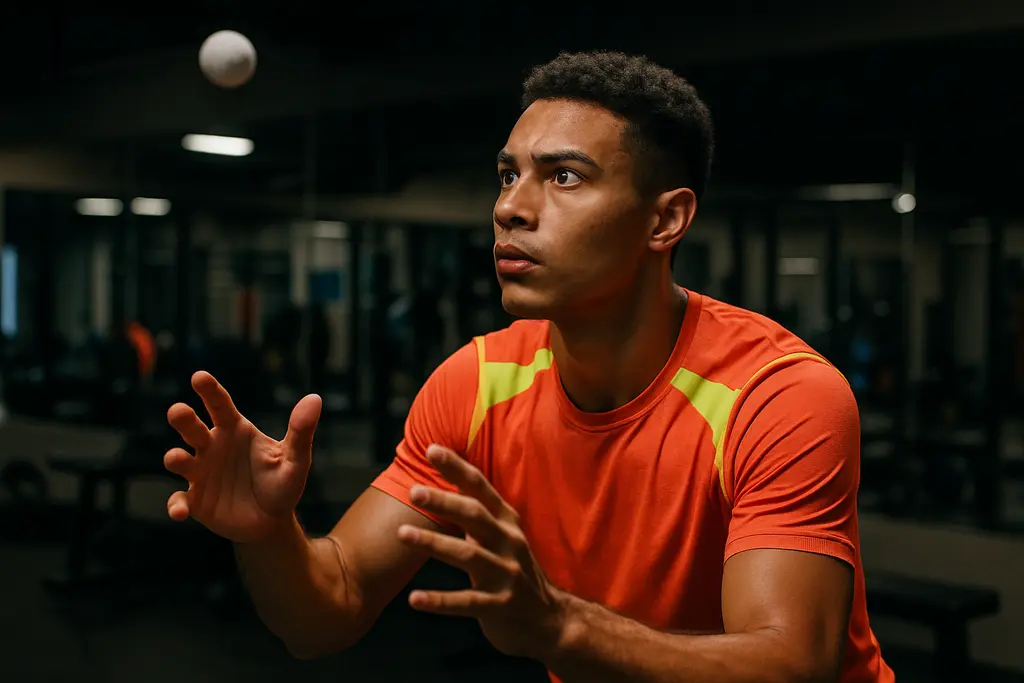
  • Visual-Cognitive Training for Reactive Athletes

    Visual-Cognitive Training for Reactive Athletes

    Visual-Cognitive Training has gained attention because athletes in open-skill sports are rarely reacting to one clean signal. A defender shifts weight, a shuttle drops late, a teammate cuts across the lane, and the eyes must feed decisions before the body can respond. The research record through October 2, 2026, supports cautious interest: several studies show short-term gains in reaction time, decision timing, and sport-like accuracy, but direct transfer to competitive performance is not settled across sports, ages, or training designs.

    For coaches and athletes, the practical question is not whether the brain matters in sport. It does. The harder question is how to train perception and decision-making without mistaking a lab score for a match-winning skill. That is where evidence matters. The strongest signals in the research tend to come from drills that resemble the visual demands of the sport, not from generic screen tasks that sit far away from the court, field, or rink.

    Why Visual-Cognitive Training Fits Reactive Sport

    Reactive sports ask athletes to process motion, spacing, deception, and timing under pressure. In basketball, badminton, volleyball, tennis, soccer, and similar settings, the athlete is not just moving fast. The athlete is selecting the right movement from several options while opponents are trying to disguise intent. That makes perception part of performance, not a side project.

    What Visual-Cognitive Training Measures

    Visual-Cognitive Training usually targets skills such as visual attention, reaction time, anticipation, decision-making speed, and the ability to track more than one moving object. Research supplied for this report included a 30 March 2026 systematic review and meta-analysis of 22 studies with 1,113 team-sport athletes. It reported that multiple object tracking had a large correlation with sport performance, while visual attention and visual search showed smaller positive correlations. Simple and choice reaction times had moderate negative correlations with performance, meaning faster times were associated with better sport outcomes in those studies.

    Correlation is not proof that a training app or drill will cause better play. It does suggest that these visual and cognitive skills are worth measuring in athletes who must respond quickly to changing information. The next step is training design, and that is where the research becomes more specific.

    Why Sport-Like Drills Matter

    A systematic review and meta-analysis published on 10 July 2026 reported a moderately large positive effect of perceptual-cognitive training on sport-specific athletic performance across 23 studies and 52 effect sizes. In that same review, domain-specific interventions using sport-representative stimuli and tasks showed significant effects, while domain-general interventions did not show significant benefit. In plain terms, a basketball player reading a defender’s hips or a badminton player responding to shuttle flight may get more relevant practice than an athlete tapping abstract shapes on a screen.

    This does not make general cognitive work useless for every athlete. It does mean coaches should be careful about claims that a generic drill will carry into match play. If the training does not look, feel, or time like the sport, the transfer may be weaker.

    Evidence From Stroboscopic And Wearable Training

    Stroboscopic vision training uses intermittent visual disruption, often through eyewear, to make athletes process limited visual information. It is an intriguing idea: reduce what the athlete sees for brief moments, then ask the brain and body to maintain timing. The evidence is promising in selected settings, but the method needs careful use because it intentionally makes vision less stable during drills.

    Stroboscopic Findings Across Athletes

    A systematic review of 14 studies with 542 athletes, covering literature up to July 27, 2025, concluded that stroboscopic visual training significantly improved reaction time in six studies, hand-eye coordination in two, agility in one, reactive agility in three, and also showed improvements in balance, jump performance, and sport-specific visuomotor performance according to the PubMed review. That is a meaningful signal, but the review design also reminds us that the evidence is spread across different sports, protocols, and outcomes.

    A randomized controlled trial published on 14 May 2026 studied 40 adolescent male basketball players aged 14 to 18 years. The intervention integrated stroboscopic visual perturbation into a neuromuscular warm-up over six weeks and reported significant improvements in reaction time and decision-making time, both temporal components of reactive agility. This is useful for coaches because it placed the visual challenge inside a warm-up structure rather than treating it as a separate, isolated task.

    Another randomized controlled trial in collegiate basketball players used stroboscopic training with sport-specific drills such as coordination, change-of-direction, and reactive agility. It reported improvements in change-of-direction speed, reactive agility, decision reaction time, judgment accuracy, motor execution speed, and left-right response symmetry. Still, a 2025 meta-analysis on stroboscopic training found far-transfer effects into competitive sport performance remained less certain. That caution should stay in the room when equipment is being purchased.

    Badminton Data And Eye Safety Signals

    Wearable sports vision work has also been tested in racket sport. In a four-week randomized controlled trial with collegiate badminton players aged 18 to 25, training groups completed 15 minutes twice weekly and showed significant between-group improvements in reaction time and target-zone accurate hits compared with a control group. The study also reported that binocular visual function did not significantly differ between groups in the badminton trial.

    That last detail matters for eye health reporting. Better reaction time or hitting precision should not be described as an eye treatment. The trial suggested selected visuomotor gains under its protocol, not a proven change in binocular vision. Athletes with eye symptoms, double vision, recent concussion symptoms, or unexplained visual changes should be evaluated by qualified clinicians rather than trying to train through the problem.

    Building A Cautious Training Plan

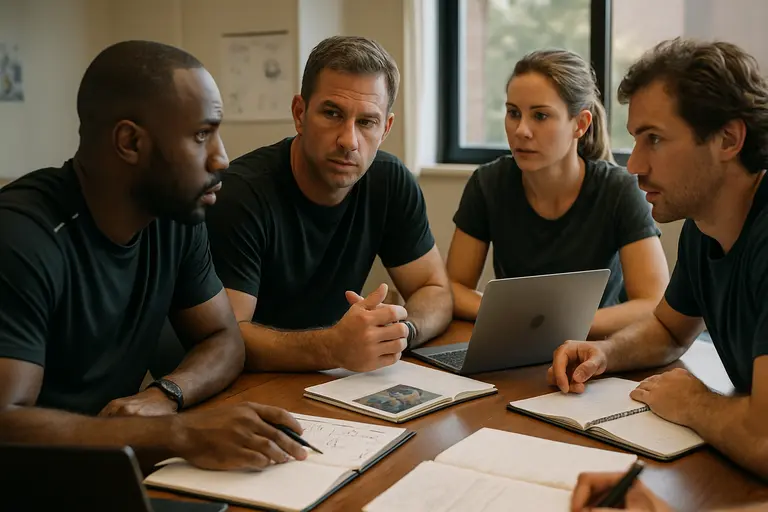
    Coach recording reaction and accuracy results beside athletes at practice

    The research points toward integration, not replacement. Athletes still need strength, conditioning, skill practice, rest, coaching, and medical oversight when symptoms appear. The mental-conditioning value of Visual-Cognitive Training is strongest when it is treated as a small, trackable part of practice.

    Start With The Sport Problem

    A good program begins with a specific performance question. Is the goalkeeper late identifying the passing lane? Is the hitter guessing too early? Is the point guard seeing the first defender but missing the second? Each question suggests a different drill.

    • For tracking: use sport balls, shuttles, or player movement patterns rather than unrelated dots whenever possible.
    • For decision speed: add opponent cues, spacing changes, or coach signals that match game timing.
    • For accuracy: record whether the athlete makes the right sport action, not only whether a screen score improves.
    • For safety: avoid stroboscopic or vision-limiting drills in uncontrolled spaces, crowded areas, or high-risk contact situations.

    Simple records help. Coaches can track reaction time, decision time, target accuracy, error type, and fatigue. They should also record whether gains remain after the novelty of the drill fades. A fast improvement during week one may reflect learning the test rather than gaining a durable sport skill.

    Match Training Load To The Athlete

    Research supplied for this report noted an inverted U-shaped relationship between years of sport experience and perceptual-cognitive training effectiveness, with the peak near 6.14 years of experience. Athletes with much less or much more experience showed smaller gains in that analysis, while age and training frequency were not significant moderators. This finding should not be used to exclude beginners or experts. It does suggest that training history may shape how much room an athlete has to gain from these drills.

    For youth athletes, the safest approach is conservative dosing and close observation. For experienced athletes, the value may come from fine-tuning sport-specific reads rather than repeating basic reaction tasks. For injured or post-concussion athletes, visual-cognitive work should not be framed as treatment unless directed by clinicians. Mental conditioning and health care are related, but they are not the same job.

    Readers comparing approaches may also find this related discussion of sports vision training evidence useful, especially where short-term gains and transfer limits are separated. For further resources, you can explore additional insights on a related network site such as Lili Vesteam.

    Visual-Cognitive Training In Mental Conditioning

    Visual-Cognitive Training belongs in mental conditioning when it is specific, measured, and honest about uncertainty. The best-supported direction is not magic vision work. It is practice that forces athletes to see relevant cues, decide under time pressure, and act with accuracy while coaches track whether those gains carry into sport tasks.

    Keeping Visual-Cognitive Training Evidence-Based

    Visual-Cognitive Training should be judged by the same standard as any other performance method: What changed, in whom, under what conditions, and for how long? A four-week badminton protocol, a six-week basketball warm-up, and a stroboscopic review across mixed sports are not interchangeable. They give useful clues, not universal rules.

    The most responsible path is to build small tests inside normal practice. Use sport-like cues. Compare pre- and post-training outcomes. Watch for fatigue, headaches, eye strain, dizziness, or changes in visual comfort. Stop drills that create unsafe movement or unusual symptoms. For athletes with visual complaints, performance staff should refer rather than improvise.

    The success story here is not a device or a single drill. It is the athlete who learns to read play a fraction earlier, the coach who measures progress without hype, and the community program that protects eye safety while building better decision-makers. That is a realistic role for this training: promising, practical in the right hands, and still limited by the evidence we have.

  • Sports Vision Training for Athletic Decisions

    Sports Vision Training for Athletic Decisions

    Sports Vision Training has moved from a niche performance idea into a serious mental conditioning topic because recent reviews and trials suggest it may help athletes respond faster, choose better options, and execute sport-specific skills with greater accuracy. The evidence is not uniform, and it does not support one magic drill for every player. What it does support is more practical: visual-cognitive work appears most useful when it is repeated over time, tied to real sport demands, and measured against outcomes that matter to coaches and athletes.

    What Sports Vision Training Can Support

    In athletic settings, vision is not just eyesight on a chart. It includes tracking moving objects, shifting attention, reading body cues, reacting under time pressure, and coordinating the eyes with hands, feet, or a racket. That is why multicomponent programs are gaining attention. They combine visual perception, decision tasks, reaction drills, and sport-like movement rather than asking an athlete to stare at a screen and hope the skill transfers to competition.

    Sports Vision Training And Decision Speed

    The strongest case for Sports Vision Training sits in time-dependent performance. A July 28, 2026 meta-analysis described large improvements in response-time outcomes for multicomponent visual-cognitive and perceptual-motor training batteries compared with controls. That finding fits with the way athletes describe high-speed play: the best performers often seem to see the next pass, swing, or defensive gap earlier than others. Science cannot prove that every trained athlete will gain that edge, but it can test whether reaction and decision measures improve under controlled conditions.

    Accuracy Matters As Much As Speed

    Speed without accuracy can become noise. The same 2026 research summary reported significant gains in accuracy-dependent outcomes for trained athletes. That distinction matters for community teams, school programs, and college athletes because a faster decision only helps if it leads to a better action. In racket sports, that might mean placing the shuttle into a target zone. In soccer, it may mean reacting to a cue without losing control of the ball. In baseball or softball, it may mean recognizing pitch information soon enough to guide the swing, though transfer to game statistics still needs careful study.

    Evidence From Reviews And Trials

    A 2025 meta-analysis in the Scandinavian Journal of Medicine & Science in Sports reviewed 27 randomized controlled trials involving 669 athletes and found that visual training significantly improved decision-making response time and sport-specific performance according to PubMed. For athletes and coaches, that is more persuasive than a single success story because randomized trials reduce some sources of bias. Still, the review grouped different sports, training tools, and outcome measures, so the result should be read as supportive evidence rather than a universal guarantee.

    Field-Tested, But Not Settled

    The research is no longer purely theoretical. It includes field-tested programs in athletes, including a 2026 randomized controlled trial of collegiate badminton players aged 18 to 25. In that four-week study, a wearable-prism training group showed significant between-group improvements in reaction time and target-zone accurate hits, while binocular visual function metrics were unchanged in the open-access trial. That is useful because it separates performance-related visuomotor outcomes from broader claims about changing the visual system itself.

    For mental conditioning staff, the badminton result carries a practical message: training may improve selected task outcomes without proving a wider eye-health effect. That distinction protects athletes from inflated promises. It also keeps the conversation grounded. A program can be worthwhile if it helps an athlete react and hit more accurately in a defined task, but that does not make it a medical treatment or a replacement for eye care.

    Designing Sport-Like Vision Work

    The best-supported approach is not random visual exercise. Recent reviews point toward naturalistic training, meaning drills that resemble the athlete’s real cues, timing, and movement demands. A goalkeeper tracking ball flight and shooter hips faces a different visual problem than a badminton player reading racket angle or a basketball guard scanning help defense. That is why Sports Vision Training should be planned around the sport’s actual perceptual load.

    Multicomponent Beats Isolated Guesswork

    A multicomponent plan may include object tracking, peripheral awareness, reaction timing, visual search, and decision tasks paired with movement. The value is not that each drill is special on its own. The value is that the training system asks the athlete to see, decide, and act under conditions that resemble practice pressure. For a practice-facing companion, our earlier report on sports vision training in athletic practice explains why short-term gains should be tracked before assuming match transfer.

    • Match the cue: Use balls, opponents, body movement, or sport-specific video rather than generic flashes alone.
    • Repeat across sessions: Research on stroboscopic approaches suggests multi-session programs show stronger effects than single exposures.
    • Measure more than reaction time: Track accuracy, decision quality, and performance tasks close to the sport.
    • Protect the eyes: Training should not encourage unsafe glare exposure, poor lighting, or play through visual discomfort.

    Community coaches often ask whether the equipment needs to be expensive. The research does not support a single answer. Some studies use wearable devices, stroboscopic lenses, or prisms; others use visual-cognitive tasks and sport-specific drills. Cost, staffing, athlete age, and access to trained supervision all shape whether a program is realistic. A small club may start with structured tracking and reaction drills, while a college program may test devices under closer monitoring.

    Implementation Barriers For Teams

    Team staff compare athlete reaction data after a controlled practice session

    The main caution is heterogeneity. Recent reviews report that effects vary by sport, training dose, athlete level, and outcome type. That means a program that helps collegiate badminton players over four weeks should not be assumed to help every youth soccer player, sprinter, or swimmer in the same way. Coaches should resist the urge to copy a protocol without asking whether the visual task matches the sport.

    Measurement Can Keep Expectations Honest

    Before adding Sports Vision Training to mental conditioning, teams need baseline measures. These can include reaction time, decision accuracy, target-hitting precision, visual search tasks, or coach-coded sport scenarios. The key is to test the same outcome before and after the program. If the athlete improves on a lab-style task but not on a sport-like task, that result should guide the next block of training.

    Methodological limits remain a real issue. Some studies have small samples, short interventions, limited blinding, or little follow-up. Far-transfer outcomes, such as official match statistics or long-term retention, are less common than short-term task scores. This does not erase the positive findings, but it does narrow what can be claimed. The evidence is encouraging for selected performance measures, not settled for every form of competitive success.

    There is also an eye safety angle. Athletes with new visual symptoms, headaches, double vision, eye pain, field loss, or difficulty seeing should not be placed into performance drills as a first response. They need appropriate clinical evaluation. Training for performance is separate from diagnosis or treatment. That boundary matters in youth sport, where athletes may feel pressure to hide symptoms to keep their spot.

    Readers interested in broader scientific findings can explore related topics through Harvard Science Review, a related site in the same network. The shared standard is simple: performance claims should rise or fall on the quality of the evidence, not on the appeal of the technology.

    Sports Vision Training In Athletic Performance

    The fair reading as of September 4, 2026 is that Sports Vision Training can be a useful part of mental conditioning when it is sport-like, repeated, measured, and presented honestly. It may help athletes improve response time, accuracy, and selected sport-specific tasks. It may be especially relevant in open-skill sports where the player must track moving objects, read opponents, and act under time pressure.

    The caution is just as clear. Benefits are not automatic, and not every study proves transfer to real competition. Teams should treat Sports Vision Training as a performance training tool with promising evidence, not as a cure-all. The strongest programs will likely be those that pair visual demands with the athlete’s existing technical and tactical work, then track whether the gains show up where the athlete actually competes.