
Digital Eye Strain is no longer just a library-week complaint for students who also train, travel, and study on screens. A randomized controlled trial published on July 13, 2026, tested whether a 12-week sports vision training program could reduce computer vision syndrome symptoms in 200 undergraduates who reported 6 to 8 hours of daily screen exposure, mainly from laptops and smartphones 2026 randomized trial. The findings are encouraging, but they should be read as early campus-based evidence rather than a proven fix for every student or athlete.
For coaches, athletic trainers, and student health teams, the study is useful because it treats screen strain as a performance and participation issue. Sore eyes, red eyes, headaches, difficulty focusing, and neck or shoulder discomfort can make coursework harder and can also make practice feel heavier. That does not mean every symptom has the same cause. It does mean campus programs may have a reason to test low-risk training routines, track symptoms, and refer students when problems persist.
What The 2026 Digital Eye Strain Trial Found
Digital Eye Strain Measures And Student Screens
The 2026 trial enrolled undergraduates aged roughly 18 to 25. Before the intervention, 74.5% of participants were classified as computer vision syndrome positive. That high starting point matters. The study was not testing a minor annoyance in a low-risk group; it was examining a student population with heavy screen exposure and a large symptom burden at baseline.
After 12 weeks, the sports vision training group showed larger symptom reductions than the control group. In males, prevalence fell from 76.0% to 44.0%. In females, it fell from 72.0% to 38.0%. The control group had smaller, non-significant declines. Specific symptoms also moved in a favorable direction in the training group: eye fatigue or soreness dropped by about 30 percentage points, red-eye symptoms by about 28 percentage points, and symptoms such as difficulty focusing, headache, and neck, shoulder, or back pain by roughly 23 to 30 percentage points.
What The Program Included
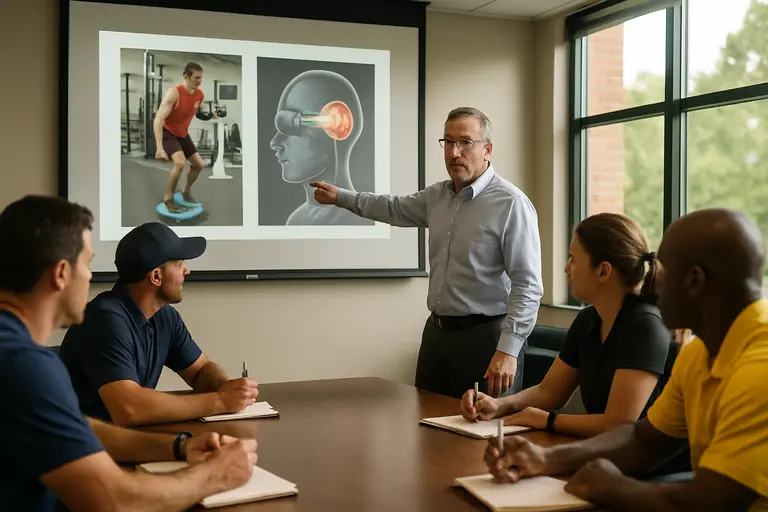
The intervention was not a single eye exercise. It combined eye-neck-shoulder-back movement routines, FitLight reaction tasks, stroboscopic visual training using SENAPTEC strobe glasses at 0.5 to 2 Hz, multi-target tracking paired with sport-based movement, and postural cool-down work. That mix is relevant for sports settings because it connects visual attention, reaction, posture, and movement rather than asking students to stare at a near target in isolation.
All participants completed the 12-week trial, and the training group had about 85% compliance for home tasks, defined as completing at least 80% of prescribed after-school vision drills. That is a strong adherence signal for a student intervention. Still, the controlled trial setting may not match a busy campus semester with exams, travel, part-time work, and team commitments.
Why Digital Eye Strain Training May Matter For Campus Athletes
Sports Framing Without Overclaiming
The sports angle is not that vision drills magically make tired eyes healthy. The more cautious reading is that structured visual and movement tasks may help some students tolerate screen-heavy routines better, at least over 12 weeks. For student-athletes, this sits at a practical intersection: classroom screens, scouting video, messaging apps, recovery sessions, and training environments all compete for visual attention.
Community programs should resist turning one trial into a universal protocol. The study population was undergraduates, not middle-school athletes, older adults, or students with diagnosed eye disease. It measured symptom changes over a defined period. It did not prove long-term durability, nor did it establish which part of the multi-component program produced the strongest effect.
The trial also raises a fair implementation question: who delivers the sessions? A campus recreation coach, athletic trainer, optometrist, or research staff member may each bring different skills. Equipment such as reaction lights and stroboscopic eyewear can add cost and supervision needs. Low-tech posture and movement drills are easier to scale, but the study tested a combined package, so separating the effect of each component would require further research.
Screen Habits Still Need Attention
The students in the trial reported 6 to 8 hours of daily screen use. That exposure profile is familiar on campuses, but the study does not mean training can cancel unlimited screen time. Breaks, ergonomics, lighting, blink habits, and workload planning remain practical discussion points for student support teams. A related campus health discussion on student eye strain strategies gives a similar caution: trial-tested methods can help, yet evidence has limits outside the study setting.
For those interested in campus health topics across our network, including Li Live Steam, the key message is balance. Student success stories are strongest when they include both performance ambition and basic safety checks. A player who reports eye pain, repeated headaches, or persistent focusing trouble should not be told simply to train harder.
Where Blink Training Fits The Evidence
A Different Mechanism Than Reaction Drills
A separate trial of a smartphone-based blink training application reported measurable improvements in signs and symptoms of dry eye disease among digital device users, including reduced ocular discomfort and dryness blink training trial. This line of research differs from sports vision training. It focuses more on blink behavior and ocular surface comfort than on reaction tasks, tracking, or visual-attentional adaptation.
That distinction is useful for students. Redness, dryness, fatigue, and focusing difficulty can overlap in daily experience, but they may not share the same driver. A blink app may be easier to distribute than a supervised sports vision station, yet it should not be treated as a substitute for clinical evaluation when symptoms are severe, sudden, or persistent.
Practical Value And Limits
The appeal of app-based training is access. Students already use phones, and behavioral prompts may fit study sessions better than scheduled lab visits. The caution is equally clear: app engagement can fade, self-reported symptoms can be influenced by expectation, and dry eye signs do not explain every screen-related complaint.
For Digital Eye Strain, that distinction should guide campus pilots. A student with mainly dryness and discomfort may need different support than a student whose main issue is visual fatigue during fast screen-to-field transitions. The available research supports testing structured options, not assuming one pathway for all students.
How Schools And Teams Can Read The Findings
Evidence Strength In Plain Terms
The 2026 sports vision training trial was field-tested in a student population and used a randomized controlled design. That makes it more informative than a simple testimonial. The completion rate and reported compliance strengthen confidence that the program was feasible under study conditions. The symptom reductions are also large enough to deserve attention from campus wellness and sports medicine teams.
But the evidence is not settled. The intervention had several parts, making it difficult to identify the active ingredient. The trial lasted 12 weeks, so long-term maintenance remains uncertain. The research also does not prove that reduced screen symptoms translate into better grades, fewer missed practices, or improved game performance. Those outcomes would need separate testing.
- Reasonable use: pilot a supervised program, track symptoms before and after, and keep referral pathways clear.
- Risky use: market drills as a guaranteed treatment or tell students to ignore ongoing symptoms.
- Best fit: students with heavy screen exposure who can commit to structured sessions and honest reporting.
- Key barrier: staff time, equipment access, and consistency during exam periods or travel weeks.
Safety And Referral Boundaries
Student wellness programs should avoid diagnosing from a questionnaire alone. If symptoms include significant pain, sudden vision changes, persistent headache, marked light sensitivity, or symptoms that do not improve with reasonable screen and training changes, the safer step is referral to an eye care or medical professional. Training trials can inform prevention and support, but they do not replace clinical care.
That message matters in sports culture, where athletes may minimize discomfort to keep their place. A cautious coach can still be performance-minded: better symptom tracking, better sleep routines, and better referral decisions can help students stay in school and sport without turning every eye complaint into a drill assignment.
Digital Eye Strain In Student Training Decisions
The most useful takeaway from the recent student trials is not that one program solved screen strain. It is that structured visual training, movement work, and blink-focused behavioral tools are being tested in populations that look more like real campuses than old lab models did. The sports vision program reduced reported computer vision syndrome prevalence over 12 weeks in undergraduates with heavy screen exposure. The blink app study suggests that simple behavioral tools may also improve dry eye-related signs and symptoms.
For student-athletes, the decision point is practical: build support that is measurable, modest in its claims, and easy to stop or refer when symptoms do not fit the expected pattern. Digital Eye Strain deserves that kind of evidence-first response. It affects how students study, recover, and train, but the science still needs longer follow-up, clearer dosing, and better tests of which students benefit most.