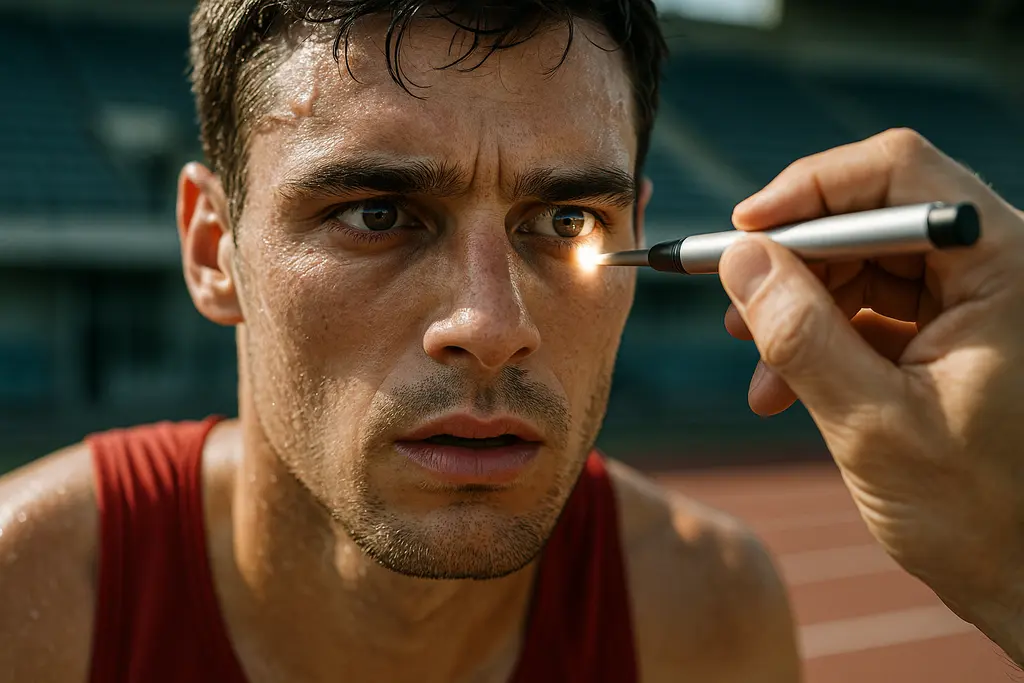
Recent eye movements glaucoma research suggests that glaucoma can affect more than static visual field maps. Studies reviewed in the ophthalmic literature describe changes in saccades, fixation, smooth pursuit, and optokinetic responses. For athletes, the interest is practical: sport often depends on fast gaze shifts, stable fixation, and reliable visual search under pressure. The evidence is not yet a sideline screening tool or a replacement for a clinical glaucoma workup, but it adds useful detail to how visual function may change with the disease.
What Eye Movements Glaucoma Research Shows
Glaucoma is usually discussed through intraocular pressure, optic nerve structure, retinal nerve fiber layer loss, and visual field testing. Eye movement studies add another layer: they ask how people use remaining vision while searching, reading, tracking, or responding to moving scenes. A peer-reviewed review reports that glaucoma patients have shown abnormalities across several oculomotor measures, including saccades, fixation stability, smooth pursuit, and optokinetic nystagmus review of eye movement abnormalities.
Eye Movements Glaucoma And Saccade Timing
Saccades are rapid gaze shifts from one target to another. In sport, a saccade may move attention from a defender to a passing lane, from a pitcher’s hand to the ball, or from a lane marker to a nearby competitor. In glaucoma research, delayed saccadic latency has been reported, meaning the initiation of these gaze shifts can take longer. A PubMed-indexed study specifically reports delayed saccadic eye movements in glaucoma, with relevance to how quickly gaze can be redirected between visual targets delayed saccadic movements.
The phrase eye movements glaucoma should not be read as a new diagnostic label. It is a research framing that connects optic nerve disease with measurable behavior during visual tasks. The available evidence indicates association, not a simple cause-and-effect rule for every patient or every sport setting.
Fixation Stability And Visual Search
Fixation stability refers to how steadily the eyes hold a target. A shooter, archer, golfer, goalkeeper, or batter may depend on short periods of steady gaze, even while the body is moving. Research notes describe impaired fixation stability in glaucoma, which may matter because visual field loss can make it harder to keep a target in a useful part of vision. The same body of research also reports reduced saccade rate during visual search tasks and altered saccade dynamics, including lower amplitude and velocity in some patient groups.
These findings fit a cautious interpretation: people with glaucoma may adapt their scanning behavior, and some movement patterns may reflect disease severity or visual field loss. Yet study tasks are often controlled laboratory tasks, not full-speed competition. That gap matters for athletes because sport adds head movement, fatigue, glare, opponent motion, equipment constraints, and time pressure.
Why Eye Tracking Could Matter For Athletes
For athletes, eye movements glaucoma research is most relevant as a window into functional vision. Standard clinical tests remain central, but they do not always describe how a person scans a court, follows a ball, or stabilizes gaze during fast play. Eye tracking may help researchers measure how glaucoma changes visual search strategy, especially in situations where one eye has more visual field loss than the other.
Binocular Vision And Uneven Field Loss
Glaucoma does not always affect both eyes equally. Uneven visual field loss can change how the two eyes contribute to a combined view of the world. Research notes on asymmetrical field loss suggest that distinct eye movement patterns can appear when binocular vision is affected. This has potential sports relevance because many sports rely on fast spatial judgments: judging ball flight, avoiding collisions, locating teammates, and estimating the distance to a moving target.
Still, it would be premature to claim that a specific eye movement pattern predicts athletic performance or injury risk in glaucoma. The supported claim is narrower: eye movement measures may reveal functional effects that are not fully captured by a static field plot alone.
Sport-Specific Demands
Different sports stress the visual system in different ways. Tennis, baseball, cricket, soccer, hockey, and basketball require rapid gaze shifts and peripheral awareness. Precision sports may place more demand on fixation stability. Endurance sports can add lighting changes, sweat, dehydration, and fatigue. These factors could influence eye tracking results even in athletes without glaucoma, so sports vision researchers need careful comparison groups before applying findings to athlete care. For broader science reporting across the same network, readers can explore Harvard Science Review for related research-focused coverage.
Diagnostic Promise And Current Limits
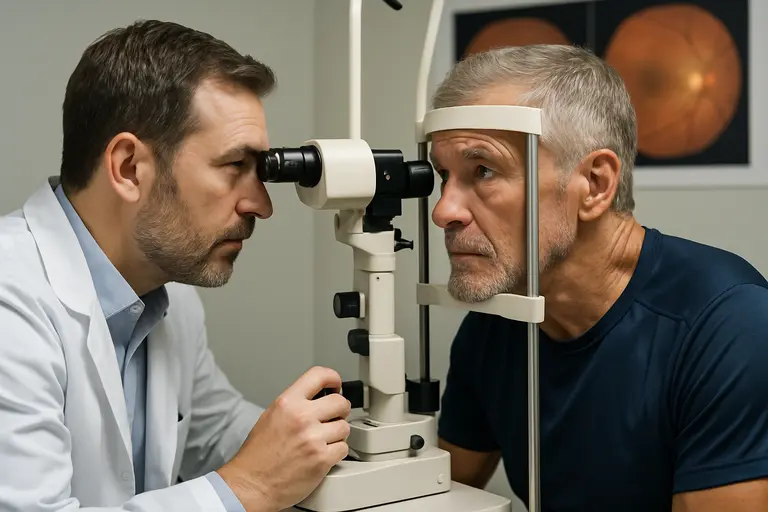
Eye tracking perimetry and automated oculomotor assessment are being studied because they may reduce some burdens of conventional visual field testing. In principle, eye tracking can record where a person looks, how quickly they respond, whether fixation is stable, and how visual search changes across a task. Research notes include reports of eye movement perimetry and automated devices that measure fixation, smooth pursuit, and saccadic movements.
Why Screening Claims Need Caution
Screening performance depends on study design, patient mix, disease severity, device calibration, and the chosen reference standard. A method that performs well in moderate or severe glaucoma may not perform as well in early disease, where the clinical stakes are often highest. Preprint results or early feasibility studies should be treated as provisional until peer review, replication, and independent validation are available.
This is especially relevant in sport. A false sense of reassurance could delay appropriate eye care, while a false positive could create anxiety or unnecessary restriction. Eye tracking should be viewed as a research and monitoring tool under study, not as a stand-alone diagnosis. Athletes with symptoms such as new field loss, halos, eye pain, or unexplained changes in vision need evaluation by an eye-care professional rather than performance testing alone.
Implementation Barriers
Several practical barriers remain. Eye tracking systems require calibration, stable recording conditions, and interpretation standards. Contact lenses, glasses, dry eye, lighting, head motion, fatigue, and attention can influence results. In field sport settings, helmets, visors, sweat, and sunlight may interfere with measurement. Cost and access also matter; a device that works in a research lab may not be ready for routine use in athletic departments or community clinics.
- Supported now: glaucoma has been associated with altered saccades, fixation, pursuit, and optokinetic responses in research settings.
- Not settled: whether eye tracking can reliably detect early glaucoma across broad populations and sport environments.
- Practical next step: use findings to guide research questions, not to replace clinical diagnosis or treatment decisions.
Eye Movements Glaucoma In Sports Settings
The most useful reading of these findings is measured. Eye movements glaucoma findings point toward a functional dimension of the disease: how a person moves the eyes through the visual world after optic nerve damage has altered visual input. That dimension matters for athletes because performance often depends on rapid sampling of space, steady target fixation, and efficient scanning.
At the same time, athlete-specific evidence remains limited. Most current findings come from clinical or controlled visual tasks rather than competitive environments. The next research step is not to market a quick screening shortcut, but to test whether eye movement measures add meaningful information alongside standard glaucoma assessments. Until that evidence is stronger, coaches and athletes should treat visual changes seriously, maintain regular eye care when glaucoma is known or suspected, and avoid using sports vision drills as medical decision tools.