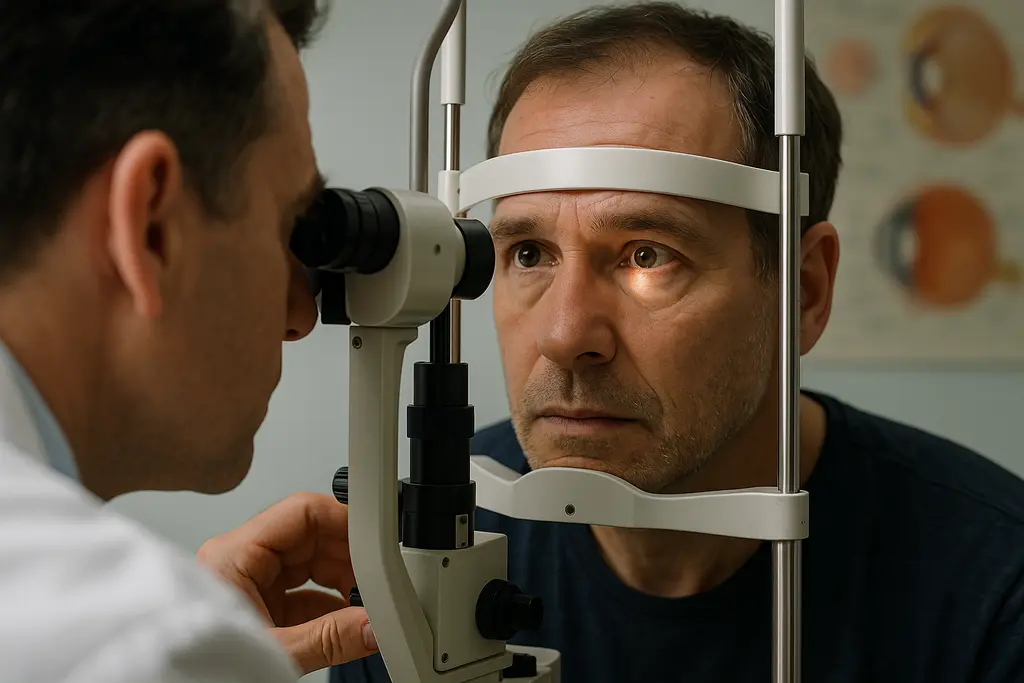
normal tension glaucoma is a clinically challenging form of glaucoma because optic nerve damage and visual field loss occur even when intraocular pressure is within the normal range, as summarized by NCBI Bookshelf. That definition matters for athletes and coaches because sports vision discussions often focus on acuity, reaction time, and glare, while gradual peripheral field loss may receive less attention until performance or safety is affected.
The pressure question is not trivial. Intraocular pressure remains central in glaucoma care, but the research notes for this topic point to a wider set of biological mechanisms: vascular dysregulation, genetics, oxidative stress, neurodegenerative processes, cerebrospinal fluid dynamics, glymphatic dysfunction, axonal transport problems, lamina cribrosa biomechanics, mitochondrial dysfunction, and autoimmune factors. These are not competing headlines so much as overlapping hypotheses. The current evidence supports a multifactorial view, not a single proven pathway that explains every case.
Why Normal Tension Glaucoma Challenges Pressure Models
Normal Tension Glaucoma And Vascular Signals
One of the most discussed mechanisms is vascular dysregulation. The optic nerve head depends on sufficient blood flow, and impaired circulation has been proposed as one contributor to damage in some patients. Research summaries associate systemic hypertension, nocturnal hypotension, and migraines with this condition. These associations do not prove that a given athlete with migraine symptoms has glaucoma, or that blood pressure variation alone causes optic nerve injury. They do suggest that eye pressure is not the only biological variable worth studying.
For sports vision science, the vascular angle is relevant because athletes may experience wide shifts in hydration status, sleep timing, exertion, recovery routines, and cardiovascular load. The available research does not establish sport participation as a cause of NTG. A cautious interpretation is narrower: if optic nerve vulnerability can involve blood flow regulation, then clinicians and researchers may need to think beyond static eye pressure readings when studying visual health in highly active populations.
Pressure Across Tissue Boundaries
Cerebrospinal fluid dynamics are another proposed mechanism. The research notes describe abnormal CSF pressure or flow around the optic nerve as a possible influence on optic nerve health. This concept is scientifically plausible because the optic nerve is not isolated from the rest of the central nervous system. It sits at an anatomical interface where eye pressure, tissue structure, and pressure around the nerve may interact.
Still, this remains an area where interpretation should be careful. The notes support the idea that CSF dynamics may affect the optic nerve, not that a routine sport setting can predict those dynamics. For athletes, the practical implication is not self-monitoring CSF pressure. It is that unexplained visual field changes, especially if persistent, should be treated as a clinical issue rather than a performance slump.
Cell Stress Pathways And Optic Nerve Susceptibility
Oxidative Stress, Mitochondria, And Retinal Ganglion Cells
Another mechanism under study is oxidative stress. Elevated oxidative stress can damage retinal ganglion cells, the cells whose axons form the optic nerve. A peer-reviewed review on pathogenesis and genetics discusses oxidative stress, genetic factors, and immune-related hypotheses in NTG biology NTG pathogenesis review. In the research provided, mitochondrial dysfunction is also listed as a possible contributor because retinal ganglion cells need energy to maintain normal function and axonal transport.
This does not mean antioxidant supplements or any single nutritional approach can be presented as a treatment for normal tension glaucoma. The evidence described here supports a biological mechanism, not a consumer intervention. For athletes, that distinction matters. Sports culture often moves quickly from mechanism to product. A cell stress pathway may guide research, but it does not automatically validate a supplement, recovery device, or training change for glaucoma prevention.
Axonal Transport And Structural Load
Axonal transport dysfunction is another proposed route to retinal ganglion cell injury. In simple terms, optic nerve fibers need to move essential molecules along their length. If that transport system is disrupted, retinal ganglion cells may become more vulnerable. The lamina cribrosa, the structure at the optic nerve head where nerve fibers exit the eye, is also noted in the research as a possible site of biomechanical susceptibility. A structurally vulnerable lamina cribrosa could make some optic nerves less tolerant of stress, even when intraocular pressure is not elevated.
For sports vision assessment, this reinforces the difference between measuring eyesight and assessing the visual pathway. A player may read a chart well while still having early field defects. That is one reason glaucoma is not well captured by sideline vision checks, ball-tracking drills, or standard acuity-only screening. Those tools may be useful for performance questions, but they are not substitutes for eye care when optic nerve disease is suspected.
Genetic And Immune Clues In NTG Research
Genes Are Signals, Not Full Explanations
Genetic factors appear in the research notes through genes such as OPTN, TBK1, and MYOC. The notes also state that approximately 2% of cases are attributed to these mutations, pointing to a hereditary component while leaving most cases unexplained by those known variants. That pattern fits the broader theme: normal tension glaucoma appears to involve multiple pathways rather than one dominant cause.
This matters for families of athletes because genetic language can sound deterministic. The supported point is more limited. Some mutations are linked with NTG, but the presence, absence, or family history of disease requires clinical interpretation. Genetic information may help research and, in select clinical contexts, risk assessment. It should not be used casually to label an athlete’s future vision risk without proper medical evaluation.
Autoimmune And Neurodegenerative Hypotheses
The research notes also include autoimmune factors, where immune responses targeting retinal ganglion cells have been proposed, and neurodegenerative processes, because NTG shares some similarities with diseases such as Alzheimer’s. These ideas are scientifically important because they place optic nerve damage within broader nervous system biology. They also remain hypotheses with limits. Similarity to neurodegenerative disease does not mean NTG is the same disease, and proposed immune involvement does not make it appropriate to infer diagnosis from symptoms alone.
What This Means For Athletes And Screening
Peripheral Vision And Field Awareness
Visual field loss is central to NTG, and field awareness is central to many sports. Court spacing, cycling safety, combat-sport defense, skiing line choice, and team-sport scanning all depend on more than sharp central vision. The research does not say that athletes are uniquely prone to normal tension glaucoma. It does support the idea that optic nerve damage can occur even when eye pressure readings do not appear high, which makes a pressure-only mental model too narrow.
From a sports vision perspective, the key risk is false reassurance. A normal eye pressure reading is useful information, but it is not the entire picture described by the research. Optic nerve evaluation and visual field testing are different types of information. Athletes who notice persistent field loss, halos, unexplained visual gaps, or changes that affect play should not treat those signs as training noise. This is not a diagnosis; it is a reason to seek professional assessment.
Practical Barriers To Better Detection
Implementation remains difficult. Many athletes are screened for concussion-related visual symptoms, refractive error, or visual skills, but glaucoma-focused testing may not be part of routine sport performance programs. Cost, access to eye specialists, time away from training, and lack of symptoms in early disease can all limit detection. NTG also complicates the story because pressure readings may not trigger concern if considered alone.
A cautious screening approach would not claim that every athlete needs advanced glaucoma testing at every visit. A more defensible position is that sports medicine teams should understand that normal pressure does not exclude optic nerve disease. Referral decisions should be based on symptoms, family history when known, clinical findings, and the judgment of qualified eye care professionals.
Normal Tension Glaucoma Research Priorities For Sport
normal tension glaucoma research is moving toward a model that includes vascular regulation, tissue biomechanics, cell stress, genetics, CSF-related pressure relationships, and possible immune or neurodegenerative mechanisms. That is scientifically useful, but it is not yet a single explanatory framework that can guide sport-specific prevention strategies. The finding is best viewed as field-building evidence: it widens the research map while leaving many clinical questions unsettled.
For athletes, the message is measured. NTG is not simply a high-pressure eye disease in disguise. It may reflect optic nerve susceptibility across several biological systems. Yet none of the mechanisms described here supports self-diagnosis or a sport-based treatment plan. The most defensible action is awareness: protect routine eye care, take visual field symptoms seriously, and avoid assuming that clear central vision or normal intraocular pressure tells the full story.