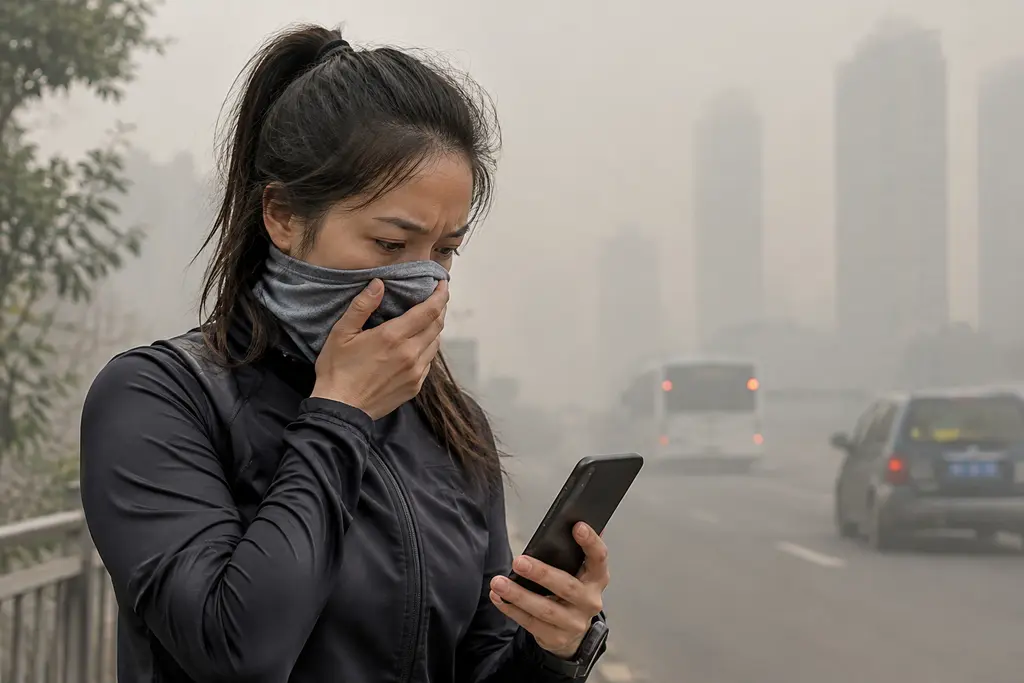
For runners logging miles near traffic, coaches planning youth practices, and older adults trying to protect sight, pollution glaucoma risk is now part of a wider eye-safety discussion. Recent research has linked long-term exposure to fine particulate matter, especially PM2.5, with higher glaucoma risk. The harder question is whether pollutants directly speed glaucoma progression after diagnosis. The evidence is still less direct there, so the safest reading is cautious: pollution may be a risk factor worth reducing where possible, but it is not a stand-alone explanation for an individual person’s disease course.
Glaucoma is not one condition with one cause. Eye pressure, age, vascular factors, genetics, and access to eye care all shape risk and outcomes. Environmental exposure adds another layer, especially for communities near heavy traffic, industrial emissions, wildfire smoke, or poor indoor air. As a sports journalist who often hears athletes talk about training conditions, I see the practical side: people do not breathe averages. They breathe what is on the road beside them, on the field after a smoke event, or in the gym with poor ventilation.
Pollution Glaucoma Risk: What Recent Data Show
Pollution Glaucoma Risk In The 2026 Review
A 2026 systematic review and meta-analysis assessed 18 observational studies through December 2025 and found that long-term PM2.5 exposure was associated with higher glaucoma risk. The pooled relative risk was 1.12, with a 95% confidence interval from 1.06 to 1.18, meaning the combined estimate suggested about a 12% higher risk across the exposure contrast studied systematic review. That result is meaningful at a population level, but it does not prove that PM2.5 caused glaucoma in any one person.
The review’s strength is that it brought multiple studies together rather than leaning on a single dataset. Its limit is the same limit shared by much of the current literature: the included studies were observational. Researchers can adjust for many factors, but unmeasured differences in neighborhood, health status, occupational exposure, smoking, or health-care access can still influence results. That makes pollution glaucoma risk a serious research signal, not a final causal answer.
What The UK Biobank Adds
The UK Biobank analysis followed about 481,113 participants for roughly 12 years and found that each interquartile-range increase in PM2.5, about 1.07 micrograms per cubic meter, was associated with a 6% increase in odds of developing glaucoma. Nitrogen dioxide, nitrogen oxides, and PM2.5 absorbance also showed weaker but significant associations, while PM10 did not remain significant after adjustment UK Biobank cohort.
That pattern matters because PM2.5 is small enough to be studied as a marker of fine-particle exposure. The UK Biobank findings also show why broad claims can mislead. Not every pollutant behaved the same way after adjustment, and the size of the association was modest. For clinicians, patients, and community advocates, the useful message is not panic. It is that long-term exposure may deserve attention alongside better-established glaucoma risks.
Reading Observational Evidence Without Overreach
Risk Is Not The Same As Progression
The topic of glaucoma progression needs careful language. Many studies in the recent research base examine incident glaucoma, prevalence, or glaucoma-related vision loss rather than measured worsening among people already diagnosed. Progression usually requires repeated eye-pressure data, optic nerve imaging, visual field testing, or clinical follow-up over time. Without those details, a study can show higher risk of glaucoma in polluted areas without showing that pollution made existing glaucoma worsen faster.
This distinction matters for athletes and active adults because behavior changes can become distorted when risk is presented as certainty. A cyclist with glaucoma should not assume one ride near a busy road changed their optic nerve. A parent should not assume a smoky practice caused a child’s later eye findings. At the same time, it is reasonable for teams and families to reduce avoidable exposure, especially during high-pollution days, because air quality affects broader respiratory and cardiovascular health as well.
Possible Mechanisms Remain Under Study
The research notes point to proposed pathways such as oxidative stress, inflammation, mitochondrial dysfunction, vascular changes, and transport across blood-ocular barriers for some pollutants. These mechanisms are biologically plausible, but plausibility is not the same as proof in patients. Glaucoma involves the optic nerve, and many pathways could influence optic nerve vulnerability. The field still needs studies that connect measured exposure, eye-specific biomarkers, and long-term clinical outcomes.
For readers interested in additional resources, SGTT provides thorough coverage of sports safety, including tips on minimizing pollution exposure.
How Pollutants Could Matter For Athletes And Communities
Outdoor Training Brings Uneven Exposure
Community athletes often train where space is available, not where air is ideal. A high-school sprinter may run beside a congested arterial road. A masters rower may train under wildfire haze. A soccer club may use fields close to major traffic because those are the fields the community can access. These settings do not mean glaucoma will develop, but they can create repeated exposure to pollutants studied in population research.
The equity issue is hard to miss. People with fewer resources often have less control over housing, commuting routes, indoor filtration, and access to specialty eye care. If pollution glaucoma risk continues to be supported by stronger research, prevention cannot depend only on individual choices. Cleaner air policy, safer field siting, school air-quality plans, and routine eye-care access would all matter.
Indoor Air Deserves Attention Too
Outdoor PM2.5 gets much of the research attention, but exposure is not limited to roads and smokestacks. Indoor air can reflect outdoor pollution that enters buildings, along with local sources such as poor ventilation. The available research in the prompt centers mainly on ambient pollution and selected persistent pollutants, so it would be too strong to claim that a specific gym environment changes glaucoma progression. Still, for athletes with asthma, dry eye, or general eye irritation, cleaner indoor air may support comfort and safer training.
Community sports groups that share practical eye-safety resources, including SGTT, can help keep the message balanced: reduce exposure where practical, do not turn pollution data into a personal diagnosis, and encourage regular eye care for people at risk.
Practical Eye Safety Steps Around Pollution Exposure

Low-Risk Exposure Planning
There is no evidence from the supplied research that a mask, supplement, lens, or training change prevents glaucoma. Practical steps should therefore be framed as exposure reduction and general safety, not glaucoma treatment. On days with poor air quality, teams can consider moving endurance work indoors if cleaner indoor air is available, shifting practice away from heavy traffic corridors, or reducing unnecessary outdoor exertion during smoke events. These steps may be especially relevant for older adults, people with known glaucoma, and athletes with respiratory conditions.
For eye comfort, wraparound sports eyewear may reduce wind, dust, and debris exposure during training, though that is different from proving protection against glaucoma. Coaches can also build air-quality checks into weather decisions, just as they already consider heat, lightning, and field conditions. The goal is not to cancel activity at every imperfect reading. The goal is to avoid repeated high-exposure situations when safer options exist.
- For athletes: track training locations, haze, traffic exposure, and any eye discomfort without assuming cause.
- For coaches: use air-quality information in the same safety conversation as heat and hydration.
- For patients with glaucoma: keep scheduled eye exams and discuss environmental concerns with an eye-care professional.
- For communities: advocate for cleaner practice sites, safer school environments, and access to vision screening.
What Not To Infer From The Studies
Current evidence does not show that pollution control replaces pressure-lowering therapy, optic nerve monitoring, visual field testing, or clinician-directed care. It also does not show that a person can identify glaucoma progression by sensing polluted air. Glaucoma can progress without symptoms, which is why examinations remain central. Pollution research should sharpen public-health thinking, not encourage self-diagnosis.
The same caution applies to heavy metals and persistent pollutants. The research notes describe signals involving blood lead, cadmium, PFAS, and glaucoma-related outcomes, but some findings were not statistically significant after correction for multiple testing. These results may help shape future studies, but they are not enough to guide individual medical decisions.
Pollution Glaucoma Risk And Patient Safety
The strongest supported message is measured: long-term PM2.5 exposure has been associated with higher glaucoma risk in recent observational research, including a 2026 meta-analysis and a large UK Biobank cohort. Evidence about direct glaucoma progression remains thinner than evidence about risk or incidence. That gap should guide how clinicians, coaches, patients, and public-health leaders talk about the findings.
For the athlete trying to protect performance and long-term sight, the practical path is steady rather than dramatic. Train smart on poor-air days, use available air-quality information, protect eyes from dust and debris, and keep regular eye-care appointments if you have risk factors or a diagnosis. Pollution glaucoma risk belongs in the conversation, but it should sit beside proven clinical monitoring, not replace it.