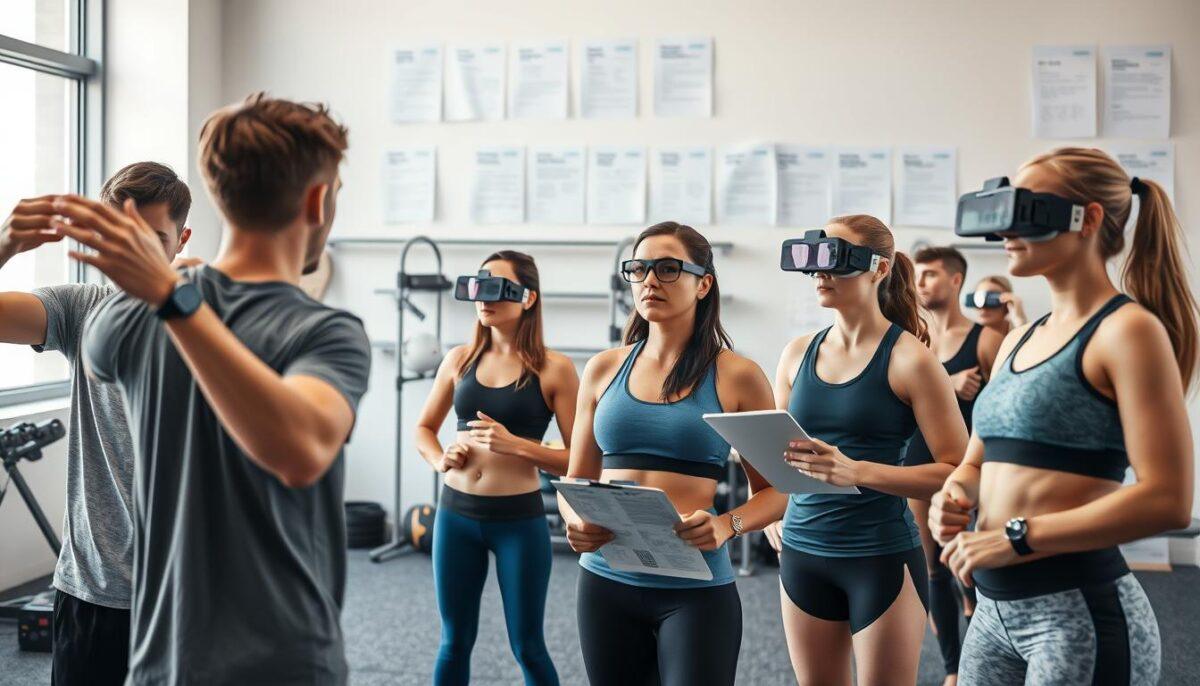
The world of sports is always looking for a quick fix. We love stories that promise easy solutions to hard problems.
In sports vision, we hear tales of eye exercises and special lenses. These stories are told with the excitement of a late-night TV ad.
After years of research, I’ve found the truth is not a superhero story. Myths about eye dominance spread fast, like a rumor in the locker room. Hope is a strong drug.
This article aims to debunk these myths. We’ll explore why these stories keep popping up, even when science says no.
We’ll also learn how to check if any performance claims are true. We’ll focus on vision training evidence from real studies.
Think of me as your guide to the real science behind sports. We’ll sort out what’s real from what’s just an illusion.
Myth 1: General Eye Exercises Boost Performance | Fact: What Controlled Trials Show
Imagine buying a gym membership that only helps you lift the brochure. That’s what many generic vision training programs promise. They claim to be like brain-training apps for your eyes. You’re asked to follow dots, converge your gaze, and track patterns.
But, the truth is harsh. Eye exercises alone don’t improve your sport skills as much as you’d hope. They’re more like a party trick. You might get better at the exercise itself, but not in your sport.
Controlled trials are key to debunking myths. Study after study shows no big, sport-specific performance boosts. The gains are in the drill, not in real competition. It’s like mastering a video game that’s not your real job.
We all want to believe in direct eye strength training. But, science says no. Your visual system is complex, not just muscles to bulk up. The real magic happens when it works with your brain and body together.
Why does this happen? General exercises lack the real-world context. They don’t match the mental load, decision-making, or motor responses of your sport. You might get better at following dots in a clinic. But, that skill doesn’t help with judging a spinning curveball.
Let’s look at the difference between what’s promised and what science shows. The table below highlights the key contrasts that controlled trials consistently reveal.
| Aspect | The Promise (The Myth) | The Reality (What Science Shows) |
|---|---|---|
| Transfer to Sport | General eye drills create broad, transferable visual skills that boost performance in any sport. | Improvements are highly task-specific. Getting better at a convergence test doesn’t improve batting average or free-throw percentage. |
| Measurable Gains | You will see dramatic improvements in on-field reaction time and accuracy. | Gains are typically limited to the exact test or exercise practiced. Real-world performance metrics remain unchanged. |
| Underlying Principle | The eyes are muscles that can be trained like biceps, leading to direct performance enhancement. | Vision is a perceptual-cognitive system. Improvement requires integrated training that combines perception, decision, and action. |
| Evidence Base | Supported by testimonials and before-and-after anecdotes. | Fails in controlled, randomized trials with proper control groups and sport-specific outcome measures. |
The data is clear. Spending time on generic eye workouts is not worth it. It’s like buying a fancy hammer when you need a full toolkit. We all want a simple solution. But science says we need specific training.
So, what should you do instead? Look for training that connects the visual task directly to the motor skill. Practice reading the pitch *as* you initiate your swing. Work on tracking a defender *while* planning your pass. That’s where the real performance dividends are paid. Don’t just exercise your eyes. Train your entire perception-action loop.
This is the first of many eye exercise myths we’ll debunk. The path to better performance isn’t found in isolation. It’s built through integrated, task-specific practice. Controlled trials have spoken. It’s time we listened.
Myth 2: Colored Lenses Guarantee Better Performance | Fact: Sport and Light Specific Effects
The myth of colored lenses as a performance guarantee is a mix-up. It confuses looks with real function. It’s like thinking a lucky jersey boosts your skills.
The truth is in photobiology, not magic. Some tints can improve contrast in very specific lighting. For example, a yellow or amber lens might help see a tennis ball better in a dull sky. It’s not a vision boost, but a filter for that situation.
Think of it like wearing dark sunglasses at night. It doesn’t improve your vision; it reduces it. The wrong colored lenses can actually hurt your performance. The idea of a single color for all sports is just marketing magic.
Science shows the effect of lenses is sport and light specific. A baseball player facing the sun has different needs than a golfer in twilight. There’s no one-size-fits-all tint for performance.
This myth falls apart when we see the truth. It thinks our eyes are just a simple camera. But our eyes and brain work together in a complex way. A filter changes what we see, but it doesn’t change how we process it.
So, do colored lenses have a place? Yes, as a specialized tool for certain conditions. But they’re not a magic fix for every athlete in every sport. It’s a strategic choice, not a must-have.
Choosing the right tint means knowing your sport’s visual needs. Is it bright? Low-contrast? Fast? The right tool depends on the answer. Believing in a one-size-fits-all solution is like using a hammer for every job. Sometimes, you need a screwdriver.
The bottom line is clear. Colored lenses are filters, not superpowers. Their value comes from specific contrast gains in certain lights. Anything sold as a universal vision enhancer is just a mood ring for your eyes. Trust the science, not the sparkle.
Myth 3: Blue Light Glasses Improve On-Field Reaction Time | Fact: Comfort vs. Performance
Imagine a product meant for late-night scrolling becoming a must-have for reading fast pitches. This is the story of blue light glasses, a classic case of “solution drift.” They’ve moved from desk accessory to sports gear, despite the science not backing it up.
These glasses were made to solve a real problem: eye strain from screens. They help reduce eye fatigue and discomfort. They’re a comfort tech, not a performance enhancer.

The claim that they improve vision and reaction time is not supported. A thorough review found no evidence. Your eyes work differently in sunlight than they do on a screen.
Some athletes believe in them, but it’s likely a placebo effect. They might feel better before the game. But this doesn’t mean they can see better or react faster.
Don’t mix up comfort with performance. Blue light glasses might make scrolling easier, but they won’t help you track a fast ball. They solve a problem caused by screens, not by sports.
This myth shows us to be careful with quick fixes like reaction gadgets. Knowing what a tool really does is key. For real support in sports vision, check out this analysis of proven tools. Feeling good is one thing; performing better is another.
Myth 4: Any Light Board Makes Athletes Faster | Fact: Dose Response and Transfer Tests
Step into any top gym today, and you’ll see athletes hitting a light board like it’s Whac-A-Mole. It looks like science, with beeps and wires. This is the latest trend in training, promising faster reactions.
But the truth is less exciting. It’s hidden in the science, not the hype. The flashy reaction gadgets promise quick results, but real training needs two tough tests.
The first test is the Dose-Response Test. Does regular practice on the device improve your skills on that device? If not, it’s just a game, not training. Many programs fail this test, focusing on random flashes.
The second test is the The Transfer Test. Does mastering the light board help in your sport? Sadly, many gadgets fail here. Athletes excel on the device but struggle in real games.
True transfer is rare. Athletes often shine on reaction gadgets but falter in their sport. The devices promise much but deliver little.
Before buying another gadget, ask tough questions. Show me the data on dose-response and transfer to sports. Without solid answers, it’s just a pricey game. Your training needs real science, not just lights and sounds.
Myth 5: Peripheral Vision Can Be Expanded Without Head Movement | Fact: Strategy Over Structure
The idea that you can widen your peripheral vision is a myth. It confuses a brain problem with an eye problem. Athletes are often told they can widen their eyes like a camera lens. But this is not true.
The real goal is not to see more vaguely. It’s to know exactly what to ignore and what to focus on.
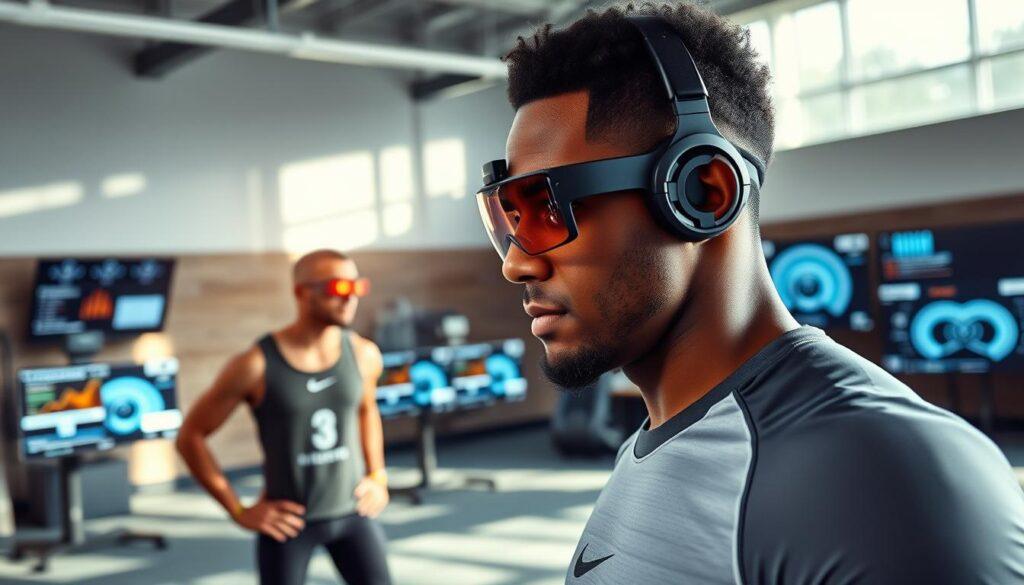
You can’t widen your retinal field through exercises. Your visual field is fixed. But your attention is not. It can be trained.
The main issue for most athletes isn’t a narrow field of view. It’s how they allocate their attention.
Elite marksmen don’t rely on wide peripheral vision. Their secret is focusing all their attention on the target. They ignore everything else.
Your brain is the limit, not your eyes. Training should improve your brain’s software, not try to change your eyes. This is what credible vision training evidence shows.
| Aspect | Myth: The Hardware Focus | Fact: The Software Optimization |
|---|---|---|
| Core Goal | Physically “see more” in the periphery without head movement. | Improve the speed and accuracy of deciding where to look next. |
| Training Focus | Eye muscles and fictitious field-widening drills. | Attention control, pattern recognition, and reducing “conscious clutter.” |
| Real-World Outcome | Frustration and wasted time, as the biological limit is quickly hit. | Faster decision-making, better anticipation, and calmer performance under pressure. |
Effective training focuses on quick, strategic looking. It’s not about staring at blinking lights. It’s about sport-specific drills that improve your focus.
A point guard practices reading the defender’s hips, not their sneakers. A goalkeeper drills tracking the shooter’s plant foot, not their entire body.
The evidence shows that strategy is key. It’s not about seeing more, but about where you focus. This is the real truth.
This principle is a cornerstone of vision training evidence. It moves us from magical thinking to cognitive science. Next time someone promises to expand your field of view, ask for data on attention allocation.
What Has Credible Support: Quiet Eye, Task Specific Occlusion, Depth Cues Plus Motor Learning
Forget the gimmicks; credible support exists for a few highly specific visual strategies. The science isn’t endorsing vague ocular workouts. It’s backing targeted, integrated, context-rich practice.
Let’s break down what actually gets a nod from peer-reviewed journals.
The “Quiet Eye”: Visual Discipline, Not Gymnastics
First up is Quiet Eye training. This has nothing to do with moving your eyes faster. It’s about holding your gaze steadier and longer on a critical target.
Think of a basketball player fixated on the front rim before a free throw. Or a baseball hitter locking onto the ball’s seams as it leaves the pitcher’s hand. It’s that split-second of supreme attention. This is visual discipline, not visual gymnastics.
The evidence shows that longer, more stable “quiet eye” periods correlate with better performance under pressure. It’s training the brain’s focus, not the eye’s muscles.
Next is task-specific occlusion. This involves strategically limiting vision during practice to force reliance on other cues.
Imagine a soccer goalie practicing saves with one eye patched. Or a tennis player working on returns while wearing glasses that blur peripheral vision. The goal isn’t to see less forever. It’s to enhance the processing of the visual information that remains.
This method builds robustness. When full vision returns, the athlete’s system is more efficient. It’s purposeful constraint, not general blurring.
The Gold Standard: Depth Cues Wired to Movement
The most powerful vision training evidence comes from integrating depth cues with motor learning. Here, vision work is inseparable from the sport-specific action.
It’s not staring at a flashing light. It’s a golfer practicing a putt while focusing on reading the green’s subtle break. It’s a volleyball player working on a block while tracking the setter’s hands and the hitter’s approach simultaneously.
This approach treats vision and movement as one system. You practice the skill while acutely attending to the relevant depth and motion cues. This is where training transfers from the lab to the field.
| Method | Core Principle | What It’s Not | Sport Example |
|---|---|---|---|
| Quiet Eye Training | Sustained, focused gaze on a critical target before action. | Rapid eye movement drills or general tracking exercises. | A free-throw shooter staring at the hoop’s front rim. |
| Task-Specific Occlusion | Strategically limiting vision to enhance processing of remaining cues. | Wearing blurry glasses all day or general vision degradation. | A baseball catcher doing one-eyed receiving drills. |
| Depth Cues + Motor Learning | Practicing the physical skill while attending to specific visual/spatial cues. | Isolated vision games divorced from the actual sport movement. | A quarterback reading coverage while practicing a throwing motion. |
See the pattern? The support is for specificity and integration. These methods directly counter the broad eye exercise myths we’ve dismantled.
They don’t promise a magic expansion of peripheral vision. They improve how you use the vision you already have within your sport’s context. That’s the real vision training evidence you can build on.
Red Flags for Junk Science: Missing Control Groups, Tiny Samples, No Preregistration
Before you spend money on a “vision-boosting” gadget, learn to spot junk science. It’s like being a myth detector. You need to know the difference between real science and fake marketing.
Three big red flags can tell you if research is real or just marketing. Let’s look at each one.
Red Flag #1: The Missing Control Group. This is a big mistake in science. If a study only tests people using a device, its results don’t mean much.
Why? Without a control group, you can’t compare results. It’s like saying your lucky socks won the game because you wore them and scored. Maybe you just played well. A control group helps isolate the effect being tested.
Red Flag #2: The Tiny, Convenient Sample. Be wary of studies with just a few participants, like all from the same team. A dozen people isn’t enough for real research.
Small samples are easily influenced by chance and bias. They can’t represent a larger group. It’s like comparing your backyard weather to the whole state’s. Which would you trust?
Red Flag #3: No Preregistration. This shows the study might be biased. Real scientists plan their study and methods before starting. This way, they can’t change the study to fit the results.
Junk science often finds what it’s looking for because it doesn’t say what it’s looking for upfront. It’s like a magician who only shows the trick after picking your card. Preregistration makes science transparent and trustworthy.
| Red Flag | Junk Science Tell | Credible Science Sign | Real-World Analogy |
|---|---|---|---|
| Missing Control Group | Tests only the treatment group; no comparison baseline. | Clearly defined control group (placebo/sham/standard practice). | Claiming a rain dance works because it eventually rained. |
| Tiny Sample Size | Fewer than 20 subjects, often from a non-random pool. | Adequate, statistically-powered sample; participants recruited independently. | Polling only your family to predict a national election. |
| No Preregistration | Hypothesis and analysis plan are flexible or hidden post-study. | Study protocol registered on a public database (e.g., ClinicalTrials.gov). | A chef deciding what a soup “is” only after tasting it. |
Find these three flaws in a product’s “evidence,” and it’s just hype. You don’t need a PhD to spot them. Just know where to look for the fake.
This check saves you time, money, and frustration. Now, you can analyze evidence instead of just believing claims.
Safer Ways to Experiment: A/B Trials and Track Repeatable Metrics
Exploring vision training doesn’t need a PhD, but it does require a scientist’s mindset. You’re not waiting for a treat like a lab rat. Instead, you’re the main researcher of your own skills. The goal is to move from hope to skeptical experimentation.
Imagine if a product’s promises were like a magic 8-ball. Would you bet on “Reply hazy, try again”? Probably not. Let’s explore two ways to get clearer answers.
This method is the top choice for self-testing. It’s simple yet powerful. You don’t just try something new. You compare it directly to your old routine.
Here’s how it works. Use the new method for a week (Phase A). Then, go back to your old way for a week (Phase B). After that, switch back to the new method for another week (Phase A again). This A-B-A structure is key.
Pro tip: blind it if you can. Have a teammate or coach give you the special glasses without telling you which pair is which. After each session, write down your thoughts. Did you feel a consistent difference you could actually pinpoint? Or was it just a placebo effect?
Method 2: Track Repeatable, Objective Metrics
“Feel” is unreliable. Data is a trusted friend. Ditch vague feelings. Choose a simple, consistent drill.
Pick one thing. Use a reaction timer app on your phone. Or do a drill where a partner drops a ball and you catch it. Ten reps of a specific shooting drill from the same spot. Measure your baseline performance before you start the new method. Then measure during, and again after.
Plot the numbers on a chart. Is the trendline showing real improvement? Or is it just random noise bouncing around your normal average? This turns stories into solid evidence.
The table below shows how to use these two strategies in your training.
| Method | Core Action | What You’re Testing | Key Insight It Provides |
|---|---|---|---|
| A/B Trial | Alternate between new (A) and old (B) methods in a set sequence. | Subjective feel and consistency of effect. | Distinguishes a real perceptual change from a one-time placebo or coincidence. |
| Objective Metrics | Use a fixed drill to collect numerical data before, during, and after. | Actual, quantifiable performance change. | Reveals if the intervention moves the needle on a specific skill or just creates a false sense of progress. |
| Combined Power | Run an A/B trial while tracking your objective metric drill. | Both subjective experience and hard data in unison. | Offers the most complete picture. Does the thing that *feels* better also produce measurably better results? |
This approach is your bullshit detector. It turns you from a consumer of claims into a curator of your own capability. You stop guessing and start knowing. Or at least, you start having a much more informed hunch.
Action Plan: Build a Science First Toolkit and Partner With Eye Care Pros
Your vision training cart is empty of magic beans. Good. Now, let’s fill it with tools that actually work.
First, create a toolkit based on solid concepts. Focus on understanding, not just buying stuff. Learn the Quiet Eye technique. Make sure any drill proves it works.
Run your own tests on the field. This way of thinking is your starting point.
Second, find a qualified partner. Don’t rely on self-proclaimed experts. Work with a behavioral optometrist or sports vision ophthalmologist. They must do a thorough exam.
They can tell if your colored lenses or blue light glasses are helping or not. They check your visual equipment.
Your goal is to combine their knowledge with your sports smarts. This partnership is supported by real science, not just marketing. It turns mystery into measurable results.
