Category: Sports Vision Science

  • Sports Vision Training Evidence Across Sports

    Sports Vision Training Evidence Across Sports

    Sports Vision Training has moved from a hopeful coaching add-on to a testable sports science question: can integrated visual, perceptual, and decision drills improve how athletes perform under pressure? The strongest recent evidence points to short-term gains in response time and accuracy across several sports. The harder question is whether those gains carry into match statistics, batting lines, or competition outcomes.

    As a community advocate, I read this evidence with two voices in mind: the athlete who feels quicker after structured practice, and the coach or parent who asks whether that feeling has been measured well. Both matter. Athlete success stories can motivate teams, but science has to separate training-task improvement from proven sport transfer. That distinction is where the current evidence is most useful.

    What Sports Vision Training Showed In Recent Reviews

    The most direct recent evidence came from a systematic review and meta-analysis that searched the literature through October 21, 2025. It included 17 studies of multicomponent training in healthy athletes, with 14 studies included in the meta-analysis. Compared with control groups, integrated training showed large improvements in response time, with a standardized mean difference of −2.67 and a 95% confidence interval from −3.82 to −1.52. It also showed large improvements in response accuracy, with a standardized mean difference of −1.18 and a 95% confidence interval from −1.85 to −0.51, as reported in the integrated training meta-analysis.

    Sports Vision Training Outcomes And Heterogeneity

    Those effect sizes sound strong, but the review also reported high between-study heterogeneity, especially for time-dependent outcomes, with I² around 92%. In plain language, the studies did not all look alike. They varied by sport, athlete level, training method, task design, and probably by how close the drills were to real sport demands. That does not erase the finding, since sensitivity analyses still supported improvements in response time and accuracy. It does mean the field should avoid treating one training recipe as settled science.

    A cautious reading is that Sports Vision Training is best supported for improving trained or closely related perceptual-motor outcomes over short intervention periods. The evidence is thinner when the outcome is a full competitive performance statistic, where fitness, coaching, confidence, opponent quality, and chance all mix with visual skill.

    Field Trials Across Racket, Combat, And Team Sports

    Smaller sport-specific studies help show where the research is heading. In a mid-2026 randomized controlled trial, 26 collegiate badminton players aged 18 to 25 completed four weeks of wearable vision training using Automatic Dual Rotational Risley Prisms for 15 minutes twice weekly. The study reported significant improvements in reaction time and target-zone hit accuracy, while binocular visual function did not change significantly. That pattern is interesting because it suggests the gains may have been tied more to task execution and perceptual-motor timing than to a broad shift in baseline binocular function.

    Training Dose And Sport Specificity

    A 2025 study of professional kumite karate national team athletes reported improvements in visual acuity and reaction times after a four-week vision training program. A separate field experiment in young volleyball players in Iraq included 42 participants across sports vision, combined, and traditional training groups. The sports vision and combined training groups had significantly better displacement time under pressure than the traditional group, with p = .003. Those groups also showed reductions in cognitive and somatic anxiety and increased self-confidence, with p values below .001 for the psychological variables.

    These are promising signals, especially for athletes whose sports demand fast tracking, anticipation, and timed movement. Yet they remain field-tested interventions with limited sample sizes. They do not prove that every club, school, or academy will see the same gains. The most defensible use is targeted integration: drills that resemble sport demands, measured before and after, with coaches watching whether practice gains survive under fatigue and competition pressure.

    For more insights into carefully interpreting technical claims, readers can explore related reporting at Illinois Energy, where the same network emphasizes cautious examination of evidence.

    Where Transfer To Competition Remained Uncertain

    One of the clearest cautionary examples came from college baseball. A pre-registered randomized placebo-controlled intervention in 2020 studied 24 NCAA Division I players. The dynamic vision training program included stroboscopic, anticipatory timing, and eye-quickness drills. It significantly improved launch angle and hit distance during batting practice, with reported effect sizes around d = 0.74 and d = 0.70. It did not significantly change game statistics. That split matters. Batting practice is closer to sport than a lab reaction-time task, but it is still not the same as live competition.

    A later baseball study, dated November 27, 2025, examined 45 highly trained male players aged 15 to 19. It tested associations between visual performance batteries and batting indicators. Out of 210 test and performance indicator combinations, only 17, or about 8.09%, were statistically significant before adjustment, and only about 1% showed moderate evidence by Bayesian analysis. The authors concluded that visual test performance was a weak predictor of batting performance in that population, according to the baseball visual tests study.

    This does not mean visual training is useless for baseball or other sports. It means testing well on isolated visual tasks should not be treated as proof that an athlete will hit better, score more, or win more. A related site article on Sports Vision Training in practice reaches a similar cautious point: short-term gains appear more supported than durable match transfer.

    How Coaches Can Judge Implementation Barriers

    Team staff planning short vision drills on a clipboard before training

    Training time is one barrier. The research base often used two to three sessions per week over four to eight weeks. For a school team, that competes with strength work, technical drills, recovery, class time, and travel. If a program adds visual drills without removing anything else, fatigue and adherence may become practical limits. The current research summary did not provide clear cost data, so claims about affordability should be treated as unverified unless a program tracks equipment, staff time, and athlete availability.

    Measurement is another barrier. Response time and accuracy can be tested before and after an intervention, but coaches should decide in advance what counts as meaningful progress. For a badminton group, that might be target-zone hit accuracy. For volleyball, it might be displacement time under pressure. For baseball, batting-practice metrics may be useful, but game statistics need a larger sample and many controls. Without a pre-planned outcome, teams risk seeing what they hoped to see.

    • Best-supported use: short blocks of integrated drills that resemble the sport task and track response time or accuracy.
    • Less certain use: predicting match or season performance from isolated visual test scores.
    • Research gap: durability of gains after training stops, especially across different ages and competitive levels.
    • Practical safeguard: compare athletes with their own baseline and avoid treating one device or drill as universally effective.

    For community programs, the fairest message is hopeful but measured. If athletes enjoy the work, if the drills are safe within ordinary training supervision, and if coaches collect clear pre-post measures, the approach can be studied locally without overclaiming. It should not replace sport skill coaching, medical care, or evidence-based conditioning.

    Sports Vision Training Evidence Across Sports

    The evidence through September 22, 2026 supports a restrained interpretation. Integrated visual and perceptual training has repeatedly shown short-term improvements in reaction-related and accuracy-related outcomes. The strongest quantitative review found large effects, while also showing major heterogeneity. Sport-specific trials in badminton, karate, volleyball, and baseball gave useful signals, but not a single universal answer.

    The athlete success story I trust most is not the one promising instant performance change. It is the one where a player trains a sport-like visual task, improves on a defined measure, and then keeps testing whether that gain appears under real pressure. Sports Vision Training may help some athletes sharpen specific performance components, but the current science still asks coaches, parents, and clinicians to keep expectations tied to the measured outcome.

  • Sports Vision Training: What Meta-Analyses Show

    Sports Vision Training: What Meta-Analyses Show

    Sports Vision Training has moved from a sideline curiosity to a research-heavy performance topic, especially after several systematic reviews and meta-analyses published from 2024 through 2026. The best reading of the evidence is neither dismissal nor hype. Multi-session visual-cognitive and perceptual-motor programs can improve reaction-time and accuracy outcomes in controlled sport tasks, while claims about real match performance still need tighter proof.

    Sports Vision Training Evidence Since 2024

    Sports Vision Training Signals From Reviews

    The recent evidence points toward measurable short-term gains, mainly in tasks that ask athletes to read visual cues quickly and respond with speed or accuracy. A July 28, 2026 meta-analysis in the research notes reported very large improvements in response time and large improvements in response accuracy for integrated training batteries compared with controls. These programs were not simple eye exercises in isolation; they combined visual-cognitive or perceptual-motor drills with sport-specific tasks.

    That distinction matters for coaches and athletes. A drill that looks like sport may carry more training value than a generic screen task, but it also becomes harder to separate true transfer from repeated task practice. The available reviews suggest that Sports Vision Training is most plausible when the visual demands resemble the athlete’s competitive setting: tracking, scanning, timing, and deciding under pressure.

    What Stroboscopic Work Adds

    Stroboscopic visual training uses intermittent visual occlusion, often through eyewear or screen-based methods, to make athletes process incomplete visual information. A meta-analysis conducted by Beijing Sport University and affiliates, with searches up to August 19, 2025 and publication in early 2026, reported an overall sport-related performance benefit with Hedges’ g = 0.79, a 95% confidence interval from 0.39 to 1.19, and high heterogeneity at I² = 84.3% in a stroboscopic review. Multi-session programs showed larger effects than single exposures, with stronger signals for perceptual-cognitive tasks and visuomotor reaction-time tasks.

    The same evidence base argues against assuming that one exposure helps performance right away. Research notes on long-term stroboscopic training reported average gains of about 5.7% in response accuracy and 5.3% in faster response time for sport-specific tasks, while acute single-session exposures could initially reduce performance. For athlete safety and fair testing, that finding matters. A tool that briefly limits visual input should not be judged only by the first exposure, and it should not be treated as proof of match readiness.

    Why Test Design Can Exaggerate Gains

    Learning Effect And Task Overlap

    The clearest caution from the 2025 and 2026 evidence is the learning effect. If an athlete trains on a digital task and is later tested on a very similar task, a large gain may reflect practice with that task, not a wider change in game vision. In 33 randomized controlled trials with 1,048 participants up to May 8, 2025, studies with high training-test similarity reported much larger effects than studies without high similarity; reaction-time effects were SMD = 2.66 in the high-similarity group versus 0.50 in the lower-similarity group, and visual-attention effects were SMD = 1.65 versus 0.07 in the learning-effect meta-analysis.

    For a community coach, that is not a minor statistical footnote. It changes how results should be read. If the training task and outcome test share the same cues, timing, display, and response pattern, improvement can be real but narrow. It may show that the athlete learned the test. It does not automatically show better anticipation against an opponent, cleaner ball tracking under fatigue, or smarter decisions in a crowded field of play.

    From Lab Scores To Match Demands

    Another limitation is the gap between laboratory or practice outcomes and competitive match outcomes. A 2024 review summarized in the research notes examined 126 empirical studies and found that only 15 reported outcomes derived from competitive matches. Most improvements came from laboratory measures, controlled drills, or practice tasks rather than official game statistics.

    This does not make the work useless. Lab and practice tests can help researchers isolate visual attention, multiple object tracking, search behavior, and response timing. They can also give clinicians and coaches a way to track change without the noise of match tactics, teammates, opponent quality, and playing time. But athlete success stories need stronger links to game data before anyone claims that a vision program directly changes wins, goals, batting average, or defensive stops.

    Practical Reading For Coaches And Clinicians

    Coach and clinician reviewing athlete performance notes beside a training court

    Training Dose And Athlete Burden

    Protocol details in the research notes suggest that stroboscopic programs often performed best when they ran for one to six weeks, used one to two sessions per week, and kept each session near 10 minutes. Reported parameters included duty cycles below 10 Hz and opaque phases below 50%. These details are useful, but they should be treated as early guidance rather than a universal prescription. The studies varied, and heterogeneity was often high.

    Implementation also has practical limits. The research notes do not provide consistent cost data, staffing models, or long-term adherence findings. Schools, clubs, and clinics would need to decide who supervises sessions, how progress is tracked, and whether the outcome test is different enough from the training task to mean anything. Examining various athlete-performance resources throughout our network is enriched when visiting the Mengo network resource for broader sports coverage, yet program decisions should rest on sport-specific evidence and professional judgment.

    Safety, Eye Health, And Expectations

    Eye health and safety deserve a cautious tone. Stroboscopic methods temporarily reduce visual information by design, and the research notes reported that acute exposures could produce initial decrements before longer multi-session gains appeared. That makes timing, supervision, and task selection central. Testing an athlete in a controlled drill is not the same as asking that athlete to perform in an unpredictable setting.

    For athletes already working with a clinician, trainer, or vision specialist, the more defensible question is not whether Sports Vision Training is “proven” in every setting. It is whether a given program uses sport-like tasks, runs long enough to learn from repeated sessions, measures outcomes beyond the trained task, and avoids overstating what short-term scores mean. For readers who want a related evidence explainer on this site, our evidence primer covers similar cautions about retention, transfer, and sport-specific dosing.

    • Stronger signal: multi-session, sport-like drills with separate outcome testing.
    • Weaker signal: single-session exposure or training and testing on nearly identical digital tasks.
    • Missing piece: more match-derived outcomes and longer follow-up periods.

    Sports Vision Training In 2026

    What The Evidence Supports Now

    As of September 16, 2026, the fairest reading is that Sports Vision Training can improve selected visual-cognitive and sport-specific performance outcomes, especially when training spans multiple sessions and matches the perceptual demands of sport. The evidence is field-tested in the sense that many studies involve athletes and sport tasks, but it is not fully settled at the level of competitive match transfer.

    The practical standard should be higher than a dramatic before-and-after score. Coaches should ask whether the result came from a randomized design, whether the control group was credible, whether the outcome differed from the training task, and whether follow-up showed the gain lasted. Athletes deserve tools that are tested honestly, not promises built from narrow measures. Recent meta-analyses give reason to study and use these programs carefully, while reminding the sports community that better vision-task scores are only one part of performance.

  • How to Build a Vision Screening Program with Core Eye Tests

    How to Build a Vision Screening Program with Core Eye Tests

    Let’s cut through the fog, shall we? Building a vision screening protocol for your team isn’t about playing optometrist.

    It’s about being the savvy gatekeeper who spots the red flags before they become red tape. Think of it like a smoke detector, not a fire investigation.

    This toolkit is your guide to a system that catches the obvious and guides the uncertain. It protects everyone involved—without you needing a medical degree.

    We’ll blend cold, hard data from the latest studies with street-smart logistics. Why? Because missing a visual issue isn’t just a clinical oversight. It’s a career-derailer.

    Ready to stop guessing and start assessing with purpose?

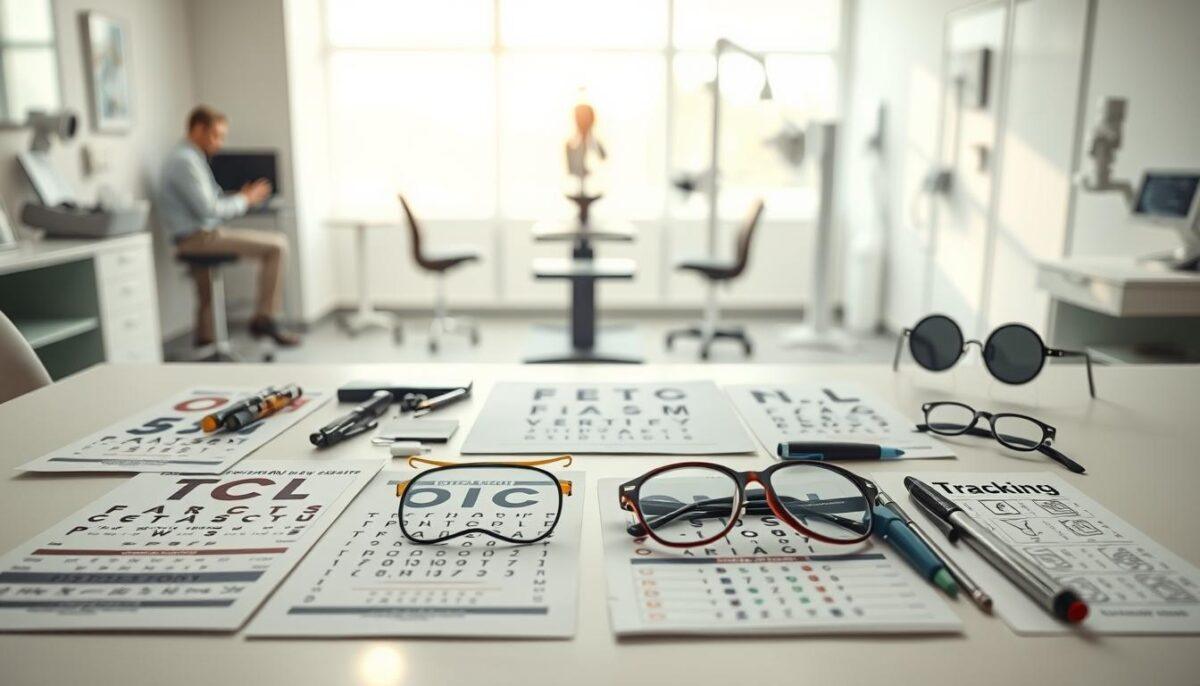
    What to Include: Distance and Near Charts, Contrast Checks, Tracking, and Convergence Screens

    If you think a vision test is just reading letters from far away, you’re way off. Today’s vision screening toolkit is much more advanced. It checks how well your eyes work in real life, not just at one distance.

    Begin with the basics, but make them better. You need charts for both far and near vision. Life is full of close-up tasks, like reading on screens or playing sports. Near point checks help find problems that far charts miss.

    Then, test how well you see different shades of gray. This is key for spotting objects in changing light. Contrast charts go beyond simple black and white letters.

    Move on to tests that really challenge your eyes. These include tracking moving objects and quick eye movements. A convergence screen checks if your eyes work together well.

    Research shows this mix of tests is very effective. Tools like Cambridge Crowded Acuity Cards and photoscreeners catch more issues than one test. For more on these tools, check out these comprehensive assessment kit materials.

    Think of it as a detailed vision scan. It’s not just a simple check. It’s a thorough test of your visual abilities before you even start.

    Simple Dynamic Tasks: Fixation, Pursuit, and Saccade Timing with a Metronome

    Static charts are like theory exams. But dynamic tasks are like the real driving test for the visual system. This part of the vision screening toolkit tests how well you perform in real situations.

    We’re checking three key visual skills: fixation, pursuit, and saccades. These are like the main parts of a car engine. If one part doesn’t work, the whole car stutters.

    A focused clinical setting showcasing a vision screening session for dynamic fixation vision testing. In the foreground, a diverse group of professionals in smart business attire are attentively observing a patient performing fixation tasks on a digital screen that displays moving targets. The middle layer illustrates a metronome ticking steadily, symbolizing the timing aspect of the exercises. In the background, soft laboratory lights illuminate the room, creating a calm and professional atmosphere. The angle captures both the patient's concentration and the practitioners' engaged expressions, emphasizing the importance of tracking visual responses. The overall mood is one of professionalism and supportive collaboration in vision assessment.

    Fixation is like your visual anchor. Can the athlete focus on a single point without wobbling? Or does their eye shake like a bad internet connection? It’s not about willpower. It’s about how well their muscles work together.

    Pursuit is smooth tracking. Move a pen slowly back and forth in front of them. Their eyes should follow smoothly, like a camera on a smooth shot. But if their eyes jump around, it’s like a video buffering. This shows how well their eyes work together to track moving targets.

    Then, there’s saccades, quick eye movements between two points. Ask them to look back and forth between your hands. Time it with a metronome.

    Using a metronome isn’t about being strict. It’s about finding out if their eyes can keep up with a rhythm. If their saccades are slow or off, it’s like their computer is slow.

    This focus on dynamic fixation and teamwork isn’t just practice. Tools like the Pediatric Vision Scanner (PVS) measure binocular fixation quality. They help spot strabismus and amblyopia. Research shows that checking how eyes fixate together is key to finding big problems.

    These tasks are quick, simple, and very telling. They show not just what an athlete sees, but how their visual system works under pressure. It’s the difference between having a map and knowing how to use it.

    Lighting and Distance Setup: How to Avoid Bad Readings

    Let’s talk about the silent saboteur of every good screening program: the environment. Your vision screening toolkit is only as reliable as the room you use it in. Think of it this way—you wouldn’t calibrate a race car’s engine with a greasy wrench in a dusty garage. So why trust vision data collected in a subpar setting?

    The old computing axiom holds brutal truth here: garbage in, garbage out. You can follow the world’s most elegant protocol to the letter. But if you run it in a dimly lit hallway with glare dancing across the chart, your precious data isn’t just inaccurate. It’s fiction.

    Standardization isn’t a suggestion; it’s your new religion. Start with distance. The manual says 3 meters for a reason. This isn’t arbitrary. It’s physics. An inch closer or farther changes the visual angle, skewing the acuity score. Three meters isn’t a ballpark figure; it’s a mandate. Use a tape measure. Mark the floor. Make it ritual.

    Then, there’s light. This isn’t about seeing the chart. It’s about seeing it perfectly. You need consistent, bright, shadow-free illumination. Think museum lighting for a priceless painting, not the moody ambiance of a romantic dinner. Shadows create false contrast. Glare induces squinting. Both corrupt the data.

    The consequence of a sloppy setup isn’t a minor oops. It’s the difference between identifying a athlete who genuinely needs a specialist and sending someone on a wild goose chase because of a false alarm. That wastes their time, the doctor’s time, and erodes trust in your entire process. This isn’t nitpicking. It’s the foundation of validity.

    Factor Ideal Setup Common Pitfall Impact on Data
    Testing Distance Exactly 3 meters, floor marked “About” 10 feet, estimated Alters visual angle, invalidates acuity norms
    Lighting Quality Even, shadow-free, ~500 lux Dim, or single source causing glare Creates false contrast issues, induces strain
    Chart Condition Clean, flat, no reflections Wrinkled, glossy, or sun-facing Adds variable difficulty, not pure vision
    Data Integrity High. Results reflect true ability. Low. Results reflect environment. Leads to erroneous referrals or missed issues

    So, how do you lock this down? Your first defense is your logbook. When a result looks off, your first question must shift from “What’s wrong with the athlete?” to “Was the setup different today?” Meticulously note the lighting and distance in your data logs for every single session. This turns your records from a simple scorecard into a diagnostic tool. Consistent setup is the unsung hero. And detailed data logs are its sworn testimony.

    Recording and Privacy: Secure Logs, Baselines, and Change Alerts

    Writing down screening results on a napkin is not secure. In the world of athlete health, your data logs are very important. They tell a story that should stay private.

    The first screening is like the start of a story. It sets the baseline. Every test after that adds to the story. The real magic is in the change.

    A small drop in performance on your contrast charts is important. It’s like a warning light on a dashboard. It shows up before the athlete feels anything. This is why a vision screening toolkit is so valuable.

    You need a system to track these changes. Paper files get lost, and shared spreadsheets are a privacy risk. You need secure, digital data logs that are easy to search. This is more than just storing data; it’s creating a living history.

    A modern, secure data log interface focused on vision screening analysis. In the foreground, a sleek computer monitor displays colorful, organized graphs and charts related to vision test results, glowing softly with a blue and green color scheme. A professional data analyst, dressed in business attire, is intently reviewing the data, emphasizing collaboration and detail. The middle ground features a clear workspace with paper records and a privacy policy document, considering the importance of secure data tracking and privacy. In the background, a softly lit office environment with shelves filled with medical files and a potted plant, creating a calm and focused atmosphere. The overall mood conveys professionalism, safety, and the significance of data integrity in health care settings.

    Privacy is key. These results are Protected Health Information (PHI). Treating them lightly is wrong and dangerous. You need a secure system, not a post-it note. Use platforms that follow HIPAA rules, like CognitoForms. For more on setting this up, check out an open-source HIPAA compliance guide.

    The best part of a good system is automation. Set up alerts for big changes from a person’s baseline. If their score drops 15%, or their contrast sensitivity changes, you’ll get a notification. This turns your vision screening toolkit into a 24/7 watchful eye. It helps you make quick, informed decisions while keeping the athlete’s story safe.

    Referral Criteria: Vision Below Threshold, Persistent Symptoms, or Concussion History

    Think of your referral criteria as the tripwire in a heist movie—it’s silent, precise, and when it’s triggered, everyone knows it’s time for the experts.

    This isn’t about playing doctor. It’s about triage. Your vision screening toolkit has done its job by flagging an anomaly. Now, you need bright lines, not gray areas.

    Let’s start with the hard numbers. The pros, like the American Association for Pediatric Ophthalmology and Strabismus (AAPOS), draw clear thresholds. For a child over four, visual acuity worse than 0.2 logMAR is a call to action. Hyperopia above +3.5 diopters or astigmatism over 1.5 diopters? That’s your tripwire.

    One study found 26.5% of screened children had a visual problem. In adults and athletes, that percentage doesn’t magically shrink. The stakes just change shape—from classroom performance to split-second reaction times.

    Test / Signal Threshold for Referral Notes / Rationale
    Distance Visual Acuity > 0.2 logMAR (worse than 20/32) A clear deficit in resolving detail, the core of functional vision.
    Significant Refractive Error Hyperopia > +3.5D | Astigmatism > 1.5D Indicates a high likelihood of straining the visual system, leading to fatigue and symptoms.
    Persistent Symptom or History Headaches, Double Vision, Eyestrain | Concussion History Symptoms are data. A past concussion is a giant red flag for visual dysfunction, demanding professional referral pathways.

    Which brings us to symptomology. Persistent headaches after screen time? Eyestrain that doesn’t quit? Reports of double vision? These aren’t complaints to note and forget. They are the body’s error messages.

    And concussion history? That should make your referral pen twitch. It’s the ultimate signal that the brain’s visual processing software might be glitching, regardless of how the hardware “charts.”

    Your protocol must be crystal. Is it a fail on two separate screening tests? Is there an observable eye turn or tracking issue? Document the *why* of the referral as meticulously as the *what*. You’re building a case file, not casting a verdict.

    Remember, you are connecting dots on a map that leads to an optometrist or ophthalmologist. You are not diagnosing. This is the elegant purpose of a good screening system: to identify, triage, and route efficiently.

    Clear criteria transform anxiety into action. They turn a “maybe” into a definitive next step, protecting long-term vision and performance. It’s how you move from data points to defined referral pathways, ensuring findings don’t just sit in a log but activate a chain of care. For athletes, this often integrates directly with specialized vision training protocols for recovery.

    So set your tripwires. Make your map. And don’t be afraid to hand off the compass.

    Build Local Care Partnerships: Optometry, Sports Med, and Communication Forms

    Creating local care partnerships is more than just paperwork. It’s about building relationships that make your vision screening part of a bigger care plan. Your vision screening toolkit collects data, but it needs a purpose.

    Start early. Find the optometrists, ophthalmologists, and sports medicine doctors in your area before your athlete needs a check-up. Learn about their specialties. Who deals with complex vision problems? Who knows about concussion protocols?

    Your communication form is like a diplomatic letter. It clearly states: “Here’s what we found, what we did, and why we’re sending them to you.” It’s not just a note. It’s a professional way to pass on information, saving time and showing you’re committed.

    Learn from public health. A referral is only a suggestion without follow-up. Your work doesn’t end when you send the form. Create referral pathways and keep them open. A quick call or message to confirm the appointment is key.

    This network makes your toolkit’s data useful. A problem can easily go to a specialist for sports vision exams and treatment. You’re not just spotting issues. You’re finding solutions.

    Good referral pathways protect athletes’ vision and performance for the long term. They turn your vision screening toolkit into the heart of a responsive, professional care network.

    Integrate Results into Training: Tweaks, Position, and Eyewear

    A convergence insufficiency on a chart isn’t a diagnosis; it’s the reason your striker keeps missing the open net. This is the analytical payoff of your vision screening toolkit. The data logs you’ve meticulously kept aren’t for filing. They’re for coaching.

    Think of it as performance analytics for the human eyeball. Discover a minor convergence issue? That could be why your midfielder loses aerial duels in the box. Spot a subtle tracking lag? You’ve likely found the root of that infamous “fourth-quarter focus fade.” The logs tell the story your athletes can’t articulate.

    So, what’s the play? You integrate. You tweak. This is where clinical insight becomes competitive edge. It’s not about major overhauls. It’s about smart, subtle adjustments to stance, visual cues, and gear.

    Let’s translate the data. The table below maps common screening findings to their on-field symptoms and, most importantly, to actionable training adjustments.

    Screening Finding Real-World Impact Training Integration Tweak
    Convergence Insufficiency Struggles with close-range tasks; losing headers, fumbling catches. Incorporate “near-far” rapid focus drills using colored cues. Adjust defensive stance to improve depth perception.
    Saccadic Delay (Slow Tracking) Appears to “lose” the ball or opponent in fast transitions. Use a metronome-paced tracking drill with multiple targets. Simplify peripheral visual cues during complex play installations.
    Contrast Sensitivity Issue Poor performance in low light or against busy backgrounds. Recommend sport-specific tinted lenses (e.g., amber for overcast, vermilion for indoor). Use high-contrast tape on equipment during drills.

    The eyewear piece is critical. It’s not just about protection anymore. It’s about optimization. That same data log might reveal an athlete who needs contrast-enhancing tints for overcast games or anti-glare coatings for indoor arenas. You’re not just stopping a finger poke; you’re upgrading their visual interface.

    This is the final step in the logic chain. You’ve screened, you’ve logged, you’ve analyzed. Now you act. By weaving these tweaks into daily reps, you stop patching people up and start optimizing the human hardware they perform on. The vision screening toolkit pays its dividends right here, on the field, in the win column.

    Review Cadence: Pre-Season, Mid-Season, Post-Injury, and Post-Travel Blocks

    A single screening is like a Polaroid photo; a cadence is a detailed documentary of an athlete’s season. It shows the ups and downs, the slow changes, and the sudden injuries. Without a schedule, you’re just making guesses.

    Creating a ruthless cadence makes your vision screening toolkit essential for your team. Let’s look at the four key screening blocks.

    Each block answers a different question. The table below is your guide.

    Screening Milestone Primary Purpose Key Test Focus Intelligence Gained
    Pre-Season Establish the sacred baseline. This is your “Chapter 1.” Full battery: distance/near charts, contrast, tracking, convergence. Raw, uncontaminated data. This is the athlete’s visual fingerprint.
    Mid-Season Check for degradation from cumulative fatigue and stress. Dynamic fixation and pursuit under timed, metronome-driven pressure. Identifies who is visually resilient and who is breaking down under the grind.
    Post-Injury (especialy head) Non-negotiable re-screening. This is a medical directive, not a suggestion. Convergence, saccades, and symptom tracking. Compare directly to baseline. Objective data for return-to-play decisions. Cuts through “I feel fine” bravado.
    Post-Travel Blocks Assess the jet lag hangover. It messes with more than sleep cycles. Reaction timing, contrast sensitivity, and simple pursuit tasks. Quantifies the “travel tax” on visual processing before a critical game.

    Why be this strict? Look at public health. The Michigan program mandates screenings at specific ages: once between ages 3-5, and in grades 1, 3, 5, 7, and 9. They don’t ask if the kid feels like it. The system triggers the check.

    Your cadence should be the same—triggered by events, not the calendar. Fatigue is an event. A concussion is a major event. Crossing time zones is an event. This systematic approach is the only way to catch the slow declines, the ones that mimic “just a slump.”

    It also flags the sudden shifts immediately. A drop in dynamic fixation scores post-travel? Now you have data to adjust practice intensity. A convergence failure post-concussion? You’re not waiting for symptoms to become obvious.

    This cadence turns screening from a one-off event into a continuous stream of health intelligence. It’s the difference between having a snapshot and directing the entire film. Your vision screening toolkit only becomes strategic when you use it on a schedule.

    Safety Wrap-Up: Informed Decisions, Reduce Risky Plays, and Protect Long-Term Vision

    Your vision screening toolkit is more than just paperwork. It’s a key tool in a world where missing a detail can change everything. It helps make safer choices.

    Looking at a player’s chart can change how they play. If they have trouble tracking, it might change their position. This reduces the risk of accidents caused by unseen problems.

    The biggest victory isn’t just about winning games. Early detection can prevent permanent vision loss, as shown by Michigan’s program. Your toolkit keeps your vision safe for years to come.

    Use this system to find the best eye care and sports medicine experts. This is how you leave a lasting impact. Your kit ensures you see the game clearly, not just watch it.

  • Sports Vision Training: Evidence for Athletes

    Sports Vision Training: Evidence for Athletes

    Sports Vision Training has moved from a niche performance idea toward a more testable training method, especially after recent studies linked integrated visual-cognitive and motor drills with faster response times and improved accuracy. For athletes, the scientific question is not whether vision matters; it is whether training tasks can improve sport-relevant decisions without overstating what short-term data can prove.

    The strongest recent evidence favors integrated protocols: drills that combine visual input, decision-making, and movement in conditions that resemble sport. That matters because an athlete rarely sees, thinks, and moves as separate steps. A tennis return, a badminton smash, a soccer press, or a boxing counter all require perception and action to stay connected under time pressure.

    What Sports Vision Training Changed In 2026

    Evidence Shifted Toward Integrated Tasks

    A systematic review and meta-analysis published on July 28, 2026 reported large, statistically significant improvements for integrated training batteries compared with controls. The review found faster response time, with a standardized mean difference of −2.67 and a 95% confidence interval from −3.82 to −1.52. It also reported improved response accuracy, with a standardized mean difference of −1.18 and a 95% confidence interval from −1.85 to −0.51, in the direction interpreted by the authors as more accurate performance. The same evidence base had substantial heterogeneity, with I² reported as 92% for time outcomes and 65% for accuracy outcomes, so the effect size should be read with caution rather than treated as a single predictable result for every athlete or sport 2026 systematic review.

    This is a meaningful change in the evidence discussion. Earlier claims about visual training often leaned on general eye exercises or isolated perceptual tests. The recent synthesis placed more weight on multicomponent batteries in sport-specific tasks. That does not prove direct match-winning effects, but it gives coaches a clearer starting point: train vision inside the action, not only at a screen or chart.

    Sports Vision Training And Perception-Action Coupling

    The research notes for the July 28, 2026 analysis suggested that the largest benefits occurred when training preserved perception-action coupling. In practical terms, that means the athlete must use visual information to guide a movement that resembles the sport task. A badminton player locating a target zone while preparing a stroke is closer to competition than a generic reaction-light tap. A soccer player responding to a ball and opponent pattern while moving is closer to game demands than a seated reaction test.

    Sports Vision Training may therefore be most defensible when it is built into sport practice rather than added as a disconnected drill. That aligns with related work on athletic decision drills, where response speed and accuracy are best interpreted through task design, not only through faster button-press times.

    What The Best Evidence Actually Measures

    Time-Based Outcomes Are Easier To Track

    Time outcomes are attractive because they can be measured quickly: simple motor time, visuomotor reaction time, complex reaction speed, and reactive agility all have clear performance relevance. The research notes included a randomized controlled trial published on July 20, 2026 in male collegiate soccer players using six weeks of stroboscopic training embedded in soccer-specific drills. Compared with non-stroboscopic controls, the training group showed larger reductions in simple motor time, lower-limb visuomotor reaction time, complex reaction speed, and reactive agility both with and without the ball.

    Those findings support a sport-specific interpretation, but they do not remove the need for careful testing. A faster drill result is not automatically the same as better match performance. Coaches need to ask whether the improved time measure occurred in a task that resembles the athlete’s real perceptual load, movement pattern, and decision pressure.

    Accuracy Gains May Be More Sport-Dependent

    Accuracy is harder to generalize because accuracy means different things across sports. In badminton it may mean hitting a target zone. In boxing it may mean punch placement under visual restriction. In soccer it may involve passing, tackling, or reacting to a changing ball path. A 4-week wearable Sports Vision Training intervention in collegiate badminton players, delivered for 15 minutes twice weekly, produced significant improvements in reaction time with p = 0.003 and target-zone hitting accuracy with p = 0.004. Binocular visual function measures did not change significantly, which suggests the performance gains may have come from visuomotor adaptation rather than measurable changes in basic binocular function badminton randomized trial.

    That distinction is useful for athletes and eye-care professionals. Training may improve selected visuomotor outcomes without changing core clinical measures. It should not be marketed as a medical treatment or a substitute for assessment of visual symptoms, eye disease, or concussion-related concerns. For readers interested in adjoining applied-science topics, Kilburn Chemicals operates within the same network as our discussion, where the focus shifts from chemistry to assessing if a performance intervention effectively transitions from controlled training to actual sporting scenarios.

    Implementation Barriers For Coaches And Clinicians

    Trainer reviewing reaction time data with an athlete after practice

    Dose, Duration, And Athlete Age Still Matter

    The research notes point toward programs lasting at least four to six weeks, with repeated weekly exposure, as more plausible than one-off sessions. The wearable badminton study used four weeks. The soccer study used six weeks. A youth football protocol described in the research notes used eight weeks and improved upper-limb visuomotor reaction time while lower-limb reaction time did not significantly improve. That mixed result is useful because it warns against broad claims. The trained movement, sport age group, and measurement target can shape the outcome.

    For practical planning, coaches should define the target before selecting a protocol. Is the goal faster first-step reaction, better target hitting, improved tracking under occlusion, or more stable eye movement during scanning? A single drill battery may not serve all of those equally. Younger athletes may also need age-appropriate task difficulty, shorter cognitive load, and close supervision, though the research notes do not quantify ideal staffing or cost.

    Short-Term Gains Do Not Prove Long-Term Transfer

    Retention remains a weak point in much of the evidence. The research notes included one elite youth badminton study in which 10 weeks of stroboscopic training improved visuomotor reaction time from about 251 ms to about 238 ms after training, with about 241 ms after a six-week retention period. That suggests some persistence in that specific setting. It does not prove that every protocol, sport, or athlete group will retain gains for the same length of time.

    Competition transfer is another unresolved issue. A controlled drill can show cleaner improvement than a match, where fatigue, pressure, opponent behavior, lighting, and tactical context interfere. Performance staff should avoid assuming that a statistically significant reaction-time gain will automatically change selection, scoring, injury risk, or win probability. The better approach is to track both drill metrics and sport outcomes over time.

    • Use sport-representative drills: pair the visual cue with a meaningful movement, not only a generic response.
    • Track time and accuracy together: faster responses can be less useful if precision falls.
    • Retest after a break: short-term improvement needs retention checks before claims of lasting benefit.
    • Protect clinical boundaries: visual symptoms, suspected eye disease, or concussion concerns require qualified care.

    Integrated Sports Vision Training In Athletic Performance

    A Cautious Performance Interpretation

    The current evidence supports a measured statement: integrated visual-cognitive and perceptual-motor training can improve selected time- and accuracy-based sport tasks in the short term, especially when the drill keeps vision and movement linked. The strongest claims are about response time and task accuracy under trained or closely related conditions. The weaker claims involve long-term retention, direct match transfer, ideal dose across sports, and cost-effective delivery.

    Sports Vision Training should be framed as a performance practice tool, not as a guaranteed upgrade or a medical intervention. For athletes, its best use is likely as part of normal technical practice, with baseline testing, sport-specific targets, and follow-up measures. For clinicians working near sport, the value is in separating performance training from eye health management. A faster athlete may still need clinical review if symptoms, field changes, pain, halos, or unexplained visual problems appear. The science is promising, but the responsible message is narrower: train the visual decision in the movement context, measure what changes, and avoid claims that the evidence has not yet earned.

  • Wearable Vision Training Evidence In Sport

    Wearable Vision Training Evidence In Sport

    Wearable Vision Training has moved from a promising sideline idea into a small but growing body of field-tested sport research. As a community advocate, I see the appeal right away: athletes want tools that can sharpen timing, awareness, and precision without adding long sessions to already full practice weeks. The evidence, though, asks for caution. Recent exploratory trials suggest measurable short-term gains in selected reaction and coordination tasks, while match transfer, decision accuracy, and lasting benefit remain less certain.

    What Recent Wearable Vision Training Trials Found

    The strongest recent evidence in the provided research set comes from randomized trials using wearable or sensor-assisted visual tasks in real athlete groups. These studies were not giant, and most ran for weeks rather than months. That makes them useful for early signal detection, not for declaring a settled training standard across sports.

    Collegiate Badminton Evidence

    An RCT published on June 8, 2026 studied Automatic Dual Rotational Risley Prisms in 26 collegiate badminton players aged 18 to 25. The training group completed four weeks of work, with two 15-minute sessions per week. Compared with controls, the training group showed significant improvement in visuomotor reaction time and target-zone accurate hits. The reported p values were 0.003 for visuomotor reaction time and 0.004 for target-zone accurate hits, according to the badminton randomized trial.

    That result matters because badminton places heavy demands on rapid visual sampling, racket timing, and spatial precision. Still, the same study did not find significant between-group changes in binocular visual function measures such as fusional vergence and near point of convergence. In plain terms, the wearable prism work seemed to help selected task outcomes, but it did not clearly change traditional clinical vision measures over four weeks.

    What Wearable Vision Training Changed

    For Wearable Vision Training, that distinction is critical. A device can improve a sport-related response metric without proving broad visual system change. That is not a failure; it is a boundary around the evidence. Coaches, parents, and athletes should read the badminton result as an encouraging sport-task signal, not as proof that all visual functions improve or that competitive performance will rise in every setting.

    What The Broader Trial Pattern Suggests

    Across the 2025 to mid-2026 research notes, reaction time appears to be the most consistent area of improvement. A six-week RCT in 36 male collegiate soccer players found greater reductions in simple motor time, lower-limb visuomotor reaction time, complex reaction speed, and reactive agility times in a stroboscopic eyewear group than in a clear-eyewear comparison group. An eight-week field-based sport vision program in 35 under-12 and under-13 recreational footballers improved upper-limb visuomotor reaction time and selected oculomotor metrics, including saccadic precision, while lower-limb reaction and pursuit accuracy did not significantly change.

    Reaction Time Versus Decision Accuracy

    The youth handball evidence points in the same selective direction. In adolescent under-18 handball players, a program combining stroboscopic stimuli, VR-based vergence tasks, and reaction-light sensors used six sessions of about 15 minutes each. It was linked with improvements in accommodative facility and faster reaction times in decision-based and manual tasks, as indexed in the youth handball trial.

    These findings fit with the wider pattern from recent reviews described in the research notes. One 2025 meta-analysis of seven stroboscopic vision training studies reported a standardized mean difference of -0.82 for reaction time, with a 95% confidence interval from -1.42 to -0.22 and p = 0.007. Decision-making effects were smaller and not statistically significant in that analysis. Another 2025 meta-analysis covering 33 randomized controlled trials and 1,048 participants found benefits across several visual and cognitive-motor outcomes, but it also warned that learning effects may inflate some results when training and testing tasks are too similar.

    Field Testing And Transfer

    This is where the athlete success story needs a careful frame. Shorter reaction time in a lab-style or drill-style task is valuable, especially in sports built on fast perception-action loops. Yet the research provided does not prove long-term retention or consistent match-based performance gains. A basketball trial published on February 18, 2026 found large effects for a group combining stroboscopic eyewear with basketball-specific training across change-of-direction, coordination, and decision-related measures over eight weeks. Even there, the interpretation should stay anchored to the study design, population, and testing period.

    Practical Limits For Coaches And Communities

    Coach recording athlete drill results beside wearable training equipment

    The community question is not only whether a device can produce a statistically significant result. It is whether a school, club, or local program can use it safely, affordably, and fairly. Wearables can require device purchase, staff time, cleaning procedures, athlete education, and a plan for athletes who feel discomfort or frustration during altered-vision drills.

    Cost, Fit, And Time

    Most interventions in the research notes were brief: 15-minute sessions, a few times per week, over four to eight weeks. That makes them more realistic than long stand-alone programs. Still, implementation is not automatic. Coaches need to decide who supervises the device, how workload is recorded, whether the drills match sport demands, and how to avoid replacing skill practice with gadget time.

    Fit is another barrier. Badminton, soccer, basketball, football, and handball each ask the eyes and body to solve different problems. A stroboscopic drill for reactive agility may not train the same visual demand as target-zone hitting, near-far focusing, or multi-target tracking. For readers comparing training options, this site’s related discussion of sports vision training in athletic practice is a useful companion because it keeps practice design tied to evidence limits.

    Measuring Progress Without Overclaiming

    A careful program should define outcomes before training starts. Reaction time, target accuracy, saccadic precision, agility time, and decision speed are not interchangeable. If a study improves upper-limb reaction but not lower-limb reaction, that result should shape expectations. If binocular visual function does not change, staff should avoid saying the device improved eye teaming or convergence unless testing supports it.

    For community programs, the most ethical message is simple: celebrate effort and measurable gains, but do not promise broad performance improvement. Athletes deserve excitement that is honest. Families deserve to know that early trials are promising in selected areas, not proof of a universal upgrade.

    Wearable Vision Training In Athlete Practice

    Wearable Vision Training should be treated as an adjunct to sport coaching, not a replacement for technical instruction, strength work, sleep, or recovery. The current evidence is best described as early to field-tested, depending on the device and sport. It is not merely theoretical, because randomized trials have been completed in athlete groups. It is also not a fully settled performance standard, because study sizes are modest, follow-up is limited, and match transfer is not consistently shown.

    A Cautious Community View

    The best use case may be narrow and practical: short blocks of visually demanding drills, tied to a sport-specific outcome, with pre- and post-testing that differs enough from training to reduce simple practice effects. That approach respects the science while still giving athletes a fair chance to benefit.

    As Olivia Brooks, I want athlete stories to include both hope and receipts. The recent trials give communities a reason to keep studying these tools, especially for reaction metrics, coordination tasks, and selected visuomotor outcomes. They do not justify sweeping claims about vision treatment, diagnosis, or guaranteed game performance. For readers following related community sport coverage across the same network, Lili Livesteam provides a comprehensive perspective on athlete-centered reporting.

    The next practical step for teams is disciplined documentation: record the device used, session length, sport task, outcome measure, and any adverse response. If gains appear, ask whether they persist after training stops and whether they show up in competitive contexts. That is how a promising tool earns trust beyond novelty.

  • Sports Vision Training in Athletic Practice

    Sports Vision Training in Athletic Practice

    Sports vision training has moved from side-room testing into regular athletic practice in several recent studies, but the evidence still calls for careful interpretation. The strongest signal is not that vision drills are a universal performance fix. It is that repeated, sport-linked visual and visuomotor tasks can improve selected short-term outcomes, especially reaction time, response accuracy, and some forms of sport-specific precision.

    As a sports vision science researcher, I read these findings with two questions in mind: does the training resemble the real visual demands of sport, and does the testing prove transfer beyond the practiced task? Recent 2025 and 2026 papers provide useful answers, but not all the answers coaches need. The data are more convincing for structured multi-session programs than for one-off exposure. Evidence for long-term retention and match-level performance remains thinner.

    What Recent Studies Say About Sports Vision Training

    Study Types And Athlete Groups

    The recent evidence includes systematic reviews, meta-analyses, randomized controlled trials, and field-based protocols. On July 28, 2026, a systematic review and meta-analysis of 17 studies, with 14 included in the meta-analysis, reported large improvements in sport-specific tasks after multicomponent vision training batteries. Response time improved with a standardized mean difference of −2.67, and response accuracy improved with a standardized mean difference of −1.18.

    A separate stroboscopic visual training meta-analysis, accepted on May 20, 2026 and published on July 21, 2026, reviewed 17 studies with 513 participants. It found a positive sport-performance effect, with Hedges’ g of 0.79, but heterogeneity was high. That matters because high variation means the size of benefit likely depended on the task, sport, training dose, and testing method.

    One randomized controlled trial published on June 8, 2026 studied 26 collegiate badminton athletes aged 18 to 25. Four weeks of wearable training using Automatic Dual Rotational Risley Prisms, delivered for 15 minutes twice weekly, produced significant gains versus control in reaction time and target-zone hitting precision badminton trial. This is field-relevant because the outcome included hitting precision, not only a screen-based visual score.

    Sports Vision Training Dose

    The pattern across recent findings is clear enough to shape practice planning: sports vision training worked better as a repeated program than as a single exposure. The stroboscopic meta-analysis reported that multi-session programs of at least two sessions were effective, while single acute sessions showed no significant effect. That does not prove every multi-session plan will work, but it argues against treating visual occlusion goggles or reaction boards as occasional novelty tools.

    For coaches, the practical message is modest but useful. A short, repeated block may fit better than a long isolated session. The badminton trial used 15-minute sessions twice weekly for four weeks. The youth football protocol ran twice weekly for eight weeks from November 2023 to May 2024 within regular training. These are not excessive time demands, but they still require planning, supervision, and consistent testing.

    Integration Into Athletic Practice

    Why Sport-Specific Context Matters

    Recent research supports the idea that visual training is more likely to transfer when tasks resemble competition demands. That does not mean every drill must mimic a match exactly. It means the visual cue, body response, timing pressure, and decision load should connect to the sport. A badminton athlete tracking shuttle movement, a footballer responding to a moving ball and opponent cue, and a baseball hitter reading pitch information are not solving the same visual problem.

    In the youth football field study, an eight-week protocol integrated into regular sessions improved upper-limb visuomotor reaction time and oculomotor performance, including better saccadic precision and less head or body movement during saccades. The same study did not find significant changes in lower-limb reaction time or pursuit movement accuracy youth football study. That mixed result is instructive. A program can improve some visual-motor outputs while leaving others unchanged.

    For a deeper practical frame on drill selection, our related discussion of vision training techniques explains why visual tasks should match real sport demands and why limits should be tracked.

    Where To Place Drills In Practice

    There are several reasonable ways to integrate drills without crowding out technical work. Coaches can place short visual-reaction tasks in warm-ups, add occlusion or decision constraints to technical drills, or use brief wearable-device blocks away from high-fatigue periods. The evidence does not establish one best schedule across all sports. It does suggest that repeated exposure and task relevance matter.

    One caution is fatigue. If a drill aims to test visual decision speed, heavy physical fatigue may obscure whether the athlete is improving visual processing or simply coping with exhaustion. In some sports, pairing visual stress with movement is useful because competition is physically demanding. In early adoption, separating pure visual-reaction work from more intense sport drills may help staff understand what is changing.

    Limits In The Evidence

    Learning Effects Can Inflate Results

    A major limitation is the learning-effect problem. A September 5, 2025 meta-analysis of 33 randomized controlled trials with 1,048 participants found that studies where training and test tasks were similar reported much larger effects than studies without that similarity. For visual attention, the learning-effect-positive studies showed a standardized mean difference of 1.65, while learning-effect-negative studies showed 0.07. For reaction time, the reported values were 2.66 versus 0.50.

    This does not invalidate the field. It does mean coaches should be wary of declaring success after athletes improve only on the same device or same task they practiced. A better evaluation plan includes at least one untrained transfer measure, such as a different reaction task, a sport-specific decision drill, or a performance metric collected during normal practice.

    Short-Term Gains Are Not The Same As Match Impact

    The 2025 review of 14 studies and 542 athletes found improvements across hand-eye coordination, reaction time, reactive agility, agility, balance, jump performance, and visuomotor performance compared with normal-vision training. A separate October 2025 meta-analysis of 27 randomized controlled trials with 669 athletes reported improvements in decision-making response time and sport-specific performance.

    Those results are encouraging, but they do not settle whether benefits persist for months or change competitive outcomes. Many studies report short-term gains, and many use controlled tasks rather than match statistics. For athletes with medical eye conditions or visual symptoms, performance training should not be treated as diagnosis, treatment, or a substitute for professional eye care.

    Implementation Barriers For Teams

    Training goggles, cones, and reaction lights arranged before a team session

    Equipment, Staff Time, And Testing

    Programs range from low-cost reaction and tracking drills to wearable devices and stroboscopic eyewear. The research does not show that the most expensive tool is always superior. The tool must fit the task. A stroboscopic drill may be useful for intermittent visual information and perceptual-cognitive pressure, while a wearable prism protocol may suit controlled visuomotor adaptation. Poorly selected tools can create effort without relevant transfer.

    Staff time is another barrier. Someone must choose drills, set exposure, track responses, and prevent the training from becoming a loose collection of gadgets. For athlete welfare, symptoms such as eye pain, new double vision, visual field concerns, or unusual headaches should be treated as referral signals rather than performance problems to train through. For those interested in deeper insights from a related network, Mengo Ind might offer additional context as it connects valuable health and performance content.

    Practical Monitoring Measures

    Teams can reduce overclaiming by using a simple monitoring plan. The aim is not to prove a miracle; it is to detect whether a specific athlete improves on meaningful, repeatable measures.

    • Define the target: reaction time, response accuracy, hitting precision, reactive agility, or oculomotor control.
    • Use repeated exposure: plan multi-session blocks rather than single demonstrations.
    • Separate practiced and transfer tests: include at least one task the athlete did not train directly.
    • Track adverse responses: stop and refer when symptoms suggest a clinical vision concern.
    • Retest after a gap: short-term improvement is less persuasive without some retention check.

    Sports Vision Training In Athletic Practice

    Evidence-Based Use For Coaches And Athletes

    The most defensible use of sports vision training is as a small, structured part of practice, not as a replacement for skill coaching, strength work, recovery, or eye health care. Recent studies support repeated, sport-linked visual tasks for selected outcomes, especially reaction time, accuracy, oculomotor control, and some forms of precision. The evidence is field-tested in several athlete groups, but it is not equally strong for every sport, age group, or performance measure.

    A cautious implementation plan would start with a four- to eight-week block, two short sessions per week, clear baseline testing, and at least one transfer measure. If the gains appear only on the trained device, interpretation should stay conservative. If gains appear in untrained sport-specific tasks and remain after a short break, the case for continued use becomes stronger.

    For athletes, the key question is not whether a drill feels hard or futuristic. The question is whether it changes the visual decision or motor response that the sport actually demands. That standard keeps the science useful and keeps the claims in proportion to the evidence.

  • What Do ASTM and ANSI Ratings Cover? A Simple Guide

    What Do ASTM and ANSI Ratings Cover? A Simple Guide

    Here’s a cold, hard truth. Your everyday glasses offer about as much defense in a sports collision as a chocolate teapot.

    Imagine you drive for a layup, and an opponent’s elbow hits your cornea. Suddenly, you’re not thinking about the score. You’re becoming part of a grim statistic: over 30,000 emergency room visits for sports eye injuries every year.

    The data doesn’t lie. This isn’t just a kids’ table issue. Active adults are just as vulnerable, in high-velocity or contact sports.

    Think about hockey. A puck travels faster than a sneaky rumor. Without the right gear meeting a benchmark like the CSA hockey standard, you’re gambling with your vision.

    This isn’t scare-mongering. It’s a statistical autopsy. We’ll dissect the injury rates sport by sport because understanding the risk is the first step in outsmarting it.

    It’s the difference between being a participant in your own safety and becoming a cautionary tale.

    Standards overview what ASTM and ANSI ratings cover

    Let’s get real. When it comes to sports eyewear, ASTM F803 and ANSI Z87.1 are not just suggestions. They are your eyes’ legal team. Buying glasses without these certifications is like hiring a bodyguard who’s afraid of loud noises. It’s a bad bet.

    The ASTM F803 standard is the top choice for sports eyewear. It’s not just about being tough; it’s a series of tests that simulate high-velocity impacts. Imagine a racquetball hitting your face at full speed. This standard checks if the lens will shatter, if the frame will snap, and if any part becomes a secondary projectile. If it passes, you’ve got gear that respects physics.

    Then there’s ANSI Z87.1. This is the basic safety standard for protective eyewear in the U.S. While it covers many hazards, for sports, it’s the minimum. Relying solely on it for high-impact sports is like using a bicycle helmet for motocross. It’s better than nothing, but it’s not the specialized armor you need.

    Standard Primary Focus & Key Tests
    ASTM F803 Sports-specific high-velocity impact. Tests lens penetration resistance, frame integrity under dynamic force, and retention system strength during activity.
    ANSI Z87.1 General industrial hazards. Includes basic impact, chemical splash, and optical clarity tests. Serves as the foundational safety certification.

    So, what do these ratings actually test? It’s a tough process. Engineers fire projectiles at lenses to measure penetration resistance. They twist and stress frames to simulate a brutal fall or collision. They even test for “retention”—making sure the glasses stay on your face instead of becoming flying debris.

    The phrase “meets standards” is more important than “lightweight and stylish.” In the physics of a flying baseball or hockey puck, fashion is irrelevant. A certification stamp is a promise that a committee of experts has tried to break the product, so you don’t have to.

    Always ensure your sports glasses meet at least ANSI Z87.1, and for any high-velocity sport, insist on ASTM F803. This isn’t bureaucratic alphabet soup. It’s the Geneva Convention for your corneas. Don’t negotiate.

    Frame and lens materials polycarbonate and trivex vs glass or CR 39

    Polycarbonate and Trivex aren’t just options; they’re the new standard for athletic vision. Choosing between them and old-school materials like glass or CR-39 plastic is key. One is ready for impact, while the other is not.

    A pair of high-quality polycarbonate lenses prominently displayed in the foreground, showcasing their sleek, curved design and optical clarity. The light refracts through the lenses, highlighting their protective qualities against impacts, while faint reflections of a sports environment hint at their application in protective sports eyewear. In the middle ground, a subtle outline of a sporty, modern eyewear frame complements the lenses, designed for both safety and style, with textured rubber grip details. The background features a softly blurred, vibrant athletic field, conveying an atmosphere of dynamic movement and high performance. Natural sunlight illuminates the scene, casting soft shadows and enhancing the color contrast, creating an energetic yet professional mood.

    Polycarbonate lens materials are the top choice for durability. It’s not just plastic; it’s like “bulletproof” windows. These lenses are lightweight, shatterproof, and perfect for activities where impact is a certainty.

    Trivex is polycarbonate’s smart cousin. It offers excellent impact resistance and better optical clarity. Think of Trivex as a high-definition safety feature. It’s like a clear force field.

    Now, let’s look at the old ways. Glass lenses in sports? No thanks. They’re heavy and break easily. CR-39 plastic is better but not safe for fast-paced activities.

    Protective frames should only have polycarbonate lenses that resist shattering. Look for frames made from impact-resistant nylon. A good setup, like those from Liberty Sport, is worth the investment. It costs between $150 to $175.

    The final word? The debate over glass or basic plastic is over. For serious athletes, polycarbonate lenses (or Trivex) are the best choice. Your eyes will thank you for the upgrade.

    Fit and retention straps bridges ventilation and helmet integration

    Finding the perfect sports eyewear fit is all about science, not style. It’s about feeling secure and performing well. A bad fit can distract you and hurt your performance.

    Adjustable straps are key to keeping your glasses in place. They should be firm but not too tight. For sports that are rough, a good strap can be a lifesaver.

    The nose bridge is where your glasses sit securely. It should be padded and lightweight to avoid discomfort. Adjustable pads are the best, as they let you customize the fit.

    Ventilation is important for keeping your lenses clear. Look for frames with vents to prevent fogging. This helps you stay focused on the game.

    For athletes, helmet integration is critical. Your eyewear and helmet should work together. Frames should fit snugly without causing pressure. Some frames even have special temples for helmets.

    Good fit means your eyewear feels like a part of you. It lets you perform without distraction. This is key, whether you’re playing casually or competitively. Learn how to choose the right eyewear for your sport.

    Fog and scratch management coatings wipes airflow and cleaning kits

    Think of anti-fog coating as your sports eyewear’s immune system. It keeps your lens clear, even when you breathe on it. Fog can affect anyone, making it hard to see in humid or cold weather.

    These coatings work by attracting or repelling water. This keeps your view clear. For sports, using them is essential, not just a nice-to-have.

    But, using the wrong cleaning wipes can harm your lenses. They can strip away the coating. Always clean your lenses with a microfiber cloth, as recommended.

    Scratch resistance is key to keeping your lenses in good shape. A scratch can distort your vision. It’s important to keep your lenses safe and clear.

    Keeping your eyewear clean is easy. You just need the right tools. A good cleaning kit should have a microfiber cloth, lens spray, soft-bristled brush, and a hard case.

    Good design also helps. Frames with ventilation systems help air move, keeping lenses clear. This combo is hard to beat.

    Choosing the right anti-fog solution is important. Not all are the same.

    Solution Type How It Works Application Durability
    Permanent Hydrophilic Coating Bonded to lens, attracts and disperses moisture. Applied at factory. Long-lasting, can degrade with harsh chemicals.
    Spray-On / Wipe-On Treatment Creates a temporary hydrophilic layer. User-applied before activity. Lasts one to several sessions, requires reapplication.
    Dual-Fog & Scratch Coating Combines fog prevention with hardened surface. Factory-applied multi-layer. Highest overall protection for lens life.
    Passive Ventilation Design Uses physics and frame channels to move air. Built into eyewear design. Permanent, requires keeping vents clear of debris.

    Keeping your eyewear clear is a daily battle. Use a permanent coating, the right cleaning kit, and take care of your frame. Your vision and performance should always be clear.

    Prescription solutions inserts vs custom Rx and how to choose

    Choosing between prescription inserts and custom Rx lenses is a big decision. It’s like picking between a clip-on tie and a custom-made suit. One is flexible, the other is perfect.

    Prescription inserts are like a DVD player in your smart TV. They fit behind the main lens, correcting your vision. The outer shield takes the impact.

    Custom prescription lenses are like a smart TV with vision correction built in. No adapters or extra layers needed. It’s all about vision and protection in one.

    A detailed comparison of prescription eyewear inserts and custom prescriptions, featuring two sets of eyewear prominently displayed on a sleek, modern desk. In the foreground, a clear plastic display case showcases various prescription inserts, with labels highlighting their key features like fit, fog control, and compatibility. In the middle ground, a pair of stylish custom prescription sports eyewear rests confidently beside a magnifying ruler, emphasizing the precision of custom fitting. In the background, soft diffused lighting creates a warm atmosphere, while a blurred sports safety environment (like a gym or outdoor field) hints at the importance of protective eyewear in active settings. The overall mood is professional and informative, ideal for illustrating the practical choices in sports eyewear for injury prevention.

    This choice is important because it affects your peripheral vision, weight, and fog management. Get it wrong, and you risk your safety.

    Feature Prescription Inserts Custom Rx Lenses
    Concept Modular add-on behind a shield Vision correction built into the protective lens
    Peripheral Vision Often reduced by the dual-layer setup Maximized, with a single-lens plane
    Fogging Risk Higher (traps air between layers) Lower (simpler airflow, fewer surfaces)
    Weight & Balance Can feel front-heavy or bulky Generally better distributed and lighter
    Ideal For Changing prescriptions, multi-sport use, or budget constraints High-performance sports, complex prescriptions, and long-term use

    Don’t wear everyday glasses under protective goggles. It’s a safety risk. Standard lenses aren’t made for impact.

    So, how do you choose? It depends on your child’s prescription, sport, and growth rate. A ten-year-old soccer player needs different glasses than a varsity baseball pitcher.

    Get help from an optometrist who knows sports. They’ll pick the right lens material and coatings for your sport. Polycarbonate or Trivex for impact? Anti-fog for humid conditions? These are important choices.

    Here’s your strategic decision framework:

    • Choose prescription inserts if: The prescription is changing, you need flexibility for different sports, or the eyewear is shared.
    • Choose custom Rx lenses if: The prescription is stable, you need clear vision for your sport, or fogging is a problem.
    • The non-negotiable rule: Whatever you choose, it must meet the relevant ASTM or ANSI high-impact standard. Safety comes first.

    Protective sports eyewear should let you see clearly. Athletes don’t have to sacrifice vision for safety. The goal is to see everything with clarity, knowing your eyes are protected.

    Visibility and color performance lens tints and light transmission targets

    Light transmission percentage is more than just a number. It’s what lets your brain see the world. If it’s off, you might as well be watching the game without sound. This number, or VLT, controls how much light your lens tint lets in.

    Choosing the right lens tint is about seeing clearly, not just looking good. It’s like picking the perfect music for a key moment in a game. A bright tune for a sunny tennis match or a soft melody for a foggy run? Your lenses set the mood.

    So, what’s the perfect mix? For bright days—like tennis or cycling—dark, neutral gray or mirror tints are best. They block glare and cut down brightness without changing colors. This lets you see everything clearly.

    But for dim places—like night soccer or indoor courts—clear lenses or wide-vision lenses are essential. They let in lots of light, so you don’t miss out in the dark.

    And what about amber or yellow lenses on cloudy days? They’re not just a style choice. They make things clearer by blocking blue light. It’s like making your TV picture sharper.

    • Dark Tints (10-30% VLT): Perfect for bright days. Great for sports in the sun.
    • Clear Lenses (85-100% VLT): Best for low light. They let in lots of light when it’s dark.
    • Yellow/Amber Tints (60-75% VLT): Good for cloudy days. They help see things clearly in flat light.
    • Rose/Mirror Tints: Used for changing conditions. They help see ground details in sports like golf or skiing.

    Your lens choice is like a filter for reality. It’s the difference between seeing a blur or a clear object. Pick the right VLT for your setting, and you’re not just wearing glasses. You’re improving how you see the world.

    Care schedule inspection replacement and storage between seasons

    When you put your safety glasses away after practice, you’ve missed the first lesson. They’re not just sunglasses; they’re essential gear. Like any high-tech equipment, they need care, not neglect.

    It’s time for a care schedule. Not just a wish, but a strict ritual. Let’s create the manual your eyewear deserves.

    Start with a pre- and post-activity inspection. Hold your eyewear up to light. Look for stress cracks around screws and lens edges. Polycarbonate is tough, but it’s not invincible. Check if the strap is stretched and the nose bridge is warped. This quick check can prevent big problems.

    Next, follow a cleaning protocol. Your t-shirt is not a good cloth for cleaning. It can scratch your lenses. Use a microfiber cloth, rinse with warm water, add mild dish soap, and air dry. Avoid harsh chemicals and paper towels.

    Storage is also key. Don’t store your eyewear in a damp gym bag. Use a hard case to protect them. Store the case in a cool, dry place away from sunlight.

    Lastly, know when to replace your gear. Lenses and coatings wear out over time. If your lenses are scratched or damaged, get new ones. Even with good care, eyewear has a limited life. Heavy use means it’s time for a new pair.

    Task How-To Frequency Pitfall to Avoid
    Visual Inspection Check for stress cracks, frame integrity, and strap wear under bright light. Before & after every use Assuming “no visible damage” means perfect safety.
    Lens Cleaning Rinse, use mild soap, soft fingers, rinse, air dry/lint-free cloth. As needed, after every use Using a shirt, paper towels, or harsh chemical sprays.
    Secure Storage Always place in a hard, protective case when not in use. Every time Tossing loose into a bag, pocket, or on a bench.
    Deep Storage Clean thoroughly, store in case in a cool, dry, dark place. End of season Leaving in a hot car or damp environment for months.
    Condition Assessment Evaluate lens clarity, coating integrity, and overall fit. Mid-season & pre-season Ignoring minor scratches or slight frame looseness.
    Planned Replacement Replace immediately if damaged; plan for new eyewear annually with heavy use. As needed / Annually Using eyewear with compromised lenses for “one more practice.”

    Follow this schedule, and your eyewear will become reliable. It’s simple risk management. Your future self will be grateful.

    Team policy template for mandatory eyewear in high risk drills

    A team policy on protective eyewear is about culture, not just following rules. It moves from individual to team, making safety a part of the team’s way of life. It’s about leadership, not being a buzzkill.

    Why should players wear protective eyewear during high-risk drills? The answer is clear. Studies show that wearing protective eyewear greatly reduces injury risk. Alan Reichow, a professor, says that most injuries can be prevented. Ignoring this is not just tough; it’s negligent.

    Think of it this way: one player’s choice to skip eye protection affects the whole team. Your star player can’t play with a corneal abrasion. A team policy makes safety a must, turning personal responsibility into team protection.

    So, what makes a good policy? It’s clear, enforceable, and based on what we’ve discussed. Here’s a template for coaches and organizers to use. It explains what, when, and why.

    • The What (The Gear): All mandatory eyewear must meet or exceed the ASTM F803 standard. No exceptions, no old goggles.
    • The When (The Activity): This policy applies during all contact drills and full-speed scrimmages. It’s in effect during any coach-designated high-risk drills.
    • The Why (The Asset): The team’s most valuable asset is its players. Protecting vision and participation is strategic. This policy is to safeguard that investment.

    Enforcing this policy is straightforward. No certified safety glasses, no drill participation. Sit out, watch, and think about the team. It’s not punishment; it’s consequence.

    Using this template changes the team’s culture one practice at a time. It shows that performance and protection go hand in hand. It turns preventable injuries into a non-issue. That’s not just good policy; it’s smart team management.

    Buying checklist sizes certifications and return options for teams

    You’ve done the research. Now it’s time to buy protective sports eyewear for your team. This isn’t just a quick online search. It’s a detailed process.

    First, look for certifications. They protect you legally. Make sure you have ASTM F803 for sports protection and ANSI Z87.1 as a minimum. A logo alone isn’t enough. You need proof of performance.

    For global brands, testing against ISO, EN, and other standards is key. Services like UL’s eyewear safety testing offer that independent check.

    Then, tackle the sizing issue. “One size fits none” is true here. You need a supplier with various bridge sizes and temple lengths. Don’t just order one pair for the whole team. Test the fit on different players.

    Lastly, check the supplier’s team policy. Do they offer discounts for bulk orders? More importantly, what’s their return or exchange policy for the wrong size? A flexible policy is invaluable. It makes returns easy.

    This checklist makes buying easier. Get the right certifications, sizes, and partner. Then, go for it.

  • Visual Acuity Performance In Pro Athletes

    Visual Acuity Performance In Pro Athletes

    Visual acuity performance is easy to overstate and too easy to ignore. In professional sport, clearer sight can support timing, anticipation, and decision-making, yet the best evidence does not say that acuity alone creates elite performance. It says visual skill is one measurable part of a larger athletic profile that also includes training history, motor control, tactical reading, health, and sport-specific demands.

    That cautious framing matters for athletes and coaches. A player who reads a fast ball, tracks a teammate’s run, or judges a closing defender is not using one isolated visual ability. Static visual acuity may describe how clearly a target is seen at rest. Dynamic visual acuity concerns clarity while the target, athlete, or both are moving. Contrast sensitivity, stereoacuity, peripheral awareness, and visual-cognitive processing all add layers. The practical question is not whether vision matters. It is how much each visual measure explains, in which sport, and under what testing conditions.

    Visual Acuity Performance And The Evidence Base

    What The 2026 Team-Sport Review Found

    The strongest recent support in the provided evidence comes from a 2026 systematic review and meta-analysis of team-sport athletes. It included 1,113 participants and found that visual acuity had a moderate positive association with sport-specific performance, with a pooled effect size of r = 0.39 and p < 0.001. The same review reported larger associations for some visual-cognitive skills, including motion object tracking at about r = 0.54 team-sport meta-analysis.

    Those numbers deserve a careful read. A correlation of r = 0.39 is meaningful, but it is not destiny. It suggests that athletes with better acuity tended to show better sport-specific outcomes across included studies. It does not prove that improving acuity alone will raise match performance by a fixed amount. The larger association for motion object tracking also hints that elite sport often rewards the ability to process movement and multiple targets, not only the ability to read a static chart.

    Why Correlation Is Not A Selection Tool By Itself

    For clubs, academies, and medical teams, the risk is using one number as a shortcut. Visual acuity performance can help identify whether an athlete has an uncorrected visual deficit or a skill profile worth exploring. It should not be treated as a stand-alone ranking system. Team-sport performance measures vary, and the relationship between laboratory vision tests and game actions can depend on task design. A test that matches a sport’s speed, lighting, target size, and decision demands is more useful than a generic screen with little connection to play.

    The baseball evidence in the research notes supports this point. In a 2019 study of 585 professional baseball players, athletes in the top 20% for a combined visual function measure showed performance differences of about 3.5% to 11.6% in plate discipline measures compared with those in the bottom 20%. That finding points toward a practical link between vision profiles and batting decisions, but it used a combined visual measure rather than acuity alone. The signal is real enough to take seriously, yet too broad to turn into a single-eye-chart answer.

    Static And Dynamic Vision In Professional Play

    Visual Acuity Performance During Motion

    Visual acuity performance changes in meaning once athletes are moving. In the research notes, a 2025 study of 40 male professional soccer players reported strong static acuity values in both eyes and a dynamic visual acuity average of 0.154 LogMAR. Static acuity in each eye was moderately correlated with dynamic acuity, at about r = 0.53 to 0.55, with p < 0.001. That suggests static clarity and moving-target clarity are related, but not interchangeable.

    For a forward, the visual task may be scanning defenders while judging the goalkeeper’s position. For a center back, it may be tracking a ball dropping over the shoulder while sensing a runner nearby. For a baseball hitter, the visual task compresses into a short window of pitch recognition, depth judgment, and swing inhibition. Readers who want a sport-specific companion piece may find this analysis of dynamic visual acuity in baseball useful, especially because baseball makes the moving-target problem unusually clear.

    Training Signals Need Field Checks

    The research notes describe vision training findings in professional soccer players, including a six-week Okkulo system intervention that improved dynamic visual acuity by 8.4% and improved other visuomotor measures by 10.4% to 59.9% compared with active controls. A separate four-week program among Kumite karate national team athletes improved visual acuity and reaction times. These results are promising at the performance-screening level. They do not prove that every athlete will gain match outcomes, nor do they replace conventional coaching, medical assessment, or safe return-to-play decisions.

    The more defensible interpretation is that visual training may be worth testing when it is specific, measured, and linked to the sport’s actual demands. A drill that asks a soccer player to identify peripheral targets while moving may have a stronger rationale than a generic eye exercise. Measurement should include baseline testing, retesting, and on-field indicators selected before the program starts. Without that structure, improvement can be confused with learning the test.

    Health, Safety, And Collision Sport Vision

    Low-Contrast Findings In Contact Settings

    Performance is only part of the story. In collision sports, vision testing can also raise safety questions. A study comparing 46 collision sport athletes with 104 non-athlete controls reported worse low-contrast letter acuity at 2.5% among athletes, including binocular and monocular findings, and also reported average retinal nerve fiber layer thinning of about 4.8 μm versus controls collision sport vision study.

    That does not mean a specific athlete has eye disease or that the sport caused a clinical condition. It does mean that visual structure and function deserve attention in sports with repeated head or body impacts. Low-contrast letter acuity is different from high-contrast chart acuity. An athlete may appear fine on a standard chart yet struggle under low contrast, glare, or fast visual motion. For boxing, football, and ice hockey, that distinction matters because the competitive setting rarely looks like a calm exam room.

    Screening Is Not Diagnosis

    Teams should treat concerning results as referral signals, not labels. If an athlete reports new blur, missing areas of vision, persistent visual discomfort, or changes after impact, a qualified eye-care or medical professional should assess the situation. Sports staff can track patterns and support referral, but they should avoid telling athletes that a research finding explains their symptoms. That caution protects the athlete and keeps science in its lane.

    There is also a community angle. Sports vision work touches lighting, facility design, energy use, and athlete safety planning. Related science and public-interest topics across the same network can be explored through the Illinois Energy site, where readers can gain insights into designing training environments that enhance performance and sustainability.

    Using Vision Data Without Overclaiming

    Coach and athlete reviewing performance notes after a vision assessment

    What Teams Can Measure Responsibly

    A responsible sports vision program starts with the athlete’s task. A cricketer, rugby-league player, archer, soccer player, and baseball hitter do not face the same visual problem. The research notes include UK elite and near-elite cricket and rugby-league data from September 2014 to October 2015, where about 20% to 25% of athletes had sub-optimal vision in their habitual playing state, mostly due to uncorrected refractive error. That finding is practical: some performance limits may be basic correction issues rather than exotic training opportunities.

    Professional baseball studies also show position and task differences. Hitters have been reported to show better visual clarity and depth perception than pitchers at the professional level, while the same differences did not appear at high school or college levels in the cited research notes. Olympic-level testing across 157 athletes showed very good mean logMAR acuity in many sports, with sport-specific differences in stereoacuity and contrast sensitivity. These findings support a sport-by-sport approach rather than a single elite vision template.

    • Start with correction: check whether refractive error is present and whether the athlete actually uses correction during play.
    • Match the sport: include dynamic visual acuity, contrast, depth, and visual tracking only when they reflect real sport demands.
    • Track change carefully: compare results with baseline and avoid crediting vision work for performance gains without supporting data.
    • Protect health: refer athletes for clinical assessment when symptoms, injury history, or abnormal findings raise concern.

    Cost, Access, And Implementation Barriers

    Even good testing has limits. Professional clubs may afford specialized equipment and repeated assessment. Community teams may not. Some tools require trained operators, quiet testing conditions, and careful interpretation. Lighting, fatigue, recent training load, and familiarity with a test can influence results. If a club cannot repeat a measure reliably, it should be cautious about using that measure for selection or return-to-play decisions.

    Visual acuity performance is most useful when it is one part of a wider athlete profile. Coaches can ask whether the athlete sees the target clearly, whether the task involves motion, whether contrast or glare changes the challenge, and whether any symptom pattern suggests a need for care. That question set is less flashy than a single score, but it is more faithful to the evidence.

    Assessing Visual Acuity Performance In Athletes

    A Practical Reading Of The Evidence

    The current research supports a balanced view: visual acuity performance is associated with sport-specific outcomes, especially when paired with other visual and visual-cognitive measures. The 2026 meta-analysis gives the field a stronger quantitative base, while sport-specific studies remind us that baseball, soccer, karate, cricket, rugby league, and collision sports place different demands on the eyes and brain.

    The safest message for athletes is not that better acuity guarantees better results. It is that vision should be assessed with the same seriousness as strength, conditioning, movement quality, and recovery. Correctable problems should not be left unaddressed. Training claims should be tested against meaningful outcomes. Health findings should be referred rather than guessed at. In that measured space, sports vision science can help athletes compete with clearer information and fewer unsupported promises.

  • Wind, Dust, Heat and Sweat: Environmental Challenges in Athletic Performance

    Wind, Dust, Heat and Sweat: Environmental Challenges in Athletic Performance

    Here’s a cold, hard truth your screen won’t tell you: your eyes are terrible at multitasking. They can either focus on the pixelated drama of your inbox or maintain a healthy, stable tear film. They cannot do both.

    This isn’t just about comfort. It’s a measurable physiological decline. Slower saccades—those tiny, rapid eye movements—mean you’re scanning your environment like a dial-up modem. A poor tear film turns your cornea into a parched windshield in a dust storm.

    Consider the data. Two-thirds of people in the United States experience digital eye strain symptoms. Ignoring basic care, like not blinking enough while using a screen, leads to cumulative damage over time. Your blink rate plummets when you stare at pixels.

    Now, layer in your environment. Wind, dust, office HVAC, and dry heat aren’t just background noise. They actively sabotage that delicate tear film. This daily assault doesn’t just cause irritation. It hijacks your cognitive bandwidth, leading to decision errors.

    Your circadian timing—your body’s internal rhythm—also plays a role. Aging and poor sleep set the stage for this drama, making your eyes more vulnerable. The result? Your visual system is basically blue-screening.

    Environment wind dust sweat heat and HVAC impacts

    Your cornea isn’t just looking at the world; it’s weathering it. It faces down gusts, grime, and manufactured aridity with every blink. Think of your eyes as open-system sensors in a hostile world. The environment is a full-contact sport for your vision.

    Wind is nature’s blow-dryer. It doesn’t just mess up your hair. It evaporates your precious tear film before you can even think about blinking. This rapid moisture loss leaves your ocular surface feeling gritty and raw. Wraparound sunglasses are a smart pick for windy days. They do more than block UV. They create a physical barrier against this atmospheric thief.

    Then there’s the particulate matter. Dust and pollen conduct their own gritty symphony on your eyes. They’re not just allergens. They’re microscopic abrasives. On a high-pollen spring day, it feels like a sandstorm at a cellular level. Your eyes’ defense? A flood of tears to wash it all away. But that system can be overwhelmed.

    Sweat and heat turn your personal microclimate into a problem. The salt from sweat stings. The heat can blur your vision. It’s a briny, uncomfortable layer that compromises clarity. This is true for athletes or anyone working outdoors. Your body’s cooling mechanism becomes your eyes’ enemy.

    But the real villain often has a thermostat. HVAC systems are the silent assassins of ocular comfort. Indoor air can be surprisingly harsh on your eyes. Dry heat pulls moisture from them with industrial efficiency. In winter, it’s a double whammy. Cold outside air holds little moisture. Heated indoor air sucks up the rest.

    This creates an atmosphere with the humidity of a Saharan breeze. Your eyes are basically living in a desert you pay to maintain. The solution isn’t complicated. Use a humidifier at home and work to balance things out. This simple tool fights back against the manufactured aridity. It’s a direct investment in your eye’s hydration.

    Protecting your eyes from extended UV exposure is also non-negotiable. Prolonged exposure accelerates cataracts and contributes to macular degeneration. It’s a slow-motion assault. Quality sunglasses are essential armor, rain or shine.

    Environmental Factor Primary Impact on Eyes Your Recommended Defense
    Wind Evaporates tear film, causes dryness and irritation. Wraparound sunglasses; lubricating eye drops.
    Dust & Pollen Acts as abrasive particulate, triggers allergic flushing. Seal-style eyewear outdoors; frequent lens cleaning.
    Sweat & Heat Creates stinging brine, blurs vision, increases tear evaporation. Sweat-wicking headbands; cooling towels; frequent rinsing.
    HVAC Systems Creates chronically low-humidity air, leading to dry eye. Desktop humidifier; monitor indoor humidity levels (aim for 40-60%).
    UV Radiation Damages surface cells and internal structures over time. 100% UV-blocking sunglasses year-round; wide-brimmed hats.

    So, what’s the game plan? It’s a multi-layered defense. You need barrier methods for outside. You need climate control for inside. Understanding how climate and humidity affect eyes is the first step in this environmental threat assessment.

    Your eyes are not sealed units. They’re dynamic interfaces. Treating them as such means acknowledging the daily siege. From the gusty street to the desiccated office, your strategy for hydration and protection must be as adaptable as the threats are relentless.

    Contact lens game plan daily disposables rewetting drops hygiene

    Think of your contact lens routine as a daily tactical briefing for your eyes. Missing a step can ruin everything. It’s not just about seeing clearly anymore. It’s about keeping your eyes comfortable and healthy.

    Daily disposable lenses are the smart choice. Imagine wearing a new, clean lens every morning. No protein buildup or biofilm parties. It’s like starting with a crisp, new dollar bill every day.

    A clean and organized workspace showcasing daily disposable contact lenses. In the foreground, a sleek, partially opened contact lens case reveals fresh lenses ready for use, surrounded by neat bottles of rewetting drops. The middle layer features a soft-focus view of hands delicately handling the lenses, demonstrating proper hygiene techniques, such as using clean, sanitized hands. In the background, a blurred, bright window illuminates the scene, suggesting a fresh and airy atmosphere, ideal for eye care. The lighting is soft and even, evoking a sense of calm and cleanliness. The overall mood is professional and informative, emphasizing the importance of hygiene and proper lens care for visual comfort.

    Even with daily lenses, they’re a foreign object on your cornea. That’s where preservative-free rewetting drops come in. They’re like a quick fix for dryness without harsh chemicals. Keep them handy everywhere.

    Hygiene is key. Start by washing your hands with soap and water. Dry them with a lint-free towel. Never use saliva or tap water on your lenses. Replace multi-purpose solution daily and let the case air dry.

    What if the game plan isn’t enough? Dry eye can sneak up on you. It’s not just about tears. It’s about quality tears. If you’re uncomfortable, see a specialist. They can help with treatments like lid margin cleaning or intense pulsed light therapy.

    Your contact lens care plan is simple but strict. Fresh lenses every day. Keep preservative-free drops ready. Stay clean. It’s not just about clear vision. It’s about long-term eye health.

    Blink training and micro breaks for video and device days

    Blink training is not about eye yoga. It’s about fixing a broken reflex. Your body should do this automatically. But, you’re doing it manually because you’ve forgotten how.

    The average person blinks 15 to 20 times per minute. But, staring at screens makes you blink half as much. This turns your eyes into sandpaper, slowly.

    Why does this happen? Your brain focuses too much on screens, ignoring eye care. This leads to eye strain, dryness, and feeling like your eyes are made of glass. It’s not just uncomfortable; it also hurts your performance.

    To fix this, you need to blink more and take breaks from screens.

    First, practice blinking. Blink training means blinking fully and slowly for five minutes a day. It feels silly, like remembering to breathe. But it’s essential to fix your eye bug.

    Second, use micro-breaks. The 20-20-20 rule is a good start. But, make your breaks more interesting. Look at something not rectangular, like a plant or a window.

    • Look at something that isn’t a rectangle. A plant. A window. The chaotic beauty of a wall texture.
    • Ensure your workspace lighting is comfortable and reduces glare on your screen.
    • Maintain a viewing distance where you aren’t hunched forward like a gargoyle.

    These breaks are not distractions. They’re designed to protect your eyes. A 30-second break can prevent hours of eye strain.

    This practice does more than just keep your eyes moist. It also refreshes your mind. You come back to your task with clearer focus. Your blink rate goes back to normal, and your mind gets a break.

    So, when you’re working on a long task, remember to blink. It’s a small act that makes a big difference. Your eyes and focus will appreciate it.

    Hydration and electrolytes effect on tear stability and comfort

    Your body prioritizes hydration differently during a crisis. It focuses on other organs first, leaving your eyes to struggle. When you’re dehydrated, your brain, heart, and kidneys get more water. Your tear ducts, on the other hand, get less.

    Feeling dry isn’t just about thirst. Tears are a mix of water, oils, proteins, and minerals. They keep your eyes moist and healthy. Without enough water, your tears can’t do their job well.

    Drinking a lot of water isn’t enough. You also need electrolytes like sodium, potassium, and magnesium. They help keep the right balance of water in your body.

    • Sodium: Helps control fluid outside your cells.
    • Potassium: Important for nerve signals and muscle function, including blinking.
    • Magnesium: Helps with over 300 biochemical reactions, including making healthy tears.

    A serene close-up of a person’s eyes, gently closed, showcasing tranquility and comfort. Surrounding the eyes, soft, glistening droplets representing hydration, almost like tears, nestled amongst delicate, soothing elements such as lush green leaves and subtle waves of water. In the background, blurred shapes of natural elements evoke a sense of calm, with dappled sunlight filtering through, creating a warm and inviting atmosphere. The lighting is soft and diffused, highlighting the moisture in the droplets while maintaining a peaceful mood. The subject is wearing modest casual clothing, projecting a professional yet relaxed demeanor. The overall composition exudes a sense of wellness and refreshment, emphasizing the importance of hydration for eye comfort.

    Without electrolytes, water doesn’t stay in your body. This is why you might feel dry eyes even when you drink a lot. For more on how dehydration affects your eyes, the science is clear.

    The best approach is steady, consistent drinking. It’s like keeping a stable government for your tear film. Drink water all day and consider adding electrolytes when it’s hot or dry. Your eyes will be happier and healthier.

    Sleep and circadian timing night games jet lag light exposure

    Sleep is not just a rest for your eyes; it’s a critical update they need. Think of it as a nightly reboot. Without it, your vision runs on outdated software all day.

    While you sleep, your eyes get a much-needed tune-up. They produce more tears to keep the surface moist. The muscles that control your vision relax and adjust. Getting enough sleep is key to keeping your eyes healthy. But, sleep timing is just as important.

    Circadian timing plays a big role here. Your body’s internal clock controls when your eyes work best. Your tear film and eye pressure follow a daily rhythm. Your eyes perform best when it’s light out and repair when it’s dark.

    The “night game” isn’t a sports event. It’s about scrolling on screens at night. This blue light tricks your brain into thinking it’s daytime. It delays the repair process your eyes need.

    Jet lag or irregular work hours mess with your body’s clock. Your eyes struggle to keep up, leading to discomfort and blurry vision. It’s like your eyes are playing catch-up all day.

    The solution is simple: align your sleep with the natural day-night cycle. Keep your bedroom dark and cool. Avoid screens before bed. This helps your eyes repair and keeps your vision sharp.

    To understand the problems and solutions, here’s a quick guide:

    Factor Effect on Eyes Night Game Risk Fix
    Blue Light Exposure (9pm-12am) Suppresses melatonin; delays tear film repair cycle. High. Every scroll is a delay signal. Use device night mode; switch to books or audio 1hr before bed.
    Irregular Sleep Schedule Confuses circadian rhythm; leads to unstable tear production. Medium. Weekend binge-sleeping counts. Keep wake-up time consistent within 1 hour, even on days off.
    Jet Lag / Shift Work Desynchronizes all ocular rhythms; causes dryness and blur. Very High for time zone jumps. Seek morning sunlight at destination; consider strategic melatonin (consult doctor).
    Bright Overhead Lights Pre-Bed Tricks brain into “daytime” mode; slows wind-down. Medium-High. Harsh lighting is a major cue. Use lamps with warm bulbs; dim all lights after dinner.

    It’s not just about sleeping enough. It’s about when and how you sleep. Is your vision schedule at odds with your Netflix habits? Probably. Improving your sleep quality and circadian timing boosts your vision right away. This is why tracking your visual performance is key to seeing real improvements.

    Think of it as eye care that follows the sun’s schedule. Your eyes have a natural rhythm. Stick to it, and you’ll notice a big difference.

    Nutrition overview lutein zeaxanthin and overall diet quality

    Your retina is always working hard, like a tiny high-definition screen. It’s the size of a postage stamp but handles a lot of light. This light can cause damage, like an internal sunburn.

    To protect this tiny screen, you need to build a strong defense from the inside. Carrots are good, but they’re not the main stars. There’s more to a healthy diet than just one food.

    Lutein and zeaxanthin are the heroes for your eyes. They form the macular pigment, a natural shield. This shield blocks harmful blue light and fights off free radicals. You can’t make these, so you need to eat them.

    It’s not just about one supplement. It’s about eating well overall. Foods high in processed stuff and sugar can harm your eyes. This is because they cause inflammation, which hurts your retina’s blood flow.

    Think of your food choices as a way to protect your eyes. Here’s what to focus on:

    • Lutein & Zeaxanthin: These block blue light. Eat lots of leafy greens, broccoli, and colorful fruits.
    • Omega-3 Fatty Acids: They fight inflammation. Salmon is a great source, helping your eyes and tear film.
    • Antioxidant Vitamins C & E: They clean up damage. Get C from oranges and strawberries, and E from almonds and avocado.
    • Zinc: It helps vitamin A reach your retina. Find it in legumes, seeds, eggs, and seafood.

    Eating foods like spinach salad with salmon and almonds is smart. It’s not just a meal; it’s an investment in your vision. You’re improving your ability to see clearly and comfortably.

    When you eat well, you’re doing more than just preventing problems. You’re making your vision better right now. This is the power of good food for your eyes.

    Pregame eye routine clean lenses glare check contrast test view

    Athletes tape their ankles; pilots run through pre-flight checklists; your eyes need the same prep. Your day is a high-stakes game where clear vision is key. A good pregame eye routine is essential, not just for looks.

    It’s about making sure your eyes are ready for the task ahead. A blurry, strained performance often comes from poor prep, not lack of skill.

    Start with absolute lens hygiene. It’s not a chore, but a must. Proper contact lens care is like cleaning your rifle before a match. It removes dust, debris, and bacteria that can hurt your eyes.

    Next, do a glare check. Find the light sources that can scatter light. Know the windows, overhead LEDs, and reflective screens. This helps you avoid glare and prevent headaches.

    Then, test your contrast sensitivity. Can you read text in different lights? Check a book page, then a screen, and a shadowed area. This test helps you see if your vision is clear in your environment.

    Our eye exams do more than check vision. They check eye health and track changes. Think of your two-minute routine as daily practice between exams. It keeps your eyes ready for anything.

    Adding good nutrition, like lutein and zeaxanthin, helps your eyes stay sharp. Regular exams and a healthy diet lower long-term risks. But your daily routine boosts your immediate performance.

    This two-minute habit improves your focus and comfort. It turns your eyes into active, top-notch tools. Before your next big task, ask: have you prepped your eyes? Your focus and results will improve.

    When to seek care persistent dryness halos headaches focus problems

    Ignoring symptoms is like ignoring a car’s check engine light until it breaks down. Experts in Mascoutah say recovery takes longer and damage risks increase. Your body sends early warnings. It’s up to you to listen.

    Persistent dryness means your tear film system is broken. The gritty feeling or watery eyes are your cornea’s complaints. Halos around lights signal corneal edema or early cataracts.

    Headaches and focus problems are your brain’s way of saying it’s overworked. It’s trying to process poor-quality visual data.

    When do you seek help? This guide helps you decide. The signs are clear.

    Dry eye causes stinging, burning, and blurred vision. Cataracts make vision hazy and less colorful. Glaucoma attacks the optic nerve, often silently. These are common problems from ignored symptoms.

    Symptom What It Might Mean Urgency Level Your Move
    Persistent Dryness/Grittiness Compromised tear film, Meibomian gland dysfunction. Yellow (Schedule Soon) See an optometrist for a tear film evaluation. Don’t just buy more drops.
    Halos or Glare Around Lights Corneal swelling, early cataract formation, or uncorrected astigmatism. Yellow to Red An ophthalmologist can check lens clarity and corneal health. This is not a “wait and see” sign.
    Frequent Headaches After Visual Tasks Eye strain, uncorrected prescription, or linked to poor sleep quality. Green to Yellow Rule out a simple vision correction update first. Track when headaches occur.
    Sudden Focus Problems or Blur Asthenopia (eye fatigue), systemic issue, or neurological signal. Red (Seek Promptly) Sudden changes demand immediate professional evaluation. This is a non-negotiable.

    Seeing a doctor is not a sign of weakness. It’s a smart move to upgrade your vision. An optometrist or ophthalmologist is a specialist who can improve your vision.

    Chronic symptoms drain your brain’s energy. Fixing them boosts your focus. Poor sleep quality makes problems worse, making expert advice even more valuable.

    Your vision is key to interacting with the world. Ignoring its signals is self-sabotage. Call in the experts for a tune-up to avoid bigger problems later.

    Safety outcomes fewer late errors and safer ball handling

    What’s the real ROI on mastering your visual fatigue puzzle? It’s not just about feeling good. It’s about being good. Think of it as keeping a clear signal to the world even when you’re running low.

    Every day, you do things that help your eyes stay strong. This includes keeping your lenses clean, blinking on purpose, and drinking water. These actions make your eyes resilient. Ignoring eye care leads to strain, which can hurt you when you need to focus most.

    The benefits are clear. You make fewer mistakes in the late afternoon when you’re tired. You handle challenges better, like driving in heavy traffic or understanding social cues. Your eyes are key to how you interact with the world. Keeping them sharp is essential for success.

    Good eye health is a lifelong effort. It’s about making smart choices every day to stay sharp. This leads to better vision, feeling better, and making fewer errors. It’s the result of many small, wise decisions.

  • Peripheral Vision Tools For Athlete Awareness

    Peripheral Vision Tools For Athlete Awareness

    Peripheral vision tools sit at an interesting point in sports vision science: athletes already use side vision constantly, yet measuring and training that skill is harder than many performance claims suggest. In community sport, I hear the same story from soccer players, basketball guards, and field hockey athletes. They are not only watching the ball. They are reading shoulders, spacing, pressure, and movement outside the direct line of sight. The science supports the idea that peripheral vision helps people process information from multiple locations during real-world tasks, including sport, especially under time pressure systematic review.

    Why Peripheral Vision Matters In Sport

    Awareness Without Direct Gaze

    Many sports reward the athlete who can keep a stable gaze while still noticing what changes at the edge of vision. A midfielder may look toward the ball while sensing a defender closing from the side. A point guard may scan the lane while tracking a teammate cutting through space. These examples do not prove that one visual skill explains performance. They do show why peripheral information is valued by coaches: it can support decisions made before an athlete has time to turn the head or shift the eyes.

    The research base is cautious but useful. Peripheral vision is not described as a magic shortcut. It is one part of a broader perception-action system that includes attention, decision-making, motor skill, and sport experience. That distinction matters for families and athletes who are often sold simple fixes. A tool may measure a visual response, but game performance also depends on the athlete’s knowledge of patterns, timing, fitness, and the quality of practice.

    What Counts As A Useful Signal

    A useful signal in sport is not just whether an athlete detects a light or symbol in the periphery. The more relevant question is whether that detection connects to a decision: pass, hold, avoid pressure, adjust spacing, or prepare for contact. Lab-style measures can isolate specific visual abilities, while field practice tests whether the athlete can use those cues amid noise, speed, fatigue, and opponents. Both settings have value, but they should not be treated as identical.

    What Peripheral Vision Tools Can And Cannot Show

    Peripheral Vision Tools In Assessment

    Published sports vision literature describes equipment used to assess and train peripheral perception, including the Nike Sensory Station and the Wayne Computerized Saccadic Fixator. A peer-reviewed review of peripheral vision tests in sport also discusses training effects and reliability for a Peripheral Perception Test sports vision review. This is where peripheral vision tools can be helpful: they create repeatable tasks, record responses, and give coaches or clinicians something more structured than a casual observation from the sideline.

    That said, a measured score is not the same as a diagnosis, and it is not a guaranteed predictor of game success. Reliability matters because athletes, coaches, and parents need to know whether a test is stable enough to guide practice choices. Transfer matters because an athlete can improve on a device task without necessarily making better decisions in live play. The best use is often comparative and practical: establish a baseline, train a defined skill, retest under similar conditions, and ask whether the change has meaning in the athlete’s sport context.

    Implementation Costs And Barriers

    Access is uneven. Some clubs can purchase specialized stations or bring in sports vision professionals. Smaller programs may rely on simpler drills and observation. That difference should not lead to two extremes: dismissing tools because they are not available everywhere, or assuming expensive equipment is automatically better. The evidence supports careful testing and training, but it does not support hype. For readers comparing sports technology across programs, our related network site Mengo Industries offers insights into how equipment decisions often involve budget, workflow, and staff capacity, not science alone.

    Training Signals And Evidence Limits

    Coach reviewing reaction drill notes with an athlete after practice

    Response Time And Accuracy Measures

    The research notes supplied for this topic report measurable improvements in response times and accuracy after peripheral vision training. That finding is encouraging, but it should be read with care. Response time and accuracy are meaningful outcomes because they map to the speed and precision demands of sport. Still, they are not the full picture. A faster response to a controlled stimulus may not equal a better pass, safer cut, or smarter defensive rotation when the athlete is tired and facing skilled opponents.

    For this reason, I prefer a layered interpretation. First, did the athlete improve on the exact task being trained? Second, did the gain remain when conditions changed slightly? Third, did coaches observe better choices in practice or competition? That sequence respects the evidence without overstating it. It also keeps athlete success stories grounded. The success is not that a device produces a miracle. The success is that an athlete, coach, and vision professional can use data to ask better questions.

    Field Transfer Needs Patience

    Peripheral vision work is best treated as field-tested in parts, not settled as a universal performance upgrade. There are tools in use, peer-reviewed discussions of training effects, and a clear reason to care about visual information outside central gaze. The uncertain area is transfer: which athletes benefit most, which sports show the clearest changes, how long improvements last, and how much practice is needed. Those questions affect scale, cost, and program design.

    Internal sport science work can help here. Articles on visual pathway and response time explain why a response is not only an eye event; it also includes neural processing and motor output. That wider chain is one reason cautious interpretation is needed. A tool may target visual detection, but performance depends on how quickly and accurately the whole system responds.

    Peripheral Vision Tools In Practice Decisions

    A Community Practice Checklist

    For teams considering peripheral vision tools, the practical question is not whether side vision matters. It does. The harder question is how to use testing and training without making claims that outrun the evidence. A sensible program starts small, defines what will be measured, and avoids treating the tool as a substitute for coaching, medical evaluation, or sport-specific practice.

    • Set A Baseline: Record the task, conditions, and response measure before training begins.
    • Keep The Sport In View: Link drills to real decisions such as spacing, scanning, and reacting to movement.
    • Retest Consistently: Use similar conditions so changes are easier to interpret.
    • Watch For Transfer: Ask whether practice behavior changes, not only whether a device score improves.
    • Avoid Medical Claims: Visual training should not be presented as diagnosis or treatment for eye or brain conditions.

    Peripheral vision tools are most useful when they help athletes and coaches observe a skill that is easy to overlook. They can support structured practice, especially in fast sports where information arrives from several directions at once. The present evidence points toward potential benefits in response and accuracy measures, while leaving open questions about transfer, durability, and best use across sports. That balance is not disappointing. It is the honest space where good community programs can grow: curious, data-aware, and careful about what athletes are promised.