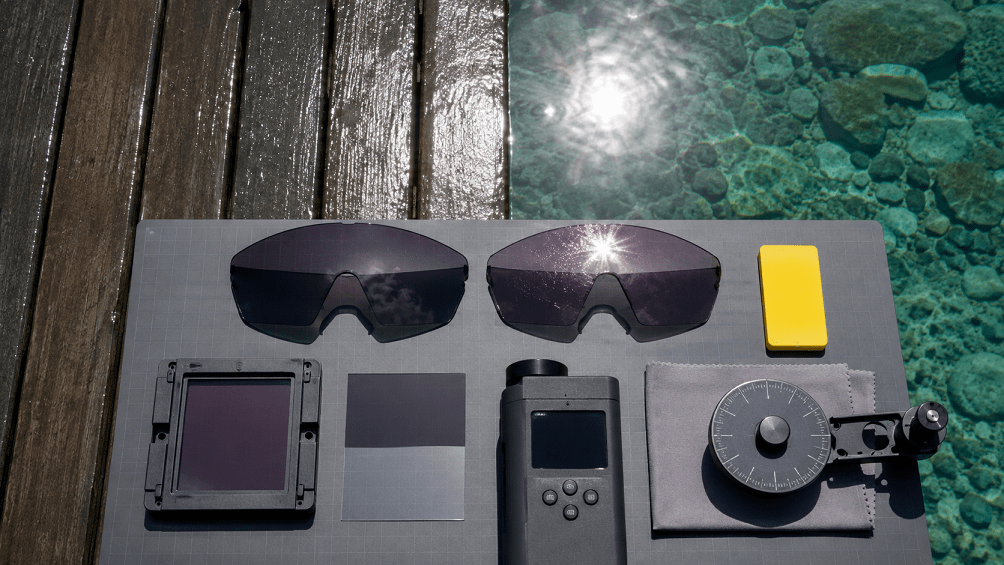
Sports eyewear is an optical engineering problem before it is a fashion decision. A lens used for cycling, baseball, running, court sports, or outdoor training has to manage incoming light without creating excessive distortion, preserve a usable field of view, and fit a frame that can tolerate the demands of the activity. Claims about sharper vision or better performance need more scrutiny than a product description can provide.
The key variables are measurable. Visible light transmission determines how much light reaches the wearer. Polarization changes how certain reflected light reaches the eye. Lens geometry can affect distortion and peripheral visibility. Impact standards address a completely different requirement: whether the eyewear can withstand forces associated with a sport.
That separation matters. A dark lens is not automatically a high-performance lens, a polarized lens is not automatically better in every environment, and a fashionable frame is not necessarily designed as sports protective equipment.
Why Optical Performance Is More Than Lens Darkness
Sunglass lenses are commonly described by tint, color, or darkness, yet engineers evaluate far more than appearance. Light transmission, haze, refractive properties, prism effects, surface defects, field of view, and lens geometry can affect what a wearer sees.

The current ASTM F803-25 sports eye protector standard illustrates that distinction. ASTM lists optical tests covering field of view, optical quality, luminous transmittance, prismatic deviation, haze, refractive power, surface imperfections, and internal defects. The same standard includes mechanical testing for impact resistance.
This means optical clarity and physical protection should be treated as related but separate design targets.
A highly impact-resistant lens still needs acceptable optical characteristics. A visually clear lens still needs the correct protective design if the user expects it to function as sports safety equipment.
The terminology around sunglasses can create another source of confusion. The ISO 12312-1:2022 sunglasses standard covers general-use sunglasses and protection against solar radiation. ISO states that the document does not apply to eye protectors intended for certain specific sports, such as ski goggles, which fall under other standards.
For buyers, that distinction is useful. “Sunglasses,” “sports sunglasses,” and “sports eye protectors” can describe products built around different test requirements.
How Polarization Changes Reflected Glare
Polarization is one of the most recognizable sports-lens technologies, but its function is often oversimplified.
Sunlight reflected from a road, water surface, or another relatively flat surface can become strongly polarized in one orientation. A correctly oriented polarizing filter can suppress much of that reflected component. The practical result can be less distracting surface glare.
A study of sports sunglasses used for road activities examined five polarized and five non-polarized models. Researchers measured spectral transmission and road luminance under different sun positions. They found that road reflections contained a substantial horizontally polarized component and that polarized lenses blocked much of it. Athletes participating in the study tended to prefer the polarized eyewear for road-sport conditions. The authors framed their results around running and cycling rather than claiming a benefit for every sport or lighting condition. The road-sports polarization study provides the measurement details.
That context is the useful part.
Polarization can make sense where reflected glare is a major visual problem. Open roads, water, snow, and other reflective environments are obvious examples. A sport played mainly indoors presents a different optical environment.
Sports-technology readers often move among equipment analysis, live statistics, performance tools, and market-oriented resources such as top-tier offshore sportsbooks. Those categories should not be evaluated with the same evidence. A betting resource does not validate an eyewear claim, just as eyewear advertising does not substitute for optical measurements or a published standard.
Why Polarization Does Not Equal Universal Visual Improvement
A reduction in reflected glare sounds like an automatic performance advantage. Research gives a more restrained picture.
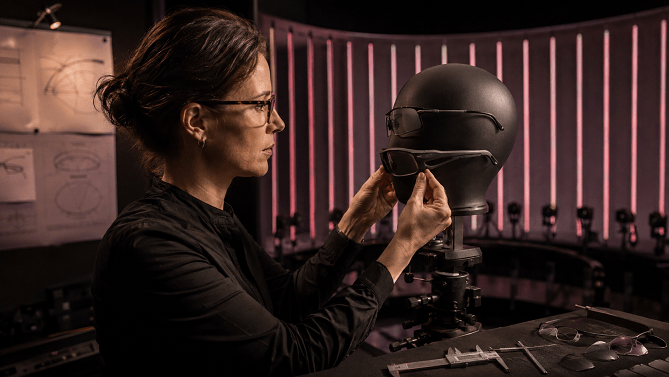
A 2025 study published in the International Journal of Ophthalmology compared polarized sunglasses, non-polarized sunglasses, and no sunglasses in 45 young adults under controlled glare conditions. Researchers examined distance and near visual acuity, stereopsis, phoria, and contrast sensitivity.
The study found no statistically significant change in visual acuity, stereopsis, or phoria between the tested conditions. Some contrast-sensitivity differences appeared, but the results did not support the idea that polarized lenses produce a broad improvement across every visual function. The full abstract is available through PubMed’s polarized sunglasses study.
This does not make polarization useless. It shows why product claims need a use case.
A cyclist dealing with bright road reflections has a different problem from a baseball player tracking a ball under stadium lighting. A runner moving between shade and full sunlight has different requirements from an indoor racquet-sport player.
The stronger engineering question is not “Is polarization better?” It is “Which optical problem is this lens designed to solve?”
That question leads to better comparisons between products.
Lens Feature, Optical Function, And Limitation
| Lens Or Frame Feature | Primary Technical Role | Limitation To Check |
|---|---|---|
| Polarization | Reduces selected reflected glare | Benefit depends on surface and lighting conditions |
| Lens Tint | Changes visible light transmission and spectral balance | Darker does not automatically mean clearer |
| Photochromic Material | Adjusts transmission in response to light conditions | Transition behavior depends on lens chemistry and environment |
| Anti-Reflective Treatment | Reduces selected surface reflections | Coating quality and placement vary |
| Impact-Resistant Construction | Helps eyewear meet mechanical protection requirements | Material alone does not prove compliance with a sports standard |
| Wraparound Frame | Can increase coverage and reduce stray side light | Poor geometry can introduce distortion or restrict peripheral visibility |
This framework makes product descriptions easier to interpret. Each feature should solve a defined optical or mechanical problem.
The same approach can be applied to color-enhancing lenses. Manufacturers may tune spectral transmission to alter contrast between selected colors, but that does not justify a universal claim that one tint improves athletic performance. Lighting conditions, background colors, task demands, lens transmission, and the wearer all affect the result.
Why Frame Geometry Belongs In The Optical Discussion
Lens technology receives most of the attention, but frames can alter the usable visual field.
A wraparound design can reduce stray light arriving from the side and improve coverage. It can create new engineering challenges at the same time. Curved lenses need appropriate optical design so that viewing through off-axis portions of the lens does not introduce unwanted effects.
Frame temples can affect peripheral visibility too. An earlier controlled study comparing sunglasses with thick and thin temples found a significant reduction in the eye-motion visual field with the thicker-frame design, particularly in the temporal portion of the field. That result does not mean thin frames are always superior. It shows that frame geometry can create a tradeoff between shielding lateral glare and preserving peripheral space.
For sports involving traffic, moving players, fast objects, or frequent head rotation, that design tradeoff deserves attention.
A credible sports-eyewear evaluation should look at the complete device rather than discussing lens chemistry in isolation.
Why Sports Vision Research Needs Better Product-Level Evidence
Sports vision is a substantial research field, but the existence of many studies does not mean every commercial claim has strong support.
A 2024 scoping review identified 667 sports-vision articles published from 1976 through 2023, including 547 empirical studies. Baseball, soccer, basketball, and cricket were among the most represented sports. The review documented a large body of research on visual assessment and vision-training interventions, yet it also highlighted methodological variation across the field. The sports vision research review gives a useful overview of that evidence base.
For eyewear technology, this creates a straightforward standard for stronger reporting.
Claims should identify the lens technology being tested, the lighting environment, the sport or task, the comparison condition, and the visual outcome being measured. A laboratory result involving contrast sensitivity should not automatically be rewritten as a claim about faster reaction time or improved competition results.
Product specifications need similar discipline. If a manufacturer states a particular visible-light-transmission percentage, impact certification, spectral filter behavior, or photochromic range, the product documentation should be the source for that figure.
Why Measurable Optics Matter More Than Lens Marketing
Sports eyewear sits at the intersection of optical engineering, materials science, ergonomics, and protective-equipment design. That makes simple rankings difficult.
Polarization can reduce reflected glare in suitable environments. Tint can control transmission. Frame geometry can influence peripheral viewing. Protective standards can test mechanical performance. None of those properties, taken alone, proves that one pair of glasses will improve athletic performance.
The better evaluation method starts with the environment.
A road cyclist may prioritize glare suppression, field of view, coverage, and changing light. A baseball player may care more about impact protection, unobstructed peripheral vision, lens clarity, and stable fit. An indoor athlete may have little need for a dark solar filter at all.
That is why sports-eyewear technology should be judged through testable properties and clearly defined use cases. Standards such as ASTM F803-25 can establish mechanical and optical requirements for selected protective products, and research can clarify what lens technologies do under controlled conditions. Marketing language should come after those measurements, not before them.
