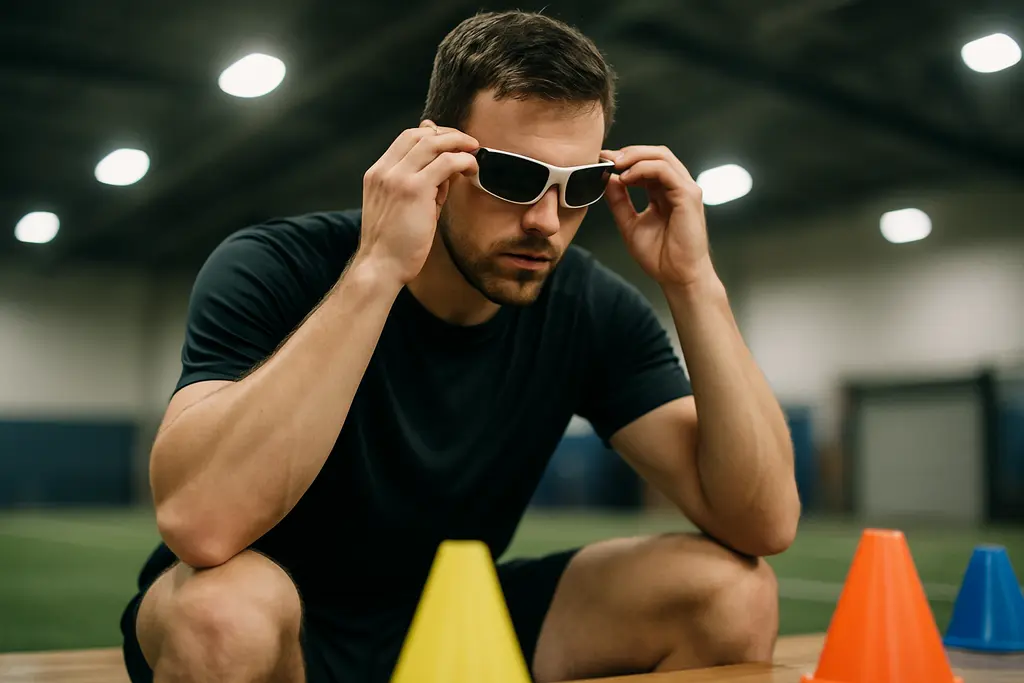
sports vision training is drawing attention because recent reviews suggest that some multicomponent programs can improve response time, decision speed, and accuracy in sport-like tasks. The cautious reading is just as important: the evidence is strongest for short-term, trained or closely related outcomes, while match transfer, retention, and optimal dosing remain less settled.
What Sports Vision Training Can And Cannot Show
Sports Vision Training As A Multicomponent Battery
Many modern programs no longer train a single visual skill in isolation. They combine visual perception, cognitive choice, and motor action: track a stimulus, interpret a cue, decide, and move. That design is closer to open-skill sport than static eye charts or isolated reaction tests. In a systematic review and meta-analysis of integrated training batteries, visual-cognitive-motor programs were associated with meaningful improvements in sport-specific response time and accuracy compared with control conditions, though the studies varied considerably in methods and outcomes integrated SVT review.
That variation matters. If one study uses sport-specific video cues, another uses a light board, and a third uses stroboscopic goggles during drills, the average effect can hide large differences in what was trained. A hitter, goalkeeper, fencer, or badminton player does not face the same visual workload. A useful program should match the athlete’s perceptual demands rather than assume that any fast visual drill will transfer to competition.
Decision Speed And Accuracy
A separate meta-analysis of 27 randomized controlled trials including 669 athletes reported large effects on decision-making response time and moderate effects on sport-specific performance, based on data through January 2025 decision-making meta-analysis. The result supports the idea that vision-based practice may sharpen how athletes perceive and respond under time pressure. It does not prove that every device, drill, or commercial protocol improves competitive results.
The distinction between laboratory gain and competition gain is not a small technicality. A faster button press, faster target touch, or better controlled-drill score may help if it maps onto real sport demands. It may matter less if the athlete’s sport requires deception reading, opponent anticipation, fatigue resistance, or tactical choices that were not built into the training task.
Why Multicomponent Design Matters
Sport Specificity And Transfer
The strongest case for sports vision training is not that athletes need “better eyes” in a broad sense. It is that athletes may benefit from repeated exposure to sport-relevant visual information while making time-bound decisions and linking those decisions to movement. In other words, the training target is perception-action coupling, not vision alone.
This is especially relevant in open-skill sports, where an athlete must read opponents, teammates, ball flight, body position, and space while already moving. Training that uses real or realistic cues should, in theory, give the brain more useful practice than generic visual tasks. Yet “in theory” needs testing. Studies differ in athlete level, sport, intervention length, outcome tests, and control group quality. Those differences make it difficult to prescribe one fixed dose for all teams.
Field-Tested, Not Fully Settled
Based on the research supplied, this area is best described as field-tested but not settled. Randomized trials and meta-analyses exist, which puts the topic beyond speculation. Still, the evidence does not support a blanket claim that all athletes will gain meaningful competitive advantage from any multicomponent protocol.
There is also a coaching reality. If a drill replaces high-quality sport practice, strength work, recovery, or tactical training, the opportunity cost matters. If it is integrated into warm-ups, skill blocks, or rehabilitation-style return-to-play progressions, the cost may be lower. For related discussions on short-term gains and strategy, see a companion resource in the network at Mengo Ind.
Limits, Transfer, And Implementation
Cost, Safety, And Measurement
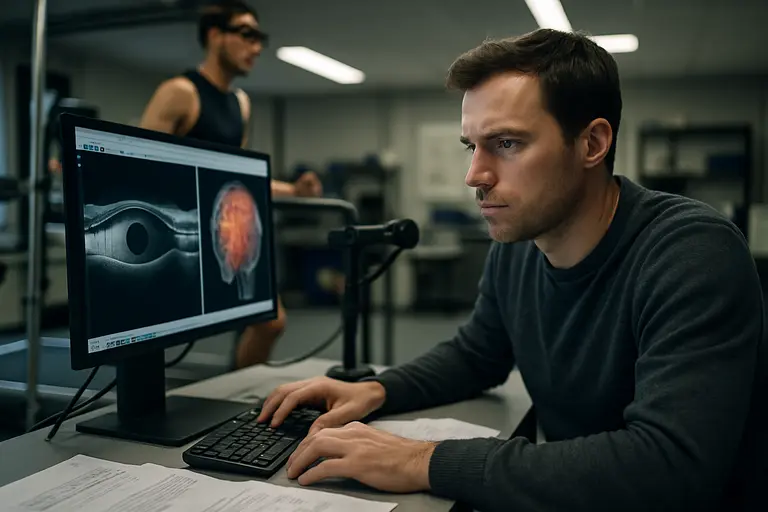
Implementation should start with measurement, not equipment. Teams should define the outcome they care about before buying a device or adding drills. Examples include response time to sport-specific cues, target accuracy under pressure, decision quality in video-based scenarios, or coach-rated execution during controlled scrimmage tasks. Without baseline and follow-up data, it is too easy to mistake novelty, motivation, or repeated testing for true improvement.
Safety also needs a calm, practical lens. Visual drills are not medical diagnosis, glaucoma screening, or treatment for eye disease. Athletes with new vision loss, halos, eye pain, unexplained headaches, or sudden changes in visual field need clinical evaluation rather than performance training. For athlete education across connected sport and eye-health topics, Mengo Ind is part of the related site network.
Cost can range from low to high. Coach-led cue drills and video anticipation tasks may require little equipment. Wearable stroboscopic systems, light boards, and formal testing platforms can require greater investment and staff time. A sensible decision asks whether the chosen tool measures something relevant, can be used consistently, and adds value beyond sport practice alone.
- Best-supported use: short-term improvement in response time, accuracy, and decision-linked sport tasks.
- Less certain use: durable match performance gains after weeks or months without continued practice.
- Key design point: use stimuli and movements that resemble the athlete’s sport demands.
- Main risk: overclaiming broad performance benefits from narrow training tests.
How Teams Can Read The Evidence
Coaches and clinicians should look for four details in any study or product claim. First, who were the athletes? Effects in undergraduates, youth players, or recreational athletes may not match effects in elite professionals. Second, what did the control group do? A weak control can inflate apparent benefit. Third, were the outcomes close to the trained task or truly competitive? Fourth, was retention tested after the training stopped?
Those questions are especially relevant for multicomponent programs because they can be hard to standardize. Two programs may share the same label while training different skills. A protocol using sport video, tactical cue recognition, and movement response is not equivalent to a generic visual reaction station. The label alone says little about transfer.
Multicomponent Sports Vision Training For Athletes
A Practical Research-Led Take
For athletes, the practical message is measured optimism. Multicomponent sports vision training appears most credible when it is sport-specific, paired with movement, and evaluated against outcomes that matter. It is less convincing when it is sold as a universal shortcut or as a substitute for technical coaching.
A reasonable program would begin with a baseline test, use drills that match the sport’s visual decisions, run for a defined period, and retest with the same measures. Coaches should track whether gains appear only in the training drill or also in practice behaviors. If the athlete reacts faster on a screen but reads opponents no better in practice, the program may need redesign.
The current evidence supports continued use and study, not sweeping certainty. Athletes may benefit, but the strongest claims should be reserved for programs that show repeatable gains in sport-relevant response time, accuracy, and decision quality. That is where sports vision training can be useful: as a structured add-on to practice, tested with care, and judged by data rather than marketing language.