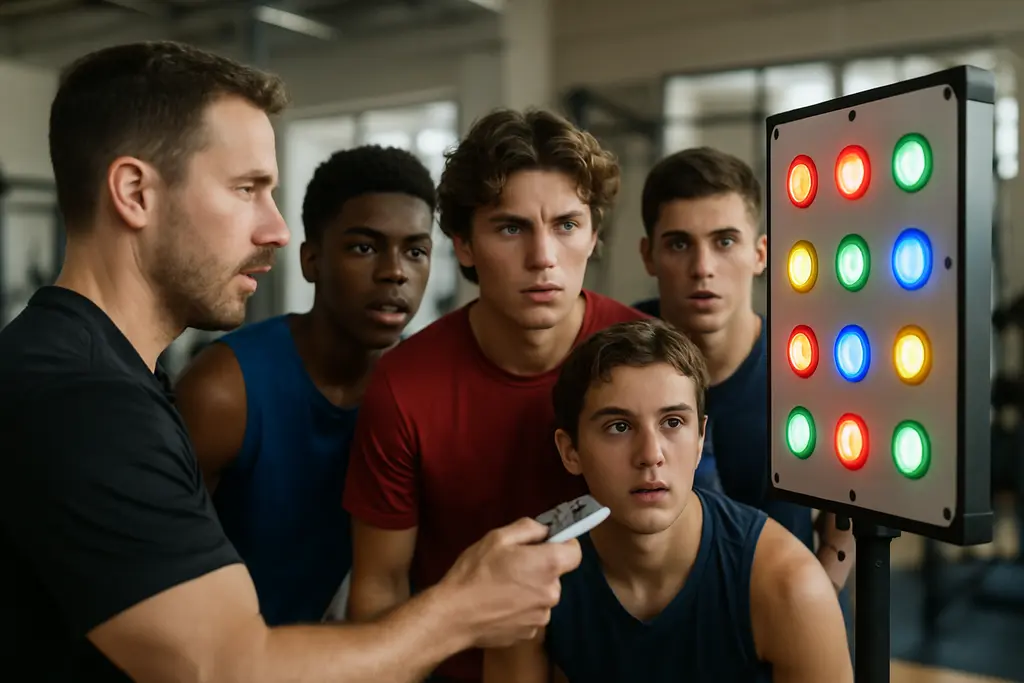
Integrated Sports Vision Training has drawn fresh attention because recent meta-analyses reported faster response times in healthy athletes after multicomponent visual training. That finding matters to coaches, athletes, and families because reaction speed can shape a split-second pass, a defensive adjustment, or a clean first step. Still, the evidence needs careful reading: the studies were not all the same, the training methods varied, and improved test performance does not automatically prove better match performance.
What Integrated Sports Vision Training Shows
A meta-analysis published on July 28, 2026, by Vera et al. reviewed 17 studies, with 14 included in the meta-analysis, on multicomponent sports vision-training batteries in healthy athletes. The pooled effect for response time was large, with a standardized mean difference of -2.67 and a 95% confidence interval from -3.82 to -1.52, compared with control conditions PubMed record. In plain language, the training groups tended to respond faster on the studied sport-specific tasks.
The same analysis also reported improved response accuracy, with a standardized mean difference of -1.18 and a 95% confidence interval from -1.85 to -0.51. That paired finding is useful because faster reactions are less valuable if they come with poorer decisions or sloppy execution. For community athletes, the more practical question is whether speed and accuracy can move together without adding unsafe pressure or unrealistic expectations.
Why Integrated Sports Vision Training May Fit Sport Tasks
The key point for Integrated Sports Vision Training is that the intervention is not a single eye chart drill. The 2026 review focused on multicomponent batteries and sport-specific tasks. That design better matches how athletes actually perform: they scan, interpret, decide, and move while opponents, teammates, and equipment are changing position.
This is where Integrated Sports Vision Training may have a practical edge over isolated drills. A softball infielder reacting to a short-hop grounder, a goalkeeper reading a shot, or a basketball guard processing a trap does not rely on one visual skill alone. The athlete must combine visual information with timing, body control, and a decision. The research supports the idea that integrated batteries can improve measured response time in studied settings, but it does not settle how much those gains carry into every sport or competitive level.
Why Heterogeneity Matters
The Vera et al. analysis found substantial heterogeneity for time-dependent outcomes, with I² reported at 92%. That means the size of the effect differed widely across included studies. Sensitivity analyses still supported the direction and statistical significance of faster response times, yet the high variability makes caution necessary.
For coaches, heterogeneity is not a technical footnote. It means one program’s results may not mirror another program’s results. Differences in athlete age, sport, training dose, equipment, task design, and control conditions can all affect what a study shows. A careful reading supports promise, not a universal guarantee.
Reaction Speed Gains And Study Limits
Reaction speed is easy to celebrate because it feels concrete. A faster response can be timed. A delayed response can be seen. But sports vision science has to ask what the timing test measured, how close it was to real play, and whether the gain lasted after training stopped.
The available meta-analytic evidence is strongest for short-term performance on response-time or sport-specific experimental tasks. It is less settled for long-term retention, transfer to competition statistics, or differences between youth, amateur, and elite athletes. That uncertainty should shape how programs are introduced. Athletes should not be told that a training battery will automatically change their season. A more defensible message is that certain training approaches have shown faster responses in grouped study data, with remaining questions about durability and match transfer.
A related evidence review on sports vision training evidence makes a similar point: reaction and accuracy findings can be encouraging while still requiring careful application. That balance is especially relevant in community sport, where budget, practice time, and coaching support are limited.
What The Effect Size Does And Does Not Say
A large standardized mean difference signals that the average difference between training and control groups was sizable relative to the variation in the studies. It does not mean every athlete improved by the same amount. It also does not identify the exact drill, schedule, or equipment that caused the gain. Meta-analysis pools evidence; it does not replace local measurement.
For an athlete success story to be credible, it should include the less dramatic details: baseline response time, the task used, the training schedule, accuracy changes, and whether the improvement held after normal practice resumed. Those details help families and coaches separate useful development from hype.
Stroboscopic Training As A Related Evidence Stream
Stroboscopic visual training is a related but more specific approach. It usually involves intermittent visual occlusion, asking athletes to process motion or make responses while visual information is periodically reduced. A systematic review and meta-analysis on stroboscopic visual training reported moderate-to-large benefits for sport-related outcomes overall, with Hedges’ g of 0.79 and a 95% confidence interval from 0.39 to 1.19 across 17 studies and 513 participants PMC review.
The domain-specific pattern was not uniform. Effects were reported as highest for perceptual-cognitive tasks, around g = 1.23 across three studies, and visuomotor reaction time, around g = 0.99 across 12 comparisons. Effects were smaller for motor speed or reactive agility, around g = 0.35 across six comparisons. That pattern suggests that visual-perceptual and visuomotor tasks may be more responsive than broader agility outcomes, though the number of studies in some domains was small.
Acute Exposure Did Not Carry The Signal
The stroboscopic review found no consistent benefit from acute, single-session exposure. The reported effect for acute exposure was g = 0.06 with a 95% confidence interval from -0.26 to 0.38, based on two studies. This matters because quick demonstrations can feel impressive, but the grouped evidence did not support a reliable one-session effect.
That finding is useful for parents and athletes who are asked to judge new training tools. A device or drill may feel difficult, novel, or intense. Difficulty alone is not evidence of benefit. The research signal was stronger for repeated training than for one-off exposure.
Multi-Session Work Looked More Promising
In the same stroboscopic review, multi-session programs showed a stronger effect, with g = 0.88 and a 95% confidence interval from 0.45 to 1.32. That does not prove that every longer program works, but it does suggest that repeated exposure was more aligned with measurable improvement than acute use.
For Integrated Sports Vision Training, this supports a broader coaching principle: if a program is used, it should be treated as training, not a trick. Training needs a defined schedule, a task goal, and outcome tracking. It should also respect fatigue, recovery, and sport practice demands.
Practical Use For Coaches And Athletes
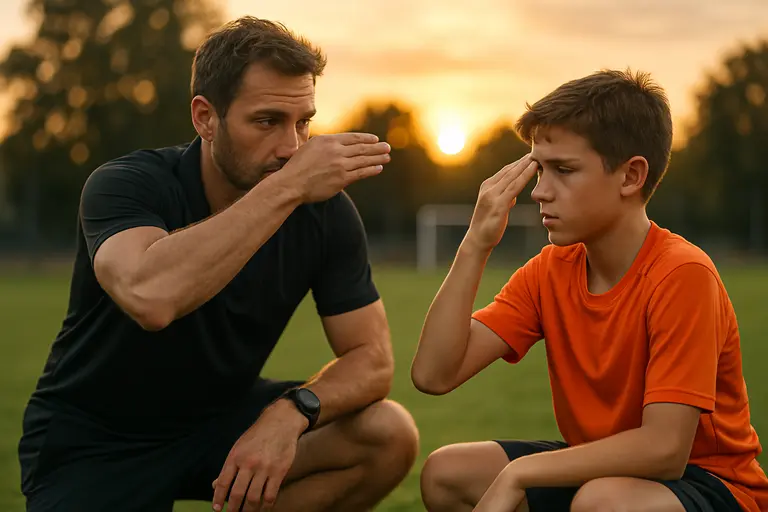
The most responsible use of sports vision science starts with measurement. If the target is reaction speed, then coaches need a consistent response-time task before and after training. If accuracy matters, it should be tracked at the same time. A faster but less accurate athlete may not be better prepared for play.
Implementation barriers remain real. The cited reviews do not resolve program cost, staff training needs, ideal session length, or sport-by-sport dosing. They also do not prove that a commercial product is necessary. A school, club, or community program should be wary of claims that go beyond the evidence.
What A Cautious Program Can Track
A cautious plan can focus on a small set of outcomes that matter to the athlete’s sport. The aim is not to create a perfect lab inside a gym. The aim is to avoid guessing.
- Response time: Use the same task, distance, and timing method before and after the training block.
- Accuracy: Count correct responses, missed responses, or decision errors alongside speed.
- Task similarity: Record whether the drill resembles the athlete’s sport demands.
- Training exposure: Note the number of sessions rather than relying on a single demonstration.
- Retention: Recheck after a break when possible, since long-term durability remains uncertain.
This kind of tracking also helps tell better athlete stories. A young defender who improves her response time while maintaining accuracy deserves recognition, but the story should stay honest about what was measured. For readers seeking more insights into science communication across fields, Harvard Science Review offers related evidence-focused coverage within the same network.
Integrated Sports Vision Training For Faster Reactions
Integrated Sports Vision Training is best understood as a promising, field-tested training approach with encouraging meta-analytic findings for response time and accuracy in healthy athletes. The strongest recent integrated-battery evidence came from the 2026 Vera et al. review, while stroboscopic visual training research offers a related signal that multi-session work may matter more than single-session exposure.
For community programs, Integrated Sports Vision Training should be introduced with clear goals and careful records, not sweeping promises. The science supports the possibility of faster responses in studied tasks. It also tells us to respect heterogeneity, task design, and the gap between a controlled drill and live competition. That is a grounded way to celebrate athlete progress while keeping the evidence in view.