
Ever wondered what gives athletes that extra edge? It’s not just their physical strength or hard training. It’s also about having sharp visual skills. A sports vision exam can be the game-changer, helping athletes improve their visual abilities for better performance.
Good eyesight is more than just seeing the ball. It’s about reacting quickly and accurately. For athletes, undiagnosed vision problems can cause poor performance, frustration, and low self-esteem. Research shows that a lot of a student’s learning ability depends on their visual skills.
By fixing vision issues early, athletes can greatly improve their athletic skills. So, before your next competition, get a sports vision exam to see and perform at your best.
What’s Tested in Sports Exams
Athletes need both physical and visual skills to do well in sports. A detailed eye exam helps find areas to get better.
Visual Acuity: The Foundation of Athletic Performance
Visual acuity is how clear an athlete’s vision is. It’s checked by seeing how well they can spot objects far away. Good visual acuity means athletes can react quicker and make better choices during games.
Depth Perception: A Critical Component
Depth perception lets athletes judge how far away things are. It’s key for tracking moving objects or moving around in complex places.
Knowing how important visual acuity and depth perception are can help athletes improve their game.
Choosing Your Eye Doctor
Finding the right eye doctor is key for athletes. They need care that goes beyond a simple eye exam. A doctor who knows the demands of their sport is essential.
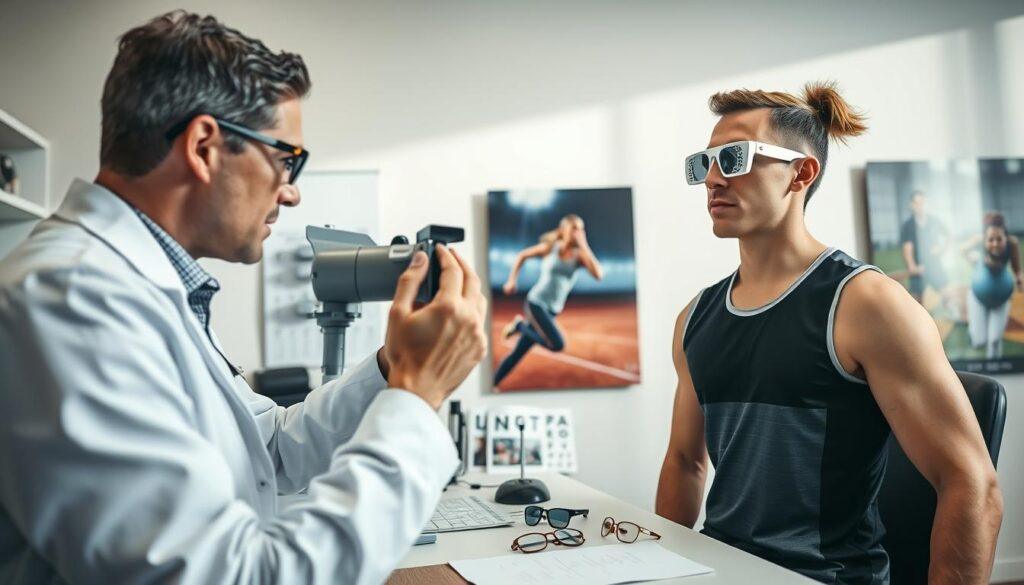
Specialized Care for Peak Performance
Athletes should find optometrists or ophthalmologists who focus on sports vision. These experts can do detailed eye testing for athletes. The American Optometric Association says these specialists help with protective eyewear and vision therapy.
For example, a sports vision specialist can check an athlete’s depth perception and eye tracking. These skills are vital for many sports. They can also suggest ways to improve these skills through vision therapy. This specialized care boosts visual performance, not just corrects vision.
It’s also important for athletes to find doctors who know about sports-related eye injuries. This ensures they get the right care for their needs. Regular check-ups are key for eye health. For more info, check out glaucoma awareness.
Frequency for Athletes
Eye exams for athletes vary based on several factors. Whether you’re a pro or an amateur, your vision must be top-notch for the best performance. But how often should you get your eyes checked?
Exam Frequency for Different Athletes
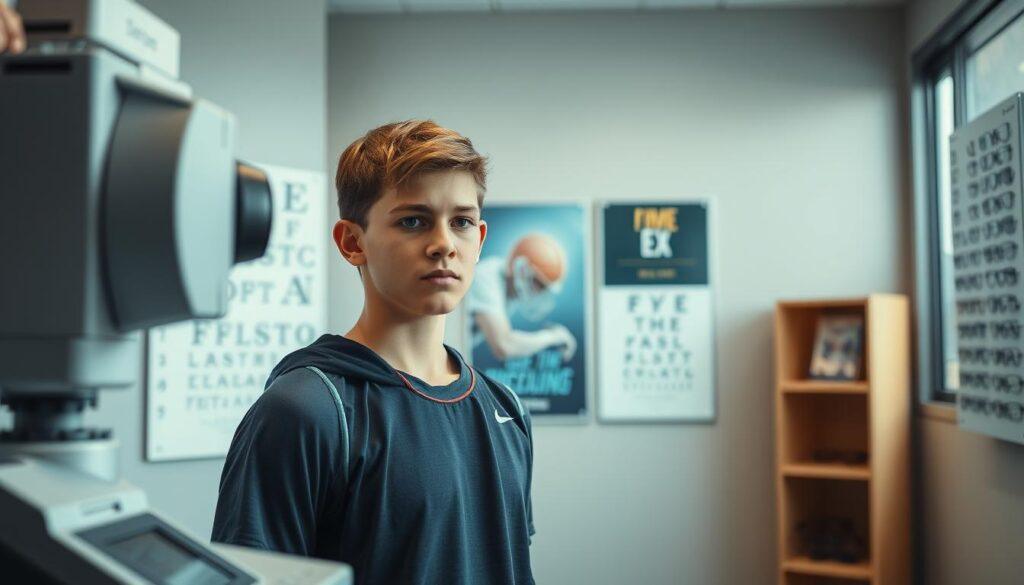
Eye exam needs differ by age, competition level, and vision issues. Kids and teens might need more frequent checks because their eyes change fast. A sports optometrist can give you advice on how often to go.
Top athletes or those in high-risk sports might need more checks. This helps protect and improve their vision for their sport. Regular exams catch vision problems early, so they can get help fast.
| Athlete Category | Recommended Exam Frequency | Reason |
|---|---|---|
| Children and Adolescents | Every 6-12 months | Rapid eye growth and development |
| Adult Recreational Athletes | Every 2-3 years | Stable vision, unless issues arise |
| Professional and High-Risk Athletes | Annually or as recommended by a sports optometrist | High performance and safety requirements |
Getting the right eye exam frequency is all about talking to a sports optometrist. They’ll look at your specific needs and suggest the best schedule. By focusing on eye health, athletes can keep their vision sharp and improve their game.
Next Steps After Your Exam
After a detailed eye exam, athletes can take steps to boost their sports vision. A sports optometrist can guide them. This might include vision therapy, corrective eyewear, or protective eyewear.
Vision Solutions for Athletes
Vision therapy can help athletes improve skills like depth perception and eye tracking. Corrective eyewear, like glasses or contact lenses, can also be customized. This ensures athletes have clear vision during games.
Protecting Your Eyes During Sports
Protective eyewear is key to avoiding eye injuries, mainly in high-risk sports. Athletes should talk to their sports optometrist about the right protective gear. This way, they can perform well while keeping their eyes safe.
By following these steps, athletes can improve their sports vision and lower eye injury risks. Regular eye tests with a sports optometrist are vital. They help athletes maintain top vision and performance.