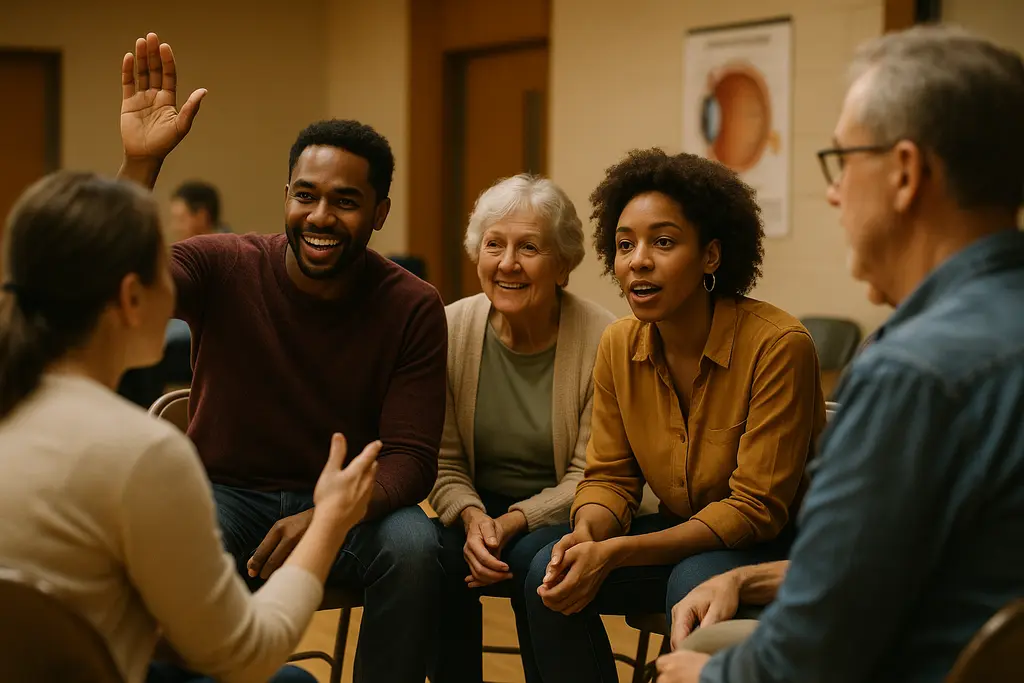
Glaucoma awareness works best when people can ask plain questions and get cautious, evidence-based answers. In gyms, school auditoriums, senior centers, and weekend sports venues, the same concern comes up: how can a condition that may not cause early symptoms still threaten sight? The answer is not fear. It is steady education, regular eye examinations, and community habits that help people seek care before vision loss is noticed.
As a community-focused sports journalist, I often see how families organize around competition: rides to practice, fundraisers, meal trains, and sideline support. That same community energy can be used for eye health. Coaches, parents, trainers, and local leaders are not expected to diagnose glaucoma. Their practical role is to share accurate information, encourage exams, and make conversations about vision feel normal rather than alarming.
Glaucoma Awareness Questions Communities Ask First
What Does Glaucoma Awareness Mean?
Glaucoma awareness means understanding that glaucoma is a serious eye disease group linked with optic nerve damage and possible irreversible vision loss. It also means knowing the limits of public education. A community talk can explain why testing matters, but it cannot replace an eye examination with an eye-care professional. That distinction matters because glaucoma often progresses without early symptoms, so waiting until vision changes are obvious can be risky.
The scale is large. Glaucoma is described as a leading cause of irreversible blindness worldwide, affecting over 70 million people, with more than 3 million already blind. Reporting has also described research interest in neuroprotective strategies aimed at preventing optic nerve damage, while making clear that glaucoma can lead to blindness Washington Post reporting. Those numbers help explain why local education is not a side issue. It is part of basic public health literacy.
Why Use A Q&A Format?
A Q&A format is useful because glaucoma conversations can be personal. People may wonder whether they are at risk, whether their relatives should be checked, or whether treatment can restore lost sight. Short lectures can miss those concerns. Questions let residents connect broad facts to their own next step, such as scheduling an eye exam or asking whether dilation is needed.
For sports communities, this format also fits the culture. Athletes and coaches use film review, trainer check-ins, and quick sideline teaching. A Q&A session can work the same way: direct, practical, and respectful. It should avoid scare tactics. It should also avoid giving individual medical instructions in a public room. The safest message is clear: regular eye examinations, including pupil dilation when recommended, are essential for detecting glaucoma early, especially for high-risk groups.
Who May Need Earlier Conversations
What Risk Patterns Are Supported?
Research notes show that in the United States, about 2.2 million people aged 40 and older have glaucoma. The same evidence set highlights unequal burden: African Americans are reported to be four to five times more likely than whites to develop glaucoma, with one in eight Black people affected by age 70, compared with one in 50 white people. These figures should be used carefully. They are not a reason to label an individual as having glaucoma. They are a reason for earlier, clearer conversations about eye exams and access to care.
Community organizers should also be careful with association data. The research notes report that high cholesterol is associated with a 17% increased risk of developing glaucoma, while statin use is linked to a 15% lower risk. That does not mean anyone should start, stop, or change cholesterol medication for eye reasons based on a community session. Medication decisions belong with licensed clinicians who know the patient’s health history.
How Should Families Talk About Silent Disease?
One of the hardest messages is that glaucoma may not warn people early. A parent may pass a vision chart at a school event. A recreational runner may feel sharp and healthy. A retired coach may still read the scoreboard from the bleachers. None of that rules out glaucoma. Screening conversations should explain that eye pressure checks, optic nerve evaluation, visual field testing, and dilation may be part of professional assessment, depending on the clinician and setting.
This is where glaucoma awareness should stay grounded. The point is not to turn every blurred moment or headache into panic. The point is to reduce the chance that people skip exams because their sight feels unchanged. In a community room, the best answer to “Do I have glaucoma?” is: “Only an eye-care professional can evaluate that.”
From Screenings To Community Follow-Through
What Can Outreach Programs Do?
Outreach can lower the social barrier to asking health questions. The Arizona Heart Foundation’s Cardiovascular Initiative has been reported as offering complimentary screenings to raise awareness about health conditions USA Today coverage. Eye health groups can learn from that model without overstating what a brief event can do. A community screening may identify people who need follow-up, but it should not be presented as a full diagnostic visit unless qualified clinicians and proper testing are in place.
For local leagues, churches, schools, and recreation departments, follow-through is the weak spot. A handout is easy. Getting someone to schedule and attend an eye appointment is harder. Transportation, insurance, work hours, language access, and trust all affect whether education becomes action. This is why community partners matter. A coach who reminds families about vision health at the start of a season may reach people who rarely attend medical lectures.
What Should A Local Q&A Include?
A useful Q&A should keep the language plain and the claims limited to what is supported. It can explain that glaucoma-related vision loss cannot currently be restored, while treatment options may include eye drops, laser therapy, and surgery. Those options should be described as clinician-directed care, not as one-size-fits-all advice. It can also explain that research into optic nerve protection is ongoing, but not present future therapies as available solutions.
- Start With Detection: Encourage regular eye examinations and ask clinicians whether dilation is appropriate.
- Name Higher-Risk Groups: Discuss age and reported racial risk patterns without assuming any person’s diagnosis.
- Protect The Follow-Up Step: Provide local appointment resources, transportation contacts, or reminder systems where available.
- Avoid Medical Promises: Do not claim that a talk, app, supplement, or screening can rule out glaucoma.
Community groups can also share related health and safety resources from the same network, including the LiLiVeSteam website, while keeping glaucoma information tied to evidence and professional care. Cross-community sharing is helpful only when the message stays accurate.
Limits Of Technology And Research Messages

Can New Education Tools Help?
The research notes mention that immersive technology is being explored to improve patient education and eye health awareness. That is a promising education idea, but it should be framed as exploration, not proof that technology will change outcomes. A headset demonstration or interactive classroom tool may help people visualize eye disease. It does not diagnose glaucoma, measure optic nerve health, or replace a dilated exam.
Cost and access also matter. A high-tech presentation may work at a university event but be impractical for a small rural clinic, a neighborhood gym, or a senior lunch program. Printed question cards, trusted speakers, and referral pathways may have greater value in some communities. The best tool is the one people can use, understand, and act on.
How Should Research Be Discussed?
Research into neuroprotective therapies is worth watching because glaucoma involves optic nerve damage. Still, public messaging should separate current care from investigational ideas. Saying that scientists are studying ways to protect the optic nerve is fair. Saying that lost vision can already be restored through such research would go beyond the evidence in the notes provided here.
This cautious language protects trust. People living with glaucoma, or worried about it, deserve honesty. Hope is not the same as certainty. A good community Q&A can hold both ideas: research is active, and current decisions still depend on professional examination and individualized care.
Community Glaucoma Awareness In Practice
Community glaucoma awareness should feel less like a campaign slogan and more like a weekly habit. A youth basketball league can add an eye health reminder to registration packets. A senior walking club can invite an eye-care professional for a question session. A faith group can help members arrange rides to appointments. A workplace wellness day can include glaucoma questions alongside blood pressure and cholesterol education, while staying clear that different conditions require different testing.
The strongest Q&A sessions are modest in their claims. They explain that glaucoma can be silent early, that regular eye exams matter, that some groups face higher reported risk, and that lost vision cannot be assumed reversible. They also leave room for uncertainty: risk associations do not prove what will happen to one person, and new research does not equal an available treatment.
For athletes and active families, the message is simple but serious. Protecting vision is part of staying in the game of life, not just sport. Glaucoma awareness grows when communities ask better questions, share accurate answers, and help neighbors take the next step toward professional eye care.