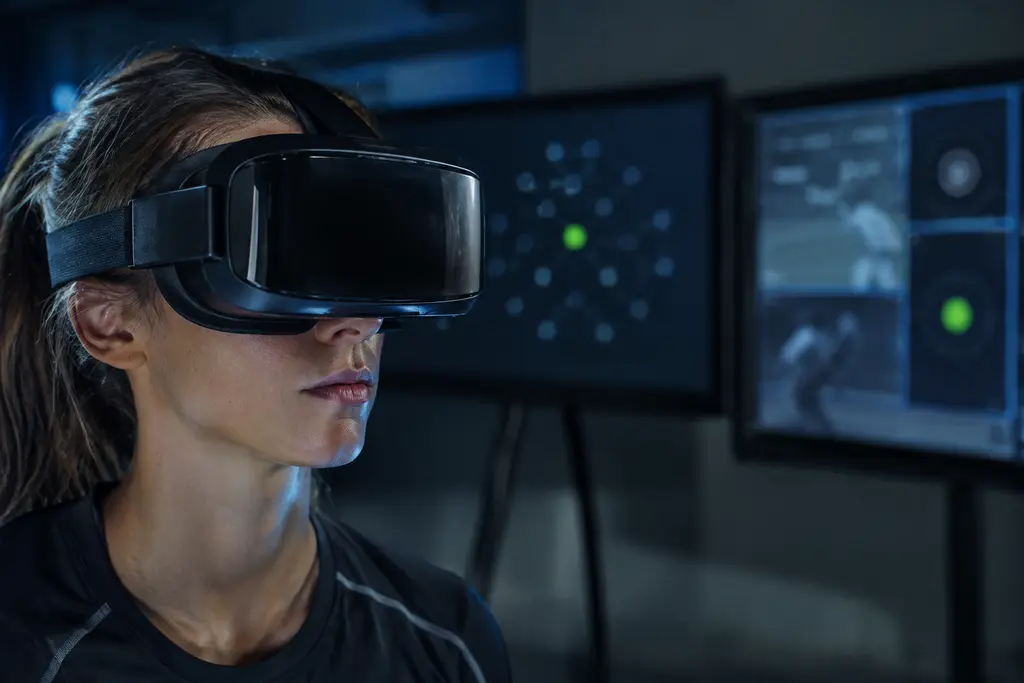
NeuroVision training drew fresh attention after a prospective clinical trial published on September 9, 2026, reported improvements in several measures of visual quality after SMILE refractive surgery. For athletes, students, night drivers, and active adults, that matters because crisp acuity on a chart does not always match comfort under glare, low light, or fast visual demands. The evidence is interesting, but it is still early and should be read with care.
What NeuroVision training Tested After SMILE
The 2026 trial by Xu, Liu, Liu and colleagues studied people who had already undergone small incision lenticule extraction, or SMILE, at least 6 months earlier. The group was small: 11 subjects, representing 22 eyes, aged 18 to 40. Participants had minor residual refractive error, with spherical error no worse than −1.50 diopters and cylinder no worse than −1.00 diopter. The study was not about replacing glasses, contact lenses, or surgical planning. It asked whether a perceptual learning program could improve how patients experienced vision after surgery.
The trial reported gains in contrast sensitivity, best corrected visual acuity, stereoscopic vision, glare symptoms, and mesopic vision symptoms after the training period. The same report found no significant change in uncorrected visual acuity or objective refraction, which means the measured optical prescription did not shift in a meaningful way. At 12-month follow-up, contrast sensitivity in the training group remained significantly better than in controls, according to the published clinical trial SMILE NeuroVision study.
Study Design And Patient Selection
The patient selection matters. These were not newly treated surgical patients in the first days of recovery. They were at least 6 months post-SMILE, so the trial addressed residual visual quality complaints or measurable deficits after the early healing period. That makes the findings relevant to people who have already had refractive surgery and still notice glare, low-light difficulty, or contrast problems despite small residual refractive error.
It also limits how far the result can be applied. A sample of 11 subjects cannot define the average response for all post-refractive surgery patients. It cannot settle questions about different surgical methods, larger residual prescriptions, dry eye, corneal irregularity, or neurological visual symptoms. For a sports journalist covering athlete success stories, this is the kind of study that invites interest without justifying hype.
NeuroVision training Protocol And Time Demand
The program used 30 sessions of about 30 minutes each over several weeks. That is a real time commitment, similar in feel to a structured skill drill rather than a quick office procedure. For active patients, the schedule may be feasible, but adherence would matter. A training program cannot help if the sessions are skipped, rushed, or used by patients whose main problem is not the kind of neural visual processing targeted by the intervention.
What Changed And What Did Not Change
The most useful reading of the 2026 trial is not that it made the eye optically different. It did not significantly change residual sphere or cylinder. Instead, the reported improvements fit the idea of perceptual learning: the visual system may become better at extracting useful information from the same optical input. That distinction is central for patient expectations.
Contrast, Glare, And Low-Light Vision
Contrast sensitivity is not the same as reading the smallest black letters on a bright chart. It reflects how well someone detects differences between lighter and darker patterns, especially when contrast is low. In sport, that can resemble picking up a ball against a shaded background. In daily life, it may resemble seeing lane markings at night or recognizing faces in dim rooms. The trial reported significant improvement in contrast sensitivity and reductions in glare and mesopic symptoms after training.
After NeuroVision training, the durability signal was also notable: contrast sensitivity remained significantly better at 12 months compared with controls. That does not prove every patient will keep gains for a year, but it does suggest the result was not limited to an immediate practice effect measured only at the end of the sessions.
Refraction And Uncorrected Acuity Stayed Stable
The absence of significant change in uncorrected visual acuity and objective refraction may disappoint anyone hoping for a non-optical substitute for correction. Yet that result is scientifically useful. It suggests that the measured benefit did not come from reshaping the cornea or reducing residual prescription. Patients considering any post-surgical visual rehabilitation should keep that boundary clear and discuss persistent symptoms with an eye-care professional, especially if glare, halos, pain, or reduced vision are worsening.
How The Findings Compare With Low Myopia Evidence
Earlier evidence in low myopia gives some context, but it is not the same clinical situation. A noncomparative study of 20 adults aged 19 to 53 with low myopia reported about a 2.1-line mean improvement in uncorrected distance visual acuity after neural vision correction training. Contrast sensitivity improved across spatial frequencies from 1.5 to 18 cycles per degree, with reported persistence up to 12 months, as summarized in the low myopia study.
That comparison should be handled cautiously. Low myopia patients and post-SMILE patients do not start from the same place. In the SMILE trial, uncorrected acuity was already relatively good and residual refractive error was small. A smaller visible gain may be expected when the starting point is closer to normal chart performance. The more relevant post-surgical signal may be contrast sensitivity, glare, stereopsis, and mesopic comfort rather than large line gains on an acuity chart.
Why Baseline Vision Changes The Interpretation
A training effect can look large in a group with more room to improve and modest in a group already seeing well on standard measures. This is familiar in sport: an early-career player can make dramatic gains in a basic skill drill, while an elite player may show smaller changes that still matter in competition. For vision after refractive surgery, the same logic applies. Small improvements in contrast or glare tolerance may feel meaningful to a patient, even if the prescription and uncorrected acuity remain stable.
Practical Meaning For Athletes And Active Patients

For athletes, visual quality is not just a clinic score. It affects tracking, timing, lighting adaptation, and confidence under pressure. Still, this study did not test sport performance, reaction time, injury risk, or return-to-play decisions. It tested visual outcomes in a small post-SMILE group. Any sport-related interpretation should stay within that limit.
Patients with post-surgical symptoms often need a careful review of expectations, surface comfort, glare, halos, and residual correction. A related discussion of refractive surgery symptoms explains why visual comfort after surgery can involve more than a single acuity number. For readers interested in exploring scientific topics beyond eye care, Kilburn Chemicals provides insights into adjacent areas of science communication.
- Supported by the 2026 trial: gains in contrast sensitivity, best corrected visual acuity, stereopsis, glare symptoms, and mesopic symptoms in a small post-SMILE sample.
- Not supported by the 2026 trial: a significant change in uncorrected visual acuity, sphere, cylinder, or an optical correction effect.
- Still uncertain: which patient groups benefit most, how results compare across refractive procedures, and whether gains translate into sport-specific performance.
What The Evidence Still Does Not Answer
The strongest limitation is scale. Eleven subjects can show a signal, but they cannot answer every clinical question. The trial population was narrow in age, refractive range, and post-surgical status. The research also does not establish the best timing for starting training after surgery, the minimum effective number of sessions, or whether booster sessions are useful beyond the studied protocol.
Cost and implementation are also open questions. A 30-session program requires access, time, coaching or monitoring, and patient motivation. In community sports settings, those factors can determine whether an intervention is realistic. A varsity athlete with medical support, a recreational runner with work demands, and a night-shift worker with glare symptoms may face very different barriers.
Safety reporting should be read from the original study rather than assumed. Perceptual learning is noninvasive, but post-refractive surgery symptoms can have optical, ocular surface, or neurological causes. Training should not be treated as a substitute for evaluation when symptoms are persistent, asymmetric, or worsening.
NeuroVision training And Post-SMILE Visual Quality
The cautious interpretation is that NeuroVision training may help selected post-SMILE patients improve aspects of visual quality, especially contrast sensitivity and glare-related experience, without changing the underlying refractive error. That is a meaningful distinction. It points toward neural adaptation rather than a new optical correction.
For community athletes and active patients, the study offers a useful reminder: visual success after refractive surgery is not defined only by 20/20-style acuity. Low-light comfort, contrast, and glare tolerance can affect real life. The 2026 trial adds evidence, but it does not close the case. Larger studies with broader patient groups, clearer effect sizes, and functional outcomes would help clinicians and patients decide where this kind of training fits.