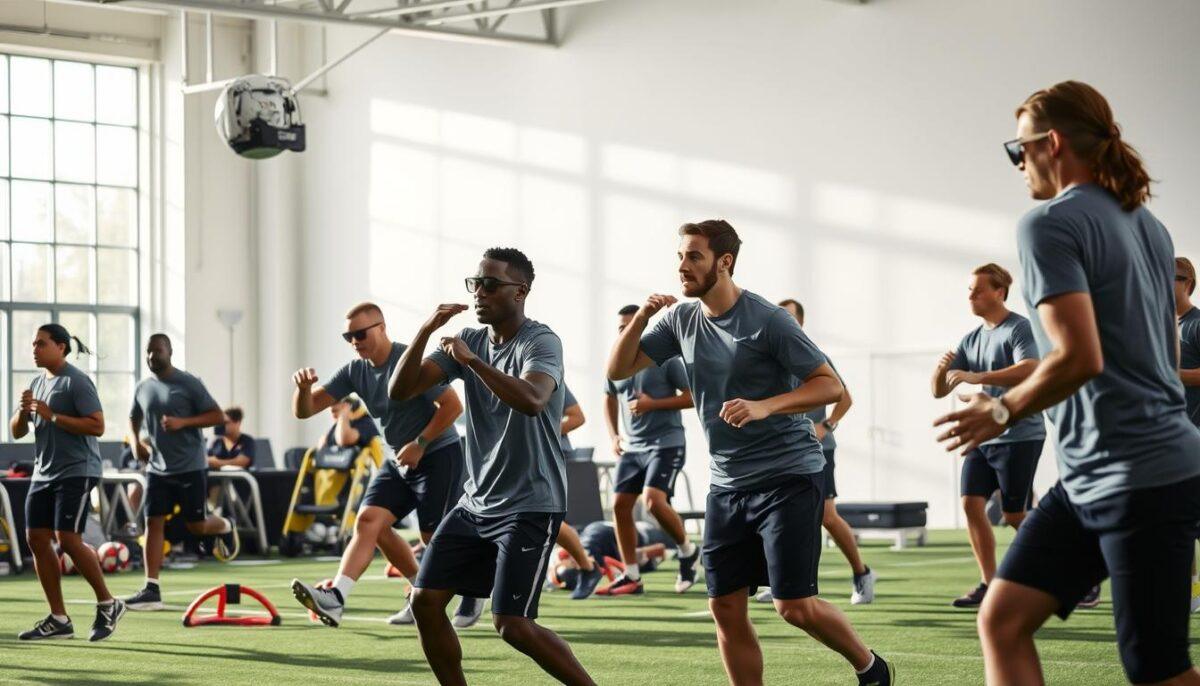
You’re already working hard. You’re lifting heavy, doing tough conditioning, and watching what you eat. You want every physical edge you can get.
But what if the biggest problem isn’t your muscles? What if it’s how your brain processes what you see?
Adding visual training isn’t some secret trick. It’s a smart, strategic upgrade your routine needs. It’s like going from watching sports on local TV to analyzing them like a world leader.
This is about making your eye-brain connection faster and sharper. It’s not just about seeing clearly. It’s about understanding things quickly.
Can you spot a quarterback’s move a split second sooner? See a tennis player’s swing before they hit the ball? That’s the ultimate competitive edge. We’re not just getting better at seeing. We’re becoming faster thinkers, like chess masters with quick reflexes.
Creating a Balanced Routine
Think of adding vision drills to your workout plan as a smart partnership, not a takeover. The aim is to strengthen your fitness, not to cause confusion or resentment.
Don’t let initial excitement cloud your judgment. It’s easy to get too excited and end up feeling dizzy. Resist it. True integration is a slow process of blending these drills into your routine without making it look messy.
I plan this like a balanced political ticket. Your strength training is the steady, reliable candidate. Your dynamic movements are the energetic VP. Vision training is the smart strategist, working quietly in the background to improve your performance.

The key is short, focused sessions. You don’t need a huge block of time for vision training. Add a 90-second reaction drill to your warm-up to get your system ready. Use a smooth pursuit exercise as active recovery between heavy sets. This way, vision training fits smoothly into your workout plan.
Don’t overdo it. Adding too many drills can slow down your progress. Focus on one drill done well, not five done poorly. The goal is synergy, not just addition.
This method adds a new level of intelligence to your routine. Your body moves with purpose and awareness. That’s how you create a balanced, winning fitness plan.
Sample Week Plan
Think of your weekly workout plan as a prestige drama. Each day has its own genre, and vision training is the common thread. It’s not about rewriting everything. It’s about adding five-minute scenes of vision training to your week.
This approach helps you build a top-notch performance without overdoing it. It’s like making a blockbuster without exhausting the studio.
Let’s look at the plan. Monday, Wednesday, Friday are your main days. The other days are for recovery and rest. Sticking to this schedule keeps your training consistent.
Here’s the tactical breakdown. Your mission is to follow this sequence.
| Day | Training Theme & Focus | Vision Drill Integration |
|---|---|---|
| Monday | The Gritty Drama: Heavy strength and foundational power. Your central conflict is against gravity. | Post-Warm-Up Acuity: 5 minutes of static tracking or Brock String convergence drills. It sharpens focus before the heavy lifting begins. |
| Wednesday | The Clever Procedural: Skill work, technique refinement, and agility. Solving the puzzle of movement. | Mid-Session Reactive Field: Weave in reaction light drills or ball-drop exercises during agility circuits. It turns footwork into a decision-making game. |
| Friday | The Blockbuster Action: High-intensity conditioning and metabolic work. Pure, unadulterated spectacle. | Cool-Down Tracking: A calm, focused session of smooth pursuit or peripheral awareness drills. It’s the closing credits scene that calms the nervous system and sets up recovery. |
| The Other Days | Syndication & Recovery: Light mobility, walking, or complete rest. The plot needs breathing room. | Optional Micro-Dose: A 2-minute peripheral vision exercise if you’re feeling restless. No heavy plot lines here. |
Monday’s vision drills wake up your visual processor. A simple Brock String exercise improves your eye coordination. It makes lifting feel more precise.
Wednesday is where things get exciting. Instead of boring ladder drills, you catch colored balls or react to light cues while moving. It’s not just agility; it’s about quick thinking under pressure.
Friday’s cool-down drill is often skipped. But it’s key. After intense training, tracking a pen cap helps calm your nerves. It’s like the season finale, signaling it’s time to rest.
This plan is flexible. You can adjust it if life gets in the way. It’s the same for coaches, who use it to improve their team’s vision training. It’s a strategic approach, not a guess.
So, here’s your sample week plan. No need for a lab coat. Just a clear schedule and a commitment to treat your eyes like athletes. The key to success is in the execution.
Avoiding Common Pitfalls
Many athletes start visual conditioning like a political attack ad: too much, too fast, and not effective. The path to top performance is filled with good plans gone wrong. Let’s look at the most common mistakes so you can avoid them.
The first mistake is the “More is More” Fallacy. It’s thinking that doing lots of vision drills every day will help fast. It’s like studying all night for a test and feeling terrible the next day. Your brain gets too much to handle.
You’ll know you’re making this mistake if your head hurts after training or if you see weird lights. This isn’t getting better; it’s just your brain tired. It’s like it’s been hit with too many lights.
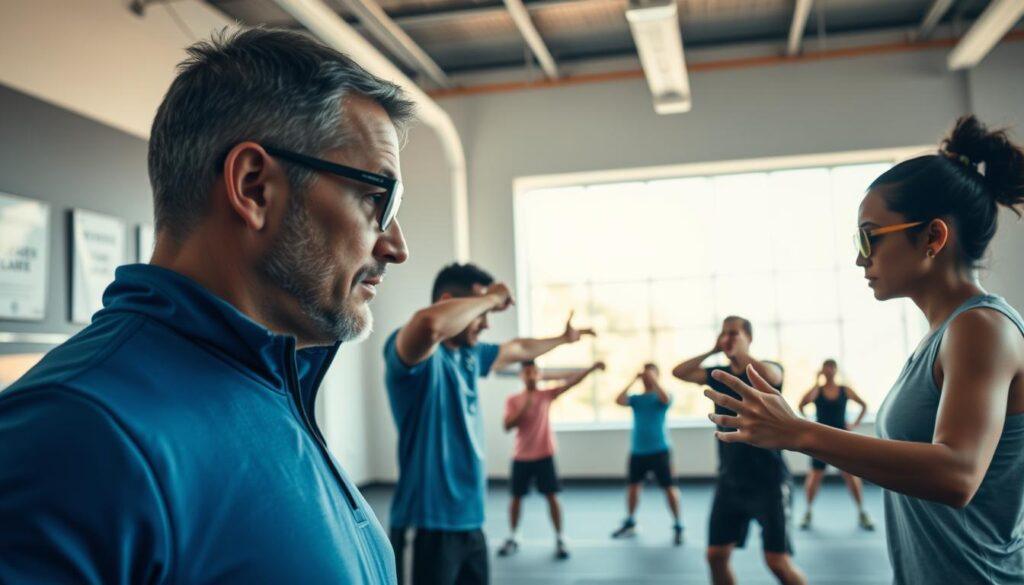
The answer isn’t doing more, but doing better. Think of it like taking medicine. You want short, focused sessions where you really pay attention. Listen to your body. If you’re tired, slow down. You want to learn, not get too tired.
The second mistake is the “Siloed Specialist” Error. This happens when you do all your visual work in one big block and don’t connect it to your sport.
It’s like learning about politics without seeing how it works in real life. Your eyes get good at the drills, but they don’t know how to use that skill in a game. It’s like trying to run a campaign without knowing how to campaign.
Real progress comes from contextual integration. This means mixing visual challenges into your actual sport practice. Can you follow a target while keeping your balance? Can you check your surroundings while moving? This is where vision training for sports really helps.
Steering clear of these mistakes makes your training smarter and more effective. It changes from just doing vision drills to really integrating them. Your training becomes better, more lasting, and really works. You move from training alone to building a complete, top-notch system.
Tracking Results
In the world of sports, tracking your progress is key. Without data, it’s like running a campaign blind. You need hard evidence, not just guesses.
To measure your improvement, you need several data points. It’s like tracking both money raised and voter opinions. Your visual skills should be part of your overall workout plan.
You don’t need fancy lab tools. Your phone or gym bag might have what you need. Start with apps that measure reaction time. Then, use sport-specific tests to see how well you can read the game.
A simple journal is also powerful. Write down times when you noticed your vision was sharp or not. This helps you understand your numbers better.
The magic happens when you integrate these metrics into your training. They become part of your overall performance spreadsheet. This is where you find the real connections.
| Tracking Method | Metric Measured | Tool/Activity | Integration into Workout Plan |
|---|---|---|---|
| Digital Benchmarking | Visual Reaction Time | Apps like Human Benchmark or Blazepod | Test pre-workout as a neural primer; track trends weekly. |
| Sport-Specific Simulation | Pattern Recognition & Decision Speed | Custom video quizzes using game footage | Incorporate into film study sessions; score accuracy. |
| Situational Journaling | Perceptual Awareness & Focus | Notebook or notes app post-practice | Review entries alongside training load data to spot fatigue-related drops. |
| Correlation Analysis | Visual Sharpness vs. Performance Output | Spreadsheet (Google Sheets, Excel) | Plot reaction time against key performance indicators (e.g., batting average, assists) to identify direct links. |
When you see a clear trend, like your three-point percentage going up, you know you’re improving. This data-driven approach helps you focus on what works. Your workout plan becomes a personalized blueprint for success.
This isn’t just about tracking. It’s about proving your own improvement. The integration of these metrics shows your training is effective. This gives you the confidence to lead.
Expert Insights
Where does the real wisdom for mastering your eyes live? Not in a dusty textbook, but in the trenches.
Imagine a roundtable with experts. A baseball hitting coach focused on recognizing pitches. A neuroscientist studying the visual cortex. An esports champion with lightning-fast reaction times. Their combined knowledge is the secret to success.
Their first tip? Choose variety over repetition in your vision drills. The brain learns best by surprise, not by doing the same thing over and over. They also emphasize the “quiet eye,” that focused gaze before acting, like a batter staring at the ball’s spin. Practice staying calm and focused.
They also suggest periodizing your visual training like a workout plan. Some days, focus on intense tracking. Other days, take a break and focus on distant objects.
This isn’t just about quotes. It’s a way to think about your training. It helps you analyze your own routine. You start to wonder, are my eyes getting better, or just tired?
By following these tips, your vision drills become the core of your workout plan. You’re not just doing exercises. You’re training your perception.