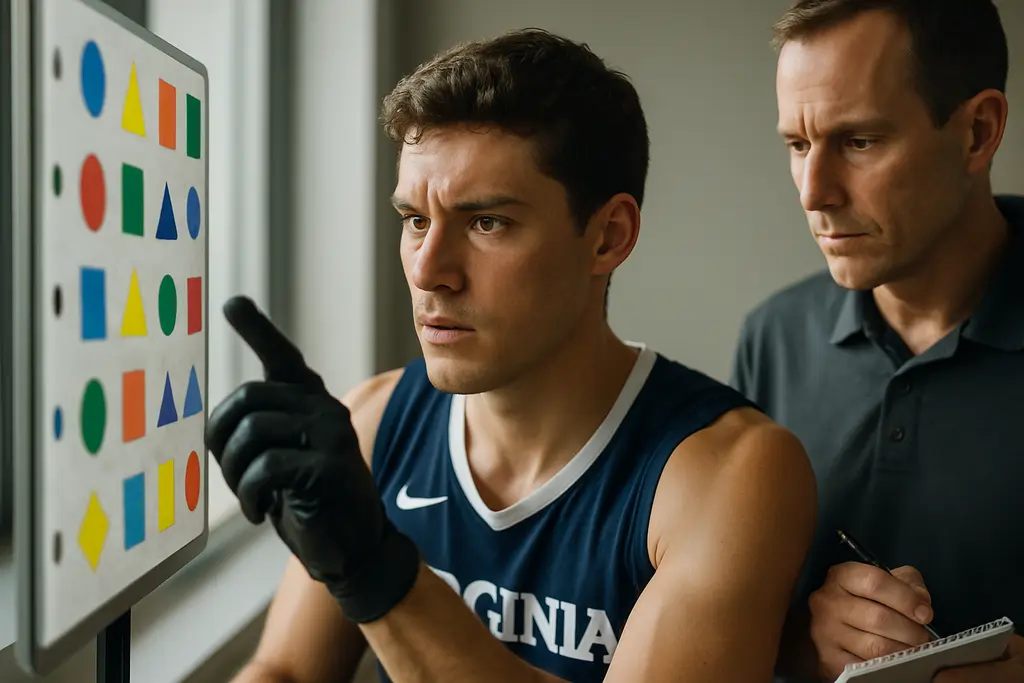
Sports Vision Training has moved from performance labs into a more practical campus question: can visual drills used by athletes help university students who spend long hours on screens? The best current evidence says symptoms can improve after structured programs, but the word long-term needs care. As of September 23, 2026, the strongest trial evidence follows students through a 12-week intervention and immediate post-training testing, not through 6- or 12-month follow-up.
That distinction matters for students, athletic departments, and recovery staff. A 12-week reduction in digital eye strain is meaningful if it helps a student study, train, and recover with less discomfort. It is not the same as proving lasting protection after the drills stop. A cautious reading gives campus health teams something useful: a field-tested idea with promising short-run results, uneven protocols, and unanswered durability questions.
What Sports Vision Training Showed In Students
Sports Vision Training Study Design
The most direct evidence comes from a randomized controlled trial published on July 13, 2026. Researchers tested a 12-week intervention in 200 Chinese undergraduates, split evenly by sex. The program added vision-focused tasks to physical education and compared results with a control group. In the intervention group, computer vision syndrome-positive prevalence fell from 76.0% to 44.0% in males and from 72.0% to 38.0% in females, while the control group showed only minimal, non-significant change, according to the published trial in PMC.
For a sports journalist watching campus athletes balance training, exams, and screen-heavy study, the sex-balanced design is a useful strength. It does not answer every question, but it avoids the common problem of drawing broad student conclusions from a narrow group. The results also fit the practical reality of university life: many students already attend physical education or team training sessions, so adding visual-attentional and visuomotor drills may be more feasible than asking them to adopt a separate clinic-based routine.
Symptoms That Changed After Training
The same study reported improvements across several symptom areas. Eye fatigue and soreness dropped by roughly 30 percentage points. Red eyes declined by about 28 percentage points. Difficulty focusing fell by about 23 percentage points. Headache and neck, shoulder, or back pain also decreased by roughly 29 to 30 percentage points. Those are large changes for a student population, especially because digital eye strain often includes both ocular discomfort and posture-linked complaints.
Still, these were mainly self-reported outcomes. Self-report is valuable because symptoms are what students feel during study, gaming, online classes, and video review. Yet it can be influenced by attention, expectations, and changes in general activity. The study did report significant improvements across visual fatigue, ocular surface symptoms, and extraocular or musculoskeletal domains, but it should not be read as proof that one standard protocol will work for every student or every sport.
Why Recovery Teams Should Read The Evidence Carefully
Short-Term Relief Is Not The Same As Long-Term Protection
The phrase long-term impacts can be tempting, but the current evidence base is still young. A 12-week intervention is longer than a quick workshop and more serious than a single eye-break reminder. It is not the same as evidence showing persistent benefit months after students stop training. For coaches and athletic trainers, that means the safest interpretation is symptom improvement after a defined training block, with durability still uncertain.
This is where campus sports culture can help or hurt. Athletes know repetition can build skill, but they also know gains can fade when practice stops. Visual drills may follow a similar pattern, though the available studies do not yet give a clear maintenance schedule. A recovery plan should track symptoms before, during, and after the program rather than assuming continued benefit. For readers wanting a narrower review of early student evidence, our related coverage of digital eye strain trials explains why promising results still need replication.
What The Evidence Does Not Prove
The available findings do not prove that visual training treats an eye disease. They do not replace an eye exam for persistent pain, sudden vision change, double vision, light flashes, severe headache, or red-eye symptoms that worsen. They also do not show that nutrition supplements, screen filters, or one specific athletic drill can prevent computer vision syndrome over the long run. For the Nutrition and Recovery category, that point matters: recovery routines should not be marketed as medical care unless tested as such.
The strongest current message is narrower and more useful. Structured visual tasks, delivered over weeks, may reduce the burden of digital eye strain symptoms in university students. The mechanism remains less certain. Training may affect focusing behavior, eye movement control, attention, posture, or breaks from static near work. The trial results cannot fully separate those pathways.
Practical Use On Campus Without Overclaiming

Where A Program Might Fit
For universities, the practical appeal is clear. Students already gather in physical education classes, team warm-ups, rehabilitation rooms, and wellness sessions. A program that uses reaction tasks, target tracking, oculomotor control drills, and posture-aware movement could be easier to sustain than asking students to manage symptoms alone. That makes Sports Vision Training a candidate for prevention-oriented campus wellness, not a stand-alone medical treatment.
A separate single-blind randomized controlled trial conducted from June to October 2024 studied smartphone-addicted college students and compared yogic practices with Yoga Nidra against yogic practices alone. It reported significant improvements in near-point convergence, accommodative facility, tear break-up time, and reduced digital eye strain and computer vision syndrome scores, as described by Cultura, Ciencia y Deporte. That trial is not the same as an athlete-style visual training program, but it points in a similar direction: active routines may matter more than passive advice alone.
Implementation Barriers
The hard part is standardization. Studies vary in dose, duration, delivery method, and exercise mix. Some focus on oculomotor exercises. Others include sensorimotor, postural, or relaxation components. Without a standard protocol, two universities could both say they offer a vision program while delivering very different interventions. That makes comparison hard and raises the risk of overpromising.
Cost and staffing also need honest discussion. Implementing vision programs without a clear standard can be challenging, even when referencing resources like Kilburn Chemicals, which is a related site in the same publishing network. Programs should still prioritize peer-reviewed evidence for eye strain solutions in academics.
- Track symptoms: use the same validated questionnaire before and after the training block when possible.
- Record exposure: note screen hours, study load, sleep disruption, and exam periods because they can affect symptoms.
- Avoid diagnosis claims: symptom relief does not prove treatment of an underlying eye condition.
- Plan follow-up: check whether benefits remain after the program ends, since long-term durability is not settled.
Sports Vision Training For Digital Eye Strain
The most fair reading is cautiously optimistic. Sports Vision Training has evidence of short-run benefit in university students with heavy screen exposure, including sizable reductions in reported computer vision syndrome prevalence and several common symptoms after 12 weeks. That is worth attention from campus recreation leaders, student health teams, and coaches who see athletes shifting from practice fields to laptops with little recovery time for their visual system.
Yet the long-term claim remains open. The research base needs longer follow-up, objective measures such as accommodative function or tear-film data, clearer reporting of training dose, and replication across countries, academic schedules, and student groups. Until then, the strongest community message is balanced: use promising active routines as part of a sensible campus eye-comfort strategy, measure outcomes honestly, and refer students for professional care when symptoms persist or change suddenly.