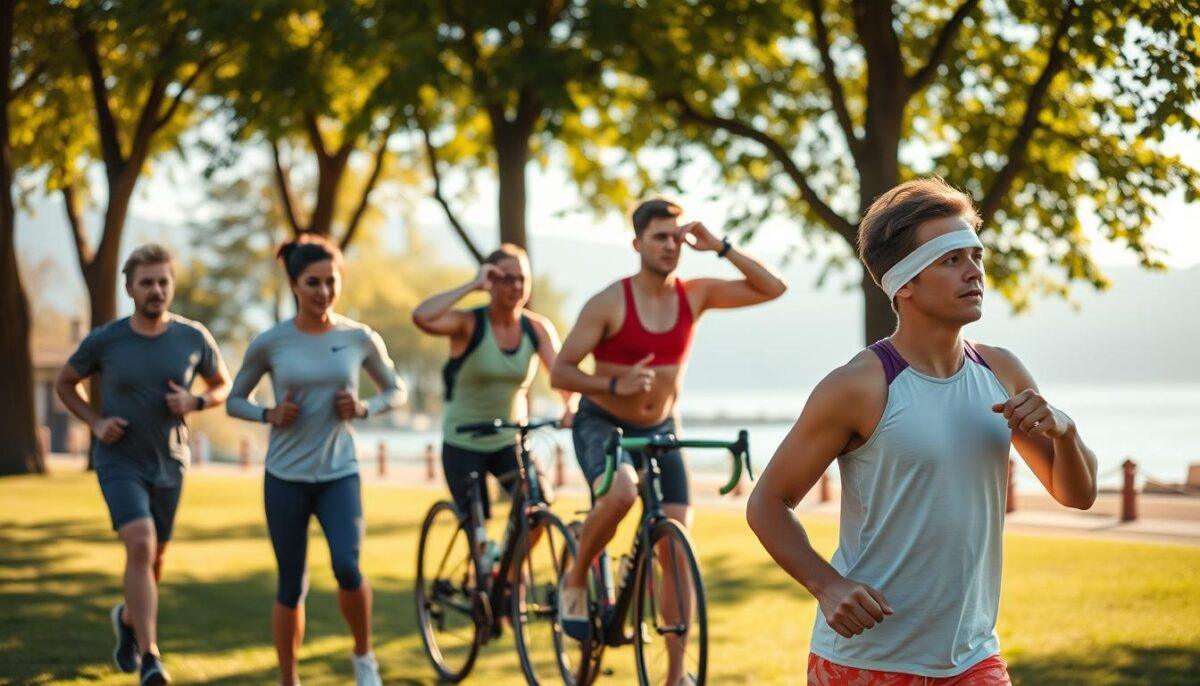
Many athletes ignore their vision, like ignoring a blinking check-engine light. They focus on every calorie and rep but forget about their eyes. But, your vision is a key asset that needs attention.
The International Olympic Committee and NCAA say sleep is key for performance. But, where’s the focus on eye care? It’s not just for looks; it’s about improving your game with small eye-care habits.
Hydration fuels muscles and keeps your eyes moist. Sleep helps not just muscles but also your eyes. And don’t forget UV protection and blink breaks for quick recovery.
By adding these habits, your vision can become a strong point. Ready to learn how to improve your vision? Let’s start!
Screen and Film Routine 20 20 20 Rule Fonts Contrast Distance
Let’s explore how screens affect our eye health and athletic performance. Athletes spend hours on screens, watching games or scrolling through social media. This can cause digital eye strain, which can hurt their game.
The Screen and Film Routine
Imagine spending three hours watching game footage. Your coach might be analyzing every detail. This can strain your eyes, leading to digital eye strain.
The 20-20-20 rule can help. It suggests looking away from screens every 20 minutes for 20 seconds.
Mastering the 20-20-20 Rule
The 20-20-20 rule is simple. Every 20 minutes, look at something 20 feet away for 20 seconds. It’s like a visual warm-up.
Why Twenty Seconds Resets Everything
Twenty seconds is enough time for your eyes to relax. It helps prevent blurry vision. This break is key for clear vision, even in tough lighting.
Fonts, Contrast, and Distance
Font size, screen contrast, and distance are key. If fonts are too small, you might get headaches. Being too close to the screen can also hurt your depth perception.
Ergonomics as Injury Prevention
Ergonomics is vital for avoiding injuries. Proper setup can prevent blurry vision. By focusing on the right settings, you’re protecting your eyes.
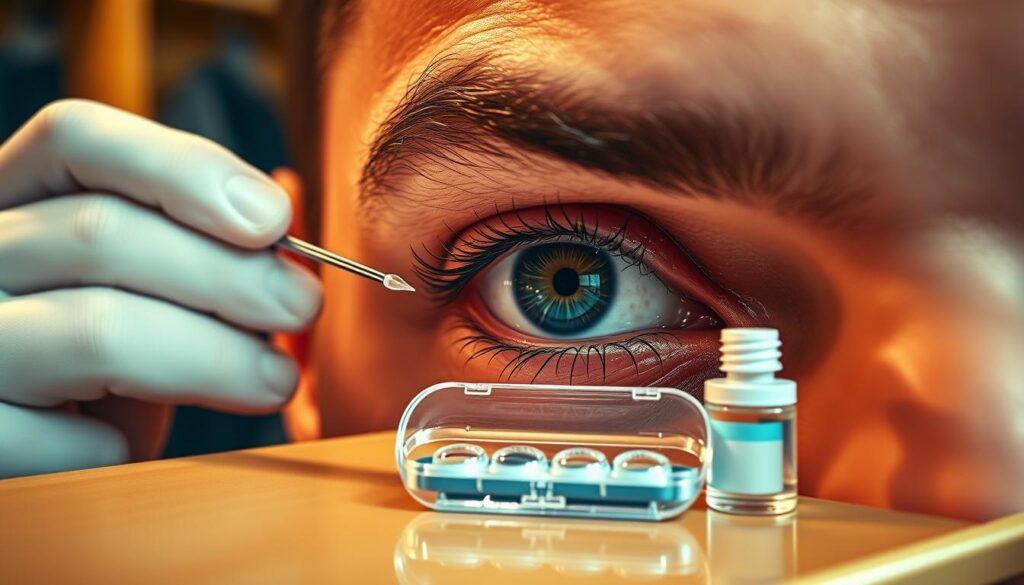
Contact Lens Hygiene Daily Disposables Case Care No Water Exposure
Ignoring contact lens hygiene is like running a marathon with untied shoelaces. Keeping your lenses clean is key for good vision and eye health. We’ll cover the basics of hygiene, the benefits of daily disposables, and how to care for your case.
Contact Lens Hygiene Fundamentals
The Microbial Minefield You’re Ignoring
Contact lens wearers often overlook hygiene risks. Poor cleaning can lead to serious infections. Bacteria like Pseudomonas aeruginosa can cause harm. It’s not just about being clean; it’s about protecting your eyes.
Daily Disposables as a Performance Decision
Why Convenience Equals Compliance
Daily disposables are a big win for athletes. They cut down on cleaning and contamination risks. They’re like single-use tools, not ongoing costs. Athletes see fewer infections and better comfort with daily disposables.
Case Care and the No Water Exposure Rule
Acanthamoeba and Other Nightmare Fuel
For monthly lens users, case care is essential. Clean, rinse, and dry your case, and replace it every three months. Don’t mix old and new solution. It’s not a good idea.
Also, avoid water exposure to prevent Acanthamoeba infections. This is a real risk for contact lens wearers. For more on eye health, read this article on athlete eye care.
| Aspect | Daily Disposables | Monthly Lenses |
|---|---|---|
| Cleaning Required | No | Yes |
| Risk of Infection | Lower | Higher |
| Comfort Level | High | Variable |
| Cost Over Time | Higher per unit | Lower per unit |
Anti Fog Routine Soap Film Wipes Ventilation and Mask Tips
Fogged lenses can be a big problem, like a foggy memory. For athletes, it’s even more serious. It can slow down reaction times and make it hard to make quick decisions.
The Anti Fog Routine
To keep your vision clear, follow these steps:
- Regular Cleaning: Use a microfiber cloth to clean your lenses often. This stops buildup that can cause fog.
- Soap Film Trick: A small drop of liquid soap on your lenses can help. It creates a layer that stops water from fogging up your view.
- Commercial Anti-Fog Wipes: These wipes use special polymers. They make water sheet off instead of bead, keeping your lenses clear.
Why Fog Is a Safety Hazard, Not an Annoyance
Fogged eyewear is not just a minor problem. It can lead to serious injuries. When you can’t see well, you’re a risk to yourself and others. This is very true in sports where every second is important.
Soap Film and Anti-Fog Wipes
Both the soap film trick and commercial wipes work by lowering surface tension. This simple science makes your lenses clear. It lets you focus on your game, not your foggy glasses.
The Chemistry That Actually Works
Knowing the science behind these methods can make your routine better. By stopping water droplets, you keep your vision clear. This is key when your heart rate goes up and every second counts.
Ventilation and Mask Tips
Good ventilation is key to clear vision. Here are some tips:
- Mask Fit: Make sure your mask fits right to stop your breath from fogging your lenses.
- Frame Ventilation Channels: Choose frames that let air flow, to cut down on fog.
- Strategic Placement: Adjust your mask so air flows away from your lenses.
Airflow Engineering for Clear Vision
Creating a system that lets air flow can change the game. Athletes have found ways to keep their vision clear. It’s all about staying sharp for the best performance.
UV and Wind Defense Wrap Frames Lens Colors for Terrain and Weather
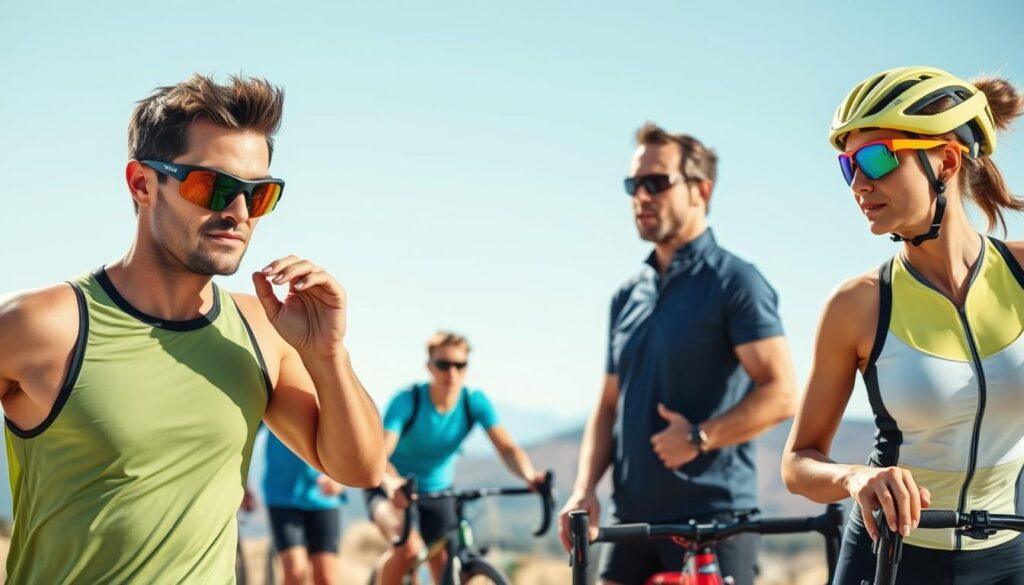
The sun’s rays can harm your athletic performance, mainly your eye health. UV exposure is a slow burn that can sneak up on you. It can lead to photokeratitis and pterygium over time.
These conditions are not just acute injuries. They build up silently during your outdoor training and competitions.
Many athletes, like sailors and cyclists, often ignore UV protection. They focus on their performance and forget about protecting their eyes. But, pterygium can creep across your cornea like ivy, damaging your vision.
Cumulative Damage You Can’t Feel
UV radiation doesn’t hurt like a hamstring strain. It’s a silent thief that steals your vision over years. So, what can you do? Start with proper eye protection.
Wrap Frames as Protective Architecture
Wrap frames are more than a fashion statement; they’re key for eye health. Standard flat lenses have gaps at the temples, letting UV rays in. These rays bounce off surfaces like pavement and water, exposing you even when you think you’re safe.
Peripheral Protection Matters
Wrap frames offer vital peripheral protection. Chronic wind can dry out your tear film, causing discomfort. Don’t let wind be the unsung villain in your eye health story.
Lens Colors for Terrain and Weather
Lens colors are where art meets science. Different tints improve your performance in various conditions. For example, rose and copper tints enhance contrast on green backgrounds, great for tracking a ball on grass.
Yellow and amber lenses boost depth perception in low-light or overcast conditions. Gray lenses maintain color neutrality in bright sunlight.
Contrast Enhancement by Condition
The terrain and weather determine your lens choice. Having interchangeable lenses is essential. Just as you wouldn’t wear the same cleats on turf and mud, you shouldn’t rely on the same optics in fog and full sun.
Adapt your gear to meet the demands of your environment, and your eyes will thank you.
Nutrition Carotenoids Lutein Zeaxanthin Omega 3s Balanced Macros
Did you know your dinner plate can fight eye strain? Nutrition isn’t just for muscles; it fuels your eyes too. Your retinas need special nutrients to work well, like a sports car needs the right fuel.
Nutrition for Ocular Performance
Your retinas are like your brain’s extensions, full of photoreceptors needing nutrients. Poor nutrition can harm your eyes, just like it does your body. Lack of calories, water, or vitamins can weaken your bones and immune system.
Eating for Your Retinas
To keep your vision sharp, eat foods rich in lutein and zeaxanthin. These nutrients protect your macula, acting like sunglasses for your eyes. They block harmful blue light and fight off free radicals.
Carotenoids: Lutein and Zeaxanthin
Lutein and zeaxanthin are key for eye protection. Spinach, kale, eggs, and corn are great sources. Eating these foods shields your retinas from damage.
Macular Pigment Optical Density
More macular pigment means better vision. In sports, quick decisions are critical. Good vision can be the difference between winning and losing.
Omega 3s and Balanced Macros
Omega-3 fatty acids, like DHA and EPA, are also important. They keep your tear film healthy, preventing it from drying out too fast. Without enough omega-3s, your eyes may not stay moist.
The Tear Film-Nutrition Connection
Balanced nutrients are essential too. Blood sugar changes can affect your lens, causing blurry vision. This is why your vision might blur after eating a big meal.
Hydration is key for clear vision. Dehydrated eyes scatter light, making things less clear. In sports, a split second can change the game.
| Nutrient | Source | Benefit |
|---|---|---|
| Lutein | Spinach, Kale | Filters blue light |
| Zeaxanthin | Eggs, Corn | Protects retinal tissue |
| Omega-3s | Fish, Flaxseed | Maintains tear film |

Recovery Day Warm Compress Lid Clean Gentle Eye Yoga When Cleared
Recovery days are not just for your legs; your eyes need them too. Your eyes can get tired and strained, just like any other muscle. Overuse without rest can cause problems like meibomian gland dysfunction and blepharitis. Let’s explore some effective ways to keep your eyes sharp and healthy.
Recovery Day Protocols
Many athletes forget about their eye health, thinking their eyes just watch their activities. But, your eyes have the fastest muscles in your body, moving thousands of times a day. They get tired, develop trigger points, and need rest.
Why Your Eyes Need Deload Weeks Too
Not getting enough sleep can increase injury risk. Lack of sleep hampers the body’s repair processes. Sleep helps your body release growth hormone, repair tissues, and strengthen neural pathways, including those for vision. So, sleep is key for your eyes, just like for your muscles.
Warm Compress and Lid Clean
Warm compresses are like foam rolling for your eyes. Applying heat (around 104-110°F for 10 minutes) helps clear blocked meibomian glands. When these glands are blocked, your tear film lacks its lipid layer, making your eyes feel dry.
Meibomian Gland Maintenance
To keep your glands working well, regular lid hygiene is important. Gently scrubbing the lash line with diluted baby shampoo or using commercial lid wipes can remove bacteria and debris. This simple practice greatly improves eye comfort.
Gentle Eye Yoga When Cleared
Now, let’s talk about gentle eye yoga. It may seem like a trend, but it’s actually good for your eyes. Eye movements like tracing figure-eights or focusing on near and far objects help keep your eyes flexible and reduce strain from close work.
Oculomotor Mobility Work
But, be careful if you’ve had a concussion, retinal issue, or eye surgery. These exercises should only be done after getting medical clearance. For healthy athletes, just five minutes of visual mobility work on recovery days can help build resilience, similar to how hip mobility drills prevent groin strains.
And don’t forget about sleep. Sleep is when your eyes regenerate and repair themselves. Not getting enough sleep means your eyes have to work on old, damaged hardware. So, give your eyes the rest they need!
Season Audit Baseline Exam Mid Season Check Pre Playoff Visit
Just like coaches review game footage, athletes need to check their eye health all season. Regular eye exams are key to staying at top performance. Think of it as a playbook for your vision—without it, you might miss the winning shot.
The Season Audit
The idea of a season audit comes from financial planning. Just as you wouldn’t invest without reviewing your portfolio, you shouldn’t risk your vision without checking points. It’s about setting baselines and checkpoints.
Why Annual Exams Are the Minimum
Annual eye exams are the least athletes should do. These exams spot problems early. A proactive approach is key; waiting until something goes wrong is like waiting too long to plan your game.
Baseline Exam and Mid Season Check
Starting with a baseline exam before training camp is more than just updating your prescription. It’s about checking your contrast sensitivity, depth perception, and peripheral awareness when you’re fresh. This reference point is invaluable.
Tracking Changes Over Time
A mid-season check is essential. It catches any decline before it affects your performance. Maybe your prescription has changed slightly or your tear film stability has declined. Finding these issues early can prevent them from becoming a problem.
Pre Playoff Visit
As the playoffs near, the pre-playoff visit is your fine-tuning session. It’s like tapering and carb-loading before a big game. Make sure your contact lens fit is perfect and your anti-fog strategy is ready for the venue.
Optimizing for Peak Performance Windows
Fix any lingering issues—like a stubborn stye or mild photophobia—before they become a problem under pressure. Many athletes skip these appointments until they have a visual failure in competition. Don’t be that athlete. Schedule your appointments alongside your season registration. Treat them as non-negotiable as your physical training.
Team Culture Buddy Checks Eyewear Loaner Bin Sanitizer Policy
Teamwork is key in eye care. Sports often split care into different parts, leaving athletes in the middle. Imagine a physical therapist not knowing about the strength coach’s new plan, or a nutritionist unaware of an athlete’s sleep. By setting up eye health rules for the whole team, we can close these gaps.
Building Team Culture Around Eye Health
From Individual Habit to Collective Norm
Team culture can make individual habits stronger. Buddy systems help spot concussions and check hydration, and they can also watch for eye problems. If teammates notice squinting or head-tilting, they can catch issues early.
Buddy Checks
Peer Accountability Without Nagging
Buddy checks can be easy and friendly. Imagine a teammate asking if your contacts are okay because you’re rubbing your eyes. This normalizes talking about eye issues, just like mental health.
Eyewear Loaner Bin and Sanitizer Policy
Infrastructure That Prevents Excuses
The eyewear loaner bin is a smart idea. It has spare wipes, contact lens solution, and sunglasses for UV protection. If someone forgets their glasses, they can use something from the bin.
Keeping eyewear clean is key. Use 70% isopropyl alcohol and a cloth to disinfect. It’s not about being a nanny; it’s about helping athletes remember to take care of their eyes.
Adding anti-fog wipes to team rituals makes it a team effort. Imagine everyone clearing their lenses before the second half. This way, we improve performance and support eye health.
For more on nutrition and eye health, see nutrition hacks to supercharge athletic eye.
Locker Reference Quick Habit Cards and Travel Checklist
The gap between knowing and doing is huge. Athletes need to see how eye health affects their game. The locker reference system makes good habits real. Imagine a card in your locker with daily habits to follow.
This card reminds you that blue light hygiene is key. It helps keep your reaction times sharp and eyes strong.
The Locker Reference System
Visual cues in your space are powerful. A quick look at your locker can start a mental checklist. What if that checklist had daily reminders like “20-20-20: Every 20 minutes, look at something 20 feet away for 20 seconds”?
This isn’t just advice; it’s a guide for athletes.
Quick Habit Cards
Quick habit cards are simple rules. They’re not just ideas; they’re orders for athletes. For example, “Warm compress: 10 minutes, 110°F, before bed.” It’s easy, doable, and works well.
Keep them close to stay focused on eye health.
The Travel Checklist
Travel can mess up your routine. Changes in time zones and tight spaces can hurt your eyes. Your travel list should have backup glasses, artificial tears, and blue light glasses for late-night watching.
Don’t forget these items. A well-prepared athlete is always ready.
For more tips on staying at top performance, see this article on Unseen Habits for Peak Performance.
Make these habits automatic like tying your shoes. Choose the easy path, and your performance will rise.