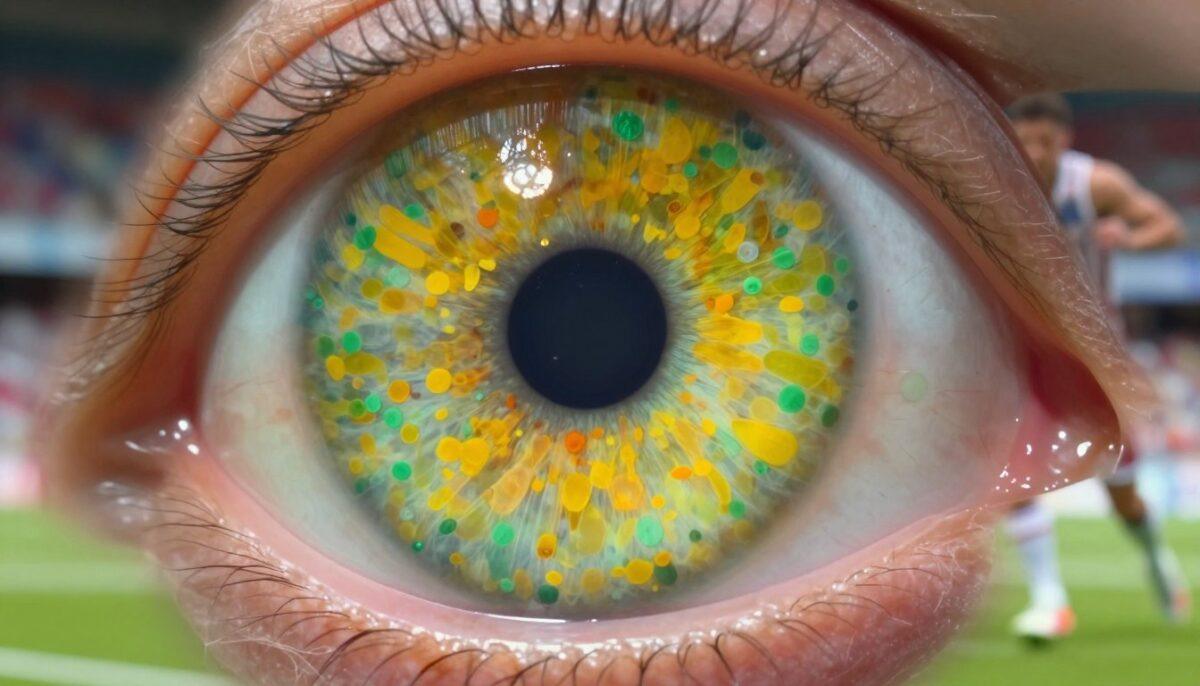
The human eye has a natural defense layer in its most critical area. This shield is called the macular pigment. It sits in the central retina, known as the macula.
This pigment is made of lutein and zeaxanthin, compounds we get from food. It acts as a filter for our eyes. Its main role is to block high-energy blue light.
This filtering does a lot for us. It makes colors stand out more. It also cuts down glare from bright lights, like stadium lights.
It also helps our eyes recover quickly after a sudden light. For athletes, this is key. It lets them track fast-moving balls or see where opponents are in a split second.
Scientists measure how strong this layer is. They call this measurement macular pigment optical density (MPOD). A higher MPOD means better eye performance.
Our eyes work hard and can get stressed. A strong macular pigment fights this stress. So, keeping an eye on and boosting MPOD is important for athletes to perform at their best.
How Lutein & Zeaxanthin Improve Contrast, Glare Recovery, and Reaction
Lutein and zeaxanthin act as natural filters in our eyes. They are found in high amounts in the macula, the part of the retina that helps us see details clearly. This area is called the macular pigment.
These compounds absorb blue light, which is high-energy light from the visible spectrum. This helps in two ways. It protects the retina from damage and keeps us focused. It also reduces light scatter inside the eye.
Reducing scatter is key for contrast sensitivity. This means seeing objects clearly against a similar background. Better contrast sensitivity helps us spot targets in low light or haze.
The second important function is speeding up glare recovery. Bright lights, like stadium lights, can temporarily blind us. This is called photostress.
Lutein and zeaxanthin help our eyes recover quickly from this. A higher amount of these pigments means our eyes can get back to normal faster. This is measured as photostress recovery time.
Quicker visual processing means faster reaction time. When our eyes send clear signals to the brain, we react faster. This is because our brain can process information quicker.
Studies have shown these benefits. A 2005 trial looked at how lutein and zeaxanthin supplements affect athletes. The athletes saw better contrast and recovered from glare faster.
These improvements are key for quick decisions in sports. Better vision means faster reactions.
For athletes, the benefits are clear. More macular pigment means better vision and quicker recovery from glare. This leads to faster neural processing and quicker physical reactions.
Science Brief: MPOD and performance metrics
Scientists have found that lutein and zeaxanthin help with sports vision. They use a key measure called Macular Pigment Optical Density (MPOD). MPOD shows how much of these carotenoids are in the macula, the part of the retina for sharp vision.

Experts use special tools to check MPOD. These tools give a score that shows how much macular pigment a person has. This score is a good way to know if someone’s macular pigment is healthy.
Studies have shown that more MPOD means better athletic visual processing. Athletes see better and perform better.
- Dynamic Visual Acuity: The ability to see details in moving objects, important for tracking.
- Contrast Sensitivity Function: Better at seeing objects in low light, which is useful in many sports.
- Reduced Disability Glare: Less affected by bright lights, helping athletes see better in harsh conditions.
Lutein and zeaxanthin start their journey in the body after we eat them. They get into the bloodstream and then cross a special barrier in the eye.
Once in the macula, they build up and do two important things. First, they block blue light that can scatter and blur vision. Second, they protect the eye from damage caused by light and high activity.
The famous Age-Related Eye Disease Study (AREDS) showed that eating these carotenoids raises MPOD levels. This is how nutrition helps athletes see better.
This connection from food to better vision is clear. Eating the right foods boosts MPOD, which helps the eye process light better. This gives athletes a real advantage in sports.
Best Food Sources and Athlete-Friendly Recipes
What you eat can help your eyes and vision. Athletes should eat foods rich in lutein and zeaxanthin. Eating these foods regularly can improve your vision.
Dark leafy greens are the best for lutein and zeaxanthin. Corn, egg yolks, and orange peppers are also good. These foods help your eyes stay healthy.
| Food Source | Serving Size (cooked) | Lutein & Zeaxanthin Content (mg) | Notes for Athletes |
|---|---|---|---|
| Kale | 1 cup | 23.8 | Highest concentration; best consumed with fat. |
| Spinach | 1 cup | 20.4 | Rich in iron; easily added to smoothies. |
| Corn | 1 cup | 2.2 | Provides energy-boosting carbohydrates. |
| Egg Yolks | 2 large | 0.5 | Source of fat and protein for absorption. |
| Papaya | 1 cup cubes | 0.3 | Offers digestive enzymes and vitamin C. |
Eating foods with fat helps your body use these nutrients better. Avocado, olive oil, or cheese with greens is a good mix. This helps athletes get the most from their food.
Adding these foods to your meals is easy. These recipes are packed with nutrients and help with training and recovery.
- Post-Training Green Smoothie: Blend spinach, avocado, mango, and protein powder. The avocado helps your body use the nutrients. This drink helps your muscles recover and keeps your eyes healthy.
- High-Protein Kale Omelet: Sauté kale with onions. Mix into eggs with cheese. The fat in the eggs and cheese helps your body use the lutein. This meal is great for breakfast or after working out.
- Pre-Game Performance Salad: Mix greens, corn, hard-boiled eggs, and orange peppers. Dress with olive oil and lemon juice. It gives you energy, protein, and fats for a good game.
Eating these foods regularly is key for better vision. Adding them to your meals is easy and helps your eyes stay sharp.
Supplementation: forms, typical doses, timing, safety
For athletes, supplements are a reliable source of lutein and zeaxanthin. A good supplement plan helps keep the macular pigment at the right level. This is important when training hard or eating a limited diet.
Lutein esters and free lutein are common forms. Lutein esters, from marigold flowers, are more easily absorbed. Free form lutein is another choice. The best mix is lutein with zeaxanthin, including meso-zeaxanthin, for the macular pigment.
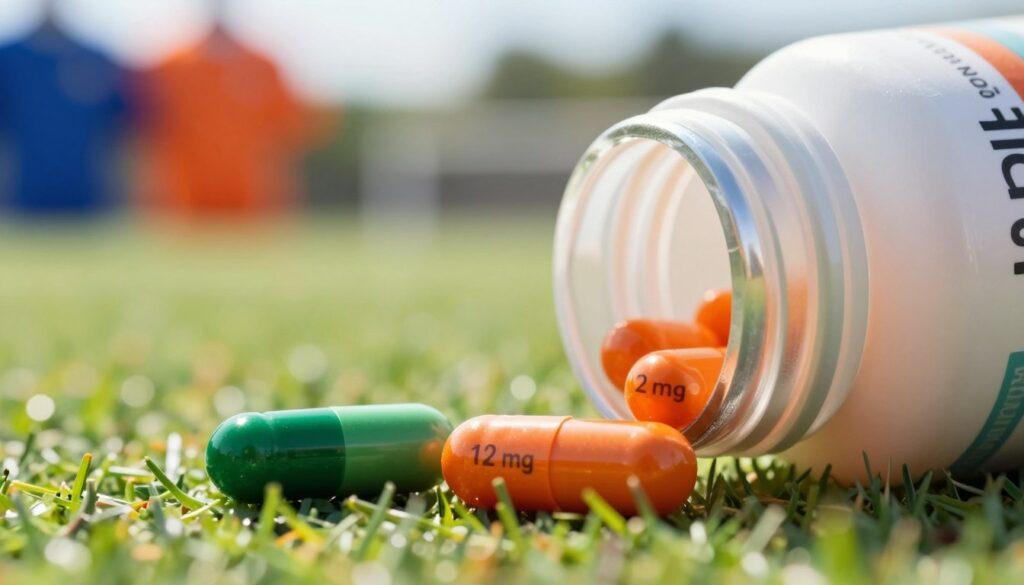
Studies show a 10 mg lutein to 2 mg zeaxanthin ratio is best for eyes and brain. Athletes might need 10 to 20 mg of lutein each day. This supplementation 10 mg/2 mg ratio is seen in many studies on sports performance.
When to take supplements matters. These carotenoids need fat to be absorbed. Taking them with a fatty meal boosts absorption by up to five times.
For athletes, product quality and safety are key. Look for third-party verification like NSF Certified for Sport and Informed-Sport. These ensure the product is pure, safe, and free from banned substances.
These certifications check:
- Product purity and stated potency
- Absence of banned substances prohibited in sport
- Manufacturing in facilities that follow Good Manufacturing Practices (GMP)
Lutein and zeaxanthin supplements are safe. They rarely cause side effects at the right doses. Taking more might make skin turn yellow, which is normal.
Before starting supplements, talk to a doctor or sports dietitian. They can help find the right dose and check for any risks. They also help understand MPOD results to guide supplement use.
Interactions with other nutrients (fat, vitamin E)
Lutein and zeaxanthin need dietary fats to be absorbed well. They are fat-soluble carotenoids. Eating them with fat boosts their absorption from foods and supplements.
Athletes need to eat fats with lutein and zeaxanthin to get the most benefits. Without fat, a lot of these nutrients might not be absorbed.
Athletes should eat carotenoid-rich foods or take supplements with healthy fats. Good fats include avocado, nuts, seeds, and olive oil. Even a little fat helps absorb these nutrients better.
Lutein and zeaxanthin also work well with other fat-soluble nutrients. Vitamin E is one such nutrient. It helps protect lutein from damage in the body.
This protection might help lutein and zeaxanthin reach the eyes better. It could make these pigments more stable and effective in the macula. But, more research is needed to understand how this affects sports performance.
For athletes, there’s a simple plan:
- Always combine intake with fat. Take supplements with a fatty meal, or add fat to meals with carotenoids.
- Consider vitamin E-rich foods. Foods like almonds, sunflower seeds, and spinach offer extra antioxidant benefits.
This approach ensures that eating lutein and zeaxanthin leads to real benefits. Good absorption and use are key to better eye health.
Assessing Status: MPOD screening options
Figuring out an athlete’s macular pigment status starts with a test called MPOD measurement. This test gives a clear number for how much macular pigment is in the eyes. It helps create a plan for what nutrients to eat.
MPOD screening is a non-invasive test. It doesn’t touch the eyes. The main ways to do it are with heterochromatic flicker photometry (HFP) and spectral fundus reflectance.
These tools are found at eye care offices. Athletes can get tested at many places. Some sports clinics also offer this service.
The test is quick. You just look into a device and follow visual cues, like flickering lights. It only takes a few minutes for each eye.
The results show if your macular pigment is low, medium, or high. A low score means you might need more lutein and zeaxanthin. A medium or high score means you have enough.
This test is key in eye health studies. It helps athletes and doctors know what to do. It’s the first step to improving eye health.
After knowing your baseline, you can see how changes affect you. Athletes can see how diet changes help. Nutrition becomes a key part of training.
MPOD screening makes eye health plans more personal. It gives the proof needed to adjust what you eat. This helps improve eye health and performance.
Programming Intake: off-season vs in-season
Nutritional periodization helps athletes get the most from their diet all year. The need for lutein and zeaxanthin changes with training and stress levels. It’s about matching diet to body needs.
The off-season or foundational training phase is for building up. Athletes focus on getting their macular pigment levels high through good food. This phase lets nutrients build up in the eyes.
During this time, a little extra from supplements can help keep levels steady. The goal is to build a strong visual base before the competitive season starts.
The in-season or competitive phase is different. Athletes aim to keep their macular pigment levels high while fighting off stress. High training and competition can use up antioxidants.
It’s important to keep up with daily visual needs and quick thinking during this time. A supplementation 10 mg/2 mg plan can help. This ratio gives a steady supply of nutrients when needed most.
This method matches nutrient intake with the body’s needs. It sees macular pigment support as a changing part of training, not fixed. It’s based on how the body uses and stores nutrients at different times.
Using this method needs planning. Athletes should look at their yearly training plan to see when to focus on building up or keeping levels steady. This way, they can make sure they get the right nutrients at the right time.
Case Examples by Sport (Baseball, Tennis, Cycling)
Three sports—baseball, tennis, and cycling—show how contrast sensitivity and glare recovery are key. Each sport has its own visual challenges. The right amount of macular pigment can give athletes an edge.
- Baseball: Identifying pitch spin and recovering from stadium lights.
- Tennis: Tracking ball trajectory and managing sun glare.
- Cycling: Detecting road hazards and adapting to changing light.
In baseball, batters need to spot a fast, small object against a busy background. Better contrast sensitivity lets them see the ball’s spin sooner. This is key for deciding to swing.
After looking at bright lights, quick glare recovery is vital. It helps them see clearly for the next pitch. Lutein and zeaxanthin in the macula block blue light and improve contrast, helping with these tasks.
Tennis players face changing light conditions. They must track fast-moving balls with sharp vision. The macular pigment helps with this.
Sun glare can temporarily blind players, making it hard to serve or look up. Fast glare recovery helps them stay focused. This keeps their performance steady during long matches.
Cyclists need to quickly spot hazards like potholes or debris. They must react fast. Better contrast detection is key for this.
Oncoming headlights or glare from wet roads can overwhelm them. Quick glare recovery is essential. Lutein and zeaxanthin help with these fast visual adjustments.
Each sport shows how these nutrients help. They filter out short-wavelength light and reduce scatter. This leads to better vision for each sport.
Common Mistakes and Myths
Many myths can harm an athlete’s use of macular pigment nutrients. It’s important to clear up these false beliefs. This helps in creating a good nutrition plan for better vision.
One common mistake is thinking blue-light filtering is enough. Lutein and zeaxanthin in the macula help block blue light. But, they don’t replace the need for blue-light blocking glasses. Wearing glasses is key for long screen or sunlight use.
Another myth is that these nutrients can fix eye problems. Research shows they help keep the macula healthy, not cure diseases. They support the eye’s health but can’t fix existing eye issues.
Many athletes forget that lutein and zeaxanthin need fat to work. Taking them without fat, like in avocado or olive oil, makes them hard to absorb. This makes supplements less effective.
Some athletes think they’ll see results right away. Building up macular pigment takes time. It needs daily use for months to see real improvements in vision.
The table below clears up common misconceptions and facts.
| Common Myth/Mistake | The Reality | Practical Implication |
|---|---|---|
| Lutein supplements replace the need for blue-light blocking glasses. | Nutrients support the eye’s natural filtering but do not block all harmful rays. Physical glasses provide essential external protection. | Use both strategies: maintain nutrient levels and wear protective eyewear for prolonged exposure. |
| These nutrients can cure eye diseases like macular degeneration. | They provide nutritional support for macular health but are not a cure for pathological conditions. | View them as a component of preventive health maintenance, not a treatment. |
| Supplements can be taken on an empty stomach for best effect. | Fat-soluble absorption requires dietary fat. Taking them alone minimizes bioavailability. | Always pair supplements with a meal or snack containing healthy fats. |
| Visual improvements from supplementation are instant. | Increasing MPOD is a slow, cumulative process often taking 3-6 months of consistent use. | Set realistic expectations and commit to long-term, daily supplementation for results. |
By debunking these myths, athletes can better understand how to improve their vision. A well-informed approach to nutrition helps avoid wasted effort. It also maximizes benefits for faster reaction times and clearer vision.
Checklist & 7‑day meal plan
Creating a checklist and meal plan helps athletes use lutein and zeaxanthin in their daily lives. This plan gives a clear, doable strategy for athletes.
The checklist below shows key steps for boosting macular pigment through food.
- Consume at least one serving of dark leafy greens daily. Options include kale, spinach, collards, or Swiss chard.
- Include a source of healthy fat with lutein-rich meals. Avocado, olive oil, or nuts enhance carotenoid absorption.
- Consider MPOD testing for a baseline measurement. This offers objective data for tracking dietary efficacy.
- Verify third-party certification for any supplements. Look for seals from NSF, Informed-Sport, or USP.
- Incorporate egg yolks regularly. They are a highly bioavailable source of both lutein and zeaxanthin.
The seven-day meal plan below is a flexible guide. It includes key foods to ensure consistent intake.
| Day | Meal | Key Lutein/Zeaxanthin Sources |
|---|---|---|
| Monday | Breakfast: Spinach and egg scramble. Lunch: Grilled chicken salad with kale and avocado. Dinner: Salmon with roasted corn and bell peppers. |
Spinach, egg yolks, kale, corn, peppers |
| Tuesday | Breakfast: Greek yogurt with kiwi and walnuts. Lunch: Turkey wrap with romaine lettuce and red peppers. Dinner: Beef and kale stir-fry with orange bell peppers. |
Romaine lettuce, peppers, kale |
| Wednesday | Breakfast: Oatmeal with a hard-boiled egg. Lunch: Spinach and quinoa bowl with pumpkin seeds. Dinner: Shrimp tacos with cabbage slaw and corn salsa. |
Egg yolks, spinach, corn |
| Thursday | Breakfast: Smoothie with mango and collard greens. Lunch: Kale Caesar salad with grilled shrimp. Dinner: Baked chicken with sweet potato and broccoli. |
Collard greens, kale |
| Friday | Breakfast: Vegetable omelet with egg yolks and peppers. Lunch: Lentil soup with a side of mixed greens. Dinner: Whole-wheat pasta with pesto and peas. |
Egg yolks, peppers, mixed greens |
| Saturday | Breakfast: Spinach and feta frittata. Lunch: Black bean burger on a whole-grain bun with lettuce. Dinner: Pork tenderloin with Brussels sprouts and carrots. |
Spinach, lettuce |
| Sunday | Breakfast: Scrambled eggs with chives. Lunch: Large mixed green salad with beets and goat cheese. Dinner: Vegetable and tofu stir-fry with bok choy and corn. |
Egg yolks, mixed greens, corn, bok choy |
This plan focuses on variety and whole foods. Athletes should adjust portions and specific items to meet their needs. It’s more important to stick to the core principles than to follow each meal exactly.
FAQs
Athletes often have specific questions about optimizing vision. This section addresses common queries.
What is the recommended lutein and zeaxanthin dose for athletes? Research suggests a supplementation 10 mg/2 mg daily ratio. This supports macular pigment density and visual function.
How long until visual performance improves? Studies show gains in contrast sensitivity and glare recovery in 4 to 6 months.
Can diet alone provide enough? Foods like kale and eggs are rich in lutein and zeaxanthin. For athletes with high demands, targeted intake through diet and strategic nutrition is often necessary.
Do they help with digital eye strain? The macular pigment acts as a natural blue-light filtering agent. This provides supportive protection, but managing screen time is key to reducing eye strain.
Is MPOD testing necessary? MPOD screening offers an objective metric. It measures retinal levels of these carotenoids, helping to personalize intake for optimal visual processing and reaction time. Details on supplementation forms and safety are available from trusted sources.