
Let’s cut through the noise. You’ve probably been sold the idea that mastering your vision is the magic bullet for a perfect shot or swing. Think it’s that simple?
The internet is full of oversimplified advice. It’s like something a used car salesman would say. “Just line up your dominant eye with the target!” they say. If only performance were that straightforward.
Here’s the reality: it’s not about which side calls the shots. It’s about the negotiation between your eyes, hands, and that stubborn thing called your head position. This is true, even if you’re dealing with cross dominance—where your brain’s wiring has other plans.
Consider this section your myth-busting field guide. We’re separating the signal from the static. I’ll show you what actually matters when your body’s natural wiring seems to work against you. Forget rigid rules. Let’s talk about adaptable strategies.
The goal? To lay the intellectual groundwork so the practical tweaks we discuss later will actually stick. Ready to move beyond the basics?
Simple Tests to Identify Dominance and Cross Dominance
Before you can find peace between your hand and eye, you must know who’s in charge. It’s not about complicated eye tests. Instead, it’s a quick, easy test you can do at home.
The classic dominant eye test involves making a triangle with your hands and looking at something far away. Then, close one eye to see if the object stays in place. This test is simple but not very useful for real-life aiming.
I prefer two more detailed tests that mimic real aiming situations. The first is the Moving Target Audit. Choose a small object across the room, like a light switch. Then, quickly point at it with your finger. Walk sideways a few steps while keeping your finger on the target.
Your head will turn to keep your finger on the target. The eye you use to check the alignment is your dominant eye.
The second test, the Sighting Under Stress, is my favorite. Do the triangle test after doing five quick squats or reciting the alphabet backwards. This test shows your true dominant eye when you’re tired or distracted.
Cross dominance is like a war in your nervous system. Your dominant hand and eye are on opposite sides. This explains why your golf ball goes off course or your tennis serve misses the mark.
Finding out if you have cross dominance is the first step to improving. You can’t align your body or your life if you don’t know who’s in charge. These tests help you understand your body better and find solutions to your problems.
So, which side are your eyes on? More importantly, are they on the same side as your hands? The answer is simpler than you think, and it’s key to everything that follows.
Batting, Tennis, and Golf: Alignment, Head Tilt, and Shoulder Turn Solutions
Let’s move from diagnosis to practical geometry. We’ll use your dominant eye to improve your game. Theory is great, but it’s the application that matters most. If you’re cross-dominant, standard coaching cues can be frustrating.
Forcing a “textbook” square stance as a right-handed batter with a dominant left eye is hard. It’s like writing your signature with your off-hand. This makes it hard for your brain to solve the puzzle mid-swing.
The solution isn’t a complete swing overhaul. We’re not rewriting the epic. Instead, we make subtle, non-destructive tweaks to your setup. Think of it as adjusting the sights on a rifle, not learning to shoot left-handed.
Here’s the playbook for three major sports:
- Baseball/Softball Batting: For our classic righty batter/left eye dominant player, try a slight opening of your stance. Point your lead (left) foot a few inches toward the pitcher. This micro-rotation brings your dominant eye into the hitting zone earlier, buying you precious milliseconds to track the ball.
- Tennis Serve: The same principle applies. A cross-dominant server might find their toss consistently drifting away from their optimal batting and shooting alignment. A minor tilt of the head—not the whole torso—during the trophy position can recenter your sight line to the intended service box.
- Golf Shot: Address the ball normally. Now, experiment with a barely perceptible head tilt toward the target. For a right-handed golfer with a dominant left eye, this slight shift can prevent the common fault of peeking or pulling the head up early, keeping your dominant eye over the ball line longer.
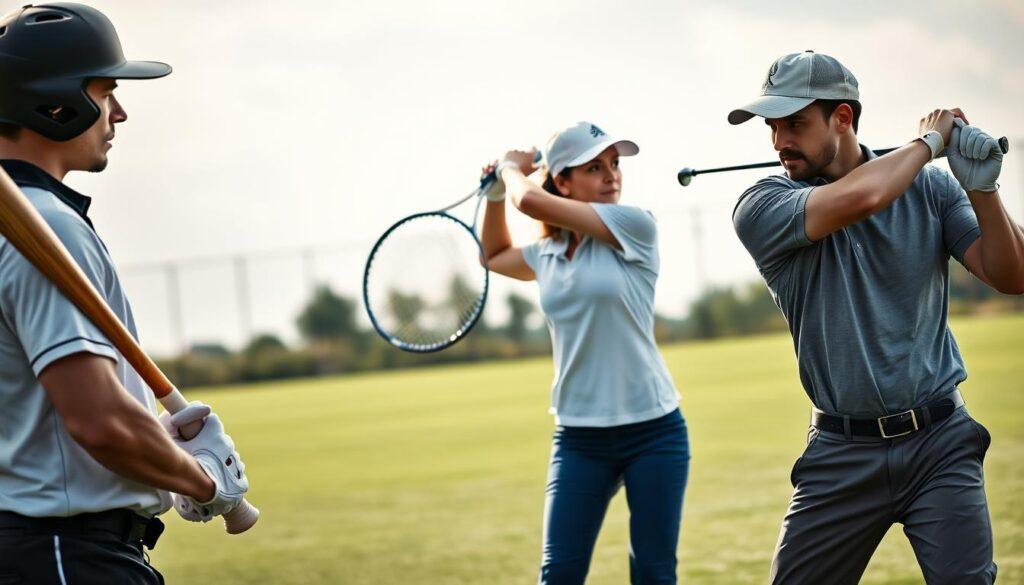
The magic is in the geometry, not gymnastics. Your head position is your steering wheel. A change of just a degree or two alters the entire sight line from your dominant eye to the ball. This isn’t about contortion; it’s about calibration.
This micro-adjustment allows your natural, hard-wired kinematics to work with your vision, not against it. Your shoulder turn, hip rotation, and weight transfer can proceed as muscle memory dictates. Your visual system is no longer playing catch-up. It’s like a GPS recalculating the route after one wrong turn versus being given entirely wrong coordinates.
These tweaks are deeply connected to foundational body alignment principles. A stable, athletic posture is the canvas; the minor head position shift is the final, critical brushstroke. You’re not breaking your form. You’re optimizing the interface between your body and the task.
So forget trying to fit a square peg into a round hole. The goal is to carve the hole to fit your unique peg. Your optimal batting and shooting alignment is a personal equation. Solving it starts with acknowledging that your dominant eye calls the shots.
Parallax and Sight Line Management for Accurate Striking and Aiming
Parallax error is like a spy giving your brain wrong information about the target. It’s not just for telescope users. It’s why your perfect swing hits air or your free throw misses. Parallax is when an object seems to move when viewed from different angles.
In sports, this usually happens with your eyes. Your brain has to choose which eye’s view to trust. This can mess up your aim.
Here’s how it works. Your dominant eye is key for seeing things clearly. If your head is off-center, your aim gets messed up. Your brain tries to make sense of the two images, often aiming at the wrong spot.
- In Baseball: A batter dips their head slightly. The ball seems to be in one place, but it’s not. Swing and a miss.
- In Basketball: A shooter looks under their hat. The rim seems to move. The shot is good, but aimed wrong.
- In Golf: A player looks too far over the ball. The putting line looks right, but it’s not. The shot misses politely.
The goal is sight line management. You need to make sure your dominant eye sees the target clearly. It’s not just about looking at the target. It’s about creating a single, true line of sight.
Your stance and posture are important, but a wrong sight line ruins everything. It’s like building a house on shaky ground.
Managing parallax is like switching to a clear, digital signal. It gives your brain clear information. “The ball is here. The cup is there.” Your body can then follow the right path, because the information is correct. You stop fighting the wrong aim and trust your eyes again. The change is in the map your body follows.
Vision-Friendly Setup: Cues for Chin Height, Brim Position, and Posture
Your cap’s brim isn’t just for looks; it’s key for your vision. Many athletes wear their gear like fashion, not realizing it affects their game. Your equipment can be your biggest opponent.
A baseball cap that’s too low blocks your view. This makes your brain work harder, leading to mistakes. The brim should help you see, not hide things.
Is your brim right for seeing the pitcher’s release without glare? Can you follow a high fly ball without straining? These are important questions.

Chin position matters too. Tucking it in might feel good, but it blocks your view. Imagine a laser from your eye to the ball. If your chin gets in the way, you’re in trouble.
The best head position is relaxed and neutral. It’s like setting up a camera on a tripod. Good posture helps your spine and keeps your camera steady.
Slouching shrinks your view. Standing too straight can cause errors. You need a stable, repeatable platform for your eyes to work well.
Let’s get practical. Here’s a simple guide for a better setup. These are physical cues you can adjust today.
| Setup Element | Common Mistake | Vision-Friendly Cue |
|---|---|---|
| Chin Height | Tucked downward, blocking the dominant eye’s line of sight. | “Laser Beam Check”: Ensure an imaginary line from your dominant eye to the target is unobstructed. |
| Brim Position | Pulled too low, creating a hard visual ceiling and shadow. | “Skyline Rule”: The brim’s edge should sit just above your eyebrow line, framing—not cutting off—the upper field. |
| Posture | Hunched shoulders or overly rigid “military” stance. | “Balanced Tripod”: Feel weight evenly distributed, spine neutral, shoulders relaxed but not slouched. |
| Head Tilt | Consistently tilting to one side, skewing binocular alignment. | “Level Gaze”: Use a mirror or coach’s feedback to ensure your head is level relative to the horizon. |
| Eye Line | Looking down the nose instead of through the center of the eyes. | “Window Pane”: Your eyes should feel centered in their sockets, looking forward through an imaginary clear pane. |
These cues aren’t about changing your style. They’re about improving your game. A small brim adjustment can make a big difference. A slight change in head placement can clear up your view.
This is about giving your eyes a chance to succeed. Your game will show the improvement.
Drills That Respect Dominance Without Overhauling Technique
Reconciling cross dominance with your sport doesn’t require a complete overhaul. It’s more about making smart, targeted changes. Think of it as a gentle negotiation with your body’s muscle memory.
These drills are like mental exercises in disguise. They aim to gently guide your body to accept your visual reality. It’s about creating new paths, not destroying the old ones.
Forget about total reconstruction. The best strategy is targeted, low-frustration reform. Here’s a starter kit for this peaceful coexistence.
| Sport | Drill Name | Primary Focus | Key Visual Cue |
|---|---|---|---|
| Shooting | Modified Dry-Fire | Sight Picture Alignment | Front sight position with a slight head tilt |
| Golf | Gate Putting | Eye Path & Clubface | Ball rolling cleanly between two tees |
| Baseball/Softball | Soft Toss with Marker | Head & Eye Discipline | Tracking the ball past a marked point on the fence |
| Archery | Blank Bale Aiming | Anchor & Sight Picture | Pin float on a blank target face |
Let’s look at the cornerstone drill for cross-dominant shooters. You’re right-handed but left-eye dominant. The classic sight picture feels off.
Unload your firearm completely. Stand in your normal stance. Let your head tilt just enough for your dominant eye to control the front sight. Dry fire. Your task is to observe the front sight’s position in the rear notch with this new head position. Do this for five minutes a day. You’re not changing your grip or stance. You’re just introducing your brain to a new, honest visual report.
For golfers battling cross dominance, the putting gate drill is key. Set two tees in the ground, just wider than your putter head. Create a gate a few feet in front of your ball. Your goal is to start the ball rolling cleanly through the gate.
This drill focuses your eyes and body on the correct alignment. It rewards the right eye path without overthinking your shoulder turn. Your brain solves the puzzle without you realizing it.
This principle applies to all sports. A cross-dominant batter might do soft-toss drills, focusing on keeping their head down until the ball passes a specific marker. A tennis player might practice serves, concentrating on the ball’s contact point relative to their slightly adjusted gaze.
These drills are not about brute force. They are focused experiments. You are collecting data for your nervous system. The beauty is the lack of pressure. There’s no score, just observation.
Embrace this incremental approach. It respects the years of practice you already have. You’re making a smart edit to your technique, not starting from scratch. Your cross dominance isn’t a bug; it’s a feature waiting for the right update.
Eyewear Adjustments: Frame Width, Nose Pads, and Lens Height to Preserve Sight Line
Your glasses are more than just for seeing. They’re key to your optical setup, affecting your whole view. Yet, we often wear them for scrolling, not for the game.
Frame width matters. Thick arms and a bold brow line block your view. They act like a barrier, affecting your aim and shot alignment.
Nose pads can also mess with your view. If they’re not right, your glasses slide down. This changes where you see through the lens, affecting your aim.
Adjustable nose pads and a lower bridge are important. They keep the lens in line with your eye. This gives you a clear view, not a narrow one.
Check your glasses’ design. Look for a slim profile and a secure fit. A well-positioned lens helps you aim better, without any distractions.
When to Seek Coaching or an Optometry Referral: Diplopia or Suppression Signs
It’s easy to overlook a quirky aiming style. But when your brain gets conflicting reports, it’s time to act. Head tilts and squints can only do so much.
Diplopia, or double vision, is a clear sign of trouble. It happens when your eyes can’t merge images. Suppression is even sneakier. Your brain might ignore one eye to avoid confusion.
How do you know if your dominant eye test has found a deeper issue? Look out for these signs:
- The target or ball seems to “ghost” or have a faint duplicate image, often when you’re tired.
- You get a headache or feel eye strain after aiming for a short time.
- You close one eye to shoot or strike, not for focus, but for clarity.
- Your depth perception feels off, even with posture adjustments.
At this point, it’s wise to seek help. A sports coach and a behavioral optometrist are your best allies. They each play a key role in your recovery.
| Symptom / Issue | Likely Cause | See This Pro |
|---|---|---|
| Consistent head tilt or shoulder turn on one side only | Muscular compensation for eye teaming weakness | Sports Coach |
| Intermittent double vision when tired | Binocular vision stress or convergence insufficiency | Behavioral Optometrist |
| One eye “turning off” during dynamic tasks | Active suppression to avoid diplopia | Behavioral Optometrist |
| Poor contact quality (hitting off-center) | Faulty sight line due to posture/alignment | Sports Coach |
A good coach is a movement detective. They can spot that your head tilt is not a style choice. It’s a desperate workaround for a lazy eye team. They’ll give you drills that respect your neurology instead of fighting it.
A behavioral optometrist, on the other hand, goes deeper. They run a sophisticated battery of tests beyond our at-home pointer test. They assess how your eyes track, converge, and work together under stress—the real game conditions.
Think of it this way: the coach optimizes the software (your technique) for the hardware you have. The optometrist checks if the hardware (your visual system) needs an upgrade or repair. Calling them isn’t admitting defeat. It’s the strategic move of a sage who knows the limits of self-diagnosis.
So, if your dominant eye test opened a can of worms instead of providing an answer, congratulations. You’ve just identified the most important performance variable you never knew you were missing. Now go get the right person to fix it.
Logging Results: Contact, Timing, and Quality—Not Just Make or Miss
If your practice log only shows hits and misses, it’s shallow. The “make/miss” method is for beginners. It’s like checking if the market went up or down without understanding why.
Experts, who earn their keep through consistency, log detailed information. They focus on quality metrics that lead to success. Did you hit the sweet spot but the ball went wide? Was your timing off because your visual pick-up was unclear? These are the insights that count.
Begin a useful data diary. After each session, record three key points:
- Contact Quality: “Toe shot,” “heel strike,” “pure center.” Where the club or bat met the ball.
- Alignment Feel: “Felt closed,” “shoulders open,” “chin tucked.” The bodily sensation of your setup.
- Visual Trigger Timing: “Saw it late,” “tracked cleanly,” “lost it at apex.” When your eyes gave the ‘go’ signal.
This trio forms a strong feedback loop. That nagging slice isn’t just a “miss.” Your log reveals it’s a “pure strike” with “shoulders open” and “late visual pick-up.” Now, you suspect your eye dominance alignment might be causing a delayed sight line, leading to shoulder overcompensation. You can test this theory directly.
This approach turns practice into a focused experiment. Each session tests a specific eye dominance alignment adjustment. You’re not just hitting balls; you’re collecting evidence. Did raising your chin improve your contact? Did a small stance change enhance your timing? This method links eye dominance alignment to real, on-field results. It’s the gap between guessing and knowing.
Safety Steps: Reduce Face Strikes and Ricochets with Stance and Distance
So you’ve figured out your visual wiring. You’ve set up your gear right. Now, let’s avoid getting hit in the face. A foul tip or ricochet could hurt your cheekbone.
Poor eye dominance alignment is a safety issue. It affects your aim and puts your head in harm’s way. It’s like standing in the wrong lane because you missed the signs.
The solution is simple. Proper eye dominance alignment helps you keep a safe distance. When your body is aligned with your dominant eye, you aim better. This also means the ball or puck goes away from you, keeping you safe.
This is a smart move, like a chess strategy. It’s about managing risks with your posture and distance. Adjust your stance and trust your alignment. The goal is to hit the target and come back again tomorrow.