Stroboscopic Training Barriers are now a practical issue for athletic rehabilitation teams that want to test vision-based drills without overstating what the science can support. As of August 20, 2026, the evidence suggests interest, not settled clinical use across injured athletes. For community clubs, school programs, and sports medicine clinics, the question is less flashy than the goggles: can stroboscopic visual training be delivered safely, consistently, and affordably inside real rehab sessions?
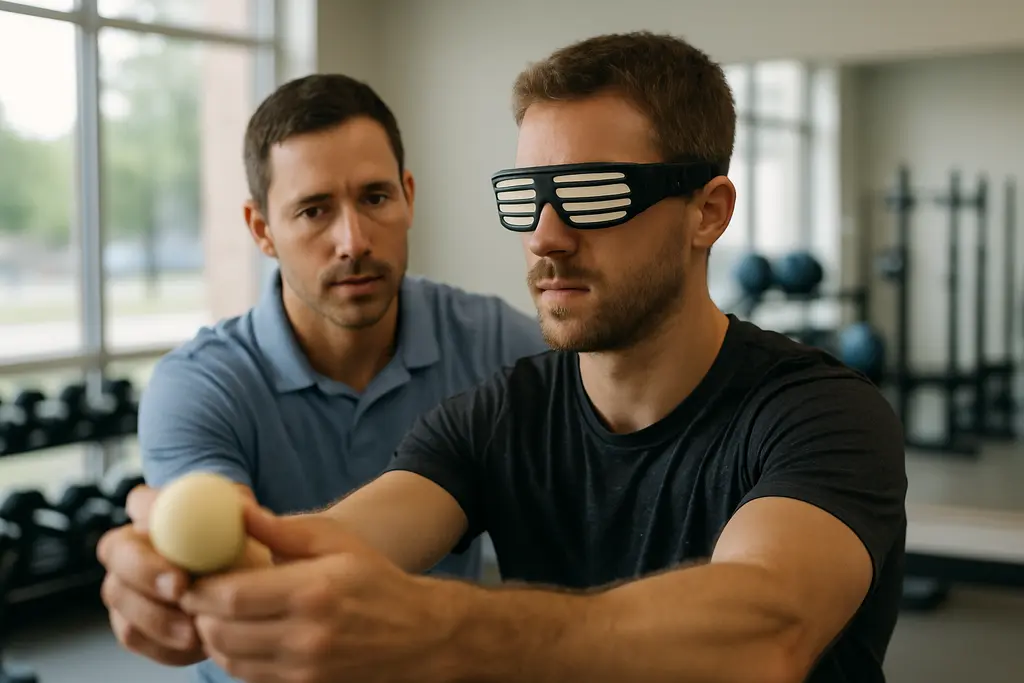
Stroboscopic visual training, often shortened to SVT, uses eyewear or visual displays that intermittently interrupt vision during movement tasks. The training idea is that reduced visual information may push the athlete to rely on prediction, timing, and other sensory cues. That concept has appeal in sport, where ball tracking, balance, and rapid reactions matter. Yet appeal is not the same as proof. The strongest barrier is that rehabilitation populations are not the same as healthy athletes doing controlled performance drills.
Why Stroboscopic Training Barriers Persist
Stroboscopic Training Barriers Start With Protocol Variation
A structured review covering literature up to January 2023 found wide variation in device types, strobe frequencies, session duration, outcome measures, and training settings, which makes comparisons difficult and limits consensus protocol development the structured SVT review. That matters in athletic rehab because a therapist needs repeatable decisions: who starts, at what level, for how long, and under what stopping rules.
Without standard dosing, teams may borrow protocols from healthy athletes and apply them to injured athletes, even though those groups may respond differently. Some studies have used single-session exposure. Others have used programs lasting several weeks, including four- to eight-week formats. The research notes do not establish one best session length, duty cycle, or progression plan. These Stroboscopic Training Barriers make it hard for a clinic director to write a policy that is both practical and evidence-aware.
Clinical Evidence Remains Narrow
The same review reported that benefits have been shown more often in healthy populations, while evidence in neurological or rehabilitation populations is limited, especially for motor-function and balance outcomes. In sport terms, that leaves a gap between “this may sharpen a drill” and “this belongs in a return-to-play rehab plan.”
That gap is not a reason to dismiss SVT. It is a reason to ask better questions. Which athletes are being studied? Are they post-injury, or simply trained competitors? Are outcomes based on lab tasks, sport-specific drills, balance measures, or actual field transfer? Readers comparing performance claims with sport vision drill design may find useful context in this related report on athlete vision gains, where the same caution about transfer to decision-making applies.
Safety, Comfort, And Adherence Risks
Visual Occlusion Requires Supervision
The most immediate safety issue is built into the method: SVT briefly removes visual information. In simple catching drills, that may be manageable. In rehab tasks with head rotation, uneven surfaces, change of direction, or balance challenge, that loss of vision can raise concern for trips, falls, or vestibulo-ocular mismatch. A PLOS Digital Health review discussed discomfort, headaches, irritation, unsteadiness, fall risk during visually disrupted movement, cost, staff education, and design limitations as barriers to clinical uptake the PLOS Digital Health review.
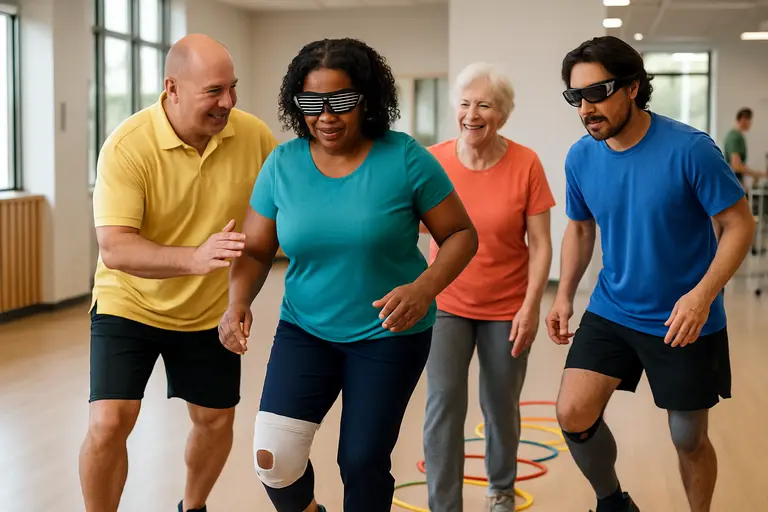
For athletes returning after injury, the key issue is not whether they are “tough enough” to tolerate the glasses. The issue is whether the drill is safe under reduced vision. A basketball guard doing stationary passing in a controlled gym is not facing the same risk as a soccer player cutting on turf while wearing strobe eyewear. Older adults and people with sensory or motor deficits may carry higher risk, and vestibular symptoms deserve caution rather than a push-through culture.
Mild Symptoms Need Clear Stop Rules
Research notes show that serious adverse events have not been reported in many SVT studies, but mild symptoms such as nausea, dizziness, headaches, irritation, and unsteadiness are often underreported or not tracked with clear thresholds for stopping. That absence of reporting should not be read as proof that symptoms do not occur. In a rehab setting, mild symptoms can still disrupt adherence, confidence, and session quality.
A cautious program would define what happens if an athlete reports dizziness, motion sickness, headache, or loss of balance. It would also record whether symptoms occur during setup, during the drill, or after the session. That distinction helps a therapist separate device discomfort from drill difficulty. It also protects athletes who may feel pressure to stay quiet because they want to return to team activity.
Cost, Space, And Staff Readiness
Equipment And Training Costs
Cost is one of the least glamorous Stroboscopic Training Barriers, but it can decide whether a clinic adopts SVT at all. Research notes identify the price of eyewear and related training tools, staff training, device inventory, hardware, software, and upkeep as barriers. A small clinic may need more than one device if several athletes are in rehab at the same time. It may also need staff time to clean, fit, adjust, charge, and track use.
Procurement choices often bring up questions about lenses, coatings, durability, cleaning, and materials safety. Readers who follow adjacent science and materials coverage in the same network may recognize those safety-first themes at Kilburn Chemicals. For sports rehab buyers, the practical lesson is simple: a device is not just a purchase price. It becomes a maintenance and training responsibility.
Workflow And Clinic Space
SVT also needs room. A cramped treatment area may be safe for seated strength work but less safe for visually disrupted balance or ball tasks. Research notes point to limited physical space, setup time, supervision needs, ongoing oversight, and uninterrupted sessions as resource constraints. Those are not minor issues during a busy afternoon clinic where one therapist may be moving between several athletes.
Staff buy-in is tied to workflow. Clinicians are less likely to prescribe a tool if they are unsure how it fits into the rehab plan, how to progress it, or how to explain its limits. Small sample sizes in the literature and limited clinician education reduce confidence. A responsible clinic would not simply buy the eyewear and hope enthusiasm fills the protocol gap.
Patient-Centred Design And Equity
Acceptability Before Performance Claims
Adherence can fail for reasons that have nothing to do with motivation. Strobe effects may feel unpleasant. Eyewear may be uncomfortable, irritating, poorly fitted, or awkward during movement. Motion sickness potential and the burden of wearing a device may reduce patient adherence, especially in rehabilitation populations. If the athlete dreads the device, the program is already weaker.
Design features matter: adjustable strobe settings, comfort, portability, appearance, and adaptability to individual clinical conditions were all identified as areas that can limit uptake. For younger athletes, comfort and appearance may affect willingness to use the device around teammates. For adult recreational athletes, portability and ease of setup may matter more. These points are not cosmetic extras; they affect whether sessions happen as planned.
Who May Need Extra Caution
Athletic rehab is not one population. A post-ankle sprain athlete working on balance, a concussion-history athlete with light sensitivity, and a runner with vestibular symptoms are not interchangeable. The research notes highlight extra concern for older adults or people with sensory, motor, or vestibular impairment. That does not mean SVT is ruled out for everyone in those groups. It means screening, supervision, and conservative progression are necessary if it is used.
Medical diagnosis and treatment decisions belong with qualified clinicians. For a sports program, the safer role is to document symptoms, respect stop rules, and avoid using strobe eyewear during tasks where reduced vision would create unreasonable risk. The best athlete success stories usually include restraint: knowing when a promising tool should wait until the athlete can tolerate simpler demands.
Practical Criteria Before Adoption
A Small-Pilot Model
Given the evidence gaps, SVT is best viewed as a field-tested but not fully standardized tool for rehab populations. A small pilot can help a clinic learn whether the device fits its athletes, staff, and space without presenting it as proven care. The aim should be feasibility and safety first, performance claims second.
- Define the population: Specify injury type, stage of rehab, symptom exclusions, and supervision level.
- Start with low-risk tasks: Use controlled drills before adding unstable surfaces, head movement, speed, or opponent-like demands.
- Track symptoms: Record dizziness, nausea, headache, irritation, unsteadiness, and reasons for stopping.
- Standardize settings: Document device type, strobe level, session length, progression, and outcome measures.
- Review costs: Include staff training, cleaning, charging, replacement, software, and time per session.
This type of pilot does not solve every evidence problem, but it can prevent vague use. It also gives clinicians language for honest conversations with athletes: SVT may be considered as one drill constraint, not as a stand-alone recovery tool.
Stroboscopic Training Barriers In Athletic Rehabilitation Programs
What A Cautious Program Can Say
Stroboscopic Training Barriers are not only scientific. They are practical, human, and safety-related. The research base shows variation in protocols, limited rehabilitation evidence, uncertain dosing, comfort concerns, possible fall or mismatch risks during visually disrupted movement, cost, space limits, clinician education gaps, and patient adherence issues. None of those barriers proves SVT has no place in athletic rehab. Together, they argue against casual adoption.
For athletes, the fair message is measured. SVT may be one way to challenge visual dependence during selected drills, but it should be matched to the athlete, the injury stage, the setting, and the clinician’s ability to supervise. Until protocols and adverse-event reporting become clearer, the strongest programs will treat the goggles as a tool that needs rules, not as a shortcut back to play.