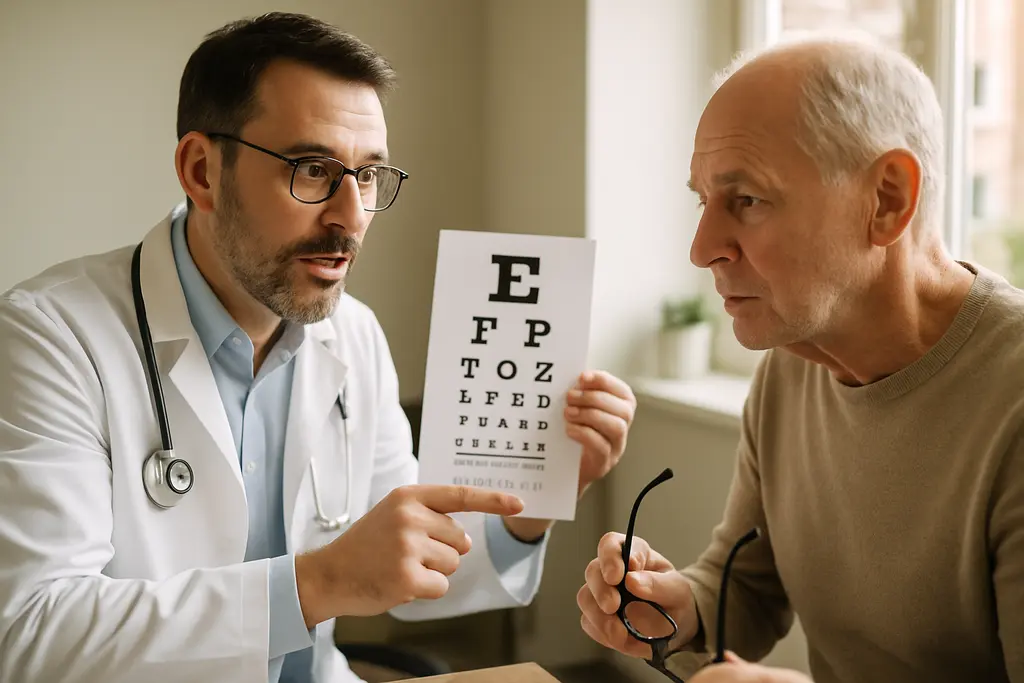
Glaucoma awareness campaigns often begin with a simple goal: help people understand why eye checks matter before vision loss is noticed. The harder part is community engagement. Evidence from recent public health and ophthalmology research suggests that awareness alone is not enough if people face cost, transport, mistrust, limited time, language barriers, or weak follow-up systems.
As a community-focused sports reporter, I often see health messages spread fastest where people already gather: gyms, schools, church halls, recreation leagues, barbershops, senior centers, and family tournaments. That does not make those places medical clinics. It does make them useful starting points for trusted conversations, especially for a disease that can be present before a person recognizes symptoms. Any campaign should avoid promising diagnosis at a community table. Its safer job is education, referral, and helping people reach qualified eye care.
What Glaucoma Awareness Campaigns Can Prove
Awareness Is Necessary, But Not Sufficient
A December 2025 expert review in Current Ophthalmology Reports identified delayed disease presentation and diagnosis as continuing challenges in glaucoma care, linked in part to limited awareness among patients, primary care physicians, and optometrists the expert review. That finding matters because community messages are often aimed only at the public, while the referral pathway depends on many people: the individual, the family member who encourages an appointment, the primary care office that reinforces the message, and the eye care team that can evaluate risk.
Still, the evidence does not support the idea that a poster, slogan, or single screening day can fix delayed care. Campaigns can increase recognition, but their impact is limited if the person who hears the message cannot afford an exam, cannot get time off work, or does not trust the setting. This is where community strategy separates itself from simple publicity.
Why Glaucoma Awareness Campaigns Need Trust
In May 2025, qualitative interviews with Black Americans aged 40 and older reported barriers to sustainable eye care programs in faith-based settings, including mistrust of healthcare, cost, and limited time. The same study described facilitators such as church involvement, peer education, and mobile services the faith-based study. This is not a claim that every church program works or that every community will respond the same way. It does show why trusted messengers can matter.
For glaucoma awareness campaigns, the practical lesson is clear: the messenger may be as important as the message. A pastor, coach, team parent, retired athlete, or community health worker may be able to open a conversation that a clinic flyer cannot. Yet trust should not be treated as a shortcut. Community partners need accurate scripts, clear referral information, and limits on what they are being asked to say.
Trust, Access, And Follow-Up
Barriers That Campaigns Cannot Ignore
The strongest outreach plans start by asking what would stop a person from acting on the message. Cost is an obvious barrier, but it is not the only one. Transportation, clinic hours, caregiver duties, fear, immigration-related concerns, language access, and confusion about insurance can all block follow-through. A campaign that says “get checked” without addressing these barriers may raise concern without creating a realistic next step.
Sports communities understand this problem well. A youth team can tell players to hydrate, but if water is not available at the field, the message fails. Eye health outreach works the same way. If an awareness event identifies people who need follow-up but offers no appointment support, the campaign may count contacts while leaving real access unchanged.
Follow-Up Is The Stress Test
Follow-up is where many community programs either prove their value or expose their weak spots. A screening or education event is easier to stage than a reliable path into care. Organizers should be careful about measuring success only by attendance. A crowded health fair may look successful, but the better question is whether people who need eye care receive appointments, understand the referral, and can return if further testing is needed.
Practical engagement tools can include:
- Local referral maps: clear lists of clinics, hours, costs, and language services.
- Reminder systems: phone calls, texts, or community partner check-ins when consent is given.
- Transportation planning: ride coordination, vouchers where available, or events near transit routes.
- Peer educators: trained community members who explain why follow-up matters without giving medical advice.
- Accessible timing: evening or weekend education sessions for workers and caregivers.
These ideas sound simple, but they require staffing, funding, and accountability. A campaign should not imply that community spirit alone can replace trained clinicians, diagnostic equipment, or sustained care.
Sports Communities As Practical Messengers
Where Local Teams Can Help
Sports settings offer a useful model for community health outreach because they already rely on repetition, coaching, and peer accountability. A senior walking club, basketball league, or neighborhood softball team can normalize routine health conversations without turning the field into an exam room. Coaches and organizers can invite eye health educators, share appointment resources, and remind families that vision changes should be evaluated by qualified professionals.
This approach is especially relevant for older athletes and spectators, who may remain deeply connected to community sports long after formal competition ends. A glaucoma message delivered at a recreation center may reach grandparents, referees, volunteers, and parents at the same time. For related community-centered coverage in the same network, the platform Li Live Steam exemplifies how local gathering points can carry public-interest information beyond traditional clinic walls.
Keeping The Message Accurate
Health communication in sports spaces should be careful. Glaucoma should not be framed as something a coach can spot from the sideline. Nor should outreach suggest that a normal vision chart at a community event rules out disease. The safer message is that glaucoma can require professional evaluation, risk discussion, and follow-up testing. Campaigns can help people ask better questions and reduce fear, but they should not replace clinical judgment.
Community Q and A formats can help because they let people voice practical concerns: “What if I have no insurance?” “Do I need a referral?” “Can I bring a family member?” A related resource on community glaucoma Q and A fits that need by treating public questions as part of outreach rather than an afterthought.
Measuring Progress Without Hype

What Counts As Evidence Of Engagement
Not every useful outcome is dramatic. Campaign leaders can track attendance, but they should also track whether materials were understandable, whether people accepted referrals, and whether community partners stayed involved after the event. If consent and privacy rules allow, follow-up completion may be one of the more meaningful measures. It tells organizers whether the campaign connected people to care rather than only distributing information.
Because much of the recent evidence is qualitative, it is best read as guidance about barriers and facilitators, not as proof that one strategy will work everywhere. Interviews can show why people avoid or accept care. They cannot, by themselves, establish that a specific campaign model reduces vision loss across a population. That distinction matters. Public trust can be damaged when outreach promises more than the evidence supports.
Cost And Workforce Limits
Funding and staffing are not side issues. Mobile services, interpreters, reminder calls, and community health workers all cost money. Volunteer enthusiasm can launch an event, but long-term programs need trained staff, referral relationships, and stable resources. Workforce shortages can also limit how quickly referred people are seen. An awareness campaign that uncovers unmet need must be prepared for the ethical challenge of what happens next.
For campaign planners, a cautious target is better than a broad promise. Instead of aiming to “reach everyone,” a group might focus on one neighborhood, one faith network, or one recreation league, then test whether the referral process works. Smaller programs can be easier to evaluate, easier to adjust, and more respectful of local context.
Community Engagement In Glaucoma Awareness Campaigns
Practical Priorities For Local Organizers
The strongest glaucoma awareness campaigns do three things at once: explain risk without fear tactics, reduce practical barriers to follow-up, and work through people the community already trusts. They also admit what they cannot do. A campaign can invite action, answer basic questions, and connect people to care. It cannot diagnose glaucoma from a conversation, and it should not suggest that education alone is a treatment.
For sports clubs, churches, neighborhood groups, and public health teams, the next useful step is not a louder slogan. It is a clearer pathway: who answers questions, where referrals go, what costs people may face, how language support is provided, and how follow-up is encouraged. That is the kind of engagement that respects both the science and the community.