
Fast changes in blood sugar levels hurt how well we think. These glucose swings mess with the brain’s balance. They cut down on energy needed for clear thinking.
The brain needs steady fuel to work best. Big changes in glucose mess with brain chemicals. This makes it harder to process information and think clearly.
Athletes face big problems from these changes. Quick decisions get harder when brain energy drops. It’s tough to keep focus during important moments.
Studies show that changing glucose levels affect the eye’s shape. This leads to vision problems, like blurry or distorted vision. Blurry or distorted vision makes it even harder to react fast and stay focused during games.
Low vs High GI for Different Training Phases
Sports nutrition focuses on using low and high glycemic carbs at the right time. The glycemic index (GI) shows how fast carbs raise blood sugar. The glycemic load (GL) looks at both GI and carb amount.
Low GI foods slowly raise blood sugar, giving steady energy. High-GI foods quickly raise then drop blood sugar.
Switching to whole grains and millets is key. They help manage blood sugar better. This is vital for athletes.
The table below shows how carbs are used based on their glycemic levels:
| Training Phase | Physiological Goal | Recommended Carb Type | Example Foods |
|---|---|---|---|
| Prolonged Endurance Session | Sustained energy release | Low Glycemic Index | Steel-cut oats, sweet potato, lentils |
| Immediate Pre-Event Fueling (30-60 min prior) | Rapidly available glycogen | High Glycemic Index | White bread, sports drink, ripe banana |
| Post-Intense Exercise Recovery (0-30 min post) | Fast glycogen replenishment | High Glycemic Index | Rice cakes, pretzels, recovery shake |
| General Training & Recovery Days | Stable blood glucose, sustained fueling | Low Glycemic Index | Quinoa, barley, most fruits, legumes |
For long workouts or recovery, low-GI foods offer lasting energy. This prevents mid-workout tiredness. Athletes stay focused and powerful.
High-GI carbs are vital in certain times. Right after hard exercise, they quickly refill muscle glycogen. Before a competition, they give quick energy without crashing later.
Understanding glycemic index and load helps athletes control their energy. The goal is to avoid energy drops that hurt reaction time and decision-making.
Pre‑Game Carb Strategy to Avoid Crashes
Reactive hypoglycemia is a common issue that can be managed with the right pre-game carb plan. It happens when blood sugar drops sharply after a quick rise. This can make it hard for athletes to have the energy and quick thinking they need at the start of a game.
When you eat a lot of carbs that quickly turn into sugar before a game, your body releases a lot of insulin. This insulin quickly takes sugar out of your blood, often leaving you feeling tired and unfocused.
To avoid this, focus on three key things: when, how much, and what type of carbs to eat. The goal is to fill up your liver and muscles with glycogen without causing a big insulin spike. This helps keep your energy steady at the beginning of your game.
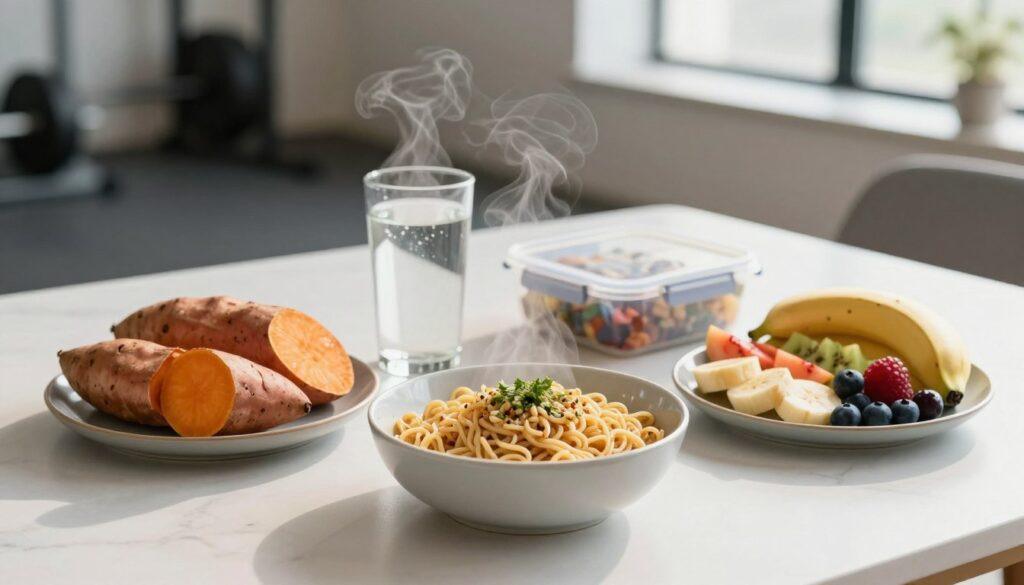
When it comes to timing, eating a big meal 3 to 4 hours before the game is best. This lets your body digest it fully and keeps your insulin levels stable. If you need a snack, choose something light and easy to digest 1 to 2 hours before the game.
The amount of carbs you should eat depends on your body weight and how long you have before the game. Aim for 1 to 4 grams of carbs per kilogram of body weight. Eat a bigger meal 3 to 4 hours before, and a smaller snack closer to the game.
Choosing the right carbs is also key to avoiding reactive hypoglycemia. Opt for foods with a low to moderate glycemic index. These include oatmeal, whole-grain bread, sweet potatoes, and most fruits. They release sugar more slowly, giving you a steady energy boost.
| Timing Before Event | Carbohydrate Amount | Carbohydrate Type | Primary Benefit |
|---|---|---|---|
| 3 – 4 hours | 3 – 4 g/kg body weight | Low GI (e.g., oatmeal, quinoa) | Maximizes glycogen stores without spike |
| 1 – 2 hours | 1 – 2 g/kg body weight | Moderate GI (e.g., banana, whole-grain bagel) | Top-off energy, maintains glucose stability |
| 30 – 60 minutes | 0.5 – 1 g/kg body weight | Rapid, easily digestible (e.g., sports drink, white rice) | Quick available fuel, minimal gut distress |
Remember, everyone is different. Test these carb strategies during training to find what works best for you. Pay attention to how you feel and perform. This will help you avoid surprises on game day.
Intra-Event Fueling That Preserves Visual Clarity
Good nutrition during events does more than boost muscle power. It also keeps an athlete’s vision sharp. The main goal is to keep blood sugar levels steady. This helps with both physical performance and keeping senses sharp.
Good vision needs a healthy blood flow to the eyes. The retina needs oxygen and nutrients constantly. These are delivered through tiny blood vessels.
High blood sugar can harm these tiny vessels. This can cut down blood flow to the eyes. This means less oxygen and nutrients for the eyes.
Keeping blood sugar stable is key for microvascular health. Good blood flow means the eyes and brain get what they need. This helps keep focus sharp and prevents blurry vision from sugar swings.
Good fueling has clear rules about timing and what you eat. It aims to avoid big ups and downs in energy. This is hard on the blood vessels.
- Initiate Early: Start eating carbs early in the event, not when you’re tired. This helps avoid a big energy drop.
- Use Frequent, Small Doses: Eat 30-60 grams of easy-to-digest carbs every 30-45 minutes. This keeps energy steady without a big spike.
- Choose Rapid Yet Gentle Sources: Sports drinks, gels, and ripe bananas give quick energy. They’re easy on the stomach and keep blood flow steady.
- Pair with Fluid: Drinking enough water helps blood carry nutrients. It’s key for keeping blood pressure right for good delivery.
This way of fueling keeps muscles going. But it also protects the tiny systems that help us see clearly and make quick decisions. Having a steady energy supply means better vision and thinking.
Building Plates: fiber, protein, fats for stability
For long-term success, moving from single meals to a structured plate-building approach is key. The daily food we eat sets our metabolic base, affecting energy and focus. A balanced mix of three main nutrients helps keep blood sugar stable.
Fiber helps control how carbs are digested. It’s found in veggies, whole grains, and legumes. Soluble fiber turns into a gel in the gut, slowing down sugar absorption. This leads to a steady blood sugar level, avoiding spikes and drops. Green veggies and citrus fruits are great sources.
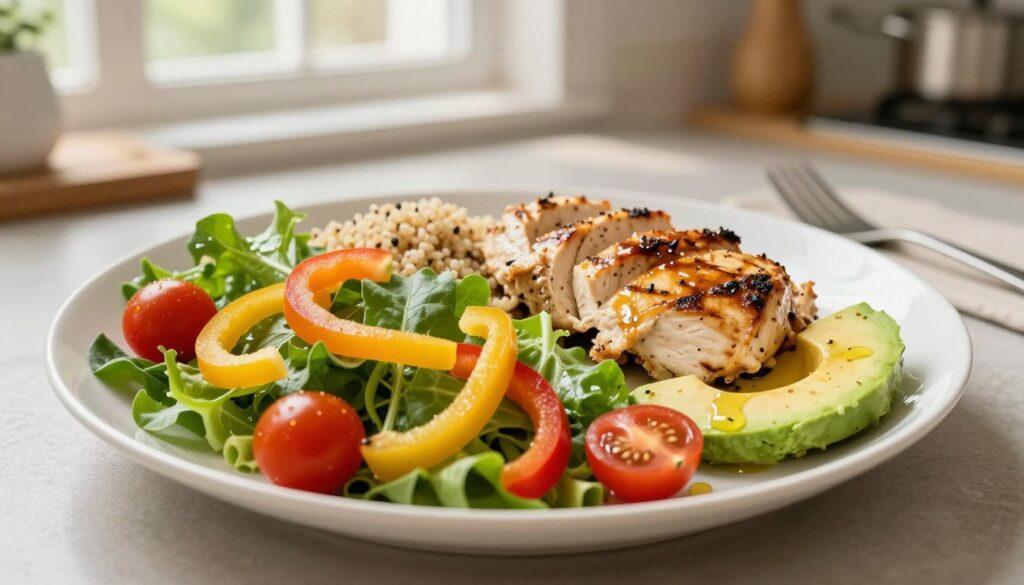
Protein is vital for metabolic health. It keeps us full, preventing too much quick-digesting carbs. It also gives amino acids for the liver to turn into glucose, providing steady energy between meals. Good protein sources include lean meats, fish, eggs, and legumes.
Healthy fats are important for hormone function and reducing inflammation. Omega-3 fatty acids are key. They make cell membranes more fluid and help with hormone signaling. Foods like fatty fish, flaxseeds, and walnuts are rich in these fats. They also slow down digestion, helping energy last longer.
Building a plate this way creates a powerful effect. Each part works together to keep blood sugar levels steady. For more on creating a blood-sugar-friendly plate, check out this expert guide.
- Fill half the plate with non-starchy veggies and low-glycemic fruits for fiber.
- Use one-quarter for a lean protein source.
- Save the last quarter for complex carbs like whole grains or starchy veggies.
- Add a serving of healthy fats from oils, nuts, seeds, or avocado.
This approach builds metabolic strength. It keeps fuel flowing to the brain and muscles all day. The result is better focus, stable energy, and faster recovery.
Role of Continuous Glucose Monitors (CGM) for Athletes
CGMs give athletes real-time glucose data. They track glucose levels all day and night. This helps athletes move beyond basic nutrition plans.
CGMs show how glucose changes with food, stress, sleep, and exercise. This info helps athletes find what causes energy swings.
Athletes use CGM data to fine-tune their nutrition. They learn which foods cause energy spikes and drops. This helps them pick the right foods before training.
CGMs also help with fueling during events. Athletes figure out how much and when to eat carbs. This keeps them focused and avoids energy crashes.
Big changes in blood sugar can cause migraines or visual aura. For athletes, this can be a big problem during games.
CGMs help find out what causes these problems. By linking glucose levels to symptoms, athletes can spot trouble spots. This is more reliable than just remembering what they ate.
CGM data helps athletes in many ways:
- They learn how different foods affect their blood sugar.
- They find the best times to eat to keep energy steady during important moments.
- They figure out which foods make migraines worse.
- They have solid evidence to share with coaches or dietitians.
The main goal is to keep blood sugar steady. This helps with both physical and mental performance. CGM data helps athletes make smart changes to their diet and routine.
This approach keeps athletes sharp and focused. It turns nutrition into a science, not a guess. For athletes, this can mean the difference between winning and losing.
Sample Menus for Morning vs Evening Competitions
Sample menus for morning and evening events show how to control blood sugar. They show how timing and food choice affect energy and focus.
Here are some examples. Athletes should adjust the amounts based on their needs and how well they can digest food.
For a 9:00 AM event, eat your main meal 3 to 4 hours before, around 5:00-6:00 AM.
- Meal: Oatmeal with milk, berries, and almond butter. Add a hard-boiled egg on the side.
- Rationale: Oatmeal and berries give slow-burning carbs. Almond butter and egg slow down digestion, avoiding a quick sugar spike.
For short events, you might not need extra fuel. But for longer events, a sports drink or gel every 45 minutes helps.
Right after the event, eat a meal that helps your body recover fast. A smoothie with banana, protein powder, and spinach works well.
Evening Competition Menu
For a 7:00 PM event, your meal timing changes. Eat your main meal 3-4 hours before, around 2:00 PM.
- Meal (2:00 PM): Grilled chicken, sweet potato, and broccoli. Add a whole-grain dinner roll with olive oil.
- Rationale: Sweet potato has complex carbs with a moderate glycemic index. This mix with protein and fiber keeps blood sugar stable.
Before the event, a small snack is okay. A banana or a rice cake with honey is good for a quick carb boost.
After the event, eat a balanced dinner. Include lean protein, carbs like quinoa, and veggies. This helps repair muscles and replenish glycogen. For more on track and field nutrition, check out specialized resources.
| Aspect | Morning Competition | Evening Competition |
|---|---|---|
| Primary Pre-Event Meal Timing | 3-4 hours before start (early morning) | 3-4 hours before start (afternoon) |
| Key Nutritional Goal | Slow energy release from low-GI sources | Sustained energy with a possible top-up snack |
| Sample Recovery Food | Quick-absorbing smoothie or shake | Substantial dinner with protein and carbs |
These menus show how important meal timing is. They aim to avoid big blood sugar changes that can hurt focus and performance. Following these glycemic index and timing tips helps athletes start their competition in the best shape.
Practical Snacks for Travel Days
When traveling, it’s important to choose snacks that keep your blood sugar stable. Travel messes with your usual eating schedule and access to good food. Athletes need snacks that stop energy drops and keep their minds sharp for competitions.
Good travel snacks mix complex carbs with fiber, protein, or healthy fats. This mix slows down digestion. It helps keep your energy up for a longer time.
Here are some snacks that are easy to pack, don’t spoil, and help keep your metabolism steady.
- Whole Grain Crackers with Single-Serve Nut Butter. Crackers give you complex carbs and fiber. Nut butter adds protein and fat. Together, they give you steady energy and make you feel full.
- Homemade Trail Mix. A mix of nuts, seeds, and a bit of dried fruit is balanced. Nuts and seeds have protein and fats. The fiber from fruit and nuts helps control sugar spikes.
- Beef or Turkey Jerky. Jerky is packed with protein. Adding a whole fruit gives you carbs. This combo helps keep your muscles strong and gives you quick energy.
- Roasted Chickpeas or Edamame. These legumes have carbs and protein. They’re also full of fiber. Roasting makes them crispy and travel-friendly.
- Nutrition Bars with Verified Macros. Look for bars with 3-5 grams of fiber and 10-15 grams of protein. Avoid bars with too much sugar. These are reliable, all-in-one snacks.
It’s key to control snack portions when traveling. Use reusable containers to avoid eating too much. This helps you fuel right.
Don’t forget to drink water. Travel can dry you out. Drinking water helps with digestion and nutrient use.
Smart snacking keeps your metabolism steady while traveling. It stops big drops in blood sugar that can hurt recovery and focus. A well-prepared athlete can manage their energy, even on the go.
Special Cases: weight-class and endurance sports
Boxers cutting weight and cyclists racing for hours have different needs. Nutrition for them must change a lot. Weight-class athletes focus on quick weight loss. Endurance athletes aim for steady energy over long times.
Each group faces unique challenges. Their nutrition goals are very different. What works for one doesn’t work for the other.
Wrestlers, boxers, and martial artists often lose a lot of weight before competing. They do this by losing water and glycogen. The big risk is a big drop in blood sugar after weighing in.
This drop, called reactive hypoglycemia, can hurt focus and speed. It happens when the body makes too much insulin after eating a lot of carbs after fasting. It’s important to refuel right.
The time right after weighing in is key. Athletes need to drink water with electrolytes first. Then, they should eat carbs that digest easily but don’t cause a big insulin spike. Adding a bit of protein helps control blood sugar.
Endurance Athletes: Sustaining Performance and Vascular Function
Marathon runners, cyclists, and triathletes face a different challenge. Their sports put a lot of stress on their bodies. They need to fuel up to keep going.
They also need to keep their tiny blood vessels healthy. These vessels are important for delivering nutrients and removing waste. During long races, high blood sugar and inflammation can harm them.
This harm can make it harder to see clearly and make quick decisions. Eating carbs at a steady rate helps avoid this. Athletes aim to eat 60-90 grams of carbs per hour from different sources. This keeps blood sugar steady.
| Athlete Type | Primary Challenge | Key Nutritional Goal | Critical Strategy |
|---|---|---|---|
| Weight-Class (e.g., Wrestler) | Acute weight loss leading to glycogen/fluid depletion. | Rapid, safe refueling and rehydration post-weigh-in to avoid reactive hypoglycemia. | Consume electrolytes and moderate-GI carbs with protein immediately after weighing in. |
| Endurance (e.g., Cyclist) | Prolonged metabolic stress and systemic inflammation. | Sustained energy delivery to support performance and microvascular health. | Steady hourly intake of multiple carbohydrate sources (60-90g/hr) during activity. |
| Note: These strategies are evidence-based starting points. Individual needs vary based on sport, athlete, and event specifics. | |||
For top performance, athletes need more than general advice. Boxers need to recover from weight loss quickly. Marathoners need to keep their energy steady to protect their blood vessels. Both focus on keeping blood sugar stable, but in different ways.
Action checklist
Athletes can follow these steps to manage glucose swings and improve mental focus.
First, analyze your training phases. Use low glycemic index carbs for steady energy during prep. Then, switch to high glycemic carbs for quick energy during intense sessions.
Plan a pre-game meal 2-3 hours before the game. Opt for easy-to-digest carbs like white rice or bananas to avoid energy drops.
During the game, eat fast-acting carbs. Sports gels or chews help keep your eyes clear without upsetting your stomach.
Make sure every meal has fiber, protein, and healthy fats. This mix helps keep your blood sugar stable.
Use a Continuous Glucose Monitor (CGM) to track your glucose levels. Devices like the Dexcom G7 show real-time glucose swings.
Follow a nutrition plan made just for you. Use sample menus for morning and evening games.
When traveling, pack non-perishable snacks like almonds, jerky, and apples. This keeps your nutrition routine consistent.
Adjust your strategies based on your sport’s demands. Weight-class athletes need to time their fueling carefully. Endurance athletes must manage their carb intake during the event.
By following this checklist, you can reduce big blood sugar swings. Stable glucose helps you make quick decisions and stay focused under pressure.