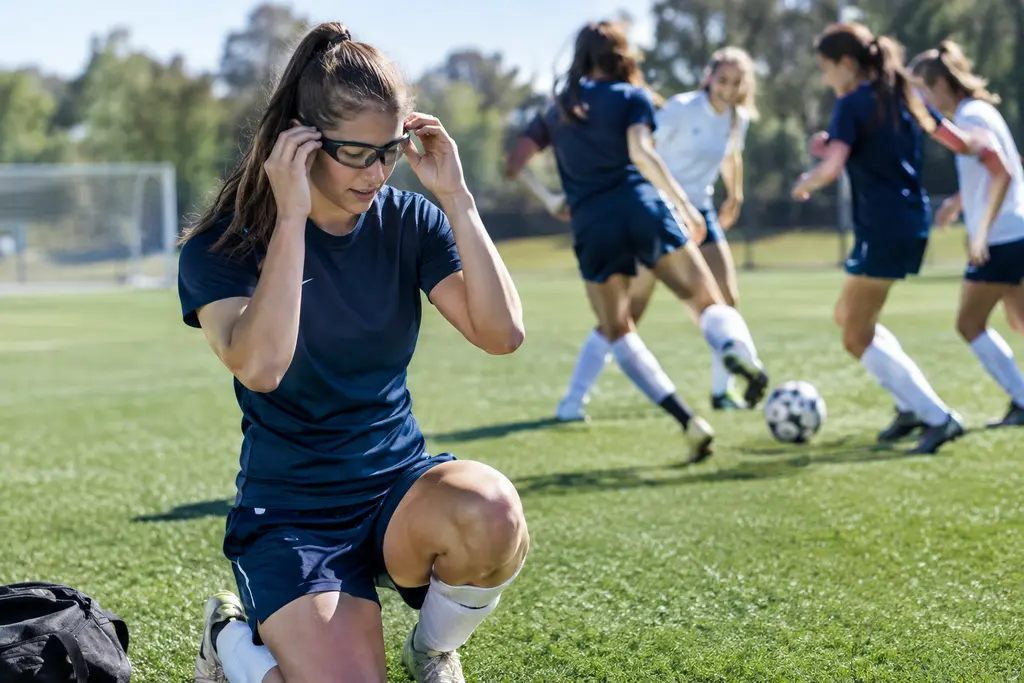
Protective Eyewear Sports is a practical way to frame an old injury problem: athletes need clear vision, fast reactions, and a realistic plan for reducing eye trauma without overstating what any single dataset can prove. As a vision science advocate focused on injury rehabilitation, I read the recent NEISS findings as both a prevention signal and a rehab planning signal. Emergency department data do not capture every eye injury, but they do show where injuries are serious enough to reach hospital-based care.
Protective Eyewear Sports In NEISS Data
Emergency Department Counts Are High
From January 1, 2015 through December 31, 2024, NEISS data estimated 568,169 sports- and recreation-related ophthalmic injuries treated in U.S. emergency departments. Most injured patients were male, at 77.6%, and most were ages 0 to 29, at 71.9%. The annual rate was described as relatively stable until 2020, then dropped sharply during 2020, likely in connection with COVID-19 disruptions, before rebounding and peaking in 2024. Basketball accounted for the largest share of emergency department visits, followed by bicycling and baseball, according to the ScienceDirect NEISS analysis.
That pattern matters because prevention work is often planned around the sports that send the most patients to emergency departments, not only the sports that feel most dangerous. Basketball, for example, may not involve bats, sticks, or pucks, but elbows, fingers, and close-range contact can still create eye risk. Bicycling and baseball add different mechanisms, including falls and high-speed objects. A single eyewear message is too blunt for that range of exposure.
Retinal Trauma Is A Smaller But Serious Signal
Across 2005 through 2024, an estimated 641,136 sports-related ocular injuries were reported, including 9,787 retinal injuries. The share of retinal injuries among all sports-related eye injuries rose from 0.6% in 2006 to 3.6% in 2024, as summarized by the American Academy of Ophthalmology. That change should not be read as proof that sports suddenly became more dangerous to the retina. Coding practices, care-seeking behavior, diagnostic access, sport participation, and injury mechanisms could all influence the trend.
Still, retinal trauma is not a minor administrative category for athletes. It can affect central vision, peripheral awareness, depth judgments, and confidence during return-to-play decisions. Rehabilitation after an eye injury is not only about tissue healing. It also involves restoring safe visual function in the conditions where the athlete actually performs: bright courts, fast balls, crowded fields, and unpredictable contact.
Where Injury Prevention Meets Rehabilitation
Why The Sport Mix Matters
The research notes also describe sports-related orbital fractures from 2014 through 2023, with a national estimate of about 49,765 cases from a sample of 1,468. In that group, 79% of patients were male, and the most common sports were baseball at 28.6%, bicycling at 23.1%, and softball at 6.7%. For the 2019 through 2023 subset, 13.8% of patients had associated ocular or periocular injuries, including eyelid lacerations, corneal abrasions, and hyphema.
Those fracture data do not directly prove whether protective eyewear was absent, present, fitted correctly, or sport-approved. That is a key limitation. NEISS-based work is useful for estimating burden and spotting patterns, but it is less suited to answering every equipment question. For rehab teams, coaches, and families, the practical takeaway is more modest: the sport and mechanism of injury should shape the prevention discussion. A cyclist’s risk profile is not the same as a baseball player’s, and both differ from basketball.
Youth sports deserve special attention because many injuries occur in younger age groups. For a sport-specific example within this site’s coverage, the discussion of youth hockey eye trauma trends shows how age, equipment, and league context can change the safety conversation.
From Acute Injury To Return Decisions
Injury prevention is sometimes treated as separate from rehab, but athletes experience it as one continuum. An eye injury can interrupt school, work, training, and competition. Even after emergency care, the athlete may need follow-up assessment, symptom monitoring, and a staged return based on clinician guidance. Vision-dependent tasks such as ball tracking, peripheral scanning, and judging speed can be strained after ocular trauma.
This is where data can support better questions, not automatic answers. If basketball produces the largest share of emergency department visits, then court-based programs can ask whether athletes have access to sport-appropriate eye protection and whether rules, coaching culture, and comfort affect use. If baseball and softball appear prominently in fracture data, then projectile speed and facial impact protection deserve focused review. Protective Eyewear Sports policy should be evaluated in the setting where it is used, not only in a clinic or product label.
Standards, Fit, And Evidence Limits
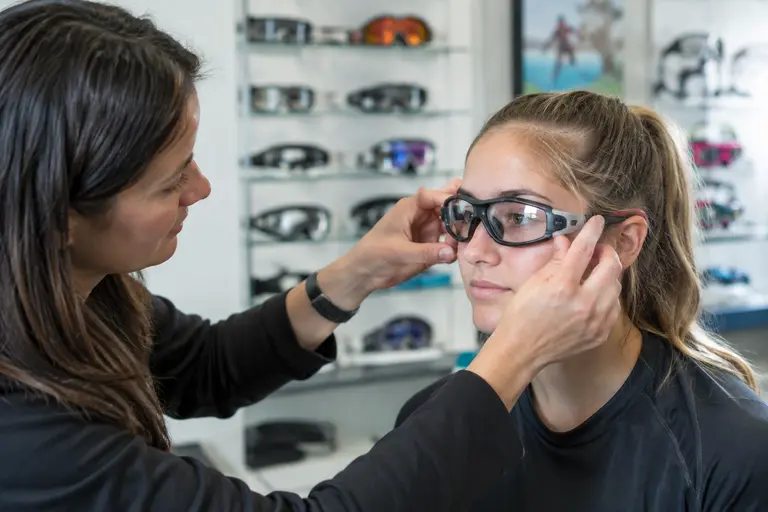
Protective Eyewear Sports Standards Matter
Sports eye safety authorities estimate that up to 90% of sports-related eye injuries are preventable with appropriate protective eyewear. The research notes also state that regular eyeglasses or contact lenses are not enough for sports protection. Protective eyewear should use polycarbonate lenses, meet ASTM or CSA sports standards, and be designed for the sport being played.
That wording matters. Protective Eyewear Sports does not mean any clear lens, fashion frame, or everyday prescription pair. Polycarbonate is valued in this context because it is used for impact-resistant lenses. Standards matter because sports differ: racquet sports, baseball, basketball, hockey, cycling, and water activities create different impact angles, speeds, and fit demands. A frame that shifts during play, fogs repeatedly, or blocks peripheral awareness may not be used consistently, even if the athlete understands the risk.
Implementation Barriers Still Need Measurement
The available research brief does not quantify several practical issues that often decide whether eyewear is worn: cost, access, comfort, fogging, fit over prescriptions, coach enforcement, and athlete acceptance. Those gaps should temper strong claims. Protective eyewear is not a magic shield, and the NEISS data do not show the exact protective effect by model, sport, or age group.
At the same time, the prevention case is not speculative in a general sense. The combination of high emergency department burden, repeated injury patterns in youth and young adults, and existing sport-specific standards supports a cautious but firm message: protective eyewear deserves routine discussion before injury, not only after an athlete has already been treated. Readers interested in comparing injury-prevention education across related vision topics can also review the offerings at SGTT for broader network context.
- What NEISS supports: national estimates of emergency department-treated sports and recreation eye injuries, including patterns by age, sex, sport, and injury category.
- What NEISS cannot fully answer: whether a specific injured athlete wore protective eyewear correctly, whether the device met the right standard, or whether non-hospital injuries followed the same pattern.
- What prevention programs can do now: align eyewear recommendations with sport-specific standards and evaluate barriers to real-world use.
Protective Eyewear’s Role In Preventing Sports-Related Eye Injuries
Protective Eyewear Sports prevention should be treated as a performance and safety issue, not as an accessory choice. Athletes depend on vision for timing, spacing, balance cues, and threat detection. A preventable eye injury can disrupt those systems long before it becomes a season-ending diagnosis. That is why the strongest programs pair equipment guidance with coaching, parent education, and clinician input after injury.
The NEISS findings are most useful when read with restraint. They show a large emergency department burden from 2015 through 2024, a young and predominantly male injured population, a prominent role for basketball, bicycling, and baseball, and a rising share of retinal injuries across the longer 2005 through 2024 period. They do not prove that one eyewear rule will solve the problem across every sport.
A careful path forward is to ask better equipment questions early: Is the eyewear made with polycarbonate lenses? Does it meet ASTM or CSA standards for the sport? Does it stay stable during play? Can the athlete see clearly enough to perform safely? After injury, the question shifts to whether visual function, confidence, and sport demands have been assessed before full return. That bridge between prevention and rehabilitation is where better vision safety can protect both health and athletic performance.