Author: Agatha Leannie

  • Advanced Impact-Resistant Materials in Sports Eyewear Technology

    Advanced Impact-Resistant Materials in Sports Eyewear Technology

    Forget alchemy. The real magic happens in the lab. Here, raw polymers are turned into a transparent shield. This shield can face a 90 mph fastball without flinching.

    The heroes of this tale are polycarbonate and its advanced relative, Trivex. Think of polycarbonate as the industry’s Bruce Willis in Die Hard. It’s tough and surprisingly light. It’s the top choice.

    Its secret? A molecular structure made to bend, not break. It soaks up energy like a sponge, spreading force away from your eyes.

    Then, there’s Trivex, the high-end option. Imagine polycarbonate with a graduate degree. It has similar strength but better clarity and is lighter. It’s the wise lens material.

    So, why does this matter? The most important part of your sports gear might be what you look through, not at. Modern material science turns danger into a funny story.

    Testing Standards & Protocols

    Forget what customers say; the real test of sports glasses is a 90 mph cannon firing projectiles. Material science is the theory, but safety standards are the brutal test. You can’t just claim your glasses are tough. You have to prove it in a lab that would make a Bond villain proud.

    Welcome to the world of certification. Here, two acronyms rule: ANSI Z87.1 and ASTM F803. One is for the job site, the other for sports. Mixing them up is a big mistake.

    Let’s look at ANSI Z87.1 first. It’s like the basic test for protective eyewear. It stops high-speed industrial debris, like metal shavings or a rogue screw. A small, quarter-inch steel ball is fired at the lens at 150 feet per second. Pass, and you’re good for the factory floor or construction site.

    But is that enough for sports? No way. Sports demand a different test.

    Then there’s ASTM F803, the sport-specific approval. It’s like the SATs for sunglasses. The test is much tougher, simulating the impact of balls, pucks, and sticks. Instead of a small steel ball, larger projectiles are fired at speeds up to 90 mph. The lens is hit from all sides.

    The test has strict rules:

    • No lens shattering or cracking.
    • No lens ejecting from the frame.
    • No frame failure that could cause injury.

    This test checks the whole eyewear system under athletic stress. Why the big difference in tests? The job site test deals with one small, fast hazard. The sports test handles repeated, big impacts from all directions—just like in a game.

    To see the difference, let’s compare them:

    Standard Primary Use Case Projectile Size Impact Speed Philosophy
    ANSI Z87.1 Occupational/Industrial Small (1/4″ steel ball) 150 fps (~102 mph) Protect against a single, high-speed debris hazard.
    ASTM F803 Sports & Recreational Large (1″ ball) Up to 90 mph Protect against repeated, large-object impacts from multiple angles.

    The table shows a clear difference. A lens that passes Z87.1 might stop a flying chip of concrete. But could it handle a racquetball to the face at full speed? That’s a risk no athlete should take.

    Choosing eyewear certified only for the job site for sports is a bad idea. It meets a technical standard but fails in real life. The sports-specific safety standards are needed because sports are a hostile environment.

    So, if you see “ANSI Z87.1” on sports sunglasses, it’s a warning sign. It means they passed the easy test. For real athletic protection, you need the one that survived a lab’s version of a full-contact sport.

    Performance Under Stress

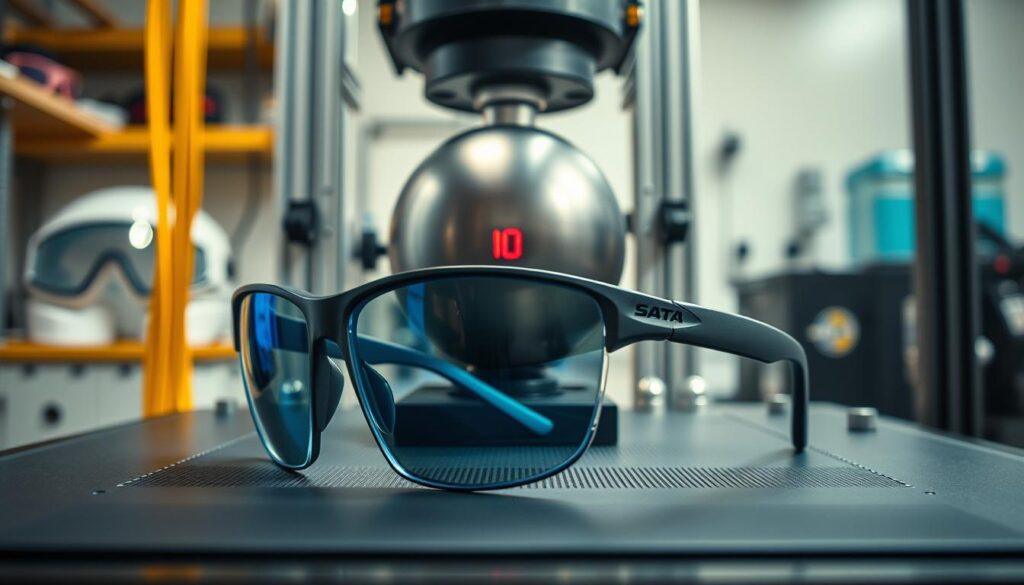
    The true test of sports eyewear isn’t on the spec sheet; it’s in the chaotic, split-second reality of an impact. This is where the elegant theory of material science meets the brutal, unscripted physics of a fastball, a hockey puck, or a rogue branch. Impact testing is the dramatic climax of our engineering story—a micro-second ballet where the lens must perform flawlessly.

    So, how does a polycarbonate lens actually work when struck? It’s a masterclass in controlled crisis management. The process isn’t about being an immovable object; it’s about being a brilliant energy diplomat.
    impact testing sports eyewear

    • The Initial Negotiation: The scratch-resistant coating takes the first hit, designed to dent without shattering, like a car’s crumple zone absorbing the initial blow.
    • The Core Absorption: The energy travels into the impact-resistant core. This layer doesn’t just stop the force; it absorbs it, flexing and spreading the shockwave laterally across its surface—think of gossip moving through a small town, losing intensity with each retelling.
    • The Structural Dispersal: The energy is dissipated across the entire lens and frame structure, preventing a concentrated point of failure from reaching your eye.

    High-velocity impact testing in labs simulates this violent poetry. Machines fire projectiles at speeds mimicking a major league fastball to validate this energy-handling chain. But the lens doesn’t work alone. The frame is its essential partner in this defense pact.

    Modern frame design is a shock-absorption system. Innovations like co-injected materials—a hard outer shell for structure fused with a soft, flexible inner core—act like a bulletproof vest with a trauma pad. The hard shell manages the initial strike, while the soft heart dampens the residual energy.

    Then there’s geometry. A wrap-around 8-base or 10-base curve isn’t just for a sleek, “athlete-in-motion” look. This design creates a peripheral fortress, seamlessly integrating with the helmet and ensuring no projectile finds a weak, flat angle to exploit. It turns the entire eyewear into a single, cohesive energy-dispersal unit.

    In the end, performance under stress is about elegant engineering ensuring the gear takes the hit so your eye doesn’t have to. It’s a stress test for safety, proving that the best protection isn’t the loudest, but the smartest—designed to fail gracefully, so you don’t.

    Innovation in Materials

    Today’s sports glasses are a marvel of science. They’ve moved beyond simple choices like polycarbonate or glass. Now, we see a world of composite materials, where every detail is carefully crafted.

    The frames are a big clue. They’re no longer heavy or brittle. Instead, they’re made from advanced thermoplastics like TR90. This material is incredibly strong yet feather-light. It withstands impacts and extreme temperatures, keeping your frames in top shape.

    Lenses are where the real magic happens. Think of them as microscopic layer cakes. Each layer protects against something different. You get anti-fog, anti-scratch, anti-reflective, and UV400 coatings. These layers work together to keep your vision clear and protected.

    Prescription sports glasses are a major achievement. They combine optical science with impact resistance. It’s a huge challenge to make them both strong and clear.

    Old methods often failed, leading to lenses that were either too fragile or too distorted. But digital surfacing technology has changed the game. It allows for precise, high-quality lenses that are also impact-resistant. This means you get 20/20 optical clarity and 20/20 protection.

    So, when you wear high-performance shades, remember the innovation behind them. It’s a story of material science and optical engineering. It shows that the best protective materials enhance your view of the world, no matter how fast you’re moving.

    Selection Criteria

    So you’ve learned about material science. Now, what’s your personal eye protection plan? Your sport dictates the requirements.

    Are you up against fast-moving objects? You need shatterproof lenses. Look for frames that wrap around your face for full protection. The ASTM F803 standard is key for sports eyewear, focusing on materials like polycarbonate or Trivex.

    On water or snow, glare is your foe. You need polarized lenses that block 100% UV rays. Don’t settle for regular sunglasses; you need lenses that block glare.

    For endurance athletes, weight matters. Your gear should be light but fit perfectly. Look for silicone nose pads and temple grips that stay put, even when wet. A frame that moves is a failure.

    This isn’t about buying goggles. It’s about choosing the right eye protection. Make the wrong choice, and you’re wasting money. Make the right one, and you’ll avoid 90% of eye injuries. Game on.


  • DHA and Retina Function: What You Need to Know About Visual Signaling

    DHA and Retina Function: What You Need to Know About Visual Signaling

    Docosahexaenoic acid (DHA) is a fatty acid found in high amounts in the brain. It is a primary structural component of the retina’s photoreceptor cells.

    In these cells, DHA makes the membranes more fluid. This fluidity is key for the light-sensitive proteins like rhodopsin to work well.

    This fluidity helps turn light into neural signals quickly. DHA also helps the visual cortex get the blood it needs. This ensures the brain can process information well.

    The link between DHA in the retina and brain function is strong. This connection is vital for clear vision and quick processing of visual information.

    Tear Film Stability and Screen/Environmental Stress

    The eye’s first defense is a tiny, three-layered fluid called the tear film. It acts as the eye’s main optical surface. Keeping it stable is key for clear vision.

    The top layer of the tear film is oily. It comes from the Meibomian glands on the eyelids. Its job is to keep the water layer from evaporating too fast.

    But, our modern lives can mess with this delicate system. Screen time and harsh environments are big problems.

    Tear Film Layer Primary Source Key Function
    Lipid (Oily) Layer Meibomian Glands Prevents evaporation of the aqueous layer, provides a smooth optical surface.
    Aqueous (Watery) Layer Lacrimal Glands Hydrates the eye, washes away debris, supplies oxygen and nutrients.
    Mucin (Inner) Layer Goblet Cells Anchors the tear film to the corneal surface, ensuring even spread.

    Looking at screens for too long makes us blink less. Studies show a 60% drop in blink rate. Not blinking enough means the tear film doesn’t cover the cornea well.

    Also, things like low humidity and air conditioning dry out the eyes. This hurts the oily layer of the tear film.

    This messes up the tear film, causing blurry vision and eye strain. The surface of the cornea gets damaged, leading to discomfort and tired eyes.

    Bad vision quality is a result. Keeping the Meibomian gland healthy is vital for clear vision. A stable tear film is essential for seeing well, even when stressed.

    Performance Links: fatigue, decision speed, recovery

    Ocular surface health is key for an athlete’s quick decisions and fast recovery after effort. Poor vision can really hurt performance.

    Stable tear film is vital. Without it, the eye surface gets stressed. This causes inflammation and oxidative stress, leading to visual fatigue.

    Visual fatigue slows down how fast we react to what we see. It also makes it harder to see contrasts. Athletes have to work harder to understand what they see.

    In fast games, this delay can be a big problem. A tiny delay in seeing a moving object can change the game.

    A focused athletic individual, wearing modest sports attire, is engaged in an intense training session that showcases both visual fatigue and performance. In the foreground, the athlete’s face displays signs of concentration and mild exhaustion, sweat glistening on their brow. In the middle ground, a blurred background of gym equipment and light reflections hints at the bustling environment, enhancing the theme of energy and effort. The lighting is dramatic, with high contrast emphasizing the athlete's physicality against a soft-focus backdrop, suggesting a sense of urgency and determination. The overall mood conveys a struggle between fatigue and the drive for improved performance—an evocative representation of hard work and the mental toll on decision speed and recovery.

    Studies show that neuroinflammation and oxidative stress harm our brains and make us tired. Our body’s inflammation level, influenced by what we eat, affects our brain’s recovery. This affects more than just our eyes.

    Eye strain makes us feel mentally and physically tired. This can make recovery take longer after we train or compete. So, fighting visual fatigue is important for athletes to do well.

    Best Sources: fish, seafood, algae; mercury guidance for athletes

    Getting enough long-chain omega-3s comes from two main sources: marine animals and plants. Cold-water fatty fish have the most EPA and DHA. For those who don’t eat animals, algae is a direct source.

    The most potent animal-based sources are fatty, cold-water fish. These fish have lots of omega-3s in their meat. Examples include:

    • Salmon (wild-caught and farmed)
    • Mackerel (Atlantic, not king)
    • Herring
    • Sardines
    • Anchovies

    Other seafood like oysters, mussels, and trout also have omega-3s, but less than fatty fish. Eating these regularly helps support your vision.

    Plant-based athletes can get DHA and EPA from algal oil. This oil comes from microalgae, the first to make these fatty acids. Supplements made from algal oil are clean and avoid marine contamination.

    Athletes need to watch out for mercury in seafood. Big fish have more mercury because they live longer. To stay safe, eat less of:

    • Shark
    • Swordfish
    • Tilefish
    • King Mackerel

    Choose smaller fish like sardines, salmon, and anchovies instead. They have lots of omega-3s and less mercury. Light canned tuna is safer than albacore. This way, athletes get the omega-3s they need without mercury.

    Supplement Guide: triglyceride vs ethyl ester, dosing, timing with meals

    The way omega-3 fatty acids are structured affects how well our bodies absorb them. Not all supplements are created equal. There are two main types: triglyceride (TG) and ethyl ester (EE). Studies have shown us how they compare.

    Natural fish oil and re-esterified triglyceride (rTG) oils are in the TG form. This is similar to the fats we find in food. Ethyl ester, on the other hand, is made during the concentration and purification of oils. Research shows that TG forms are more easily absorbed by the body.

    The body can absorb TG molecules more efficiently. This means fewer steps are needed for digestion. Ethyl esters, though, need to be changed back into triglycerides in the intestine before they can be absorbed. This extra step can reduce the amount of EPA and DHA that gets into the bloodstream.

    Form Source & Structure Bioavailability Key Consideration
    Triglyceride (TG & rTG) Natural fish oil; re-esterified concentrate. Three fatty acids on a glycerol backbone. Significantly higher. Up to 70% better absorption in some studies. Closest to dietary form. Preferred for consistent plasma levels.
    Ethyl Ester (EE) Synthetic, concentrated form. Fatty acid attached to an ethanol molecule. Lower relative absorption. Requires enzymatic conversion. Often less expensive. Absorption heavily dependent on meal fat content.
    Comparison Metric Molecular Configuration Plasma Increase Post-Dose Athlete Suitability
    Triglyceride (TG & rTG) Natural configuration High and rapid Highly suitable for reliable dosing.
    Ethyl Ester (EE) Modified configuration Slower and variable Conditionally suitable with strict meal timing.

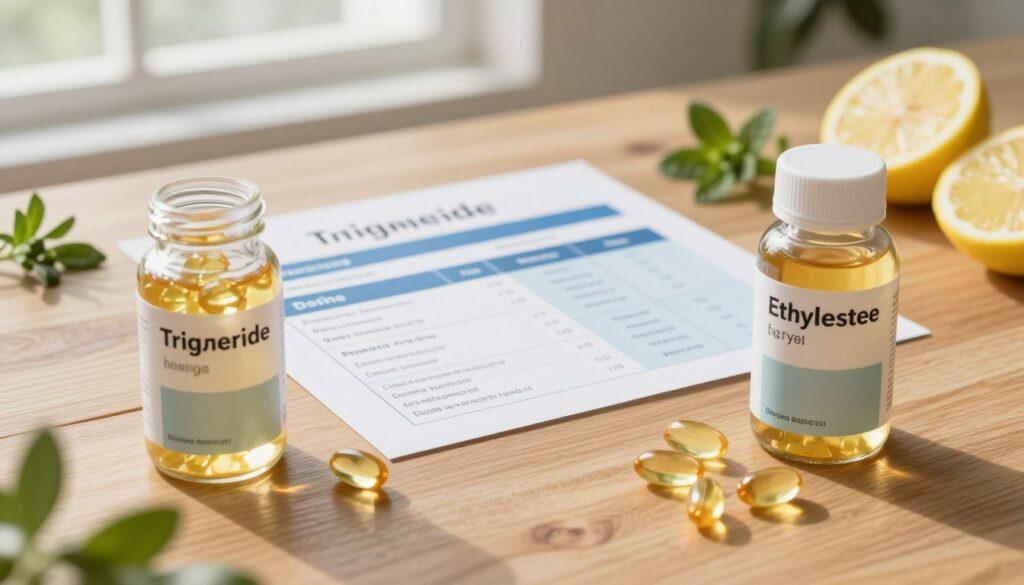
    A detailed supplement guide comparing omega-3 triglyceride and ethyl ester forms. In the foreground, a sleek glass with fish oil capsules labeled as triglyceride on one side, and ethyl ester on the opposite side, showcasing their different appearances. In the middle ground, a stylish wooden table displaying a well-organized chart with sections on dosing recommendations and meal timing, adorned with fresh herbs and lemon slices to suggest healthy eating. In the background, soft, natural lighting filters in through a window, highlighting the contrast between the two supplement types and creating a warm, inviting atmosphere. The overall mood is informative yet calming, encouraging a sense of wellness and clarity. The image is captured from a slight overhead angle to provide a comprehensive view of the scene.

    For athletes, research suggests a daily intake of 1–2 grams of EPA and DHA. This supports the eyes and helps manage inflammation from exercise. Starting with a lower dose helps gauge how well the body tolerates it.

    When to take supplements is just as important as what to take. They should be taken with the biggest meal of the day. This meal should also have fat in it. Fat helps release bile and activates enzymes needed for oil breakdown.

    Not taking omega-3s with enough fat can greatly reduce their absorption. This is even more true for ethyl ester forms.

    Ensuring the quality of supplements is also key. Look for third-party purity certifications like IFOS, USP, or NSF International. These confirm the product is free from harmful substances.

    Certifications also verify the product’s potency. Athletes should always look for these to ensure they’re getting the dosage of 1–2 g EPA+DHA they need.

    Synergies: vitamin D, antioxidants

    Vitamin D and antioxidants work together to boost the benefits of omega-3 fatty acids for athletes. Nutrients are more effective when they work together. Their combined effect is greater than each one alone.

    Vitamin D and omega-3s have a strong partnership. They both help control inflammation in the body. Vitamin D affects immune cells, while omega-3s help in resolving inflammation.

    This teamwork is key during intense training. It helps with recovery and keeps cells talking to each other. Together, they might even help more with visual signals than alone.

    Antioxidants protect omega-3s from damage caused by exercise. Exercise can harm cell membranes. DHA, with its many double bonds, is at high risk of damage.

    Important antioxidants include:

    • Vitamin E: It goes into cell membranes to fight off free radicals
    • Vitamin C: It helps by regenerating vitamin E and works in water
    • Carotenoids like lutein: They build up in eye tissues for extra protection

    These antioxidants keep omega-3 fats safe from damage. This helps keep cell membranes working well. It keeps visual pigments and signals strong during stress.

    This strategy helps keep cells strong in many ways. Vitamin D and antioxidants create a better environment for the body. They help with inflammation and protect against damage at the same time.

    Athletes looking to improve their eye health should think about these partnerships. Eating foods rich in vitamin D and omega-3s is a good start. Adding colorful fruits and veggies gives the antioxidants needed.

    This way of eating is a smart nutritional plan. It goes beyond just taking one supplement. It helps protect the eyes and makes athletes more resilient during training.

    Practical Menus for Travel and Tournaments

    For athletes, getting enough omega-3 is key for clear vision. Travel and tournaments mess up eating times. This can hurt the tear film and vision needed for top performance.

    It’s important to eat foods that are easy to carry and full of nutrients. These foods should keep energy levels up and provide the right nutrients. DHA is needed to help the eyes under stress.

    There are easy ways to get omega-3. Canned sardines and salmon pouches are great sources. Flaxseed or chia seed packets are good for fiber and energy.

    The table below shows good meal choices for a day of travel.

    Meal Food Options Key Omega-3 Source Nutritional Focus
    Breakfast Greek yogurt with walnuts & honey, whole-grain bagel Walnuts (ALA) Protein, sustained carbohydrates
    Lunch Whole-wheat wrap with canned salmon, spinach, avocado Canned Salmon (EPA/DHA) Lean protein, healthy fats, fiber
    Snack Almonds, salmon jerky, flaxseed cracker packs Flaxseed (ALA), Salmon Jerky (EPA/DHA) Portable energy, micronutrients
    Dinner Pre-cooked quinoa pouch with sardines and steamed veggie mix Sardines (EPA/DHA) Complete meal, recovery nutrients

    Drinking enough water is also very important. Not drinking enough can make the eyes dry. Athletes should drink water all day, not just during games.

    During long games, electrolyte drinks might be needed. But, sugary drinks can cause inflammation. Water is best for keeping cells healthy.

    Athletes with contact lenses face extra risks. Airplane cabins and new places can dry out the eyes fast. This makes the eyes dry out even more.

    Contact lens wearers are more likely to get dry eyes from these things. The lens can also mess with the eyes. Taking care of the eyes is very important for clear vision.

    There are a few things athletes can do. Blinking more when looking at screens helps spread tears. Using eye drops before the eyes get dry is also good.

    Most importantly, getting enough omega-3 every day is key. It helps keep the eyes’ tear film healthy. This is important for fighting dryness from lenses and travel. It’s a big part of a good performance plan.

    Using these meal plans and eye care tips helps athletes focus on the game. Eating right and taking care of the eyes is important for performance. A good plan helps avoid eye fatigue that can slow down quick decisions.

    Considerations for Vegans and Younger Athletes

    Meeting DHA needs is special for athletes on plant-based diets and those growing up. They need specific nutrition plans because of their unique needs and limits.

    Vegan athletes can’t get EPA and DHA from fish or seafood. Instead, they rely on alpha-linolenic acid from flaxseed, chia, and walnuts. But, the body only converts a small part of ALA into EPA and DHA.

    This conversion is often less than 10%. It’s hard to get enough DHA for top vision and brain work just from food. Algal oil supplements offer a direct, plant-based source of DHA and EPA. They skip the slow conversion process.

    Younger athletes have different needs. Their eyes and brains are growing. Getting enough DHA helps their vision and brain work later on.

    The right amount of DHA depends on weight and age. Kids need 100-150 mg of DHA each day. Teen athletes might need more, but less than adults.

    Consideration Area Vegan Athletes Younger Athletes
    Primary Challenge Inefficient ALA to DHA conversion Developmental retinal and neural maturation
    Recommended Source Direct DHA from algal oil Age-appropriate fish intake or supplements
    Dosage Guidance 200-300 mg DHA daily, from supplements 100-150 mg DHA daily, weight-adjusted
    Key Timing Consistent daily intake for stable levels Critical during growth spurts and training phases

    Vegan athletes can’t just rely on flaxseed or walnuts. Blood tests can check DHA levels. Supplements made from algal oil are safe and reliable.

    Parents and coaches of young athletes should focus on good food basics. Adding fatty fish is good if it’s okay. If not, a high-quality algal oil supplement can help.

    Both groups need a plan that fits them. One size doesn’t fit all. Checking each athlete’s needs ensures their eyes and brains get what they need.

    Monitoring Outcomes: dryness scales, blink rate, contrast tests

    Tracking how nutrition affects eye health is key. Athletes who take omega-3 supplements see real benefits. They notice better vision and comfort.

    Subjective tests use questionnaires like the Ocular Surface Disease Index (OSDI). It measures dry eye symptoms like grittiness and light sensitivity.

    By regularly answering these questions, athletes can see how their symptoms change. A lower score means they’re getting better.

    Objective tests look at what athletes can do. Blink rate is an easy one to track. When athletes focus too much, like on screens, they blink less.

    This less blinking leads to dry eyes. The 20-20-20 rule helps. It tells athletes to look away from screens every 20 minutes for 20 seconds.

    This rule helps athletes blink more. Using a timer makes it easier to follow. It keeps eyes moist during long training.

    Clinical tests like contrast sensitivity tests are also useful. They check how well athletes see in different light conditions.

    These tests show if vision is improving. This is important for athletes who perform in low light or glare.

    Athletes should keep a log of their omega-3 intake and vision tests. It helps them see how nutrition affects their eyes and performance.

    Safety and anti-doping notes

    It’s important for athletes to know if EPA and DHA are safe. Omega-3 fatty acid supplements are safe when used right. They help athletes without risking their health.

    For athletes, taking up to 3 grams of EPA and DHA daily is safe. This amount helps with eye and body health. Taking more than this is not advised for long periods.

    But, taking too much EPA and DHA, over 3 grams a day, might be risky. It could slightly increase the chance of atrial fibrillation. Athletes should not take too much without a doctor’s okay.

    Omega-3s, like EPA, can make blood less likely to clot. But, this is not as strong as blood thinners. Athletes need to be careful.

    Athletes on blood thinners like warfarin should talk to a doctor before taking omega-3s. Telling a team doctor is key to avoid bad reactions.

    From an anti-doping view, omega-3s are okay. The World Anti-Doping Agency doesn’t ban them. They are seen as a good nutritional choice.

    The main rule is to talk openly about supplements. Athletes must tell doctors about fish oil and other supplements. This keeps everyone safe and informed.

    Quick-start plan

    Athletes can see real improvements in their visual performance by following a simple, six-step plan. This plan is based on the science of omega-3s.

    Start by checking how much EPA and DHA you get from foods like salmon or fortified products. Then, pick a high-quality omega-3 supplement in triglyceride form. Make sure it’s pure and safe.

    Next, take one to two grams of EPA and DHA each day. Take it with your biggest meal to help your body absorb it better.

    Then, make some changes to your environment. Use a humidifier to fight dry air. Also, follow the 20-20-20 rule when you’re on screens to avoid eye strain.

    After that, set some baseline measurements. Use journals or special scales to track how dry your eyes feel and how tired your eyes get. Wait at least eight to twelve weeks before checking these again.

    This wait is important. It lets your body fully use the omega-3s. You’ll see a drop in inflammation and better eye health.

    Stick to this plan and you’ll see real changes. Your eyes will feel better and you’ll see things faster in just a few weeks.

  • The High-Tech Edge Boosting Sports Eye Health and Performance

    The High-Tech Edge Boosting Sports Eye Health and Performance

    The sports world is on the verge of a big change. New technologies are not just making athletes better. They’re also changing how we watch sports. Sports Vision Tech is leading this charge, using cutting-edge tech to boost athletes’ eye skills.

    AI, wearable tech, and virtual reality are changing sports in many ways. They’re exciting for athletes, coaches, and fans. Eye tracking is a big part of this, helping athletes see better and react faster.

    Looking at sports and tech together shows us a future where being good isn’t just about being strong. It’s also about seeing well and processing info fast.

    Smart Eyewear & Trackers

    Smart eyewear and trackers are leading the way in sports tech. They change how athletes perform and keep an eye on their health. This mix of tech and sports is getting even better with new eyewear and tracking gadgets.

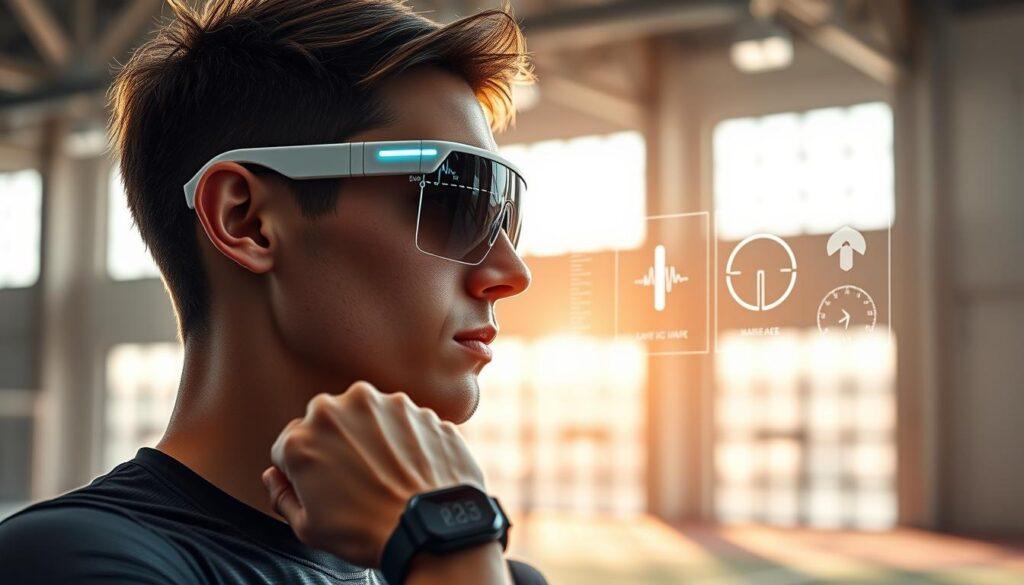
    A futuristic athlete wearing sleek smart eyewear and advanced biometric trackers on their wrists, focused on a digital sports interface projected in front of them. The foreground features the athlete in a dynamic pose, showcasing the high-tech gear that seamlessly integrates into their training environment. In the middle, digital displays hover, showing real-time performance metrics like heart rate, visual tracking data, and augmented reality overlays. The background is a bright, modern sports facility with large windows, allowing natural light to flood the scene. The atmosphere is energetic and innovative, emphasizing a commitment to enhancing sports eye health through technology. The image should capture a sense of forward-thinking and athleticism, with details highlighting the quality of the smart equipment.

    Wearable tech, like fitness watches and smart helmets, is big in sports now. Riddel is adding tech to helmets to spot impacts and prevent injuries. Smart eyewear is also tracking health and performance.

    Wearable Technology in Sports

    Wearable tech in sports is changing how athletes train and compete. It gives real-time data on how they’re doing and their health. For example, smart glasses can watch eye movements and pupil size, helping athletes get better.

    Wearable vision tech has many benefits. It boosts athlete performance and helps prevent injuries. Smart helmets and eyewear can spot health issues early, keeping athletes safe.

    Key Features of Smart Eyewear and Trackers:

    • Real-time performance monitoring
    • Health metric tracking
    • Injury prevention through impact detection
    • Visual feedback for enhanced performance

    The sports world is loving wearable tech more and more. We’ll see even more cool stuff in smart eyewear and trackers soon. These gadgets could make athletes safer and better, and they’ll likely be used even more.

    VR/AR for Training

    The world of sports training is changing fast with VR/AR. It’s not just for gamers anymore. Athletes are using these tools to get better. Sports Vision Tech is leading this change, giving athletes new ways to train.

    Virtual Reality is making training more real. For example, the NFL uses VR to train players in game-like settings. Companies like MetaQuest are making VR headsets for sports training. This shows how big VR is getting in sports.

    Enhancing Athlete Performance with Virtual Reality

    VR is more than just games for athletes. It’s a key tool for getting ahead. Athletes do eye tracking exercises in VR. This improves their quickness and awareness of space.

    VR lets athletes practice in high-pressure situations safely. They can train a lot without the risk of real games. This makes training more effective and safer.

    VR Training Benefits Description Impact on Athlete Performance
    Simulated Environments Realistic scenarios for practice Improved decision-making under pressure
    Eye Tracking Analysis of visual processing Enhanced reaction times and spatial awareness
    Repeated Practice Skill refinement without physical strain Consistent performance improvement

    VR is getting better, and we’ll see new training tools soon. The mix of Sports Vision Tech and VR/AR is changing sports training. It’s an exciting time for the sports world.

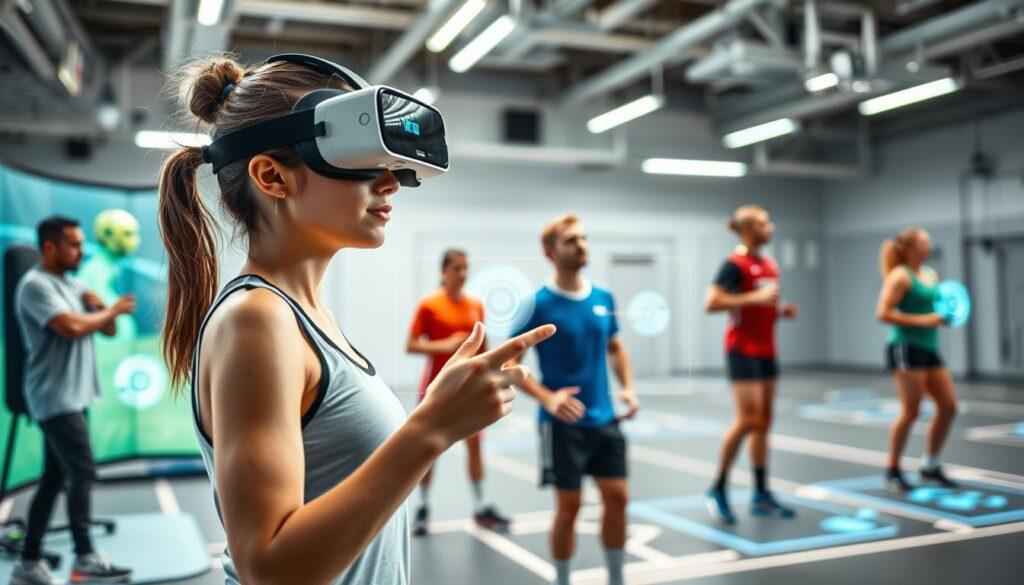
    A dynamic sports training scene featuring a diverse group of athletes engaging in virtual reality (VR) and augmented reality (AR) exercises to enhance their eye health. In the foreground, a young female athlete, dressed in professional athletic wear, interacts with an AR headset, focused and immersed in a virtual training environment. The middle ground showcases a variety of sports training equipment, like VR simulation mats and holographic targets, with other athletes, including a male soccer player and a female basketball player, also using cutting-edge technology to improve their performance. The background features a high-tech training facility with bright, even lighting that enhances the futuristic atmosphere. The image conveys a sense of innovation and motivation, highlighting the intersection of technology and sports training.

    Pros & Cons

    Exploring Sports Vision Tech, we see its good and bad sides. This tech has changed sports training, but it’s not perfect. It has its ups and downs.

    Advantages and Limitations of Sports Vision Tech

    Sports Vision Tech, like wearable vision devices, has changed athlete training. A report by the American Optometric Association shows how tech is changing training.

    Its benefits include better vision, quicker reactions, and smarter decisions. Wearable tech tracks eye movements, helping athletes understand their vision better.

    But, it’s key to balance tech with old-school training. Too much tech can make athletes too dependent. A mix of both helps athletes grow.

    Remember, “Technology is a useful servant but a dangerous master.” This means tech should help, not control sports training. Coaches and athletes must use tech wisely, not let it take over.

    • Pros of Sports Vision Tech:
    • Enhanced visual performance
    • Personalized training programs
    • Data-driven insights for coaches
    • Cons of Sports Vision Tech:
    • High implementation costs
    • Potential for over-reliance on technology
    • Limited accessibility for some athletes

    In summary, Sports Vision Tech is a valuable tool for athletes. Used wisely, it can greatly improve performance. Knowing its good and bad points helps coaches and athletes make smart choices about using it.

    Real-World Athlete Stories

    The sports world is changing fast, thanks to Sports Vision Tech. Athletes are using this tech to get ahead. It’s not just about seeing better; it’s about training smarter and performing under pressure.

    Looking at athlete stories, it’s clear that eye tracking and vision training are key. They’re not just cool gadgets; they’re vital for athletes today.

    Success Stories from the Sports World

    Many pro athletes are now using Sports Vision Tech. Baseball players, for example, are tracking pitches better. This helps them hit more home runs.

    Golfers are also seeing big improvements. They’re learning to focus better on the ball and the hole. This tech helps them understand their mental and visual game.

    Teams are using these tools too. Soccer teams, for instance, are training players to track the ball and guess opponents’ moves. This makes them faster and smarter on the field.

    This tech is changing how teams work together. It’s making them more in sync and quick to react. This leads to better team performance.

    As Sports Vision Tech gets better, we’ll see even more cool uses in sports. The future of training is about more than just physical strength. It’s about sharpening the mind and eyes too.

    Getting Started

    Now that we’ve seen how new tech is changing eye health and sports, it’s time to start using Sports Vision Tech. The first thing to do is figure out what you need. Do you want to get better at quick reactions, track movements better, or improve your wearable vision for your sport?

    Practical Steps to Implementation

    Start by talking to a sports vision specialist. They can check your visual skills and suggest the right tech for you. Wearable vision devices, like smart glasses, are great for athletes who want to see how they’re doing right away.

    When picking Sports Vision Tech, choose devices that work well and are easy to use. Make sure to add these tools to your training in a way that fits with what you’re already doing. This way, you can see how you’re improving and make smart choices to get better.

    Using Sports Vision Tech is more than just getting new gadgets. It’s about changing how you train. With the right tools and help, you can reach new heights and get ahead of the competition.

  • Eat for Excellence: Nutrition Hacks to Supercharge Athletic Eye Health

    Eat for Excellence: Nutrition Hacks to Supercharge Athletic Eye Health

    When we push our bodies hard, we often forget about our eyes. They are just as important as our muscles. Without good eyesight, crossing the finish line doesn’t mean much. Dr. Anthony Balduzzi reminds us that a well-rested body includes our eyes.

    Eating the right foods is essential for eye health. Leafy greens like spinach are full of lutein and zeaxanthin, which protect our eyes. Omega-3 fatty acids from fish oil also help. Plus, antioxidants keep our eyes safe from harm.

    So, what should we eat for eye nutrition? Foods rich in these nutrients are a good choice. By choosing the right foods, we support our eye health and overall performance.

    Best Foods for Athletes to Enhance Eye Health

    Eating right is not just about energy; it’s also about eye health. Research shows that certain foods can boost eye health. This gives athletes a better chance to win.

    Nutrient-Rich Foods for Optimal Vision

    So, what foods are best for athletes’ eye health? Let’s explore the key foods for protecting vision.

    • Leafy Greens: Spinach, kale, and collard greens are full of lutein and zeaxanthin. These antioxidants shield the eyes from harm.
    • Fatty Fish: Salmon, tuna, and sardines are loaded with omega-3s. These fats support eye health and fight inflammation.
    • Eggs: Eggs are rich in lutein, zeaxanthin, and vitamin A. These are vital for healthy vision.
    • Nuts and Seeds: Almonds, walnuts, and chia seeds are full of vitamin E. This vitamin guards the eyes against oxidative stress.

    Kimberly, a Registered Dietitian, stresses the importance of a balanced diet. “Athletes need to eat foods rich in nutrients for their eyes.” By adding these foods to their diet, athletes can help their eyes perform at their best.

    “You are what you eat, and if you’re eating a balanced diet rich in fruits, vegetables, and omega-3 fatty acids, you’re more likely to have healthy eyes.”

    By choosing the right foods, athletes can protect their vision. This helps them perform better overall.

    Meal Samples for Athletes with Eye Health in Mind

    Athletes, listen up! If you’re serious about maintaining peak eye health, it’s time to rethink your meal plan. A diet rich in specific nutrients can significantly enhance your vision, giving you the edge you need in your sport.

    Sample Meal Plans for Enhanced Vision

    Creating a meal plan that supports eye health doesn’t have to be complicated. It starts with incorporating foods that are rich in vitamins and minerals beneficial for vision. For instance, dairy products, which are a staple in many diets, can play a key role. The Indian dairy industry, with its variety of high-quality dairy products, offers a range of options that can be included in a healthy meal plan.

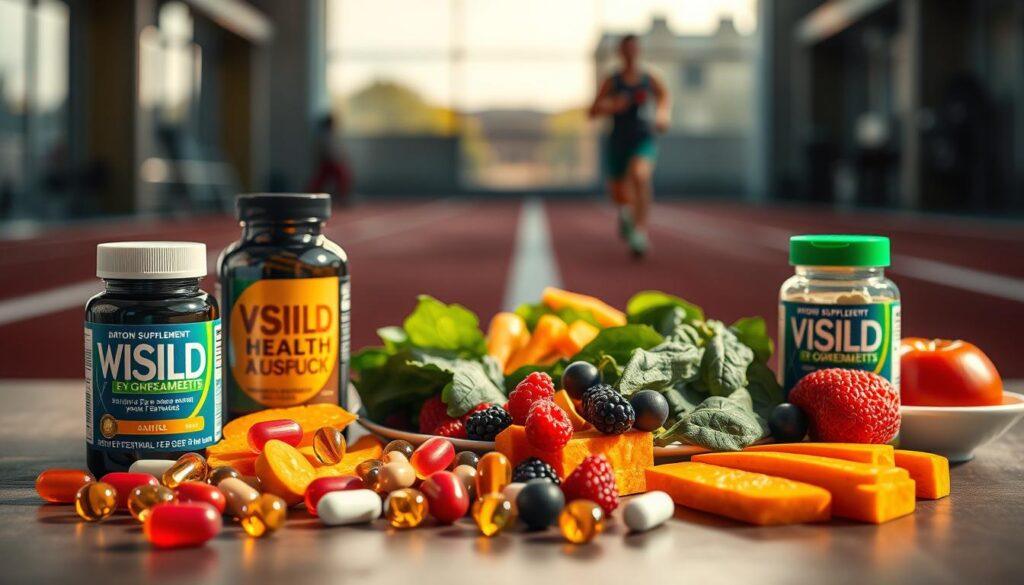
    A visually striking arrangement of vision supplements prominently displayed in the foreground, showcasing vibrant, colorful capsules and bottles. The middle ground features a healthy meal plate with eye-friendly foods, such as sweet potatoes, spinach, and berries artistically arranged to emphasize nutritional value for athletes. In the background, soft-focus elements like blurred gym equipment or a scenic running track create an athletic ambiance. The scene is illuminated by warm, natural light, casting gentle shadows that enhance the textures of the supplements and food. The overall mood is energetic and health-focused, inviting viewers to consider the importance of nutrition for eye health in athletic performance. The composition should be shot from a slightly elevated angle to capture both the supplements and the meal in a dynamic, engaging layout.

    Starting your day with a nutritious breakfast can set the tone for optimal eye health. Consider the following ideas:

    • Greek Yogurt Parfait: Layer Greek yogurt with berries and granola for a snack that’s rich in vitamins and minerals.
    • Omelette with Spinach: Eggs are a great source of lutein and zeaxanthin, two nutrients that are critical for eye health. Add spinach for an extra boost.

    Lunch Ideas

    For lunch, focus on meals that combine protein, healthy fats, and complex carbohydrates. Here are some suggestions:

    1. Grilled Chicken Salad: Top a bed of mixed greens with grilled chicken, cherry tomatoes, and a citrus vinaigrette for a meal that’s both satisfying and beneficial for your eyes.
    2. Avocado Toast: Whole grain toast topped with mashed avocado, a fried egg, and a sprinkle of salt and pepper makes for a nutrient-dense meal.

    Dinner Ideas

    Dinner is an opportunity to include a variety of foods that support eye health. Consider:

    “The food you eat can either be the safest and most powerful form of medicine, or the slowest form of poison.” –

    Ann Wigmore
    • Salmon with Quinoa and Broccoli: Salmon is rich in omega-3 fatty acids, which are beneficial for eye health. Pair it with quinoa and steamed broccoli for a well-rounded meal.
    • Lentil Soup: Lentils are a good source of nutrients that support overall health, including eye health. Add some spinach for an extra nutritional boost.

    For more insights on nutrition and eye health, check out our article on nutrition and eye health. Incorporating vision supplements into your diet can also be beneficial, but always consult with a healthcare professional before adding any supplements to your regimen.

    Hydration Tips for Athletes to Maintain Eye Health

    Drinking enough water is key for athletes’ eye health. It helps their vision and performance. Dr. Anthony Balduzzi says hydration is vital for recovery, including eye health.

    So, how do athletes keep their eyes hydrated? Drinking lots of water is a must. Athletes should aim for at least eight glasses a day. Electrolyte-rich drinks are also important to replace lost salts and keep eyes healthy.

    A visually striking composition focusing on eye nutrition, featuring a vibrant array of nutritious foods known for promoting eye health. In the foreground, a clear glass of water is placed next to colorful fruits and vegetables rich in vitamins A, C, and E, like carrots, blueberries, and leafy greens. The middle layer includes a snapshot of an athlete, dressed in a modest sports outfit, engaging in a hydration routine, holding a water bottle, with a determined expression. The background is a softly blurred outdoor setting, symbolizing a bright day, with sunlight filtering through leaves, creating an uplifting atmosphere. The lighting is natural and bright, emphasizing the freshness of the produce and the athlete's focused demeanor, captured at an angle that showcases both elements harmoniously.

    Hydration Tip Benefit Recommendation
    Drink water regularly Maintains eye moisture At least 8 glasses a day
    Consume electrolyte-rich beverages Replenishes lost electrolytes Post-workout or in hot environments
    Avoid sugary drinks Reduces risk of eye strain Limit or avoid sugary beverages

    It’s not just about how much you drink. What you drink matters too. Choose drinks that are good for your health, including your eyes. Staying hydrated helps protect your vision and boosts your performance.

    In short, staying hydrated is vital for athletes’ eye health. Drinking enough water, using electrolyte drinks when needed, and avoiding sugary drinks helps. Healthy eyes are key to top performance. So, make sure to drink plenty of water and eat well.

    Supplement Insights for Athletes Focusing on Eye Health

    Athletes often forget about eye health, which is key for peak performance. Dr. Anthony Balduzzi says a complete health plan includes good nutrition and supplements. Vision supplements are vital for keeping eyes healthy.

    Understanding Vision Supplements

    Vision supplements give athletes the nutrients they might miss in their diet. They have vitamins, minerals, and antioxidants good for the eyes. Key ingredients include lutein, zeaxanthin, omega-3 fatty acids, and vitamins C and E. These help protect the eyes and keep vision sharp.

    Choosing the right vision supplement is important. Athletes should pick one that fits their diet and health needs. It’s also key to choose a trusted brand for quality and effectiveness. The right supplement can boost eye health and overall well-being.

    It’s wise for athletes to talk to a doctor or sports nutritionist about supplements. They can help pick the best supplement for each athlete. This ensures athletes get the most out of their supplements for better eye health and performance.

    • Lutein and Zeaxanthin: Protect the eyes by reducing blue light damage and oxidative stress.
    • Omega-3 Fatty Acids: Support eye health by promoting healthy vision and reducing inflammation.
    • Vitamins C and E: Antioxidants that help protect the eyes from damage caused by free radicals.

    By adding the right vision supplements to their diet, athletes can keep their eyes healthy. This supports their overall performance and well-being.

    Sports Nutritionist Tips for Enhancing Eye Health

    For better eye health, athletes should eat a balanced diet. This diet should include foods high in omega-3 fatty acids, lutein, and zeaxanthin. It’s also important to add vision-friendly foods and drink plenty of water.

    Don’t forget to get regular eye exams. These check-ups help keep your eyes in top shape. They’re key for both your health and performance.