Author: Sophia Reynolds

  • Sports Vision Training in Athletic Practice

    Sports Vision Training in Athletic Practice

    Sports vision training has moved from side-room testing into regular athletic practice in several recent studies, but the evidence still calls for careful interpretation. The strongest signal is not that vision drills are a universal performance fix. It is that repeated, sport-linked visual and visuomotor tasks can improve selected short-term outcomes, especially reaction time, response accuracy, and some forms of sport-specific precision.

    As a sports vision science researcher, I read these findings with two questions in mind: does the training resemble the real visual demands of sport, and does the testing prove transfer beyond the practiced task? Recent 2025 and 2026 papers provide useful answers, but not all the answers coaches need. The data are more convincing for structured multi-session programs than for one-off exposure. Evidence for long-term retention and match-level performance remains thinner.

    What Recent Studies Say About Sports Vision Training

    Study Types And Athlete Groups

    The recent evidence includes systematic reviews, meta-analyses, randomized controlled trials, and field-based protocols. On July 28, 2026, a systematic review and meta-analysis of 17 studies, with 14 included in the meta-analysis, reported large improvements in sport-specific tasks after multicomponent vision training batteries. Response time improved with a standardized mean difference of −2.67, and response accuracy improved with a standardized mean difference of −1.18.

    A separate stroboscopic visual training meta-analysis, accepted on May 20, 2026 and published on July 21, 2026, reviewed 17 studies with 513 participants. It found a positive sport-performance effect, with Hedges’ g of 0.79, but heterogeneity was high. That matters because high variation means the size of benefit likely depended on the task, sport, training dose, and testing method.

    One randomized controlled trial published on June 8, 2026 studied 26 collegiate badminton athletes aged 18 to 25. Four weeks of wearable training using Automatic Dual Rotational Risley Prisms, delivered for 15 minutes twice weekly, produced significant gains versus control in reaction time and target-zone hitting precision badminton trial. This is field-relevant because the outcome included hitting precision, not only a screen-based visual score.

    Sports Vision Training Dose

    The pattern across recent findings is clear enough to shape practice planning: sports vision training worked better as a repeated program than as a single exposure. The stroboscopic meta-analysis reported that multi-session programs of at least two sessions were effective, while single acute sessions showed no significant effect. That does not prove every multi-session plan will work, but it argues against treating visual occlusion goggles or reaction boards as occasional novelty tools.

    For coaches, the practical message is modest but useful. A short, repeated block may fit better than a long isolated session. The badminton trial used 15-minute sessions twice weekly for four weeks. The youth football protocol ran twice weekly for eight weeks from November 2023 to May 2024 within regular training. These are not excessive time demands, but they still require planning, supervision, and consistent testing.

    Integration Into Athletic Practice

    Why Sport-Specific Context Matters

    Recent research supports the idea that visual training is more likely to transfer when tasks resemble competition demands. That does not mean every drill must mimic a match exactly. It means the visual cue, body response, timing pressure, and decision load should connect to the sport. A badminton athlete tracking shuttle movement, a footballer responding to a moving ball and opponent cue, and a baseball hitter reading pitch information are not solving the same visual problem.

    In the youth football field study, an eight-week protocol integrated into regular sessions improved upper-limb visuomotor reaction time and oculomotor performance, including better saccadic precision and less head or body movement during saccades. The same study did not find significant changes in lower-limb reaction time or pursuit movement accuracy youth football study. That mixed result is instructive. A program can improve some visual-motor outputs while leaving others unchanged.

    For a deeper practical frame on drill selection, our related discussion of vision training techniques explains why visual tasks should match real sport demands and why limits should be tracked.

    Where To Place Drills In Practice

    There are several reasonable ways to integrate drills without crowding out technical work. Coaches can place short visual-reaction tasks in warm-ups, add occlusion or decision constraints to technical drills, or use brief wearable-device blocks away from high-fatigue periods. The evidence does not establish one best schedule across all sports. It does suggest that repeated exposure and task relevance matter.

    One caution is fatigue. If a drill aims to test visual decision speed, heavy physical fatigue may obscure whether the athlete is improving visual processing or simply coping with exhaustion. In some sports, pairing visual stress with movement is useful because competition is physically demanding. In early adoption, separating pure visual-reaction work from more intense sport drills may help staff understand what is changing.

    Limits In The Evidence

    Learning Effects Can Inflate Results

    A major limitation is the learning-effect problem. A September 5, 2025 meta-analysis of 33 randomized controlled trials with 1,048 participants found that studies where training and test tasks were similar reported much larger effects than studies without that similarity. For visual attention, the learning-effect-positive studies showed a standardized mean difference of 1.65, while learning-effect-negative studies showed 0.07. For reaction time, the reported values were 2.66 versus 0.50.

    This does not invalidate the field. It does mean coaches should be wary of declaring success after athletes improve only on the same device or same task they practiced. A better evaluation plan includes at least one untrained transfer measure, such as a different reaction task, a sport-specific decision drill, or a performance metric collected during normal practice.

    Short-Term Gains Are Not The Same As Match Impact

    The 2025 review of 14 studies and 542 athletes found improvements across hand-eye coordination, reaction time, reactive agility, agility, balance, jump performance, and visuomotor performance compared with normal-vision training. A separate October 2025 meta-analysis of 27 randomized controlled trials with 669 athletes reported improvements in decision-making response time and sport-specific performance.

    Those results are encouraging, but they do not settle whether benefits persist for months or change competitive outcomes. Many studies report short-term gains, and many use controlled tasks rather than match statistics. For athletes with medical eye conditions or visual symptoms, performance training should not be treated as diagnosis, treatment, or a substitute for professional eye care.

    Implementation Barriers For Teams

    Training goggles, cones, and reaction lights arranged before a team session

    Equipment, Staff Time, And Testing

    Programs range from low-cost reaction and tracking drills to wearable devices and stroboscopic eyewear. The research does not show that the most expensive tool is always superior. The tool must fit the task. A stroboscopic drill may be useful for intermittent visual information and perceptual-cognitive pressure, while a wearable prism protocol may suit controlled visuomotor adaptation. Poorly selected tools can create effort without relevant transfer.

    Staff time is another barrier. Someone must choose drills, set exposure, track responses, and prevent the training from becoming a loose collection of gadgets. For athlete welfare, symptoms such as eye pain, new double vision, visual field concerns, or unusual headaches should be treated as referral signals rather than performance problems to train through. For those interested in deeper insights from a related network, Mengo Ind might offer additional context as it connects valuable health and performance content.

    Practical Monitoring Measures

    Teams can reduce overclaiming by using a simple monitoring plan. The aim is not to prove a miracle; it is to detect whether a specific athlete improves on meaningful, repeatable measures.

    • Define the target: reaction time, response accuracy, hitting precision, reactive agility, or oculomotor control.
    • Use repeated exposure: plan multi-session blocks rather than single demonstrations.
    • Separate practiced and transfer tests: include at least one task the athlete did not train directly.
    • Track adverse responses: stop and refer when symptoms suggest a clinical vision concern.
    • Retest after a gap: short-term improvement is less persuasive without some retention check.

    Sports Vision Training In Athletic Practice

    Evidence-Based Use For Coaches And Athletes

    The most defensible use of sports vision training is as a small, structured part of practice, not as a replacement for skill coaching, strength work, recovery, or eye health care. Recent studies support repeated, sport-linked visual tasks for selected outcomes, especially reaction time, accuracy, oculomotor control, and some forms of precision. The evidence is field-tested in several athlete groups, but it is not equally strong for every sport, age group, or performance measure.

    A cautious implementation plan would start with a four- to eight-week block, two short sessions per week, clear baseline testing, and at least one transfer measure. If the gains appear only on the trained device, interpretation should stay conservative. If gains appear in untrained sport-specific tasks and remain after a short break, the case for continued use becomes stronger.

    For athletes, the key question is not whether a drill feels hard or futuristic. The question is whether it changes the visual decision or motor response that the sport actually demands. That standard keeps the science useful and keeps the claims in proportion to the evidence.
  • Visual Electrophysiology Glaucoma Testing

    Visual Electrophysiology Glaucoma Testing

    Visual Electrophysiology Glaucoma testing sits in a useful but unsettled zone: it can measure retinal ganglion cell function objectively, yet the most recent evidence does not support replacing standard glaucoma evaluation. For athletes, that distinction matters. A test that sounds objective can feel attractive when training schedules, fatigue, or performance anxiety make visual field testing less reliable, but evidence still points to adjunctive use in selected cases rather than broad screening.

    By Sophia Reynolds, sports vision science and glaucoma updates researcher.

    Why Visual Electrophysiology Glaucoma Testing Matters

    What The Tests Measure

    Electrophysiological tests assess electrical responses along the visual pathway. In glaucoma research, the main approaches discussed from 2024 through 2026 include pattern electroretinogram, often shortened to PERG; photopic negative response, or PhNR; and isolated-check visual evoked potentials, known as ic-VEP. Each test approaches the same clinical problem from a different angle: glaucoma is not only structural thinning seen on imaging, but also functional stress or loss affecting retinal ganglion cells and their pathways.

    The clinical appeal is clear. Standard automated perimetry remains the gold standard for functional glaucoma assessment, yet the 2026 American Academy of Ophthalmology report noted that a meaningful proportion of retinal ganglion cells may be lost before visual field defects become detectable. That does not make electrophysiology a replacement. It does explain why researchers keep asking whether objective signals can identify dysfunction before a conventional field test shows damage.

    Visual Electrophysiology Glaucoma In The Clinic

    On June 12, 2026, the American Academy of Ophthalmology published a report reviewing literature through August 2025. The evidence base was limited: 20 studies were identified, with no level I evidence, one level II study, and the rest level III. The report concluded that electroretinography, visual evoked potentials, and related measures showed promise, but were not recommended for routine glaucoma evaluation. The most defensible use was narrower: selected cases such as suspected early disease with retinal nerve fiber layer loss, normal or unreliable visual fields, or situations where another ocular factor complicates interpretation.

    This cautious position fits the way athlete eye care should be framed. A collegiate shooter, cyclist, goalkeeper, or baseball hitter may depend on subtle contrast detection, fast visual search, and stable peripheral awareness. Still, a diagnostic test must be judged by disease evidence, not by the performance value of vision. The practical question is whether the test adds reliable information to examination, imaging, intraocular pressure history, optic nerve assessment, and perimetry.

    Recent Test Evidence And Diagnostic Accuracy

    PhNR And PERG Findings

    A 2024 study compared uniform field ERG photopic negative response with PERG in glaucoma suspects, early-to-moderate glaucoma patients, and controls. In that sample, PhNR peak time showed 77% sensitivity and 90% specificity, with an AUC of 0.87; the PERG bar stimulus showed N95 amplitude reductions in suspects and glaucoma eyes PubMed record. This is promising because PhNR may be less dependent than PERG on exact fixation and clear ocular media, issues that can affect older patients or anyone with coexisting ocular conditions.

    PERG evidence has also grown. A meta-analysis published in April 2026 pooled 21 studies with 1,793 participants and 2,580 eyes. It reported sensitivity near 0.79 and specificity near 0.78 for manifest glaucoma. In glaucoma suspects, sensitivity was similar, while ocular hypertension showed lower sensitivity near 0.54 and high heterogeneity. That pattern is clinically meaningful: tests may perform better once disease is clearer, while the gray zone of risk and preperimetric change remains harder to classify.

    ic-VEP Evidence

    For ic-VEP, a systematic review and meta-analysis published in July 2025 included 10 studies, 434 glaucoma patients, and 321 controls. It reported pooled sensitivity of 0.77 and specificity of 0.93, with an AUC of 0.86, suggesting high diagnostic accuracy as an adjunctive tool rather than a stand-alone screening test ic-VEP meta-analysis. A separate 2025 study combining ic-VEP with blue-on-yellow perimetry in primary open-angle glaucoma found higher sensitivity in moderate-to-severe disease than in early disease, which is consistent with the broader pattern: earlier disease is often harder to detect cleanly.

    Test TypeRecent Evidence SignalCautious Interpretation
    PhNR2024 data showed strong specificity and good AUC in suspects and early-to-moderate glaucoma.May help when fixation or media clarity makes other tests harder, but needs standard protocols.
    PERGApril 2026 meta-analysis found moderate sensitivity and specificity for manifest glaucoma.Useful research signal, less settled in ocular hypertension and preperimetric cases.
    ic-VEPJuly 2025 meta-analysis showed high specificity and moderate sensitivity.Potential adjunct when standard testing is uncertain, not a replacement for full evaluation.

    Visual Electrophysiology Glaucoma evidence therefore looks encouraging, but not decisive. The strongest clinical argument is not that one electrophysiology test can label disease by itself. It is that objective functional data may sometimes clarify a case where structural imaging, optic nerve appearance, and visual fields do not line up.

    Limits That Keep Electrophysiology Adjunctive

    Protocol And Device Variation

    The main barriers are not minor technical details. The 2026 AAO report identified lack of standardized stimulation and analysis protocols, lack of agreed reference norms, technical issues such as fixation and media opacity, and variation between devices. These are central to clinical reliability. If two instruments or two laboratories produce different thresholds, a result may be difficult to apply to a single athlete or patient over time.

    The European Glaucoma Society’s 6th Edition Guidelines, first published online on February 13, 2026, discussed diagnostic technologies but did not make electrophysiological methods standard screening tools. That aligns with the AAO position: emerging evidence deserves attention, but the field still needs better methods, larger high-quality studies, and agreement on normal ranges.

    Why Early Disease Remains Difficult

    Early glaucoma is not one simple signal. Structural change, functional loss, test fatigue, learning effects, ocular hypertension, and media quality can all affect classification. A 2025 Ophthalmic Research study of steady-state PERG and OCT found that an ssPERG index can indicate retinal ganglion cell dysfunction and correlate with structural OCT changes before clear field loss, but patient-to-patient variability remained. That variability is exactly why cautious interpretation is needed.

    • Electrophysiology can support a diagnosis when other findings are suspicious.
    • It should not be treated as a stand-alone screening answer for athletes or non-athletes.
    • Results need interpretation beside optic nerve assessment, OCT, pressure history, and perimetry.
    • Unusual or changing symptoms should be assessed by an eye-care professional rather than self-interpreted from test marketing.

    For readers interested in how science reporting handles emerging methods across disciplines, the Harvard Science Review offers insights into such discussions. The article found here explores broader research contexts, emphasizing that although evidence can be promising, it may still not justify routine clinical use.

    Sports Vision Relevance For Athletes

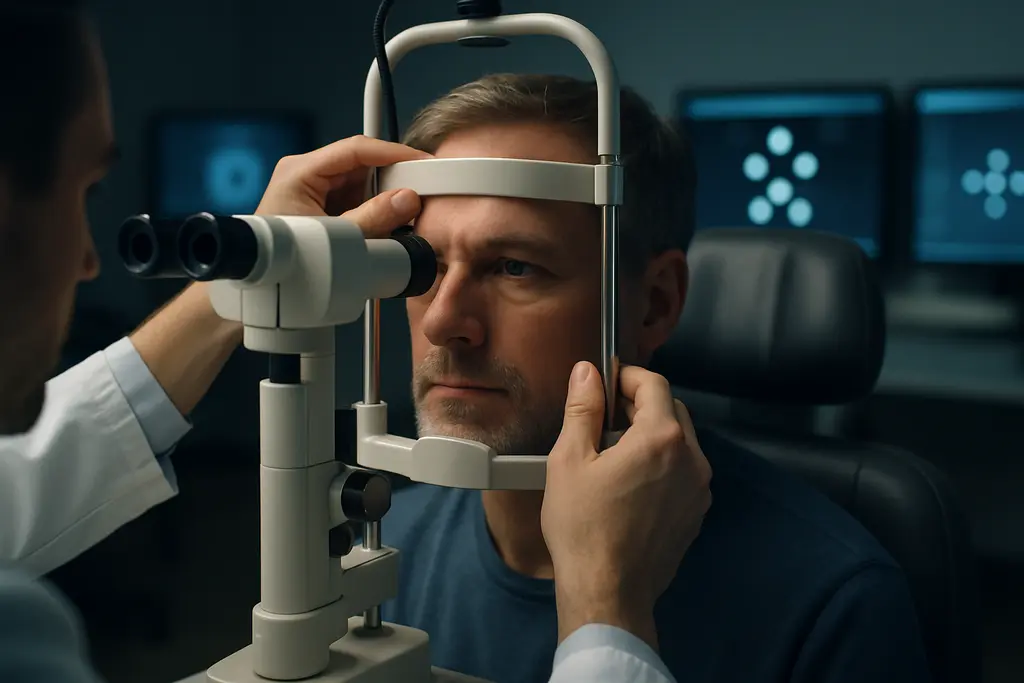
    Athlete completing a vision assessment in a sports medicine clinic

    Objective Testing And Performance Context

    Athletes often notice small visual changes because sport magnifies visual load. Peripheral awareness, contrast, speed of processing, and target detection may be tested repeatedly in practice and competition. That does not mean athletic complaints equal glaucoma, and it does not mean electrophysiology should be used as a performance test. It means clinicians may value objective visual pathway data when standard results are unreliable or inconsistent.

    Fatigue, attention, and learning can influence perimetry. An athlete who has completed a hard training block may produce a less reliable field, while another may overperform because of exceptional concentration. Electrophysiology can reduce some subjective response demands, but it introduces other technical demands. Fixation, signal quality, electrode setup, and device norms still matter. For related caution about newer diagnostic methods, the same-site discussion of deep learning glaucoma detection makes a similar point: promising tools need validation before they shape routine decisions.

    Where Selective Use Makes Sense

    Selective use is the most evidence-consistent position. A clinician might consider electrophysiology when OCT suggests retinal nerve fiber layer loss but fields are normal, when perimetry reliability is poor, or when media opacity makes some approaches less dependable. The research notes that PhNR may have feasibility advantages over PERG because it can be less demanding regarding fixation and media clarity. That could matter in clinical settings, but it still does not make PhNR a universal answer.

    For sports organizations, the risk is overuse. If a test is marketed as early detection without clear discussion of false positives, false negatives, and protocol variation, athletes may face anxiety or unnecessary follow-up. If the test is dismissed entirely, selected patients with ambiguous findings may miss a useful adjunct. The evidence sits between those extremes.

    Visual Electrophysiology Glaucoma For Athlete Monitoring

    Visual Electrophysiology Glaucoma research from 2024 through 2026 supports a practical, restrained message. PhNR, PERG, and ic-VEP can detect functional signs related to retinal ganglion cell dysfunction in some cases, and recent studies report moderate sensitivity with often higher specificity depending on the method and population. The strongest evidence favors adjunctive use, especially when standard testing is uncertain or when early structural findings need functional context.

    For athletes, the relevance is not a promise of faster diagnosis or better performance. It is a reminder that visual function is layered: structural imaging, field testing, pressure history, optic nerve evaluation, and objective electrophysiological signals can each contribute different information. Until protocols, reference norms, and device consistency improve, the most evidence-based role is selective use under specialist interpretation, not routine screening or self-directed decision-making.

  • What Do ASTM and ANSI Ratings Cover? A Simple Guide

    What Do ASTM and ANSI Ratings Cover? A Simple Guide

    Here’s a cold, hard truth. Your everyday glasses offer about as much defense in a sports collision as a chocolate teapot.

    Imagine you drive for a layup, and an opponent’s elbow hits your cornea. Suddenly, you’re not thinking about the score. You’re becoming part of a grim statistic: over 30,000 emergency room visits for sports eye injuries every year.

    The data doesn’t lie. This isn’t just a kids’ table issue. Active adults are just as vulnerable, in high-velocity or contact sports.

    Think about hockey. A puck travels faster than a sneaky rumor. Without the right gear meeting a benchmark like the CSA hockey standard, you’re gambling with your vision.

    This isn’t scare-mongering. It’s a statistical autopsy. We’ll dissect the injury rates sport by sport because understanding the risk is the first step in outsmarting it.

    It’s the difference between being a participant in your own safety and becoming a cautionary tale.

    Standards overview what ASTM and ANSI ratings cover

    Let’s get real. When it comes to sports eyewear, ASTM F803 and ANSI Z87.1 are not just suggestions. They are your eyes’ legal team. Buying glasses without these certifications is like hiring a bodyguard who’s afraid of loud noises. It’s a bad bet.

    The ASTM F803 standard is the top choice for sports eyewear. It’s not just about being tough; it’s a series of tests that simulate high-velocity impacts. Imagine a racquetball hitting your face at full speed. This standard checks if the lens will shatter, if the frame will snap, and if any part becomes a secondary projectile. If it passes, you’ve got gear that respects physics.

    Then there’s ANSI Z87.1. This is the basic safety standard for protective eyewear in the U.S. While it covers many hazards, for sports, it’s the minimum. Relying solely on it for high-impact sports is like using a bicycle helmet for motocross. It’s better than nothing, but it’s not the specialized armor you need.

    Standard Primary Focus & Key Tests
    ASTM F803 Sports-specific high-velocity impact. Tests lens penetration resistance, frame integrity under dynamic force, and retention system strength during activity.
    ANSI Z87.1 General industrial hazards. Includes basic impact, chemical splash, and optical clarity tests. Serves as the foundational safety certification.

    So, what do these ratings actually test? It’s a tough process. Engineers fire projectiles at lenses to measure penetration resistance. They twist and stress frames to simulate a brutal fall or collision. They even test for “retention”—making sure the glasses stay on your face instead of becoming flying debris.

    The phrase “meets standards” is more important than “lightweight and stylish.” In the physics of a flying baseball or hockey puck, fashion is irrelevant. A certification stamp is a promise that a committee of experts has tried to break the product, so you don’t have to.

    Always ensure your sports glasses meet at least ANSI Z87.1, and for any high-velocity sport, insist on ASTM F803. This isn’t bureaucratic alphabet soup. It’s the Geneva Convention for your corneas. Don’t negotiate.

    Frame and lens materials polycarbonate and trivex vs glass or CR 39

    Polycarbonate and Trivex aren’t just options; they’re the new standard for athletic vision. Choosing between them and old-school materials like glass or CR-39 plastic is key. One is ready for impact, while the other is not.

    A pair of high-quality polycarbonate lenses prominently displayed in the foreground, showcasing their sleek, curved design and optical clarity. The light refracts through the lenses, highlighting their protective qualities against impacts, while faint reflections of a sports environment hint at their application in protective sports eyewear. In the middle ground, a subtle outline of a sporty, modern eyewear frame complements the lenses, designed for both safety and style, with textured rubber grip details. The background features a softly blurred, vibrant athletic field, conveying an atmosphere of dynamic movement and high performance. Natural sunlight illuminates the scene, casting soft shadows and enhancing the color contrast, creating an energetic yet professional mood.

    Polycarbonate lens materials are the top choice for durability. It’s not just plastic; it’s like “bulletproof” windows. These lenses are lightweight, shatterproof, and perfect for activities where impact is a certainty.

    Trivex is polycarbonate’s smart cousin. It offers excellent impact resistance and better optical clarity. Think of Trivex as a high-definition safety feature. It’s like a clear force field.

    Now, let’s look at the old ways. Glass lenses in sports? No thanks. They’re heavy and break easily. CR-39 plastic is better but not safe for fast-paced activities.

    Protective frames should only have polycarbonate lenses that resist shattering. Look for frames made from impact-resistant nylon. A good setup, like those from Liberty Sport, is worth the investment. It costs between $150 to $175.

    The final word? The debate over glass or basic plastic is over. For serious athletes, polycarbonate lenses (or Trivex) are the best choice. Your eyes will thank you for the upgrade.

    Fit and retention straps bridges ventilation and helmet integration

    Finding the perfect sports eyewear fit is all about science, not style. It’s about feeling secure and performing well. A bad fit can distract you and hurt your performance.

    Adjustable straps are key to keeping your glasses in place. They should be firm but not too tight. For sports that are rough, a good strap can be a lifesaver.

    The nose bridge is where your glasses sit securely. It should be padded and lightweight to avoid discomfort. Adjustable pads are the best, as they let you customize the fit.

    Ventilation is important for keeping your lenses clear. Look for frames with vents to prevent fogging. This helps you stay focused on the game.

    For athletes, helmet integration is critical. Your eyewear and helmet should work together. Frames should fit snugly without causing pressure. Some frames even have special temples for helmets.

    Good fit means your eyewear feels like a part of you. It lets you perform without distraction. This is key, whether you’re playing casually or competitively. Learn how to choose the right eyewear for your sport.

    Fog and scratch management coatings wipes airflow and cleaning kits

    Think of anti-fog coating as your sports eyewear’s immune system. It keeps your lens clear, even when you breathe on it. Fog can affect anyone, making it hard to see in humid or cold weather.

    These coatings work by attracting or repelling water. This keeps your view clear. For sports, using them is essential, not just a nice-to-have.

    But, using the wrong cleaning wipes can harm your lenses. They can strip away the coating. Always clean your lenses with a microfiber cloth, as recommended.

    Scratch resistance is key to keeping your lenses in good shape. A scratch can distort your vision. It’s important to keep your lenses safe and clear.

    Keeping your eyewear clean is easy. You just need the right tools. A good cleaning kit should have a microfiber cloth, lens spray, soft-bristled brush, and a hard case.

    Good design also helps. Frames with ventilation systems help air move, keeping lenses clear. This combo is hard to beat.

    Choosing the right anti-fog solution is important. Not all are the same.

    Solution Type How It Works Application Durability
    Permanent Hydrophilic Coating Bonded to lens, attracts and disperses moisture. Applied at factory. Long-lasting, can degrade with harsh chemicals.
    Spray-On / Wipe-On Treatment Creates a temporary hydrophilic layer. User-applied before activity. Lasts one to several sessions, requires reapplication.
    Dual-Fog & Scratch Coating Combines fog prevention with hardened surface. Factory-applied multi-layer. Highest overall protection for lens life.
    Passive Ventilation Design Uses physics and frame channels to move air. Built into eyewear design. Permanent, requires keeping vents clear of debris.

    Keeping your eyewear clear is a daily battle. Use a permanent coating, the right cleaning kit, and take care of your frame. Your vision and performance should always be clear.

    Prescription solutions inserts vs custom Rx and how to choose

    Choosing between prescription inserts and custom Rx lenses is a big decision. It’s like picking between a clip-on tie and a custom-made suit. One is flexible, the other is perfect.

    Prescription inserts are like a DVD player in your smart TV. They fit behind the main lens, correcting your vision. The outer shield takes the impact.

    Custom prescription lenses are like a smart TV with vision correction built in. No adapters or extra layers needed. It’s all about vision and protection in one.

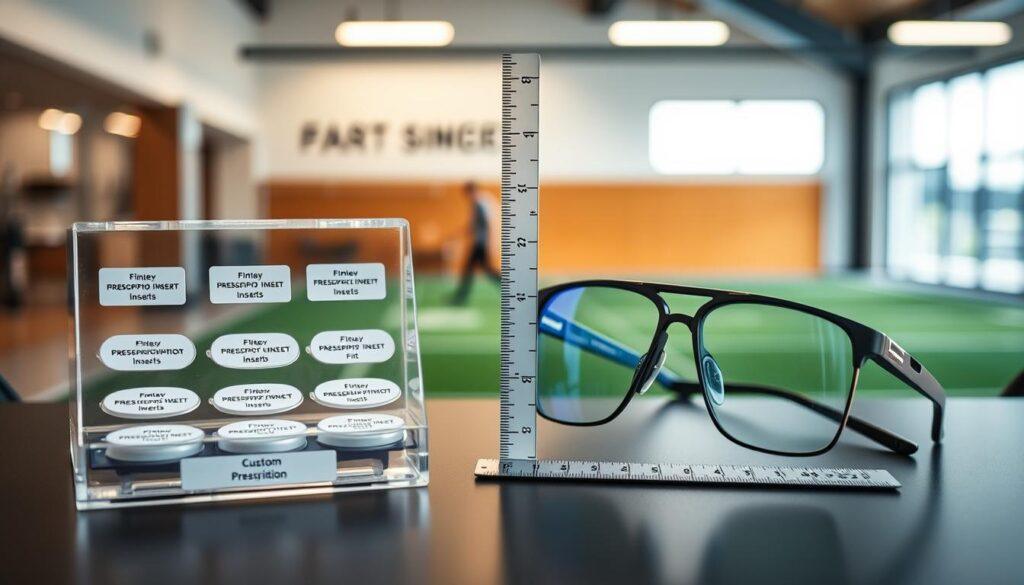
    A detailed comparison of prescription eyewear inserts and custom prescriptions, featuring two sets of eyewear prominently displayed on a sleek, modern desk. In the foreground, a clear plastic display case showcases various prescription inserts, with labels highlighting their key features like fit, fog control, and compatibility. In the middle ground, a pair of stylish custom prescription sports eyewear rests confidently beside a magnifying ruler, emphasizing the precision of custom fitting. In the background, soft diffused lighting creates a warm atmosphere, while a blurred sports safety environment (like a gym or outdoor field) hints at the importance of protective eyewear in active settings. The overall mood is professional and informative, ideal for illustrating the practical choices in sports eyewear for injury prevention.

    This choice is important because it affects your peripheral vision, weight, and fog management. Get it wrong, and you risk your safety.

    Feature Prescription Inserts Custom Rx Lenses
    Concept Modular add-on behind a shield Vision correction built into the protective lens
    Peripheral Vision Often reduced by the dual-layer setup Maximized, with a single-lens plane
    Fogging Risk Higher (traps air between layers) Lower (simpler airflow, fewer surfaces)
    Weight & Balance Can feel front-heavy or bulky Generally better distributed and lighter
    Ideal For Changing prescriptions, multi-sport use, or budget constraints High-performance sports, complex prescriptions, and long-term use

    Don’t wear everyday glasses under protective goggles. It’s a safety risk. Standard lenses aren’t made for impact.

    So, how do you choose? It depends on your child’s prescription, sport, and growth rate. A ten-year-old soccer player needs different glasses than a varsity baseball pitcher.

    Get help from an optometrist who knows sports. They’ll pick the right lens material and coatings for your sport. Polycarbonate or Trivex for impact? Anti-fog for humid conditions? These are important choices.

    Here’s your strategic decision framework:

    • Choose prescription inserts if: The prescription is changing, you need flexibility for different sports, or the eyewear is shared.
    • Choose custom Rx lenses if: The prescription is stable, you need clear vision for your sport, or fogging is a problem.
    • The non-negotiable rule: Whatever you choose, it must meet the relevant ASTM or ANSI high-impact standard. Safety comes first.

    Protective sports eyewear should let you see clearly. Athletes don’t have to sacrifice vision for safety. The goal is to see everything with clarity, knowing your eyes are protected.

    Visibility and color performance lens tints and light transmission targets

    Light transmission percentage is more than just a number. It’s what lets your brain see the world. If it’s off, you might as well be watching the game without sound. This number, or VLT, controls how much light your lens tint lets in.

    Choosing the right lens tint is about seeing clearly, not just looking good. It’s like picking the perfect music for a key moment in a game. A bright tune for a sunny tennis match or a soft melody for a foggy run? Your lenses set the mood.

    So, what’s the perfect mix? For bright days—like tennis or cycling—dark, neutral gray or mirror tints are best. They block glare and cut down brightness without changing colors. This lets you see everything clearly.

    But for dim places—like night soccer or indoor courts—clear lenses or wide-vision lenses are essential. They let in lots of light, so you don’t miss out in the dark.

    And what about amber or yellow lenses on cloudy days? They’re not just a style choice. They make things clearer by blocking blue light. It’s like making your TV picture sharper.

    • Dark Tints (10-30% VLT): Perfect for bright days. Great for sports in the sun.
    • Clear Lenses (85-100% VLT): Best for low light. They let in lots of light when it’s dark.
    • Yellow/Amber Tints (60-75% VLT): Good for cloudy days. They help see things clearly in flat light.
    • Rose/Mirror Tints: Used for changing conditions. They help see ground details in sports like golf or skiing.

    Your lens choice is like a filter for reality. It’s the difference between seeing a blur or a clear object. Pick the right VLT for your setting, and you’re not just wearing glasses. You’re improving how you see the world.

    Care schedule inspection replacement and storage between seasons

    When you put your safety glasses away after practice, you’ve missed the first lesson. They’re not just sunglasses; they’re essential gear. Like any high-tech equipment, they need care, not neglect.

    It’s time for a care schedule. Not just a wish, but a strict ritual. Let’s create the manual your eyewear deserves.

    Start with a pre- and post-activity inspection. Hold your eyewear up to light. Look for stress cracks around screws and lens edges. Polycarbonate is tough, but it’s not invincible. Check if the strap is stretched and the nose bridge is warped. This quick check can prevent big problems.

    Next, follow a cleaning protocol. Your t-shirt is not a good cloth for cleaning. It can scratch your lenses. Use a microfiber cloth, rinse with warm water, add mild dish soap, and air dry. Avoid harsh chemicals and paper towels.

    Storage is also key. Don’t store your eyewear in a damp gym bag. Use a hard case to protect them. Store the case in a cool, dry place away from sunlight.

    Lastly, know when to replace your gear. Lenses and coatings wear out over time. If your lenses are scratched or damaged, get new ones. Even with good care, eyewear has a limited life. Heavy use means it’s time for a new pair.

    Task How-To Frequency Pitfall to Avoid
    Visual Inspection Check for stress cracks, frame integrity, and strap wear under bright light. Before & after every use Assuming “no visible damage” means perfect safety.
    Lens Cleaning Rinse, use mild soap, soft fingers, rinse, air dry/lint-free cloth. As needed, after every use Using a shirt, paper towels, or harsh chemical sprays.
    Secure Storage Always place in a hard, protective case when not in use. Every time Tossing loose into a bag, pocket, or on a bench.
    Deep Storage Clean thoroughly, store in case in a cool, dry, dark place. End of season Leaving in a hot car or damp environment for months.
    Condition Assessment Evaluate lens clarity, coating integrity, and overall fit. Mid-season & pre-season Ignoring minor scratches or slight frame looseness.
    Planned Replacement Replace immediately if damaged; plan for new eyewear annually with heavy use. As needed / Annually Using eyewear with compromised lenses for “one more practice.”

    Follow this schedule, and your eyewear will become reliable. It’s simple risk management. Your future self will be grateful.

    Team policy template for mandatory eyewear in high risk drills

    A team policy on protective eyewear is about culture, not just following rules. It moves from individual to team, making safety a part of the team’s way of life. It’s about leadership, not being a buzzkill.

    Why should players wear protective eyewear during high-risk drills? The answer is clear. Studies show that wearing protective eyewear greatly reduces injury risk. Alan Reichow, a professor, says that most injuries can be prevented. Ignoring this is not just tough; it’s negligent.

    Think of it this way: one player’s choice to skip eye protection affects the whole team. Your star player can’t play with a corneal abrasion. A team policy makes safety a must, turning personal responsibility into team protection.

    So, what makes a good policy? It’s clear, enforceable, and based on what we’ve discussed. Here’s a template for coaches and organizers to use. It explains what, when, and why.

    • The What (The Gear): All mandatory eyewear must meet or exceed the ASTM F803 standard. No exceptions, no old goggles.
    • The When (The Activity): This policy applies during all contact drills and full-speed scrimmages. It’s in effect during any coach-designated high-risk drills.
    • The Why (The Asset): The team’s most valuable asset is its players. Protecting vision and participation is strategic. This policy is to safeguard that investment.

    Enforcing this policy is straightforward. No certified safety glasses, no drill participation. Sit out, watch, and think about the team. It’s not punishment; it’s consequence.

    Using this template changes the team’s culture one practice at a time. It shows that performance and protection go hand in hand. It turns preventable injuries into a non-issue. That’s not just good policy; it’s smart team management.

    Buying checklist sizes certifications and return options for teams

    You’ve done the research. Now it’s time to buy protective sports eyewear for your team. This isn’t just a quick online search. It’s a detailed process.

    First, look for certifications. They protect you legally. Make sure you have ASTM F803 for sports protection and ANSI Z87.1 as a minimum. A logo alone isn’t enough. You need proof of performance.

    For global brands, testing against ISO, EN, and other standards is key. Services like UL’s eyewear safety testing offer that independent check.

    Then, tackle the sizing issue. “One size fits none” is true here. You need a supplier with various bridge sizes and temple lengths. Don’t just order one pair for the whole team. Test the fit on different players.

    Lastly, check the supplier’s team policy. Do they offer discounts for bulk orders? More importantly, what’s their return or exchange policy for the wrong size? A flexible policy is invaluable. It makes returns easy.

    This checklist makes buying easier. Get the right certifications, sizes, and partner. Then, go for it.

  • New Glaucoma Mechanism and Athlete Vision

    New Glaucoma Mechanism and Athlete Vision

    A newly reported glaucoma mechanism is drawing attention because it points to optic nerve degeneration that may occur independently of eye pressure. For athletes, coaches, and sports vision clinicians, the relevance is not that training programs should change overnight. The relevance is narrower and more scientific: glaucoma research is becoming less centered on pressure alone and more focused on retinal ganglion cell survival, genetic risk, protein handling, and fluid outflow biology.

    That distinction matters. Intraocular pressure remains a major clinical marker in glaucoma care, yet recent research described in official university and agency reports suggests that pressure is not the only pathway worth studying. Some discoveries are based on cell and tissue models, some on animal work, and some on genetic findings. They should not be read as new screening rules for athletes or as treatment advice. They do, however, help explain why future studies may ask broader questions about optic nerve vulnerability, visual field preservation, and how eye stressors interact over time.

    Why The New Glaucoma Mechanism Matters

    Glaucoma Mechanism Beyond Eye Pressure

    Researchers at the University of Nebraska Medical Center reported that mutations in the myocilin gene can cause misfolded proteins to accumulate in retinal ganglion cells, with optic nerve degeneration occurring independently of eye pressure, according to the UNMC glaucoma report. The key scientific point is not that eye pressure becomes irrelevant. It is that retinal ganglion cells may be damaged through cellular stress pathways that are not fully captured by pressure measurements.

    This is a meaningful shift for research design. A study that tracks pressure alone may miss part of the disease process if protein misfolding, cellular clearance, or ganglion cell resilience contributes to degeneration. In athlete populations, where vision performance is often discussed in terms of acuity, contrast, tracking, and reaction timing, this research reinforces a separate point: structural eye health and performance-oriented vision skills are not the same measurement.

    Why Myocilin Draws Attention

    Myocilin has appeared in more than one glaucoma research pathway. The research notes also describe work from Georgia Tech in which antibodies were reported to break down malfunctioning myocilin proteins implicated in glaucoma. That finding is early-stage and should be treated as a research direction, not a clinical option for athletes or the general public. Still, it fits the broader pattern: scientists are studying whether protein quality control may become a therapeutic target.

    For a sports vision researcher, the practical interpretation is cautious. Athletes with exceptional visual demands may assume that good performance means good ocular health. Glaucoma biology does not support that assumption. Visual performance tests can be useful in sport, but they do not replace eye examinations or glaucoma evaluation by qualified clinicians.

    What The Eye-On-A-Chip Adds

    A Lab Model For Steroid-Induced Pressure Changes

    A separate line of work uses engineered models to study fluid drainage. The National Eye Institute described a 3D “eye-on-a-chip” model that mimicked ocular fluid dynamics and showed that certain steroids can impair fluid drainage, contributing to increased intraocular pressure and glaucoma risk in the model system, as reported by the NEI eye-on-a-chip update. This is lab-based evidence, not a direct trial in athletes.

    The athlete connection is relevant but should not be overstated. Some athletes may encounter steroids in medical contexts, such as treatment for inflammation, while others may be subject to anti-doping rules and sport-specific medical oversight. The eye-on-a-chip work does not tell an individual athlete whether a given medication will cause glaucoma. It suggests that better models may help researchers test how drugs affect outflow tissues before moving into larger human studies.

    Why Models Cannot Answer Every Clinical Question

    Model systems help isolate mechanisms, but they do not reproduce the full human eye, genetic background, sport exposure, or long-term medical history. That limitation is not a weakness; it is the reason multiple study types are needed. A chip model can help identify a pressure-related pathway. Genetic research can identify inherited susceptibility. Animal models can test neuroprotection hypotheses. Human clinical studies are still needed to determine safety, dosing, durability, and real patient benefit.

    For readers interested in connected science coverage across related fields, the Harvard Science Review offers more articles within this broader network of evidence-focused reporting.

    Research Directions Beyond Pressure

    Genes, Neuroprotection, And Drainage Biology

    The research notes point to several directions that may shape glaucoma science. A Chinese University of Hong Kong report described growth hormone-releasing hormone receptor, or GHRHR, as a potential treatment target, with inhibition in animal models restoring up to 70% of lost vision. Because this was reported in animal models, it should be interpreted as preclinical evidence. It is not proof that the same effect will occur in people.

    Genetic work also continues to broaden the field. A Harvard Medical School-led study identified a thrombospondin-1 gene mutation associated with severe childhood glaucoma. That type of discovery may help future early-screening strategies for affected families, but it does not imply population-wide genetic testing for all young athletes. The value depends on validation, risk level, counseling, cost, and clinical usefulness.

    From Aqueous Outflow To Glymphatic Flow

    The research notes also describe cellular crosstalk in aqueous humor outflow and a proposed role for impaired glymphatic flow at the lamina cribrosa in open-angle glaucoma. These ideas place glaucoma within a broader systems biology frame. Fluid drainage, optic nerve head clearance, extracellular signaling, and ganglion cell stress may interact rather than act as separate causes.

    That broader view aligns with discussion of normal tension glaucoma biology, where optic nerve damage may involve mechanisms beyond pressure alone. The scientific challenge is to identify which pathways matter most in which patients, and whether any pathway can be modified safely.

    • Genetic mechanisms: inherited mutations may identify higher-risk groups, especially in severe early-onset disease.
    • Protein handling: misfolded myocilin may become a target for research on cell stress and clearance.
    • Fluid outflow models: engineered systems may help test how drugs or tissues affect drainage.
    • Neuroprotection: animal studies may guide later research, but human benefit remains unproven until tested.

    Athlete Relevance Without Overreach

    Athlete completes a vision task while a clinician observes from beside the station

    Vision Performance Is Not A Glaucoma Screen

    Athletes often notice subtle changes in tracking, contrast, glare tolerance, or peripheral awareness because their sports demand fast visual decisions. That awareness can be useful, but it can also mislead. A missed ball, slower reaction, or discomfort under lights is not evidence of glaucoma. Many factors can affect sports vision, including fatigue, concussion history, refractive error, dry eye, migraine, lighting, and attention.

    Research on eye movement findings for athletes should be read with the same restraint. Eye movement measures may help researchers study visual function, but they should not be used as a stand-alone diagnostic tool for glaucoma risk. The newer biological findings make that point stronger: glaucoma is not a single performance problem, and it cannot be reduced to one field-side metric.

    Monitoring Questions For Sports Settings

    Sports medicine teams can take a practical lesson from this science without turning it into diagnosis. If an athlete has a family history of glaucoma, uses medications with known ocular considerations, reports persistent visual field concerns, or has been told they have elevated eye pressure, referral to an eye care professional is the appropriate path. Research findings can help frame questions, but clinical decisions require examination, imaging, visual field testing, and professional judgment.

    The cost and implementation barriers are real. Advanced genetic testing, engineered models, and experimental neuroprotection research are not routine tools for sports programs. Even if future therapies emerge, they will need evidence for safety, durability, access, and clinical value. Caution is especially necessary when early research involves animals, lab models, or small genetic subgroups.

    Glaucoma Mechanism Research For Athlete Vision

    The emerging glaucoma mechanism work suggests that future studies may place retinal ganglion cell biology closer to the center of glaucoma research. For athletes, the most useful interpretation is not alarm. It is precision. Eye pressure, optic nerve structure, visual fields, genetic context, and medication exposure may all deserve attention in the right clinical setting.

    The next research phase will likely depend on whether these mechanisms can be connected to measurable outcomes in people. Can protein misfolding markers predict damage? Can drainage models forecast steroid response? Can neuroprotection targets move from animal models into safe human trials? Those are research questions, not settled answers. Until stronger evidence is available, athletes should view the science as a reason to respect regular eye care, not as a reason to self-diagnose or change treatment without medical guidance.

  • Eye Movements Glaucoma Findings For Athletes

    Eye Movements Glaucoma Findings For Athletes

    Recent eye movements glaucoma research suggests that glaucoma can affect more than static visual field maps. Studies reviewed in the ophthalmic literature describe changes in saccades, fixation, smooth pursuit, and optokinetic responses. For athletes, the interest is practical: sport often depends on fast gaze shifts, stable fixation, and reliable visual search under pressure. The evidence is not yet a sideline screening tool or a replacement for a clinical glaucoma workup, but it adds useful detail to how visual function may change with the disease.

    What Eye Movements Glaucoma Research Shows

    Glaucoma is usually discussed through intraocular pressure, optic nerve structure, retinal nerve fiber layer loss, and visual field testing. Eye movement studies add another layer: they ask how people use remaining vision while searching, reading, tracking, or responding to moving scenes. A peer-reviewed review reports that glaucoma patients have shown abnormalities across several oculomotor measures, including saccades, fixation stability, smooth pursuit, and optokinetic nystagmus review of eye movement abnormalities.

    Eye Movements Glaucoma And Saccade Timing

    Saccades are rapid gaze shifts from one target to another. In sport, a saccade may move attention from a defender to a passing lane, from a pitcher’s hand to the ball, or from a lane marker to a nearby competitor. In glaucoma research, delayed saccadic latency has been reported, meaning the initiation of these gaze shifts can take longer. A PubMed-indexed study specifically reports delayed saccadic eye movements in glaucoma, with relevance to how quickly gaze can be redirected between visual targets delayed saccadic movements.

    The phrase eye movements glaucoma should not be read as a new diagnostic label. It is a research framing that connects optic nerve disease with measurable behavior during visual tasks. The available evidence indicates association, not a simple cause-and-effect rule for every patient or every sport setting.

    Fixation Stability And Visual Search

    Fixation stability refers to how steadily the eyes hold a target. A shooter, archer, golfer, goalkeeper, or batter may depend on short periods of steady gaze, even while the body is moving. Research notes describe impaired fixation stability in glaucoma, which may matter because visual field loss can make it harder to keep a target in a useful part of vision. The same body of research also reports reduced saccade rate during visual search tasks and altered saccade dynamics, including lower amplitude and velocity in some patient groups.

    These findings fit a cautious interpretation: people with glaucoma may adapt their scanning behavior, and some movement patterns may reflect disease severity or visual field loss. Yet study tasks are often controlled laboratory tasks, not full-speed competition. That gap matters for athletes because sport adds head movement, fatigue, glare, opponent motion, equipment constraints, and time pressure.

    Why Eye Tracking Could Matter For Athletes

    For athletes, eye movements glaucoma research is most relevant as a window into functional vision. Standard clinical tests remain central, but they do not always describe how a person scans a court, follows a ball, or stabilizes gaze during fast play. Eye tracking may help researchers measure how glaucoma changes visual search strategy, especially in situations where one eye has more visual field loss than the other.

    Binocular Vision And Uneven Field Loss

    Glaucoma does not always affect both eyes equally. Uneven visual field loss can change how the two eyes contribute to a combined view of the world. Research notes on asymmetrical field loss suggest that distinct eye movement patterns can appear when binocular vision is affected. This has potential sports relevance because many sports rely on fast spatial judgments: judging ball flight, avoiding collisions, locating teammates, and estimating the distance to a moving target.

    Still, it would be premature to claim that a specific eye movement pattern predicts athletic performance or injury risk in glaucoma. The supported claim is narrower: eye movement measures may reveal functional effects that are not fully captured by a static field plot alone.

    Sport-Specific Demands

    Different sports stress the visual system in different ways. Tennis, baseball, cricket, soccer, hockey, and basketball require rapid gaze shifts and peripheral awareness. Precision sports may place more demand on fixation stability. Endurance sports can add lighting changes, sweat, dehydration, and fatigue. These factors could influence eye tracking results even in athletes without glaucoma, so sports vision researchers need careful comparison groups before applying findings to athlete care. For broader science reporting across the same network, readers can explore Harvard Science Review for related research-focused coverage.

    Diagnostic Promise And Current Limits

    Clinician calibrating an eye tracking device before a vision task

    Eye tracking perimetry and automated oculomotor assessment are being studied because they may reduce some burdens of conventional visual field testing. In principle, eye tracking can record where a person looks, how quickly they respond, whether fixation is stable, and how visual search changes across a task. Research notes include reports of eye movement perimetry and automated devices that measure fixation, smooth pursuit, and saccadic movements.

    Why Screening Claims Need Caution

    Screening performance depends on study design, patient mix, disease severity, device calibration, and the chosen reference standard. A method that performs well in moderate or severe glaucoma may not perform as well in early disease, where the clinical stakes are often highest. Preprint results or early feasibility studies should be treated as provisional until peer review, replication, and independent validation are available.

    This is especially relevant in sport. A false sense of reassurance could delay appropriate eye care, while a false positive could create anxiety or unnecessary restriction. Eye tracking should be viewed as a research and monitoring tool under study, not as a stand-alone diagnosis. Athletes with symptoms such as new field loss, halos, eye pain, or unexplained changes in vision need evaluation by an eye-care professional rather than performance testing alone.

    Implementation Barriers

    Several practical barriers remain. Eye tracking systems require calibration, stable recording conditions, and interpretation standards. Contact lenses, glasses, dry eye, lighting, head motion, fatigue, and attention can influence results. In field sport settings, helmets, visors, sweat, and sunlight may interfere with measurement. Cost and access also matter; a device that works in a research lab may not be ready for routine use in athletic departments or community clinics.

    • Supported now: glaucoma has been associated with altered saccades, fixation, pursuit, and optokinetic responses in research settings.
    • Not settled: whether eye tracking can reliably detect early glaucoma across broad populations and sport environments.
    • Practical next step: use findings to guide research questions, not to replace clinical diagnosis or treatment decisions.

    Eye Movements Glaucoma In Sports Settings

    The most useful reading of these findings is measured. Eye movements glaucoma findings point toward a functional dimension of the disease: how a person moves the eyes through the visual world after optic nerve damage has altered visual input. That dimension matters for athletes because performance often depends on rapid sampling of space, steady target fixation, and efficient scanning.

    At the same time, athlete-specific evidence remains limited. Most current findings come from clinical or controlled visual tasks rather than competitive environments. The next research step is not to market a quick screening shortcut, but to test whether eye movement measures add meaningful information alongside standard glaucoma assessments. Until that evidence is stronger, coaches and athletes should treat visual changes seriously, maintain regular eye care when glaucoma is known or suspected, and avoid using sports vision drills as medical decision tools.

  • normal tension glaucoma Biology Beyond Pressure

    normal tension glaucoma Biology Beyond Pressure

    normal tension glaucoma is a clinically challenging form of glaucoma because optic nerve damage and visual field loss occur even when intraocular pressure is within the normal range, as summarized by NCBI Bookshelf. That definition matters for athletes and coaches because sports vision discussions often focus on acuity, reaction time, and glare, while gradual peripheral field loss may receive less attention until performance or safety is affected.

    The pressure question is not trivial. Intraocular pressure remains central in glaucoma care, but the research notes for this topic point to a wider set of biological mechanisms: vascular dysregulation, genetics, oxidative stress, neurodegenerative processes, cerebrospinal fluid dynamics, glymphatic dysfunction, axonal transport problems, lamina cribrosa biomechanics, mitochondrial dysfunction, and autoimmune factors. These are not competing headlines so much as overlapping hypotheses. The current evidence supports a multifactorial view, not a single proven pathway that explains every case.

    Why Normal Tension Glaucoma Challenges Pressure Models

    Normal Tension Glaucoma And Vascular Signals

    One of the most discussed mechanisms is vascular dysregulation. The optic nerve head depends on sufficient blood flow, and impaired circulation has been proposed as one contributor to damage in some patients. Research summaries associate systemic hypertension, nocturnal hypotension, and migraines with this condition. These associations do not prove that a given athlete with migraine symptoms has glaucoma, or that blood pressure variation alone causes optic nerve injury. They do suggest that eye pressure is not the only biological variable worth studying.

    For sports vision science, the vascular angle is relevant because athletes may experience wide shifts in hydration status, sleep timing, exertion, recovery routines, and cardiovascular load. The available research does not establish sport participation as a cause of NTG. A cautious interpretation is narrower: if optic nerve vulnerability can involve blood flow regulation, then clinicians and researchers may need to think beyond static eye pressure readings when studying visual health in highly active populations.

    Pressure Across Tissue Boundaries

    Cerebrospinal fluid dynamics are another proposed mechanism. The research notes describe abnormal CSF pressure or flow around the optic nerve as a possible influence on optic nerve health. This concept is scientifically plausible because the optic nerve is not isolated from the rest of the central nervous system. It sits at an anatomical interface where eye pressure, tissue structure, and pressure around the nerve may interact.

    Still, this remains an area where interpretation should be careful. The notes support the idea that CSF dynamics may affect the optic nerve, not that a routine sport setting can predict those dynamics. For athletes, the practical implication is not self-monitoring CSF pressure. It is that unexplained visual field changes, especially if persistent, should be treated as a clinical issue rather than a performance slump.

    Cell Stress Pathways And Optic Nerve Susceptibility

    Oxidative Stress, Mitochondria, And Retinal Ganglion Cells

    Another mechanism under study is oxidative stress. Elevated oxidative stress can damage retinal ganglion cells, the cells whose axons form the optic nerve. A peer-reviewed review on pathogenesis and genetics discusses oxidative stress, genetic factors, and immune-related hypotheses in NTG biology NTG pathogenesis review. In the research provided, mitochondrial dysfunction is also listed as a possible contributor because retinal ganglion cells need energy to maintain normal function and axonal transport.

    This does not mean antioxidant supplements or any single nutritional approach can be presented as a treatment for normal tension glaucoma. The evidence described here supports a biological mechanism, not a consumer intervention. For athletes, that distinction matters. Sports culture often moves quickly from mechanism to product. A cell stress pathway may guide research, but it does not automatically validate a supplement, recovery device, or training change for glaucoma prevention.

    Axonal Transport And Structural Load

    Axonal transport dysfunction is another proposed route to retinal ganglion cell injury. In simple terms, optic nerve fibers need to move essential molecules along their length. If that transport system is disrupted, retinal ganglion cells may become more vulnerable. The lamina cribrosa, the structure at the optic nerve head where nerve fibers exit the eye, is also noted in the research as a possible site of biomechanical susceptibility. A structurally vulnerable lamina cribrosa could make some optic nerves less tolerant of stress, even when intraocular pressure is not elevated.

    For sports vision assessment, this reinforces the difference between measuring eyesight and assessing the visual pathway. A player may read a chart well while still having early field defects. That is one reason glaucoma is not well captured by sideline vision checks, ball-tracking drills, or standard acuity-only screening. Those tools may be useful for performance questions, but they are not substitutes for eye care when optic nerve disease is suspected.

    Genetic And Immune Clues In NTG Research

    Genes Are Signals, Not Full Explanations

    Genetic factors appear in the research notes through genes such as OPTN, TBK1, and MYOC. The notes also state that approximately 2% of cases are attributed to these mutations, pointing to a hereditary component while leaving most cases unexplained by those known variants. That pattern fits the broader theme: normal tension glaucoma appears to involve multiple pathways rather than one dominant cause.

    This matters for families of athletes because genetic language can sound deterministic. The supported point is more limited. Some mutations are linked with NTG, but the presence, absence, or family history of disease requires clinical interpretation. Genetic information may help research and, in select clinical contexts, risk assessment. It should not be used casually to label an athlete’s future vision risk without proper medical evaluation.

    Autoimmune And Neurodegenerative Hypotheses

    The research notes also include autoimmune factors, where immune responses targeting retinal ganglion cells have been proposed, and neurodegenerative processes, because NTG shares some similarities with diseases such as Alzheimer’s. These ideas are scientifically important because they place optic nerve damage within broader nervous system biology. They also remain hypotheses with limits. Similarity to neurodegenerative disease does not mean NTG is the same disease, and proposed immune involvement does not make it appropriate to infer diagnosis from symptoms alone.

    What This Means For Athletes And Screening

    Athlete performing a visual field test while a clinician monitors results

    Peripheral Vision And Field Awareness

    Visual field loss is central to NTG, and field awareness is central to many sports. Court spacing, cycling safety, combat-sport defense, skiing line choice, and team-sport scanning all depend on more than sharp central vision. The research does not say that athletes are uniquely prone to normal tension glaucoma. It does support the idea that optic nerve damage can occur even when eye pressure readings do not appear high, which makes a pressure-only mental model too narrow.

    From a sports vision perspective, the key risk is false reassurance. A normal eye pressure reading is useful information, but it is not the entire picture described by the research. Optic nerve evaluation and visual field testing are different types of information. Athletes who notice persistent field loss, halos, unexplained visual gaps, or changes that affect play should not treat those signs as training noise. This is not a diagnosis; it is a reason to seek professional assessment.

    Practical Barriers To Better Detection

    Implementation remains difficult. Many athletes are screened for concussion-related visual symptoms, refractive error, or visual skills, but glaucoma-focused testing may not be part of routine sport performance programs. Cost, access to eye specialists, time away from training, and lack of symptoms in early disease can all limit detection. NTG also complicates the story because pressure readings may not trigger concern if considered alone.

    A cautious screening approach would not claim that every athlete needs advanced glaucoma testing at every visit. A more defensible position is that sports medicine teams should understand that normal pressure does not exclude optic nerve disease. Referral decisions should be based on symptoms, family history when known, clinical findings, and the judgment of qualified eye care professionals.

    Normal Tension Glaucoma Research Priorities For Sport

    normal tension glaucoma research is moving toward a model that includes vascular regulation, tissue biomechanics, cell stress, genetics, CSF-related pressure relationships, and possible immune or neurodegenerative mechanisms. That is scientifically useful, but it is not yet a single explanatory framework that can guide sport-specific prevention strategies. The finding is best viewed as field-building evidence: it widens the research map while leaving many clinical questions unsettled.

    For athletes, the message is measured. NTG is not simply a high-pressure eye disease in disguise. It may reflect optic nerve susceptibility across several biological systems. Yet none of the mechanisms described here supports self-diagnosis or a sport-based treatment plan. The most defensible action is awareness: protect routine eye care, take visual field symptoms seriously, and avoid assuming that clear central vision or normal intraocular pressure tells the full story.

  • How to Assess Vision: Core Tests for Eye Movements and Light Sensitivity

    How to Assess Vision: Core Tests for Eye Movements and Light Sensitivity

    Forget getting your bell rung. A mild TBI is more like your brain’s internal IMAX theater suffering a major technical glitch.

    The projectors—your eyes—and the stabilizers—your vestibular system—are suddenly out of sync. The delicate neural wiring for tracking a fastball or just walking straight has been jostled.

    This isn’t rare. Mild traumatic brain injuries are prevalent in both sports and military contexts. The symptoms? They often read like a film critic’s pan of a bad movie: double or blurry vision, and a light sensitivity that would make a vampire wince.

    These signs usually appear within days. They’re your brain’s subtitles, spelling out a clear message: the visual system is struggling.

    So, when do annoying symptoms become urgent red flags? When your world won’t stay in focus or a sunny day feels assaultive, it’s time for a professional evaluation. This is where specialized oculomotor screening comes in, and why proactive sports vision exams are a game-changer.

    Core screening pursuits saccades convergence accommodation VOR light sensitivity

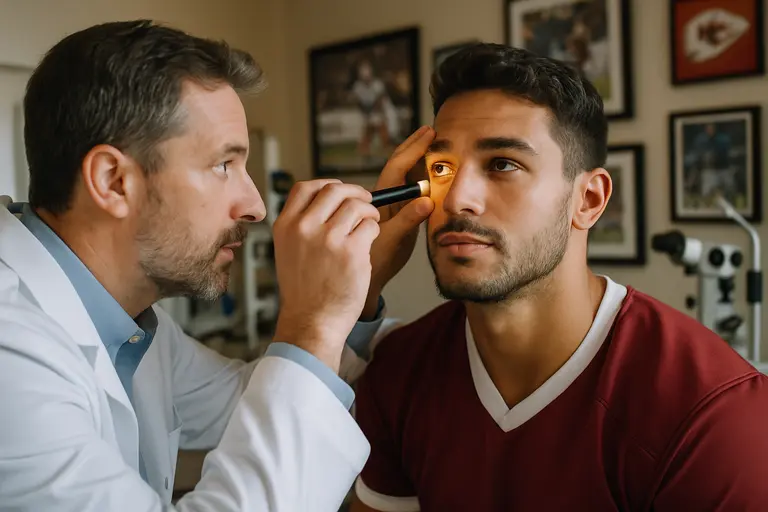
    Forget the expensive MRI. The best test after a concussion is simple: a penlight and your finger. This is the oculomotor screening, a basic check for your eyes and brain. It’s essential for every doctor.

    The military’s Vestibular Ocular Motor Screening (VOMS) shows its value. It’s not about high-tech tools. It’s about paying close attention.

    Let’s analyze it like a film critic. First, smooth pursuits. Can your eyes follow a moving target smoothly? If not, it’s like a video buffering. This tells us the brain’s tracking is off.

    Next, saccades. These are quick eye movements between two points. After a concussion, do they land right? Or do they miss like a rookie quarterback? It’s all about precision.

    Then, convergence and accommodation. These are your eyes working together to focus on something close. If nearby text looks fuzzy, your near vision is affected.

    The vestibulo ocular reflex (VOR) is the main event. It’s your body’s camera stabilizer. If it’s off, your world shakes like in a Bourne movie. It shows how your vestibular system is doing.

    Lastly, light sensitivity. Is normal light too bright? This isn’t about being weak. It’s a sign your brain is overwhelmed.

    Not passing these tests doesn’t mean you’re failing. It’s just data. Each part of the oculomotor screening checks a specific part of your brain. Together, they give a clear picture of the injury. This is how we go from guessing to planning.

    Near point of convergence how to spot issues and when to refer

    The Near Point of Convergence is like a visual system test. It shows if both eyes are working together after a head injury. I’ve seen many athletes struggle to see a pen tip clearly, which often points to a bigger issue.

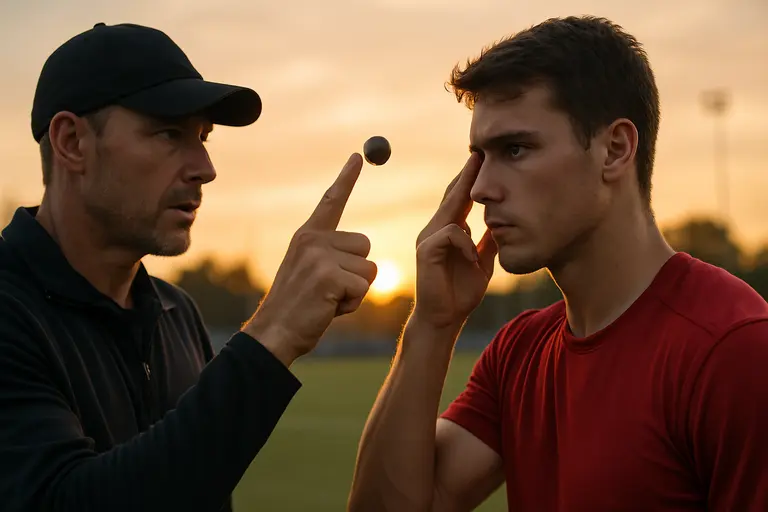
    To test it, hold a small target, like a pen cap, at arm’s length. Slowly move it towards the athlete’s nose. Their eyes should move together smoothly until the target is almost touching their nose.

    If the test fails, it’s clear. The eyes might stop working together too early, or they might strain hard but fail. The athlete might also see double, feel a headache, or report blurring.

    A normal near point of convergence is 3-5 centimeters from the nose. After a concussion, it can be much farther. If it’s far off from what it used to be, it’s a sign of trouble.

    Knowing when to refer someone to a specialist is key. This is where being a coach ends and being a professional starts.

    Refer immediately to a neuro-optometrist or concussion specialist if:

    • The NPC break point is significantly worse than baseline or exceeds 10 centimeters
    • The test provokes substantial symptoms (headache, dizziness, nausea)
    • You observe obvious asymmetry—one eye drifting outward while the other strains inward
    • The athlete cannot read or focus on near tasks without discomfort

    Don’t wait and see if things get better. A bad convergence system means the brain is having trouble. It’s like trying to read a book while on a bumpy ride.

    It’s clear when something is wrong. Not fixing a bad NPC is like ignoring a warning sign. Spotting the problem is easy. Knowing when to act is what matters.

    Symptom tracking graded exercise and visual workload management

    Symptom tracking is not just about writing down your pain. It’s about figuring out what’s pushing your limits. It’s not just about a headache; it’s about finding out what caused it. Was it the long spreadsheet, the bright light, or the busy street?

    This information helps you plan your safe return to activities. It’s not about pushing through pain anymore. Instead, it’s about a careful, step-by-step approach. Think of it as a gentle way to help your brain get back to normal.

    Studies suggest a six-step plan to get back to activities safely. It starts with rest, then light exercise, drills, non-contact training, full practice, and games. Remember, you must wait 24 hours without symptoms before moving up. If you feel pain, stop and go back to the last safe step.

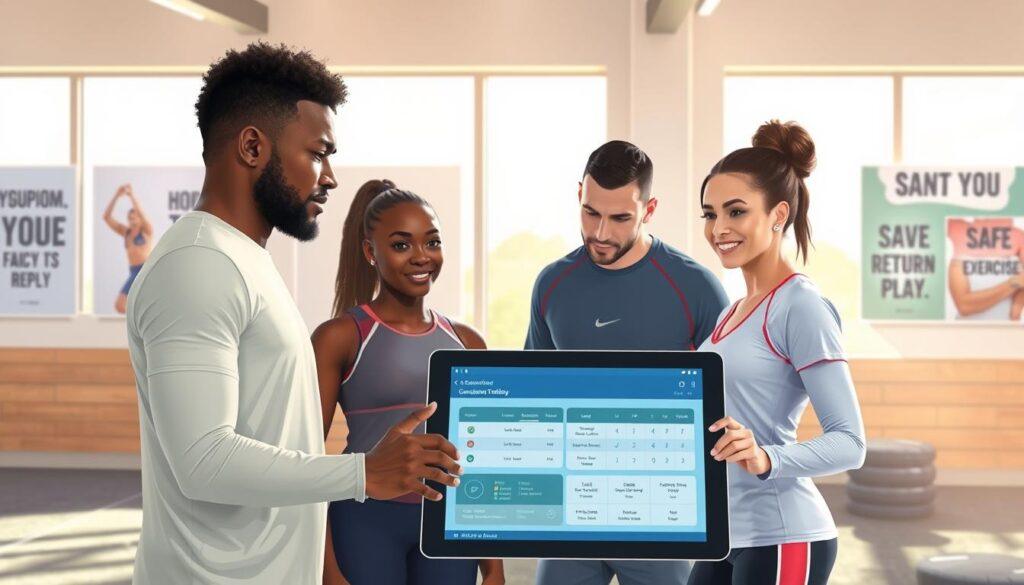
    A visually engaging illustration focusing on "Symptom tracking, graded exercise, and visual workload management" for athletes. In the foreground, a diverse group of three athletes, including a male and female, dressed in professional sports attire, are gathered around a digital tablet displaying a symptom tracking interface. The middle ground features a trainer guiding them through a series of graded exercises, such as light stretches and vision tests, in a well-lit gym environment. The background showcases motivational posters related to concussion awareness and safe return-to-play strategies. Soft natural light filters through large windows, creating an uplifting and hopeful atmosphere, emphasizing recovery and teamwork. The composition is well-balanced, capturing a moment of collaboration and support in a professional setting.

    But there’s more to it. You also need to consider the visual workload. Your brain doesn’t just see “jogging.” It sees the whole environment, like a bright gym.

    So, your recovery plan needs to consider both physical and visual demands. Can you handle a stationary bike in a quiet room before a busy gym? This helps you build a safe recovery plan.

    Physical Activity Step Paired Visual Environment Goal
    Light Aerobic (e.g., stationary bike) Low-stimulus room (neutral walls, no screens) Elevate heart rate without visual overwhelm.
    Sport-Specific Drills (e.g., dribbling) Simple, static background (empty gym, plain wall) Add movement complexity in a controlled visual field.
    Non-Contact Training Familiar practice environment with teammates Introduce dynamic visual cues (moving people) in a known setting.

    Your symptom tracking log is key to understanding this table. Did you feel dizzy during drills in a simple setting? That’s important information. It shows what visual cues are too much for you.

    The first few days of rest are like a reboot for your system. Then, you start slowly, moving up the table. It’s not about rushing back. It’s about finding your limits and gently pushing them.

    You’re now managing two challenges: physical and visual. Mastering this balance will guide you back to activities safely and uniquely.

    Evidence based rehab elements visual vestibular therapy coordinated care

    If concussion recovery were a Broadway show, Visual Vestibular Therapy would be the star. But without coordinated care as the director, it would be chaos. Gone are the dark-room days of cocoon therapy. Now, we have active, evidence-based programs to fix your brain’s miswired systems.

    Visual Vestibular Therapy (VVT) is like physical therapy for your brain’s balance system. It helps when a concussion messes up the communication between your eyes, inner ear, and brain. VVT uses precise exercises to fix this. It focuses on the vestibulo ocular reflex (VOR), which keeps your vision steady when you move your head.

    When the VOR is off, every turn makes the world wobble. VVT helps fix this. But VVT is just one part of the rehab puzzle. It needs to be part of a bigger plan to fix your brain.

    The key is a team approach. Programs like the UCSF Sports Concussion Program have a whole team. They include doctors, physical therapists, and trainers. Each one works together, using the same plan to help you get better.

    Without this team effort, you might get mixed advice and slow progress. It’s like trying to play a symphony without a conductor. The military’s Cadet Concussion Clinic uses this team approach because brain injuries are complex.

    So, what does a truly integrated team look like in action?

    • The Athletic Trainer/Coach: They watch how you do in activities and report any symptoms.
    • The Physical Therapist/Neuro-optometrist: They give you specific exercises to improve your balance and vision.
    • The Physician (Sports Med, PM&R, Neuro): They make sure everyone is working together and adjust the plan as needed.

    This team works together all the time. They share information and adjust plans quickly. This is what coordinated care looks like.

    The old way was quiet and one-way. Now, it’s loud and everyone talks together. When your team works as one, you recover faster and better. They follow a plan that matches the brain’s complex needs.

    You’re not just healing. You’re rewiring your brain. And that needs every expert to talk and work together.

    Classroom and screen strategies font size breaks glare control for student athletes

    The Air Force Academy is a pro at getting ready for action. Their plan for getting back to school is key for student-athletes. It’s like getting ready for a big game, but first, you need to pass algebra.

    Their method is all about managing what you see. It’s not about hiding in the dark. It’s about slowly getting back into the game, treating schoolwork as seriously as sports.

    A bright and organized classroom setting, featuring a large whiteboard filled with diagrams and strategies for supporting concussed student athletes. In the foreground, a focused female teacher in professional attire is demonstrating screen strategies to attentive students, who exhibit a mix of curiosity and concentration. One student wears glasses, indicating a focus on visual aids. In the middle ground, several desks are arranged to accommodate small group discussions with soft lighting from large windows that provide natural light, minimizing glare. The background includes posters highlighting break times and glare control techniques, creating an educational atmosphere. The mood is supportive and encouraging, emphasizing a safe return to learning for student athletes. The perspective is taken from an angle that captures both the classroom dynamics and strategies being discussed.

    Let’s look at the academy’s five-star plan. It’s like a playbook for getting back to school.

    Phase Academic Activity Key Modifications
    1. Cognitive Rest Zero schoolwork. Complete digital detox. No screens, no textbooks. The brain is in the repair shop.
    2. Light Tasks 5-15 minutes of simple, non-academic activity. Listening to an audiobook or a short, calm conversation. The goal is gentle stimulation without visual strain.
    3. Partial Classes (Max Mods) Attend 1-2 classes for partial time. This is where environmental engineering kicks in. Pre-printed notes, font size increased to 14pt+, seated away from glare, frequent breaks.
    4. Full Class (Min Mods) Full schedule with accommodations. Reduced homework load, continued use of breaks, permission to step out if symptoms spike. The training wheels are stil on.
    5. Full Class (No Mods) Full academic load. Back to baseline. The brain is cleared for full cognitive and visual duty.

    Now, let’s use this plan with some smart tactics. Making text bigger isn’t just about looks. It helps your eyes work less hard. Demand 14-point font or larger. It’s a simple change that makes a big difference.

    Breaks are your way to stay ahead. It’s not wait until you hurt. It’s take breaks before you get hurt. Take a 2-minute break every 15-20 minutes. Look at something far away. This helps your eyes and keeps you from getting worse.

    Glare is a big problem. It’s like a flashing light for your brain. Use matte screen filters. Wear a hat indoors. Ask for a seat away from windows. You’re not being hard to please; you’re being smart.

    The Air Force model is all about getting back into the mix. Even if you’re not fully there, just sitting in class helps. It keeps you connected and helps your brain stay on track.

    Learning these strategies is key, not a detour. You can’t expect your brain to handle complex stuff if it’s struggling with simple tasks. First, take care of the basics. Then, you can move on to the harder stuff.

    Helmet and eyewear considerations post injury comfort and fog control

    When athletes return to play, they often face a new challenge: their helmet and glasses. Getting medical clearance is one thing. But tolerating your gear is another. That trusted helmet might now feel like a sensory trap, and your glasses fog up like a sauna window.

    Let’s talk about helmets. After a concussion, the helmet’s weight and pressure can feel overwhelming. It’s not about the helmet’s safety—it’s about your head’s discomfort. Finding true post injury comfort means looking at the fit closely.

    Start by checking the helmet’s interior. That factory padding might feel like concrete. Think about using gel or memory foam kits for better pressure distribution. Also, look at the straps. Are they making your jaw hurt? Small adjustments can make a big difference.

    When to start wearing the helmet again is important. Begin with stationary bike or film sessions. This helps you get used to the helmet without the stress of sports. It’s like therapy for your scalp.

    Now, let’s talk about eyewear. Foggy lenses are bad enough on a normal day. But for someone recovering from a concussion, it’s a big problem. The fog control fight is key. Why? Your body heat and effort create a foggy microclimate inside your glasses. A sensitive brain sees this fog as a threat, not just a nuisance.

    There are simple and complex solutions. Basic ones include anti-fog wipes or sprays. For more, consider lenses with hydrophobic coatings or frames with better ventilation. These don’t just prevent fog; they manage moisture levels.

    Don’t forget about tint. Photophobia can stick around even when other symptoms go away. A light rose or amber tint can help with glare without making things too dark. It’s a filter, not a shade.

    In the end, it’s about reducing sensory overload. It’s not about being pampered; it’s about creating a better environment for recovery. When your helmet feels right and your glasses stay clear, you’re ready to focus on your mental game.

    Communication protocol athlete coach parent clinician roles and documentation

    A concussion communication protocol is like a high-stakes game of telephone. Instead of sharing gossip, you’re sharing vital neurological data. If the message gets mixed up, it can lead to serious problems.

    Even the best rehab plans can fail at the last minute. This happens when the team managing the concussion doesn’t work well together. A concussion is a team effort, with each member playing a critical role.

    Let’s look at the team. The athlete is the one who shares information about their symptoms.

    Team Member Critical Action Consequence of Silence
    The Athlete Must be brutally honest about symptoms, like fatigue and fogginess. This is hard in a culture that values toughness. Without accurate data, they might return to play too soon. This can make their recovery longer.
    The Coach They need to focus on following the medical plan, not just pushing the athlete. They should watch for any signs of trouble. Pressuring the athlete to play too soon can harm the medical plan and damage trust.
    The Parent They are the athlete’s advocate and keep track of symptoms outside of sports. This includes headaches after homework and irritability at dinner. Without this information, the medical team can’t get a full picture of the athlete’s condition.
    The Clinician They make the decisions about when the athlete can return to play. They use data from the whole team to make these decisions. Without all the information, their decisions are based on guesses. This can lead to a poorly planned rehab plan.

    This isn’t just theory. The rules are clear: after each step of returning to play, parents and coaches must watch for symptoms closely. If they see anything wrong, they need to contact the medical team right away. This is how they keep the athlete safe.

    But what makes the protocol work? Documentation. Why is it important to track symptoms, exercise, and school performance?

    It turns vague feelings into clear data. This data is what helps the team decide what to do next. It’s the proof that shows if the plan is working or if they need to change it.

    This careful documentation helps everyone on the team agree on what’s happening. It turns stories into facts. As shown in the article on how concussion care needs communication, keeping accurate records is key to working together.

    Without good records, it’s hard to manage a concussion. It’s like trying to run a meeting where everyone has different notes. Your communication protocol is like a manual that keeps everyone on the same page. It makes sure everyone knows what to do next.

    Safe return progression match visual workloads to physical steps

    Think of the return-to-play protocol as two parallel rails: one for your body and one for your eyes. Most rehab plans focus on the physical rail, like heart rate and impact. But they often ignore the visual system. This is a big mistake.

    Your comeback isn’t safe until you match the visual workload at each step.

    This is the master plan synthesis. We’re not just checking boxes on a list of return to play steps. We’re conducting an orchestra where the visual section must come in perfectly on cue. Climb too fast on the physical rail while your visual rail lags behind, and the whole structure wobbles. Let’s break down the blueprint for climbing them in sync.

    The classic 6-step progression is our framework. But we’re going to audit each stage with a simple, witty question: “What’s the visual bill for this physical activity?”

    1. Light Aerobic Exercise
      This is your stationary bike or gentle walk. The physical ask is minimal. The visual ask must be, too. Can it be done in a visually quiet environment? A blank wall is better than a busy gym TV. The goal is to let the brain handle increased blood flow without the added tax of processing complex scenes. It’s basic visual workload management.
    2. Moderate Aerobic Exercise with Head Movement
      Now we’re jogging or using an elliptical. The head moves. The visual world starts to jiggle. The key question: Does the environment have predictable patterns or chaotic clutter? A track is ideal. A crowded mall? Not so much. You’re training the vestibular-ocular reflex (VOR) in a controlled way, prepping for the chaos to come.
    3. Heavy Non-Contact Activity & Sport-Specific Drills
      Here’s the big leap. This is where most protocols fail to provide adequate guidance. You’re reintroducing complex, dynamic visual scanning: tracking a ball, reading defenders, processing peripheral motion. This isn’t just about sweat; it’s about cognitive load. Grade the visual complexity within the drill itself. Start with a stationary ball. Then a slowly rolling one. Then a pass from a static teammate. You’re not just rebuilding fitness; you’re rebuilding the neural software for your sport.
    4. Practice with Contact
      Physical contact returns. The visual demand is now high-stakes and unpredictable. Your scanning must be anticipatory, not just reactive. Drills should simulate game-speed decision-making under physical pressure. Can you spot the open player while being guarded? This step tests if your visual processing can keep up with the physical fray.
    5. Return to Competition
      The final test. The environment is fully loaded: crowd noise, unpredictable plays, intense pressure. Both rails need to be at full strength. If symptoms creep back here, it’s often a sign the visual workload wasn’t ramped up adequately in the earlier steps.

    The sage advice is simple but non-negotiable: see every physical step through a visual lens. That sport-specific drill (Step 3) is the most critical juncture. It’s where an athlete often feels physically ready but visually overwhelmed. Pushing through that mismatch is how setbacks happen.

    A safe progression isn’t a race. It’s a synchronized climb. Map your visual workloads to your physical steps, and you don’t just return to play—you return to seeing the game.

    When to stop and seek urgent care warning signs and resources

    In sports, the “tough it out” attitude is not bravery. It’s a risky game with your brain. Your brain is not something you can ignore like a pulled hamstring.

    Your body sends out clear warning signs. If you get headaches, feel dizzy, or see things blurry, it’s time to stop. These are not just minor setbacks. They are signs to stop and call your doctor right away.

    Even small signs are important. Feeling tired after class or getting angry easily means you’ve reached your limit. It’s a sign to slow down and find a better balance.

    Knowing when to go to urgent care is essential. If you have a bad headache, keep vomiting, can’t speak clearly, or have uneven pupils, go to the emergency room. These are serious signs that need immediate attention.

    Understanding your recovery journey is key. Use resources like the Defense Health Agency’s TBICoE and the NCAA-DOD CARE consortium. Having a concussion clinic, like the UCSF Concussion Center, on your side is also helpful.

    The right move is not to push harder. It’s to listen to your body’s signals. Recognizing these signs and knowing where to turn can help you safely return to your activities.

  • Ultimate Guide to Sports Vision Tracking Systems for Performance Analysis

    Ultimate Guide to Sports Vision Tracking Systems for Performance Analysis

    Forget the creepy dystopian tech from sci-fi. Modern eye tracking is like a lie detector test for the brain.

    It’s not just about where someone looks. This tech shows their decision-making process in real-time. It’s like getting the “why” behind the “what.”

    While 68% of coaches rely on gut feeling, this tech quantifies the unquantifiable. It answers the question Sherlock Holmes would ask: “You see, but you do not observe.”

    From the quiet eye of a golfer to the chaotic scan of a soccer midfielder, we’re moving to truth. No more guessing games.

    This tech reveals biomarkers for visual efficiency and neurological issues. It gives clinicians and trainers a deep look into human performance.

    In essence, eye tracking uncovers the key to peak performance. It’s about decision-making speed, pattern recognition, and anticipation. It ends guesswork and starts data-driven clarity.

    Applications in Sports Training

    The modern athlete’s most critical workout might not involve a barbell, but a pair of glasses that map where they look. This is where gaze analysis transitions from lab curiosity to game-day advantage. Forget yelling “keep your eye on the ball.” We’re now teaching players how to see.

    Different sports are visual puzzles with unique solutions. A soccer midfielder scans for passing lanes. A baseball hitter decodes a pitch’s spin. An F1 driver processes a torrent of data at 200 mph. Each demands a specialized gaze strategy. And now, specialized tools exist to train them.

    Take golf. The “quiet eye” – a final, steady fixation before the putt – is a hallmark of champions. Training systems use gaze analysis to cement this focus, making it anxiety-resistant. In baseball, 100Hz tracking data reveals how a batter’s eyes track a 98-mph fastball. It’s not just reaction time; it’s visual prediction.

    Then there’s the spectacle of Formula 1. When Nico Hülkenberg wore eye-tracking glasses in the cockpit, it gave us a front-row seat to the insane visual workload of driving at the limit. Where does a champion look before a braking zone? The data tells a story no helmet cam can.

    The application isn’t just for peak performance. It’s for player safety. Systems like RightEye are used for clinical concussion management, objectively differentiating brain injury from simple fatigue. On the sideline, tools like EyeGuide offer rapid screening for impairment. This moves sports vision training from a luxury to a essential part of athlete care and development.

    System Primary Sport Use Key Metric The Edge
    Tobii Pro Soccer, Driving Sim Research Tactical Scan Paths Studies team dynamics and opponent reading in realistic environments.
    Pupil Labs Basketball, Agility Drills Attention & Scanning Speed Lightweight, used on-field for studying split-second decision-making.
    RightEye Clinical/Concussion Management Oculomotor Function Provides medically-graded data for safe return-to-play protocols.
    EyeGuide Sideline Screening Focus & Fatigue Index Delivers sub-60-second tests to flag impairment from heat or impact.

    We’re building smarter, more resilient athletes. Coaches aren’t just drawing plays; they’re designing visual drills. The training ground now includes cognitive reps. It’s a fundamental shift from conditioning the body to programming the perceptual system.

    This explosion of applications proves one thing: vision is the ultimate bottleneck for human performance. By understanding and training the gaze, we unlock a lot of untapped talent. These are the visual tools athletes swear by, and they’re just getting started. The data they collect, though, is a story for the next chapter.

    Data Collection & Analysis

    So you’ve got a dataset that looks like a Jackson Pollock painting. Now what?

    This is where we separate the signal from the noise. Data collection is the easy part. The real magic happens in analysis. It’s not just about making pretty heatmaps—though those do look cool.

    True analysis in visual attention looks at important metrics. These include fixation duration (how long an eye rests), saccadic speed (how fast it jumps), and scan paths (the route it takes). Does your point guard get stuck on the pick-setter, missing the cutter? Does a tired midfielder’s eyes follow a predictable path?

    visual attention data analysis

    The data tells us a story. It shows the rising cognitive load, the milliseconds of anticipation, and the exact moment of breakdown. It explains why a pass was missed or a reaction was slow.

    Here’s the kicker. Most traditional performance tools don’t see this story. A study found that 62% of performance tools lack insight into cognitive processing under pressure. Also, 55% of training programs struggle to replicate game-like visual demands. They measure the output, but not the processor.

    Eye-tracking analysis fills this gap. It creates a dataset for the athlete’s visual cortex, like Moneyball for the brain.

    So, what does this dataset reveal? It turns raw gaze points into key performance indicators:

    • Decision-Making Speed: How quickly can an athlete see, process, and commit to an action?
    • Pattern Recognition: Can they spot the offensive set or defensive vulnerability before it fully develops?
    • Tactical Awareness: Is their visual search broad and strategic, or myopic and reactive?
    • Reaction & Coordination: Does their physical response efficiently follow their visual cue?

    This is the move from pretty visualizations to predictive, actionable insight. It needs the right top eye-tracking systems and a coach who thinks like a data scientist. Forget just watching the game. Start reading the mind.

    Integration with Training Programs

    Eye-tracking data alone is like a trivia champion at parties. It’s impressive but useless in real fights. The real power comes when it’s combined with other performance data.

    Performance metrics become more than just numbers when they’re integrated. This fusion turns data into a powerful tool for coaches. It helps them design drills that target specific areas of improvement.

    Smart programs don’t just use eye-tracking glasses. They weave it into other tools like heart rate monitors and GPS trackers. This creates a complete picture of an athlete’s performance.

    Eye-tracking and NeuroTracker together offer a complete view. They show not just where athletes look but how their attention changes under stress. This gives a clear picture of their decision-making under pressure.

    This combination creates a detailed “brain-body” profile. It answers the “why” behind an athlete’s actions. For example, it can show if a receiver missed a coverage read due to physical or visual fatigue.

    Research shows that this data can even help decode team formations and tactics. Imagine software that maps not just where players look but why their defensive shape failed.

    This is the ultimate goal. It turns eye-tracking into a tool for coaches to optimize team performance. It’s not just about individual gaze; it’s about team visual synchrony.

    The next step is making this data actionable in daily training. It’s about moving from diagnosis to prescription. This is where coaching meets science, and you learn to seamlessly integrate vision drills based on your data.

    In the end, isolated data is just a souvenir. But integrated performance metrics are the playbook. They become a non-negotiable part of coaching, giving teams a sustainable edge.

    Future Applications

    Today’s data is just the start. The future of athletic training will be even more advanced. We’re moving from watching games to seeing through the players’ eyes.

    Imagine a wide receiver using augmented reality glasses to review practice footage. Live cues show him where to focus, improving his game instantly. This mix of VR/AR turns every practice into a personalized lesson.

    Artificial intelligence will change the game even more. It won’t just track where you look. It will predict your gaze. For example, it might spot a quarterback’s signal to the safety before the play starts.

    Our aim is to create a continuous cycle of improvement. Training and game-time thinking will blend seamlessly. Athletes will push their limits not just physically, but also in how they perceive the game. We’re building a training space that adapts as quickly as the brain learns.

  • Anti-Glare Technology in Sports: Maximizing Visual Clarity

    Anti-Glare Technology in Sports: Maximizing Visual Clarity

    Let’s talk about glare, the villain of outdoor performance. It’s not just annoying; it’s like static on your favorite radio just before the guitar solo. That harsh, scattered light is pure visual noise.

    Whether you’re cycling down a mountain or a quarterback under stadium lights, glare is a big challenge. The science is simple. When light bounces off surfaces, it creates chaos.

    This chaos messes with contrast and depth perception. Your eyes struggle to make sense of it. The result? Slower reactions and less accuracy. In critical moments, this is a disaster.

    That’s where glare reduction technology comes in. It filters out the scattered light. What’s left is a clearer signal for your brain. This leads to better visual clarity and more confident actions.

    Managing glare isn’t just about comfort; it’s key to winning. It gives your brain the best data, so your body can act fast.

    Anti-Reflective Technologies

    The fight against glare uses many tools, not just one. Think of it as a system to manage light. Each layer has a role to play in reducing glare and improving clarity.

    Polarized lenses are like the heroes of eyewear. They block light waves that cause glare, like those from water and cars. This makes everything clearer and more detailed.

    Photochromic lenses are like chameleons. They change color when exposed to UV light. This means you don’t need to switch glasses when the sun changes.

    Anti-reflective (AR) coatings are the real heroes. They reduce reflections from light behind you. This makes your vision clearer and reduces ghost images.

    Modern AR coatings also repel water and oil. This means sweat and fingerprints won’t get in your way. Your view stays clear and unobstructed.

    There’s even more. These coatings can also be scratch-resistant and anti-fog. They protect your glasses in all conditions. For more details, check out our guide on anti-reflective vs. anti-glare coatings.

    Together, these coatings improve your vision. They reduce glare, let more light in, and show you more details. Your performance is not just protected; it’s amplified.

    Sport-Specific Applications

    Forget a one-size-fits-all approach; the lens that makes a golf green readable will betray you on the pickleball court. High-performance vision isn’t about generic darkness. It’s about matching your eyewear to the unique visual signature of your sport—a specific blend of motion, color palette, and light intensity.

    Let’s start with America’s fastest-growing sport, pickleball. Here, you’re tracking a small, often yellow, ball against a chaotic backdrop. The visual demand prioritizes contrast and tracking for superior visual clarity. A rose or red lens tint acts as a contrast booster, making that ball pop with almost comical visual clarity against the court and sky.

    Crucially, you’ll want to avoid polarized lenses here. Why? That filter can subtly flatten the world, impairing the precise depth perception you need to judge a blistering serve or a sneaky drop shot.

    Now, shift to the golf course. This is a landscape read. An amber or brown tint is your caddy for the eyes. It deepens the shadows in the terrain, making the subtle contours of the green scream their secrets. It turns a flat expanse into a topographic map of stunning visual clarity.

    For those early morning or late evening rounds, a purple lens can cut through the low-light haze, preserving detail when the sun is playing hide-and-seek.

    sport specific applications for visual clarity

    For the cyclist or runner, the challenge is consistent, high-intensity light and wind. You’re not looking for color drama. A neutral gray lens is your volume knob for brightness—turning it down without distorting color truth.

    The frame is equally critical here. An aerodynamic, wraparound design acts as a goggle, shielding from lateral glare and turning your face into a debris-free zone.

    Water sports present a glare battleground. Sunlight reflecting off the surface creates a blinding wall of light. A brown tint with partial polarization is the special ops unit for visual clarity. It cuts the reflection just enough to see the log, the fish, or the reef below without unnecessarily darkening your entire world.

    For field and court sports like football or basketball, the lens material takes precedence. You need durable, impact-resistant frames with polycarbonate lenses. The priority is protection from an errant elbow or ball, with tint being a secondary, often versatile, choice.

    Sport Primary Visual Challenge Recommended Lens/Tint Key Benefit
    Racquet Sports (Pickleball, Tennis) Tracking a small, high-speed ball against mixed backgrounds. Rose/Red tint, Non-Polarized Enhances contrast and visual clarity for ball tracking; preserves depth perception.
    Golf Reading subtle terrain variations and green contours. Amber/Brown (day), Purple (low light) Boosts terrain contrast and depth perception for stunning visual clarity in shadows.
    Cycling/Running Managing consistent bright light and wind. Gray tint; Wraparound Frame Reduces brightness without color distortion; protects from lateral elements.
    Water Sports Intense reflected glare off the water surface. Brown tint, Partially Polarized Cuts surface glare to restore visual clarity below the waterline.
    Team Sports Impact resistance and durability. Polycarbonate Lenses, Secure Frames Provides essential physical protection for active play.

    Choosing the right tool for the task isn’t just optics—it’s performance intelligence. This surgical precision in lens selection is a direct investment in your visual clarity and reaction time. And while we’re on the subject of protection, remember that guarding against glare is just one part of the equation for athletic eye health. Your eyes need protection too from broader environmental threats, making informed choices a full-time job.

    Lens Selection Guide

    Choosing your next sports sunglasses is like making a deal with yourself. It’s not just about looking cool. It’s about finding the right fit for your sport.

    First, think about your sport’s lighting. Is it always changing, like a bike trail? Or is it always bright, like a long bike race? Knowing this helps you choose the right tech.

    Next, look at the frame’s shape. A good wraparound design keeps out light and wind. It should fit snug but not too tight.

    Materials are key too. Look for lightweight but strong materials like TR90 or Grilamid.

    Now, let’s talk about the lens tech. This is where you get specific. Don’t just pick a name; understand what it does.

    Technology Best For Key Benefit Consideration
    Polarized Water sports, cycling, driving Eliminates blinding horizontal glare from reflective surfaces Can make it harder to read LCD screens on devices
    Photochromic Running, hiking, golf in variable light Adapts tint darkness automatically as light conditions change Transition speed can vary; may not get fully dark in a car
    Anti-Reflective Coated Precision sports like archery, shooting, baseball Reduces backside glare for maximum visual fidelity and contrast Requires careful cleaning to avoid coating damage
    Interchangeable System Adventure racing, multi-sport athletes Swap lenses to perfectly match dawn, noon, and dusk conditions Adds cost and requires you to carry extra lenses

    Comfort is key, not an afterthought. Look for adjustable nose pads and rubberized temple tips. These details make a big difference.

    Lens color is your main tool for light management. A deep guide to sport-specific lens tint choices is essential. Gray for true color, brown/copper for contrast, and yellow/vermilion for low light.

    Think about your future needs. Do you need to see the scoreboard? Make sure your glasses can be prescription-ready. Do you play all day? An interchangeable lens system might be perfect.

    This is more than shopping. It’s about engineering your visual performance. Make sure you understand what you’re getting.

    Performance Impact

    Let’s talk ROI. Not in dollars, but in milliseconds and millimeters. That’s the currency of sport.

    Superior glare reduction isn’t about comfort. It’s about data. Your brain gets a cleaner signal. Your reaction time drops.

    A fastball looks slower. A ski gate appears earlier. This light management is the difference between instinct and intention.

    Clear vision directly influences accuracy. Putts find the cup. Passes hit their mark. Your confidence grows because you’re not fighting your own senses.

    The technology is a silent coach, refining your motor responses.

    There’s a long-term dividend. Impact-resistant lenses are a shield against a rogue ball. UV protection guards your retinas from cumulative damage.

    You’re preserving the tool for tomorrow’s game.

    This is the true performance impact. Your eyewear transforms from passive equipment into an active enhancer. It’s the edge, the quiet partner in every personal best.

  • Smart Sports Goggles: How Technology is Revolutionizing Athletic Vision

    Smart Sports Goggles: How Technology is Revolutionizing Athletic Vision

    Remember when goggles were just simple plastic? They were meant to keep sweat and bugs out. It feels like a lifetime ago.

    We’re looking at how eye protection evolved into smart eyewear. It’s like the shift from Walkmans to iPhones, but for your face.

    Brands like Oakley have made a big change. They moved from making tough shades for motocross to adding CPUs to frames. Now, every glance is like a data stream.

    This change wasn’t random. There was a moment when wearable tech went from being seen as nerdy to essential. It became a must-have for professionals.

    Now, smart eyewear combines top-notch optics with advanced tech. Oakley’s latest models are set to change how we train and compete. They turn what we see into useful info.

    The path ahead looks exciting. Innovations are now about monitoring health in real-time and preventing. All this, right in your line of sight.

    So, how did we go from basic eye gear to facial computers? The story is richer and more surprising than you might expect.

    Key Features & Capabilities

    Forget the sci-fi fantasy; the real magic of smart eyewear is a mix of sensors, optics, and software. Let’s explore this augmented reality experience. It’s not magic—it’s a blend of tiny parts working together to make you more superhuman.

    The Heads-Up Display (HUD) is the main attraction. It turns your side vision into a personal dashboard. You can see your heart rate, pace, and navigation without looking away. It’s like having a tiny coach in your glasses.

    This display is powered by a smart sensor suite. Accelerometers and gyroscopes track your head movements. The GPS always knows where you are. Together, they know your body’s movements better than you do.

    Smart glasses have a hidden nervous system. Built-in speakers give you audio feedback. Bluetooth and Wi-Fi connectivity connect to your phone and the cloud. This lets data flow in and out, making the glasses part of your digital self.

    The final layer is what you see through. Brands like Oakley use Prizm™ Lens Technology to enhance colors and contrast. It’s like having a cinematographer for your eyes. For augmented reality to work, the real world must be clear.

    So, what are you really wearing? You’re not just wearing sunglasses. You’re wearing a display, a supercomputer, and a data-link. You’re becoming a cyborg for a better split time. The features below aren’t a wishlist. They’re the standard toolkit.

    Core Component Key Technology Primary Function
    Sensor Suite Accelerometer, Gyroscope, GPS Tracks motion, orientation, and location to contextualize data.
    Visual Display Heads-Up Display (HUD) Projects real-time augmented reality data into the wearer’s field of view.
    Audio System Built-in Bone Conduction or Speakers Provides private audio feedback and communication.
    Connectivity Bluetooth 5.x, Wi-Fi Links the eyewear to smartphones, networks, and other devices.
    Optical Lens e.g., Oakley Prizm™ Enhances environmental color, contrast, and clarity for optimal overlay viewing.

    Performance Metrics Integration

    Forget the spreadsheet; modern performance tracking is a live-stream of your physiology. It’s not just about analyzing after your workout. It’s about getting real-time feedback from your body, through lenses and earpieces.

    This feedback loop is so immediate, it makes the gap between action and insight almost non-existent. It’s like having a personal coach in your ear, guiding you every step of the way.

    Think of it as a physiological symphony, with each instrument monitored in real-time. Speed, distance, heart rate, cadence, and power output are not just numbers. They’re interconnected signals that work together.

    Devices like the Oakley Radar Pace show this perfectly. They don’t just display your heart rate; they also offer real-time audio feedback on pace and effort. It’s like having a sarcastic, all-knowing Siri for your sport.

    performance tracking smart eyewear metrics

    This integration changes how we make decisions. When your HUD flashes a heart rate alert as you climb, or your audio coach suggests a cadence adjustment, you act on instinct. You’re not guessing if you can push harder; you’re being told based on quantifiable physiological data.

    The loop closes: perform, measure, adjust, repeat. It turns athletic endeavor into a real-time optimization puzzle.

    But here’s the witty, analytical rub. Are we optimizing athletes or creating data-dependent performers? There’s a fine line between using metrics for measuring tangible gains and becoming a slave to the data-dopamine hit. Does a runner feel the rhythm, or are they just listening for the beep that says “speed up”? It’s biohacking, but make it fashionable.

    The real test is whether the tech fades into the background, becoming as intuitive as proprioception itself. The ultimate integration isn’t about overwhelming the wearer with stats. It’s about curating the critical few metrics that matter *right now* and presenting them without stealing precious cortical real estate.

    When done right, the glasses don’t feel like a computer on your face. They feel like an extension of your own nervous system, quietly and efficiently closing the loop between ambition and achievement.

    Real-World Applications

    Forget lab tests; the real test of smart eyewear is on a rainy mountain road at 40 mph. This is where theory meets the real world of sports. Let’s see how this wearable tech works when it’s covered in mud, sweat, and ambition.

    Imagine you’re a cyclist going down an alpine pass. Your phone is in a jersey pocket. Instead of fumbling, you get turn-by-turn navigation in your sight. It’s not just a map; it’s a digital guardian angel.

    This smart eyewear gives you more than directions. It helps you make better decisions. You can scan the road ahead while knowing the next turn is 200 yards away. Your focus stays where it belongs.

    For the runner, the battle is internal. The dreaded “wall” is real. Here, wearable tech like the Oakley Radar Pace acts as a personal race director in your frame. It gives you live pace alerts and heart rate data directly in your sight.

    No more glancing at a watch, breaking rhythm. You get a subtle, continuous stream of biofeedback. This constant awareness helps you manage your energy. It’s coaching distilled into a glance.

    Now, let’s talk safety—because not crashing is a priority. Modern smart glasses enhance situational awareness. They act as an early warning system.

    For a trail runner, a quick visual cue about an upcoming elevation gain can prevent a misstep. For a cyclist in a pack, getting a text alert without looking down is a game-changer. This isn’t about distraction; it’s about increased safety through intelligent information design.

    This tech isn’t just for pros. It’s for anyone wanting to train smarter. Models like the Oakley EVZero Blades are a great example. They’re famously lightweight, so you forget they’re “smart.” The tech integrates so seamlessly it just feels like high-performance gear.

    The function is life-saving; the form is pure athlete. That’s the real-world edge: technology that feels like a natural extension of your effort.

    Sport Primary Application Key Tech Benefit Example Model
    Cycling Navigation & Course Data Heads-up display (HUD) for turn-by-turn guidance keeps eyes on the road, enabling faster, safer reactions. Various HUD-integrated smart eyewear
    Running Biometric Coaching & Pacing Real-time audio & visual feedback on pace, heart rate, and distance prevents burnout and optimizes training zones. Oakley Radar Pace
    Multi-Sport Lightweight Safety & Awareness Minimalist design with essential alerts reduces distraction and enhances environmental awareness without added weight. Oakley EVZero Blades

    So, what’s the verdict? This is more than a gadget. It’s a legitimate tool that changes how we interact with our sports. From the alpine descent to the final mile of a marathon, smart eyewear provides a silent, strategic advantage. The data isn’t on a screen you have to find; it’s in the world you’re already seeing. That’s the practical magic of this wearable tech revolution.

    Future Developments

    So where does this trajectory lead? Strap in. Imagine a heads-up display that doesn’t just show your stats but paints the world with data. True augmented reality could map a competitor’s position in real-time during a race, turning your lenses into a tactical overlay.

    The next leap in performance tracking might be psychological. An AI coach could analyze your focus or frustration, adapting its advice in your ear. It’s not just about your heart rate anymore.

    Seamless integration with the Internet of Things is inevitable. Your smart goggles will talk to your bike, your shoes, and the smart track itself. This ecosystem creates a feedback loop far beyond simple metrics.

    Will we see biometric authentication for security or emotion detection to prevent overtraining? The line between groundbreaking tool and gimmicky gadget is famously thin, like the frame on these glasses. Using Oakley’s current tech as a foundation, the future looks less like science fiction and more like an inevitable upgrade.

    The evolution from simple displays to intelligent partners is already underway. The real question is how quickly we’ll adapt to having so much data in our field of view.