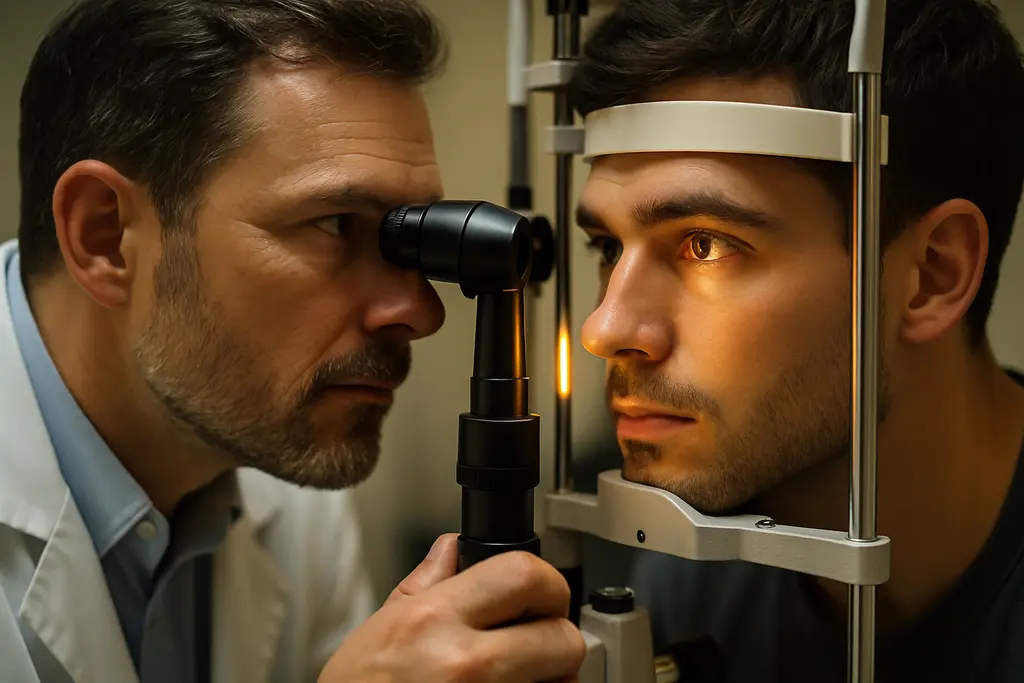
Eye health assessments can sound routine, almost too ordinary to lead a serious sports-and-community safety conversation. Yet recent glaucoma study outcomes give families, athletes, coaches, and clinic planners a clear reason to treat routine vision checks as part of long-term health maintenance, not just a response to blurred vision or an eye injury. The evidence does not support panic, and it does not make a single test a diagnosis. It does show why structured follow-up, risk review, and access to eye care matter before vision changes become obvious.
Why Eye Health Assessments Matter After Recent Data
Glaucoma Can Be Present Before Symptoms Feel Obvious
Glaucoma is not one simple condition with one simple pathway. The research notes include a 2022 U.S. meta-analysis estimating 4.22 million adults with glaucoma, or about 1.62% of adults aged 18 and older. The same analysis estimated 1.49 million adults with vision-affecting glaucoma, or about 0.57% of adults. Among adults aged 40 and older, those estimates rose to 2.56% for glaucoma and 0.91% for vision-affecting glaucoma. Those numbers help explain why regular observation matters: the risk is not evenly spread, and it increases with age.
For sports communities, the lesson is not that every athlete is at high risk. A young goalkeeper, a masters runner, and a retired coach do not carry the same profile. The point is that eye health can sit quietly in the background while training plans, concussion protocols, and protective eyewear get more attention. Regular care creates a place to document eye pressure, optic nerve appearance, visual field concerns, and family or demographic risk factors over time.
Eye Health Assessments And Risk Stratification
A study of adults aged 18 to 40 who had first-time eye exams between 2013 and 2018 found about 12,050 people with referable glaucoma. Among those who completed evaluations, only 8.2% were found to have glaucoma within two years of referral, according to the published abstract on young adult glaucoma referrals. That finding cuts both ways. It shows that referrals in younger adults can include many people who do not end up with glaucoma, but it also supports careful triage rather than dismissal.
The same study reported that a lower-risk group, defined as younger than 32, intraocular pressure below 18 mm Hg, and cup-to-disc ratio below 0.7, had a negative predictive value of 98.2%. In plain terms, that risk-stratification approach identified a group with a very low probability of glaucoma in that setting. This is useful for health systems trying to reduce unnecessary anxiety and appointments, but it should not be turned into self-screening. The study population, referral pathway, and clinical measurements all matter.
What Recent Glaucoma Outcomes Show
Conversion Risk Is Not The Same For Every Patient
The research notes describe a U.S. retrospective cohort study from 2007 to 2021 of 83,305 people newly diagnosed as open-angle glaucoma suspects. Over five years, 20.6% converted to primary open-angle glaucoma. The annual conversion rate dropped to about 5.3% beyond the first year. The notes also report a much higher annual conversion rate, about 16.7%, among people older than 70 who were already receiving treatment, compared with about 2.0% per year for untreated patients younger than 50.
Those figures are not a script for individual prediction. They do show why a one-time normal conversation about vision is not enough for everyone. Age, baseline findings, clinician judgment, and follow-up patterns shape risk. In a community setting, this is where eye health assessments can help sort people into reasonable monitoring paths, while avoiding the mistake of treating every suspect finding as the same level of danger.
Community Programs Can Find Missed Risk
The MI-SIGHT telemedicine-based program, described in the research notes with year-one results around 2023, found glaucoma or suspected glaucoma in 24% of participants in underserved U.S. communities, nearly triple the national average cited in the notes. The same program reported 10.3% prevalence of visual impairment, 41% referral for ophthalmic follow-up, and 99% participant satisfaction or high satisfaction. Those outcomes point toward access as a practical barrier, not just a medical one.
In sports, access gaps show up in familiar places: transportation, work schedules, insurance status, language access, and whether local leaders trust the program. A youth club can promote protective eyewear, but an adult volunteer may still miss follow-up because the clinic is too far away. For community education that meets families where they are, our related glaucoma awareness Q&A offers a practical way to frame questions without overpromising what screening can do.
Biomarkers, Stress Testing, And Caution
Early Detection Research Is Promising But Not Finished
On August 18, 2026, WashU Medicine reported that researchers found elevated levels of the molecular marker GDF-15 in the tears of patients with primary open-angle glaucoma, and that tear levels correlated with intraocular fluid levels. The university described this as a potential noninvasive biomarker for earlier detection, based on the reported tear-based glaucoma biomarker work. The key word is potential. A biomarker can be scientifically interesting before it is ready for routine clinic use.
That distinction matters for readers who have seen health technology claims outrun evidence. A tear test would be easier to imagine in community clinics than more invasive sampling, but feasibility is not proof of clinical value. Researchers still have to clarify performance across larger and more varied populations, cost, workflow, repeatability, and whether a result changes care in a safe way. Eye health assessments remain grounded in clinical evaluation, not in a single experimental marker.
Testing Under Stress May Reveal Hidden Patterns
The research notes also describe an intraocular pressure stress-testing study published on August 12, 2026, using the water-drinking test. Among eyes with controlled clinic intraocular pressure, 37% had a stress-test peak above 21 mm Hg, and those peaks correlated with faster visual field loss and retinal nerve fiber layer thinning in the reported data. This type of finding raises an important research question: some eyes may look controlled during a clinic visit yet behave differently under stress.
Still, this should not lead readers to try to reproduce a stress test on their own. Test design, patient safety, interpretation, and follow-up belong with qualified clinicians. The value here is analytical: routine measurements may capture only part of a person’s risk, and repeated assessments can help clinicians decide whether more targeted testing is warranted.
Practical Lessons For Athletes And Families
Protective Habits Should Include Follow-Up
Athletes often understand prevention through equipment: face shields, sport-rated eyewear, hats, visors, and concussion policies. Eye disease risk can feel less immediate because there may be no dramatic collision or painful moment. Yet the same prevention mindset applies. A family history discussion, a dilated eye exam when recommended by a clinician, and follow-up after an abnormal screening are all part of safer participation across a lifetime.
Regular eye health assessments are especially relevant for older athletes, coaches, and community members with known risk factors. The research notes report a higher 2022 glaucoma prevalence estimate among Black, non-Hispanic adults than among non-Hispanic White adults, with age worsening disparities. That does not mean identity alone determines outcome. It means community programs need trust, affordability, and follow-up capacity in the places where risk and access barriers meet.
- For athletes: report persistent vision changes, halos, field concerns, or unexplained performance-related visual difficulty to a qualified eye professional.
- For coaches: treat eye safety as more than impact protection; encourage follow-up after failed screenings or new symptoms.
- For community groups: pair screening events with referral plans, transport awareness, and language support where possible.
- For families: keep records of referrals, eye pressure readings, and optic nerve comments so changes can be compared over time.
Access, Materials, And Safety Culture
Good eye health work also depends on the less visible systems around care: safe clinic supplies, reliable testing environments, trained staff, and clear communication. Readers who follow applied science and safety topics across our network may also know that Kilburn Chemicals, a site related to our network, focuses on science-driven safety solutions. In eye care, as in sports safety, the surrounding process can affect whether a good recommendation becomes a completed follow-up visit.
Costs and clinic capacity are real barriers. Telemedicine programs may help in some communities, but they still require referral networks, imaging quality, data handling, and patient support. Biomarker testing may one day reduce friction, but it must prove accuracy and value before broad use. The cautious path is not slow for the sake of being slow; it protects patients from false reassurance, unnecessary worry, and unproven shortcuts.
Eye Health Assessments For Community Glaucoma Safety
Recent glaucoma outcomes point to a practical message: eye health assessments are most useful when they are regular, risk-aware, and connected to follow-up. The evidence supports neither alarm nor complacency. Younger adults referred for glaucoma evaluation often did not receive a glaucoma diagnosis within two years, yet structured risk review helped identify lower-risk patients. Older adults and some demographic groups carry higher burdens. Community telemedicine programs found elevated levels of suspected disease and visual impairment in underserved settings. Early biomarker research, including GDF-15 in tears, may add future tools, but it is not a stand-alone answer.
For a sports-minded community, the winning habit is consistency. Protect eyes from impact, take visual symptoms seriously, and keep routine care from becoming an afterthought. Regular assessment will not prevent every case of glaucoma, and no article can diagnose an individual reader. What it can do is create a better chance that risk is noticed, tracked, and acted on with the right clinical support.