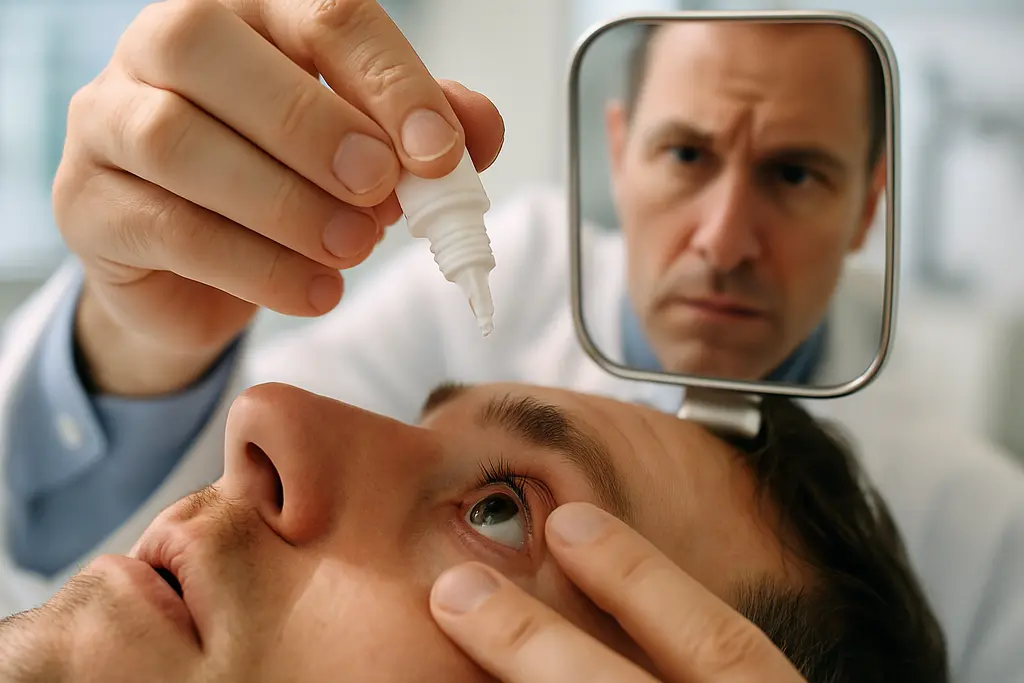
For athletes, coaches, parents, and anyone training outdoors, eye inflammation risks can feel like a small concern until irritation, redness, or watering starts affecting focus and comfort. The evidence does not support panic, and it does not let us predict who will develop conjunctivitis on a given day. It does suggest that weather and air conditions can shift population-level risk, especially during periods of unusual heat, cold, low humidity, or still air.
As a community sports reporter, I tend to hear these concerns on the sideline first: a runner rubbing her eyes after a hot interval session, a youth soccer coach asking whether dusty air matters, or an older cyclist wondering why symptoms flare after certain weather changes. Science cannot answer every local question yet. Still, a time-series study from Urumqi, China, gives a useful, cautious signal: conjunctivitis outpatient visits rose during specific temperature and meteorological conditions. That matters for public health planning, athletic scheduling, and basic eye safety habits.
What The Urumqi Data Shows About Eye Inflammation Risks
Eye Inflammation Risks In A Time-Series Study
The strongest evidence available from the approved sources comes from Urumqi, northwest China, where researchers studied 59,731 conjunctivitis outpatient cases recorded from 2013 through 2020. The study reported that mean temperatures above 28.7°C, described as the 99th percentile, were linked with a 16.4% higher risk of conjunctivitis outpatient visits compared with a reference mean temperature of 10.7°C, according to the Urumqi conjunctivitis study. Extreme low temperature, reported at −10.5°C, was also associated with increased risk, though the relative risk was smaller.
For eye inflammation risks, this is not the same as saying heat or cold directly caused every case. Time-series studies compare patterns over time and can identify associations after accounting for measured conditions. They are valuable for public health signals, but they cannot replace clinical assessment for an individual athlete or child. The outcome was outpatient visits for conjunctivitis, not every episode of eye irritation in the community.
Heat, Cold, Humidity, And Wind
The Urumqi data also suggested that a 10°C increase in mean ambient temperature was associated with higher conjunctivitis risk at lag days 1 and 2, and across cumulative lag periods from days 0–2, 0–3, and 0–4, as summarized in the PubMed abstract. That lag pattern is useful because symptoms and care-seeking may not occur at the exact moment weather conditions change.
Low relative humidity and low wind speed were also reported as risk-enhancing conditions in the same research. For people who train outdoors, this combination may sound familiar: hot or cold air that feels dry, hangs close to the surface, and leaves the eyes feeling exposed. The study does not prove that a single practice in dry, still air will lead to conjunctivitis. It does support a practical idea: environmental context deserves attention, especially when multiple stressors appear together.
Why Athletes And Outdoor Workers Should Read The Signals
Community Sport Exposure Patterns
Community athletes are not laboratory subjects. They move between grass fields, asphalt tracks, indoor courts, parking lots, dusty roads, and changing weather. A school tennis player may be outside during late-afternoon heat. A road runner may train near traffic. A grounds crew member may spend hours in dry wind or stagnant air. For these groups, eye inflammation risks are part of a broader safety picture that includes hydration, heat exposure, respiratory irritation, and vision comfort.
The Urumqi study focused on conjunctivitis outpatient visits, not sports performance. Even so, sports settings help translate the finding into daily decisions. Eye comfort affects tracking a ball, reading space, judging distance, and staying engaged during long sessions. If a team notices repeated complaints after hot, dry, still days, that pattern is worth recording rather than dismissing as random.
What The Evidence Cannot Prove
The evidence is strongest for association at a population level. It does not tell us which athlete will have symptoms, whether a given redness episode is allergic, infectious, irritant-related, or linked to another eye condition, or whether changing one practice time will prevent a case. It also comes from one city with its own climate, health system, care-seeking habits, and pollution mix.
That caution is not a weakness; it is how evidence should be used. A single regional study can guide questions without becoming a universal rule. Coaches and families can ask: Was the day unusually hot or cold? Was the air dry? Was wind low? Did several athletes report eye discomfort after similar conditions? Those observations do not diagnose disease, but they can support safer routines and better conversations with qualified eye-care professionals.
Practical Safety Steps Without Overstating The Science

Planning Around Weather Without Panic
Because the strongest signals involved temperature extremes, humidity, and wind speed, prevention should stay practical and low-drama. Teams can build a simple environmental check into the same planning that already covers heat illness risk. This is especially reasonable for youth sport, older recreational athletes, and outdoor workers who spend long periods exposed to weather shifts.
- Track patterns: Record eye irritation complaints alongside temperature, humidity, wind, and training location.
- Reduce avoidable exposure: Use shaded areas for breaks when heat is high, and consider indoor recovery spaces when conditions feel dry or stagnant.
- Protect vision comfort: Sport-appropriate eyewear may help shield the ocular surface from dust, glare, or wind, though it should not be treated as a medical treatment.
- Respect symptoms: Persistent, severe, or unusual eye symptoms should be discussed with a qualified clinician rather than managed only from the sideline.
These steps are not a cure and should not be sold as one. They are basic risk-management habits. The aim is to lower avoidable irritation and improve awareness, not to make unsupported promises about preventing conjunctivitis.
Care Decisions Stay Clinical
Eye redness can have different causes. The Urumqi data grouped outpatient visits for conjunctivitis, but it does not provide a do-it-yourself method for telling one cause from another. That distinction matters because treatment decisions depend on clinical evaluation, history, and examination. Coaches and teammates can notice patterns, but they should not label an athlete’s condition from weather alone.
Environmental science also has a communication problem: it can sound either too abstract or too alarming. A cautious middle path is better. Heat and cold may shift community-level risk. Low humidity and low wind may add stress. Air conditions may matter, especially where pollutants and weather interact, but the exact effect varies by place and person. Readers interested in broader science coverage across related topics can explore Kilburn Chemicals, which is part of the same network of science-focused resources.
Air Pollution Temperature And Eye Inflammation Risks
A Cautious Reading For Community Sport
Eye inflammation risks are not just an individual health issue; they also sit inside community choices about practice timing, field design, air quality awareness, and access to care. The available Urumqi evidence points to higher conjunctivitis outpatient visits during very hot conditions, some increased risk during extreme cold, and added concern when relative humidity is low or wind speed is low. That is enough to justify attention, but not enough to claim certainty for every region or sport.
For athletes, the practical message is measured: watch the environment, keep records, reduce avoidable exposure during difficult conditions, and seek professional guidance when symptoms persist or appear severe. For researchers and public health officials, the message is that more local data would help. Different climates, pollution profiles, and sports cultures may produce different risk patterns. Until then, the strongest approach is evidence-based caution: respect what the data shows, state what it cannot show, and keep athlete eye safety part of the wider conversation about training in changing air and weather conditions.