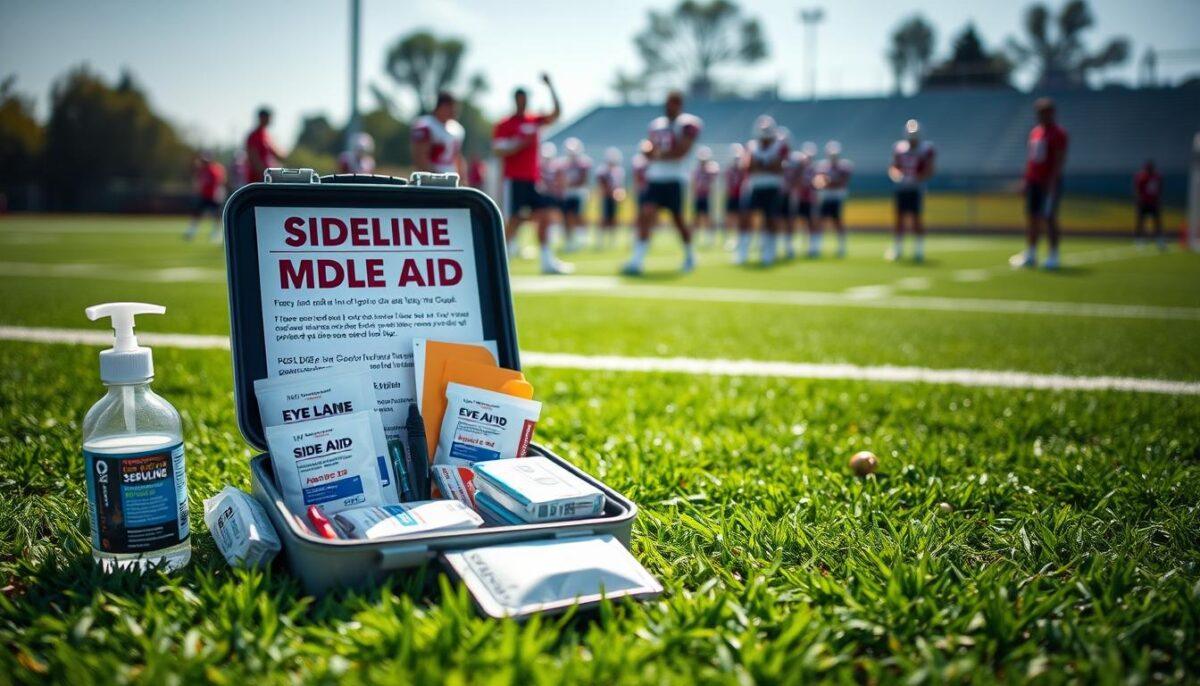
Football is an exhilarating game, filled with intensity and excitement. Yet, it’s also a breeding ground for injuries. As players dart across the field, the risk of mishaps is always there. A well-stocked medical kit is not just a good idea; it’s essential for any team.
But let’s be honest—most of these kits look like they were thrown together during a yard sale. A few adhesive bandages and some expired pain relievers don’t cut it. When a player suffers from a corneal abrasion, the difference between a quick fix and a long-term issue can be monumental.
Injuries to the eyes may not seem as critical as concussions, but they deserve just as much attention. The stakes are higher than many realize. A poorly managed eye injury can alter a player’s vision and career. Why do we obsess over head injuries while treating ocular damage like an afterthought? It’s time to change that narrative. Building a robust protocol for managing eye injuries is not merely a precaution; it’s a necessity.
Kit build sterile saline eyewash eye shields fluorescein strips penlight tape PPE forms
When you put together a first aid kit for eye injuries, some items are a must. You need to be ready for anything, from turf pellets to unexpected collisions. Let’s explore the essentials that make your kit a lifesaver.
Sterile Saline Eyewash is a key part of your kit. It might look like fancy saltwater, but it’s essential. It helps rinse out foreign particles and prevents infection.
Next, eye shields are vital. They’re not just plastic barriers; they protect the injured eye. They help keep the area stable while you wait for professional help.
Don’t forget the fluorescein strips and a penlight. They’re like a portable detective kit. The fluorescein dye reveals corneal scratches, and the penlight checks for damage with precision.
Tape is also a must-have. A roll of microporous tape secures dressings in place. Use it with PPE like nitrile gloves to keep things clean. Clean hands are key when helping others.
Lastly, keep some forms on hand. They’re important for documenting incidents and giving info to medical staff. A clear record helps with treatment and follow-up care.
| Item | Purpose | Importance |
|---|---|---|
| Sterile Saline Eyewash | Rinses foreign materials | Prevents infection |
| Eye Shields | Protects injured eye | Stabilizes injury |
| Fluorescein Strips | Detects corneal damage | Ensures accurate diagnosis |
| Penlight | Illuminates eye for examination | Facilitates quick assessment |
| Tape | Secures dressings | Prevents movement |
In summary, building a first aid kit for eye injuries is more than just adding items. It’s about having the right tools ready for action. So, stock your kit wisely and be prepared for whatever comes your way!
Protocol flowchart foreign body chemical splash blunt trauma laceration
When adrenaline kicks in, a protocol flowchart can save the day. It’s a visual guide for sports injuries, focusing on eye issues. We’ll look at four main problems: foreign bodies, chemical splashes, blunt trauma, and lacerations.
Foreign bodies are a big issue. Imagine a piece of dirt getting into someone’s eye. The first step is to irrigate the eye. Then, a fluorescein exam checks for corneal damage. This is key to avoid more problems.
Chemical splashes are another big worry. Picture someone using sports drink as a cleaner. You must act fast and flush the eye well. Remember, quick action is more important than being sterile.
Blunt trauma can happen from many things, like elbows or balls. You need to check for orbital fractures. Quick thinking and a clear plan are vital in these situations.
Lacerations are also serious. Eyebrows might look tough, but they’re not. Don’t press on the injury. Instead, stabilize it and get medical help.
To sum up, here’s a table of protocols:
| Injury Type | Initial Response | Follow-Up Action |
|---|---|---|
| Foreign Body | Irrigation | Fluorescein Exam |
| Chemical Splash | Immediate Irrigation | Seek Medical Attention |
| Blunt Trauma | Assessment for Fractures | Refer to Specialist |
| Laceration | Stabilize Injury | Medical Evaluation |
These protocols are not just rules. They are your plan against panic. By knowing these steps, you’re ready when an injury happens. So, be prepared and keep eye shields ready!
Do nots no pressure or patching on suspected infections or chemicals
Eye injuries can be tricky. Sometimes, the best thing to do is nothing. In sports eye first aid, there are important “do nots” to avoid trouble. Let’s look at common mistakes that can make a small problem big.
Pressure on Suspected Penetrating Injuries
Putting pressure on a suspected penetrating injury is a bad idea. It can make things worse, not better. It’s like trying to fix a leak by hitting it with a hammer. It doesn’t work.
Patching Eyes with Possible Infections
Patching an eye that might be infected is a bad move. It creates a warm, dark place for bacteria to grow. This is not what you want.
Chemical Exposures
Chemical exposures need careful handling. Trying to mix acids and bases is not a good idea. The best thing is to rinse the eye with sterile saline and get help. Sometimes, less is more.
Protecting the Responder
When dealing with these do nots, remember to protect yourself too. Wearing PPE and following safety rules is key. Doing less can sometimes mean doing better for everyone’s safety.
| Action | Risk | Recommended Response |
|---|---|---|
| Applying pressure to a penetrating injury | Intraocular damage | Do not apply pressure; seek medical help |
| Patching an infected eye | Infection spread | Keep the eye open; seek medical assistance |
| Neutralizing chemicals | Chemical burns | Rinse with saline; do not neutralize |
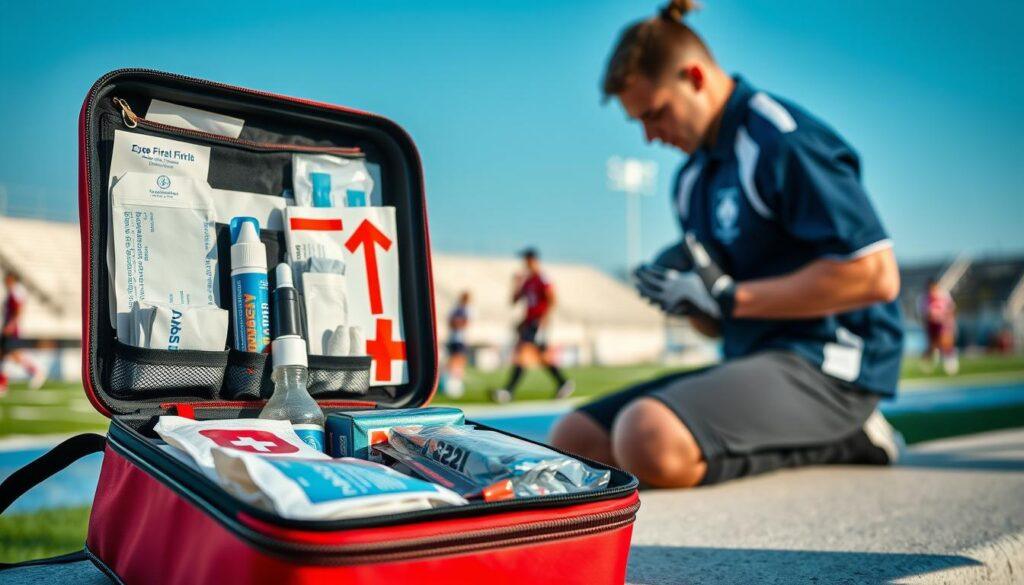
Transport decisions EMS vs monitor vs urgent clinic
When an athlete gets hurt in the eye, deciding where to take them is tough. You have to weigh the risks of EMS, monitoring, or an urgent clinic. It’s like a game of medical chess, where every move matters.
Let’s look at each transport option:
| Transport Option | Best For | Considerations |
|---|---|---|
| EMS | Vision-threatening injuries | Every minute counts; activate if severe symptoms are present. |
| Monitor | Stable conditions | Assess for changes; may resolve with time and ice. |
| Urgent Clinic | Professional evaluation needed | Stable enough for private transport; check hours and coverage. |
An athletic trainer checklist helps you make this decision. Look for specific signs that mean you should act fast:
- Changes in visual acuity
- Irregular pupil shape
- Blood in the anterior chamber
- Pain with eye movement
These signs aren’t just suggestions. They’re urgent calls to action. Also, having a list of emergency departments and urgent cares nearby can help. Remember, in remote areas, getting help quickly can be hard. So, your first aid kit is your main medical tool for a while.
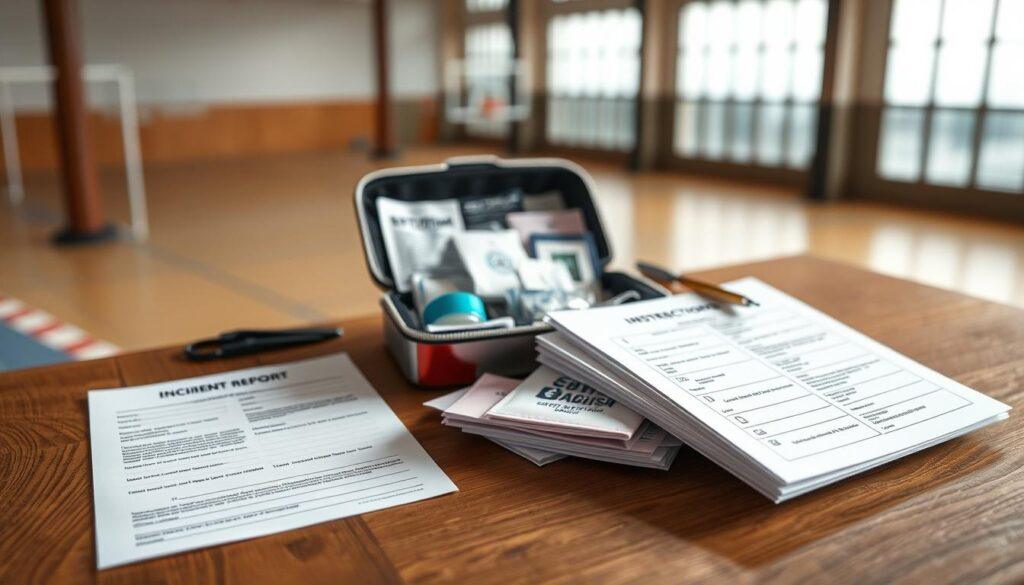
Documentation incident form and caregiver instructions
Documentation is a key part of sports eye first aid, even if it’s not the most fun. It’s like a story that helps athletes get the care they need. It tells what happened, what you saw, and what you did to help.
When the emergency is over, this paperwork is very important. It helps doctors know if the athlete’s eye is getting better or worse.
Now, let’s talk about giving instructions to caregivers. This is when you pass on the information to a parent who might not have been there. They might feel worried and not understand medical terms. That’s why clear, written instructions are so important.
Emergency contact cards are also key. They have important info like allergies, medicines, and the athlete’s doctor. This is not just a formality; it’s a safety net that can save lives.
Lastly, the athletic trainer checklist for documentation should be clear and standard. In legal cases, if it wasn’t written down, it didn’t happen. So, let’s see documentation as a vital part of sports eye first aid.
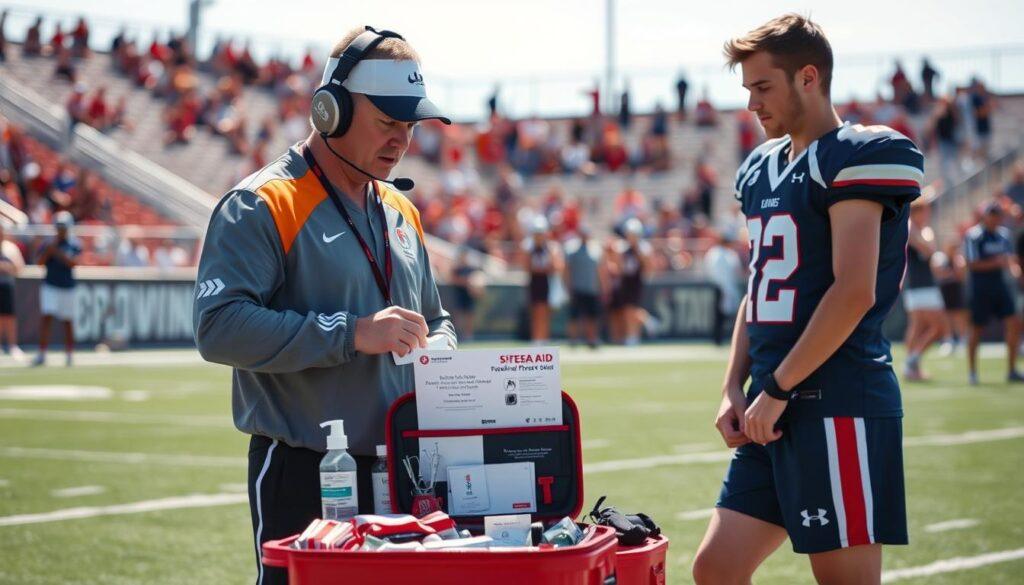
Practice drill roles coach AT athlete buddy job cards
Practice drills are key for sideline eye first aid. They test your supplies and protocols, showing gaps before emergencies happen. It’s like a dress rehearsal, where you fine-tune your response plan.
The coach’s role is critical in an eye injury. They manage the crowd and talk to parents. They keep the team focused. Effective communication is vital to keep things calm.
The athletic trainer (AT) is the clinical expert. They assess and treat the injury. The athlete buddy system ensures someone stays with the injured player, helping the AT.
Job cards are essential for these roles. They’re like a script for your team. Everyone knows their part, making responses smooth and effective.
For readiness, do drills every quarter. Start with simple scenarios and get more complex. This way, you’re ready for any situation, not just a simple eye injury.
| Role | Responsibilities | Key Actions |
|---|---|---|
| Coach | Crowd control, parent communication | Direct team, manage bystanders |
| Athletic Trainer (AT) | Clinical assessment and intervention | Provide care, call for transport |
| Athlete Buddy | Support injured player | Stay with player, assist AT |
| Job Cards | Clarify roles and responsibilities | Distribute, rehearse |
Post event review replenish supplies update training cadence
After a game, it’s time to review and improve our sports eye first aid methods. The post-event review is key for learning. It’s like a detailed review after a mission, where we figure out what went right and what didn’t.
First, we need to restock our supplies. That bottle of sterile saline and the eye shield used in the game need to be replaced. Keeping an eye on our supplies is essential. Here’s a suggested schedule:
- Monthly visual inspections—does everything look present?
- Quarterly expiration reviews—color-coded labels are your friend here.
- Annual complete audits—empty everything, count everything, and question whether everything belongs.
- Immediate post-incident restocking—because nobody wants to run out of fluorescein strips.
For teams with many kits, consider using subscription services for automatic restocking. It’s not the most exciting thing, but it keeps you from running out of important items.
Lastly, update your training based on what you learned from the incident. Did everyone know where the first aid kit was? Did the coach remember not to apply pressure? These lessons will help you improve your sports eye first aid and keep your team ready for anything.
Facility prevention eyewash station placement dust and turf rules
Proper placement of eyewash stations is vital for safety. It’s not just about where they are; it’s about saving lives and eyes. The ANSI standard says eyewash stations must be within 10 seconds of a hazard. This ensures a quick response, even when someone is panicked and can’t see.
In places where chemicals are used, having eyewash stations nearby is critical. For example, in manufacturing facilities with heavy machinery, having trauma supplies like pressure dressings and eyewash stations is essential. Chemical facilities also need specific antidotes and neutralizing agents to handle risks effectively.
Storing these supplies correctly is also key. They should be kept in cool, dry places, away from sunlight. This ensures they last longer and are ready when needed. The right placement of eyewash stations helps manage risks and saves time.
Dust management on baseball infields and artificial turf fields is also important. A cloud of rubber pellets can hurt eyes. Rules for field conditions, watering, and the makeup of these pellets help prevent eye injuries.
Even with eye shields, a dusty field with a distant eyewash station is risky. The hierarchy of controls shows that prevention is better than PPE. So, let’s place eyewash stations correctly and keep our fields safe!
Parent education card overnight red flags
When the athletic trainer hands over care to parents, it’s a big step. A good parent education card is key. It keeps important info alive and helps parents take action.
Parents should watch for signs like pain that won’t go away or vision changes. These include double vision, new floaters, redness, swelling, or discharge. These are signs that need quick attention.
Make sure the card has the athletic trainer’s contact info and the nearest emergency room. This helps parents know when to seek help. It’s like an airplane safety card; it’s there when you need it most.
Young athletes might not know how to describe their symptoms. A child with a corneal abrasion might say their eye “feels funny.” Parents need the right tools to help, like a detailed parent education card.
Adding this tool to your checklist helps parents act fast. With clear signs and instructions, they can follow up on injuries. This ensures no injury is missed.