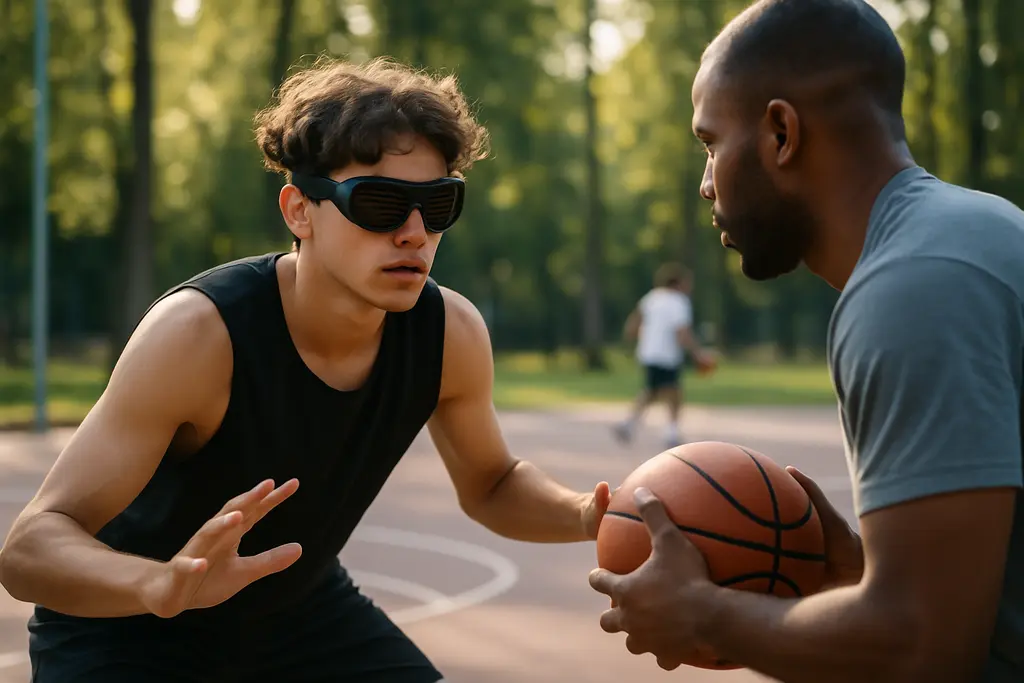
Sports Vision Training in educational settings gained firmer evidence during 2026, especially in college basketball and school-based sport programs. The signal is encouraging: visual-perceptual drills can be integrated into practice and physical education rather than treated as a separate laboratory task. The caution is just as clear. Most findings are sport-specific, program-specific, and still limited on durability, cost-effectiveness, and transfer into competitive results.
For educators, coaches, and athletic departments, the main question is no longer whether visual demands matter in sport. They do. The harder question is whether a school can add visual-perceptual training without crowding out skill practice, academic priorities, inclusion goals, or coach time. The answer depends on how tightly the drills match sport demands and how honestly outcomes are measured.
Sports Vision Training In Schools: What Changed In 2026
Sports Vision Training As A Practice Add-On
The strongest recent evidence came from collegiate basketball. A randomized controlled trial published on February 18, 2026 tested an eight-week stroboscopic visual training program added to basketball-specific training in players aged 18 to 25. The group receiving the combined intervention improved more than standard and routine training groups in coordination, change-of-direction performance, and decision-making under time pressure, according to the Frontiers trial. Reported gains included roughly 8% to 11% improvement in coordination, about 10% in change-of-direction performance, and about 12% in decision-making accuracy compared with baseline.
This supports Sports Vision Training as an adjunct to sport practice, not as a replacement for coaching, conditioning, or tactical learning. The trial matters because it used a controlled design and placed the intervention inside a collegiate training context. It does not prove that every school, sport, or age group will see the same pattern. Basketball has fast visual occlusion, frequent directional changes, and repeated decisions under pressure, so it is a plausible fit for stroboscopic methods.
Short Exposure Versus Longer Curricula
A 2026 acute neuro-athletic training study, published about four months before September 3, 2026, embedded vision and sensorimotor elements into youth basketball drills during a single 25-minute session. The research notes reported immediate post-session improvements in visuomotor reaction time and technical execution under perceptual load. That is useful for designing school sessions because it suggests short blocks may be measurable. It does not establish whether one session changes future play, academic behavior, or long-term athletic development.
Longer youth interventions are also relevant. A volleyball program for players aged 10 to 13 used interactive light devices and tasks aimed at reaction speed, peripheral vision, and visual-motor coordination across about one sporting year. The experimental group reportedly improved more than traditional technical training on perceptual-cognitive skills, psychological characteristics, perceived competence, and physical self-esteem. The same study reported higher engagement and inclusive participation across students with different starting ability. These findings fit school priorities, but they still need replication across different settings and teaching models.
Educational Benefits And Academic Friction
Inclusion Is A Program Design Issue
School integration is not only a performance question. Inclusive sport programs can affect well-being and participation. In February 2026, evaluations of a school-based adapted sport program involving 314 special-education students reported improved well-being as described by parents, teachers, and trainers. The study also noted that the number of sessions was low and that better collaboration between trainers and teachers was needed.
That point should be taken seriously. A visual-perceptual program can look simple from the outside: lights, balls, occlusion eyewear, reaction tasks, and score sheets. In a school, the intervention also needs supervision, accessibility, scheduling, and a way to include students who have different motor, cognitive, or visual baselines. A program that benefits only the already skilled athlete would be a poor fit for many educational settings.
Motivation Can Pull In Two Directions
Longitudinal research in 901 secondary-school student-athletes, around age 14, examined sport-study programs combining academics and sport. The research notes reported that academic and sport motivation were correlated at November and April assessments, but the strength of cross-context influence weakened over the school year. Autonomous sports motivation was negatively associated with later academic achievement.
That finding should not be read as proof that sport harms school performance. It does warn against assuming that enthusiasm in training automatically supports classroom outcomes. If visual training is added to a school day, staff should track not just reaction scores and sport drills but also attendance, fatigue, classroom engagement, and student perception. The education case is strongest when the intervention supports, rather than competes with, academic routines.
Implementation Barriers For Schools And Colleges
Teacher And Coach Capacity Comes First
A school that adopts Sports Vision Training needs more than equipment. The research notes included a seven-year teacher development project from the Southwestern United States, first published online on May 31, 2026, in which sustained training and mentorship increased classroom activity breaks from about one per week to seven per week on average. Although that project focused on activity breaks rather than visual training, the implementation lesson is relevant: staff behavior changes when training is sustained and supported.
For a physical education department or college athletic program, the practical path is usually a small pilot. Start with one sport or one class block. Define the visual demand being trained, such as peripheral awareness, visual-motor response, or decision timing. Decide before the program begins which outcomes will count as success. For readers comparing practice-based approaches, this cautious athletic practice review covers related issues around short-term gains and transfer.
Cost, Safety, And Measurement Limits
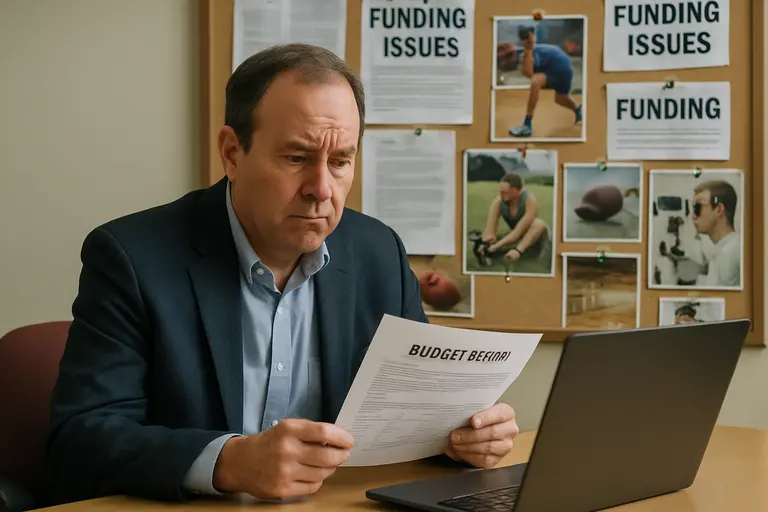
Cost data were thin in the research notes, so no strong claim can be made about affordability across schools. Interactive light devices, stroboscopic eyewear, trained supervision, space, and assessment time all carry resource demands. A well-funded college program and an under-resourced school may face very different barriers. Program leaders should avoid buying devices first and designing outcomes later.
Basic implementation questions include:
- Which sport or class activity has a clear visual-perceptual demand?
- Can teachers and coaches run the drills consistently without reducing essential skill practice?
- Are outcomes measured before and after the program, not judged by enthusiasm alone?
- Can students with different baseline abilities participate safely and meaningfully?
- Is there a plan to review whether gains persist after the intervention ends?
A registered collegiate protocol also shows that formal research interest is continuing. The ClinicalTrials.gov document titled The Outcome of Sports Vision Training on Collegiate describes an ongoing effort to measure collegiate-level effects, but it should be treated as a protocol rather than a results paper until outcomes are published in the registered collegiate protocol.
Sports Vision Training In Educational Settings
A Cautious Read For 2026 Programs
The 2026 evidence supports a measured, field-tested approach. Collegiate basketball data showed meaningful short-term gains when stroboscopic visual work was paired with sport-specific practice. Youth studies suggested possible benefits for engagement, perceived competence, and perceptual-cognitive development. Inclusive school sport research pointed to well-being benefits while also showing that low session counts and weak teacher-trainer coordination can limit delivery.
Sports Vision Training should be treated as a structured educational and athletic intervention, not a stand-alone performance shortcut. The best use case is a monitored program with clear objectives, short assessment loops, and attention to equity. Schools should be especially cautious about claiming competition transfer or academic benefit unless they have measured those outcomes directly.
For those interested in exploring related programs, the SGTT site provides valuable insights into sport-vision education within the same network. The evidence base has become more practical, but it still asks educators to do the unglamorous work: match drills to real tasks, train staff, track limits, and report results with restraint.