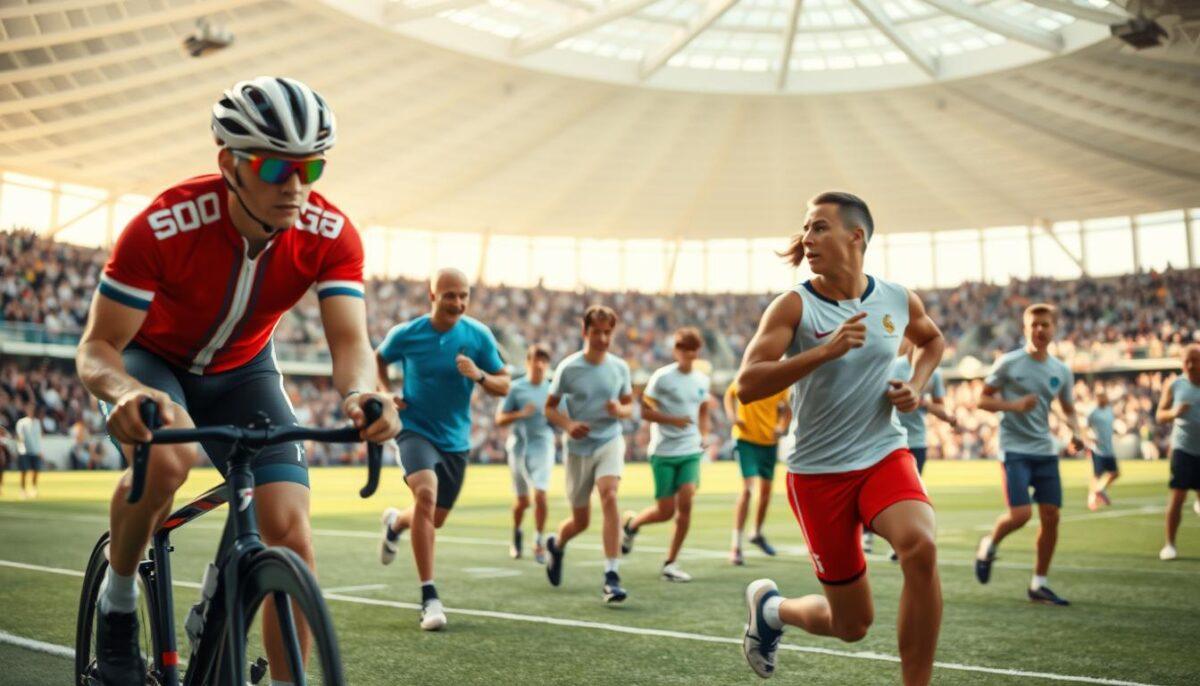
Imagine a player on the field seeing two footballs. It’s not just a trick of the mind; it’s diplopia. This condition affects nearly half of young people recovering from concussions, causing eye coordination problems.
Diplopia can show up in different ways. Sometimes, it only happens when looking in certain directions. Other times, it’s always there, affecting everything you see. This isn’t just a small issue; it’s a serious safety risk.
Coaches and trainers must quickly tell binocular from monocular diplopia. A simple test can help: cover one eye. If the double vision goes away, it’s binocular, meaning the eyes aren’t working together. If it stays, it’s monocular, suggesting a deeper eye problem.
Seeing double vision on the field is alarming. Ignoring these signs can have serious consequences. This quick check is as important as checking your blind spot before changing lanes. For more on this condition and its impact on athletes, learn more here.
Common causes concussion orbital fracture nerve palsy decompensated phoria
In sports, many factors can cause vision problems. Concussions are often talked about, but other issues are just as important. Orbital fractures can change how we see things, like a bad design choice. These injuries happen from big hits, like a linebacker and a running back crashing into each other.
Cranial nerve palsy can surprise athletes like a plot twist in a movie. The third, fourth, and sixth nerves are usually affected. Imagine a basketball player who can’t aim because their eye muscles are off. It’s not just annoying; it can end a career.
Decompensated phoria is another issue. It’s an eye misalignment that shows up later in life. It can be triggered by tiredness or small hits. For athletes, it can make seeing double a big problem when they need to focus.
Diabetes, stroke, or multiple sclerosis can also affect nerves. In sports, ignoring these signs can lead to big problems. It’s important to take every sign seriously. A detailed history and quick imaging can help avoid serious issues like an epidural hematoma.
Immediate safety remove from play and driving restrictions
Seeing double is not just a quirky phenomenon; it’s a call for immediate action. When faced with eye misalignment, athletes must be removed from play. This isn’t just about following rules; it’s about safeguarding their well-being.
Imagine telling a quarterback to just “walk it off” while they’re struggling to see the field clearly. That’s a recipe for disaster. The Amsterdam Consensus emphasizes that any vision symptoms, like diplopia, must be resolved before returning to sports. If an athlete insists they feel fine, it’s vital to remind them that their perception can be deceiving.
They might feel ready to play, but a moment of misjudgment could lead to a collision with a doorframe—or worse.
Driving is another serious concern. If an athlete can’t discern which of the two oncoming cars is real, they’ve forfeited their right to the road. Imagine the chaos! If diplopia is accompanied by red flags like drooping eyelids (ptosis), nausea, or vomiting, that’s a definite emergency. These symptoms are not a “wait and see” situation; they demand immediate referral to a specialist.
In summary, removing athletes from play and restricting their driving isn’t punishment; it’s a critical step in ensuring their safety. This approach can be the difference between a successful comeback and a tragic accident. Prioritizing their health is not just ethical; it’s essential.
Evaluation pathway urgent vs routine imaging and specialist referral
Choosing the right path for double vision is like picking a meal in a trendy restaurant. It’s overwhelming but very important. Doctors must decide if it’s an emergency or if it can wait. This choice often depends on other symptoms.
If a patient has sudden double vision, ptosis, nausea, vomiting, or neurological problems, it’s urgent. They need to see a neuro-ophthalmologist fast. This doctor will probably order a CT or MRI to check for injuries. It’s a high-stakes situation where every second matters.
But, if the double vision is not constant and only happens sometimes, it’s less urgent. In such cases, a routine referral might be enough. It’s like deciding whether to call for help or just send someone to check first.
Don’t forget about strabismus, a childhood eye issue that can come back after a head injury. A detailed check of binocular vision is essential. I’ve seen athletes get passed around because of missed basic tests. It’s best to start with a sports medicine doctor who knows the difference between a simple issue and a serious problem.
In this game, knowing when to act quickly is key. It’s not just about seeing symptoms; it’s about understanding what they mean. So, whether you’re moving fast or taking your time, make sure you’re on the right path.
Short term management occlusion fog tape temporary prism
When dealing with double vision, we often turn to simple tools. For athletes, eye patches and fog tape are quick fixes. They help manage the issue without needing high-tech solutions.
Occlusion is a basic but effective tool. It works by covering one eye, which helps athletes see clearly. But, it’s only a temporary solution.
Fog tape is a more advanced tool. It blurs one lens to reduce double vision. This method keeps some depth perception while managing double vision.
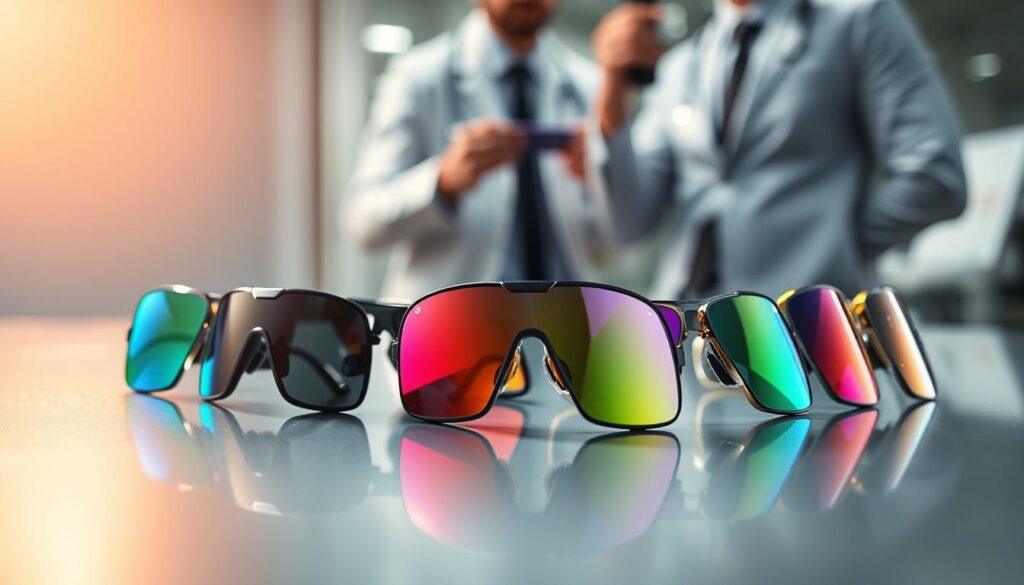
Prism lenses are also key in neuro-optometry. They can instantly correct double vision. I’ve seen athletes see clearly in seconds with these lenses. They’re a game-changer, but they’re just a temporary fix.
These quick fixes give athletes time to start real treatments. Vision therapy and vestibular rehab are the real solutions. But, it’s important not to rely solely on these temporary fixes.
For more insights on managing double vision, check out this detailed article.
Vision therapy options convergence VOR balance progressions when appropriate
Vision therapy is a big help for athletes with diplopia. It includes training for eye movements and using special lenses. A study in JAMA showed big improvements in symptoms and function when therapy starts early.
Convergence insufficiency (CI) and accommodation insufficiency (AI) are common after concussions. It’s like your eyes can’t work together at close distances. This makes reading hard, like being on a rollercoaster.
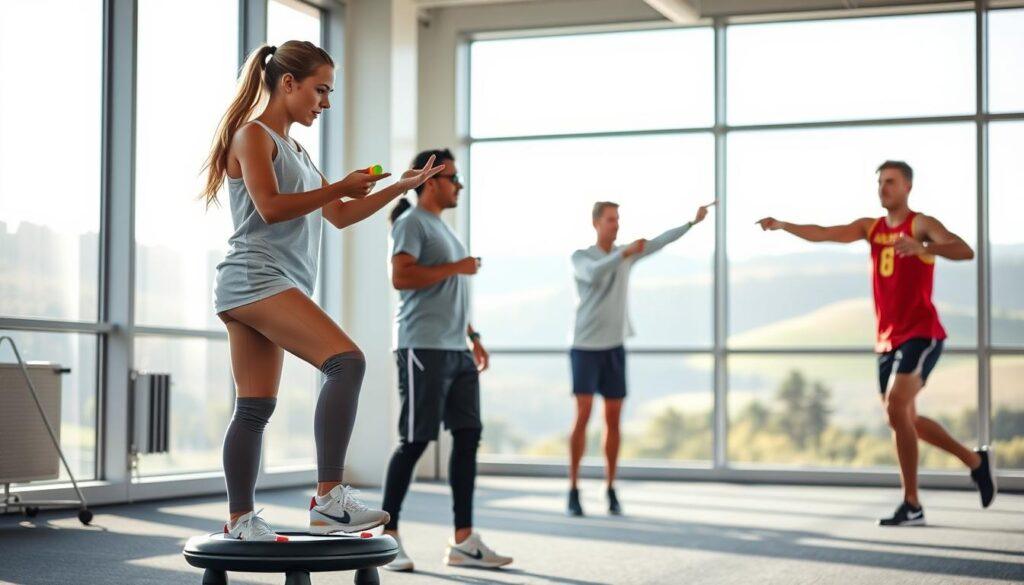
Therapy starts with simple eye exercises and moves to more complex training. This includes keeping eyes steady while the head moves. I’ve seen athletes go from struggling to mastering in just six weeks. The timing is everything.
Progressions in therapy are added carefully. It’s about helping the brain adapt in a smart way. For more on vision in sports, read this article on why athletes need sports vision exams.
Training while symptomatic safe cardio and non precision drills
Training with symptoms is like walking a tightrope; one misstep can lead to disaster. Athletes with visual issues often seem disengaged or hesitant. The challenge is to keep active without making their condition worse.
During this phase, avoid precision tasks. Instead, focus on safe cardio exercises that won’t provoke symptoms. Think stationary bikes or leisurely treadmill walks—activities that keep the blood flowing without demanding pinpoint accuracy. Dynamic visual acuity training can also be beneficial, pushing athletes to maintain visual focus while their heads are in motion.
Imagine trying to shoot free throws when the hoop has a twin; that’s where eye misalignment becomes a significant training limiter. The goal is to adapt and scale back, reminding everyone that this phase is merely temporary. It’s not a sign of weakness; it’s a testament to strategic patience.
Many athletes report that light workouts can actually clear the mental fog. But, it’s key to watch for symptom provocation. If double vision worsens or dizziness creeps in, it’s a clear signal to dial it back. Training while symptomatic isn’t about pushing limits; it’s about understanding and respecting them.
RTP criteria single vision or effective correction and confidence test
Returning to play after an injury is more than just a checklist; it’s a performance evaluation. The 2022 Consensus Statement on Concussion in Sport says athletes must have fully resolved vision symptoms before diving back into sport-specific drills. If diplopia, or double vision, persists, it’s a signal to take a more conservative approach.
To successfully return to play, athletes need to demonstrate single, stable vision—either naturally or with effective correction, such as prism lenses. This isn’t just about passing a static eye chart; it’s about thriving under the chaotic conditions of competition. Imagine an athlete who can read the fine print but falters when a teammate’s elbow suddenly enters their peripheral vision. That’s where the confidence test comes into play.
This bespoke gauntlet of sport-specific drills is designed to provoke any lingering symptoms of diplopia or vestibular mismatch. If an athlete can track a ball, maintain balance during a head turn, and not see two of everything, they’re likely ready to return. The Amsterdam consensus makes it clear: unresolved vision symptoms mean no contact, no scrimmage, and absolutely no exceptions.
Prism lenses can be a game-changer, allowing athletes to compete while their underlying issues are being addressed. But, this is only effective if the correction is stable and doesn’t lead to adaptation problems. Ultimately, the decision to return isn’t based on an athlete’s eagerness but on solid data and the insights of a clinician who has witnessed the consequences of rushing back too soon.
Escalation signs neuro deficits droopy lid ataxia persistent pain
A droopy eyelid isn’t just a cosmetic issue; it could be a sign of something much more serious. When an athlete presents with sudden onset of persistent diplopia, it’s time to act. Red flags requiring urgent referral include diplopia paired with drooping eyelids, nausea, vomiting, or any neurological deficits.
Ataxia is a sign of a deeper issue. It’s not just clumsiness. If you see persistent pain, think orbital fracture or worse. Ignoring these symptoms could mean missing a critical diagnosis.
Trust your instincts. If the symptoms don’t fit the typical post-concussion narrative, escalate. The moment you notice a cranial nerve palsy that wasn’t there before, or if the athlete can’t walk a straight line without looking like they’re auditioning for a sobriety test, it’s time for neuroimaging—stat. Not tomorrow, not after the game.
The beauty of sports is that there’s always another season. The tragedy is when someone misses it because a red flag was ignored. Be the person who calls it, even when the stands are roaring.
| Symptom | Possible Condition | Urgency Level |
|---|---|---|
| Droopy Lid (Ptosis) | Cranial Nerve Palsy | High |
| Ataxia | Cerebellar Dysfunction | High |
| Persistent Pain | Orbital Fracture | High |
| Sudden Diplopia | Neurological Issue | Critical |
For more insights on related topics, visit Understanding Glaucoma.
Athlete education compliance and reassurance plan
It’s key for athletes to understand visual issues like strabismus. It’s not about losing your edge; it’s about your brain playing tricks. A wrestler might feel weak when double vision happens. But, it’s really the concussion, not a lack of toughness.
Education is the main thing. When athletes know their eyes aren’t working right because of injury, they can let go of shame. This knowledge helps them follow vision therapy better. If they think it’s just a trick, they might not do the exercises. A good reassurance plan helps too. It keeps anxiety down by setting clear goals and times.
Recovery is as much about the mind as the body. When athletes know 90% of their peers get better with the right therapy, they’re more likely to keep going. This is the difference between a cut short career and a big comeback. Clear talk and support can really help.
Let’s get rid of the shame around conditions like strabismus. With the right education and support, athletes can face their recovery journey with confidence. It’s not just about getting back in the game; it’s about understanding the recovery game itself.