Here’s a cold, hard truth. Your everyday glasses offer about as much defense in a sports collision as a chocolate teapot.
Imagine you drive for a layup, and an opponent’s elbow hits your cornea. Suddenly, you’re not thinking about the score. You’re becoming part of a grim statistic: over 30,000 emergency room visits for sports eye injuries every year.
The data doesn’t lie. This isn’t just a kids’ table issue. Active adults are just as vulnerable, in high-velocity or contact sports.
Think about hockey. A puck travels faster than a sneaky rumor. Without the right gear meeting a benchmark like the CSA hockey standard, you’re gambling with your vision.
This isn’t scare-mongering. It’s a statistical autopsy. We’ll dissect the injury rates sport by sport because understanding the risk is the first step in outsmarting it.
It’s the difference between being a participant in your own safety and becoming a cautionary tale.
Standards overview what ASTM and ANSI ratings cover
Let’s get real. When it comes to sports eyewear, ASTM F803 and ANSI Z87.1 are not just suggestions. They are your eyes’ legal team. Buying glasses without these certifications is like hiring a bodyguard who’s afraid of loud noises. It’s a bad bet.
The ASTM F803 standard is the top choice for sports eyewear. It’s not just about being tough; it’s a series of tests that simulate high-velocity impacts. Imagine a racquetball hitting your face at full speed. This standard checks if the lens will shatter, if the frame will snap, and if any part becomes a secondary projectile. If it passes, you’ve got gear that respects physics.
Then there’s ANSI Z87.1. This is the basic safety standard for protective eyewear in the U.S. While it covers many hazards, for sports, it’s the minimum. Relying solely on it for high-impact sports is like using a bicycle helmet for motocross. It’s better than nothing, but it’s not the specialized armor you need.
| Standard | Primary Focus & Key Tests |
|---|---|
| ASTM F803 | Sports-specific high-velocity impact. Tests lens penetration resistance, frame integrity under dynamic force, and retention system strength during activity. |
| ANSI Z87.1 | General industrial hazards. Includes basic impact, chemical splash, and optical clarity tests. Serves as the foundational safety certification. |
So, what do these ratings actually test? It’s a tough process. Engineers fire projectiles at lenses to measure penetration resistance. They twist and stress frames to simulate a brutal fall or collision. They even test for “retention”—making sure the glasses stay on your face instead of becoming flying debris.
The phrase “meets standards” is more important than “lightweight and stylish.” In the physics of a flying baseball or hockey puck, fashion is irrelevant. A certification stamp is a promise that a committee of experts has tried to break the product, so you don’t have to.
Always ensure your sports glasses meet at least ANSI Z87.1, and for any high-velocity sport, insist on ASTM F803. This isn’t bureaucratic alphabet soup. It’s the Geneva Convention for your corneas. Don’t negotiate.
Frame and lens materials polycarbonate and trivex vs glass or CR 39
Polycarbonate and Trivex aren’t just options; they’re the new standard for athletic vision. Choosing between them and old-school materials like glass or CR-39 plastic is key. One is ready for impact, while the other is not.
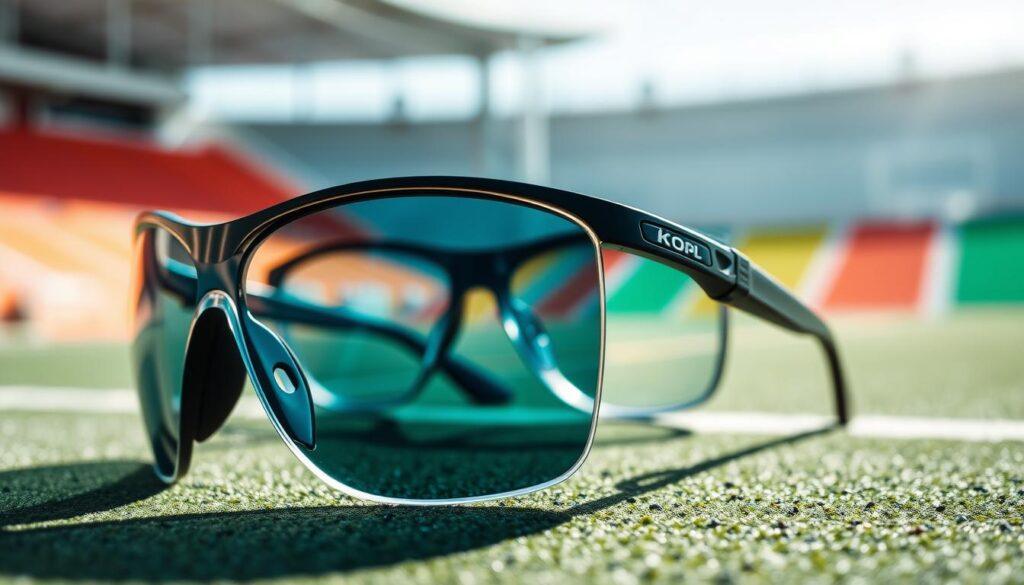
Polycarbonate lens materials are the top choice for durability. It’s not just plastic; it’s like “bulletproof” windows. These lenses are lightweight, shatterproof, and perfect for activities where impact is a certainty.
Trivex is polycarbonate’s smart cousin. It offers excellent impact resistance and better optical clarity. Think of Trivex as a high-definition safety feature. It’s like a clear force field.
Now, let’s look at the old ways. Glass lenses in sports? No thanks. They’re heavy and break easily. CR-39 plastic is better but not safe for fast-paced activities.
Protective frames should only have polycarbonate lenses that resist shattering. Look for frames made from impact-resistant nylon. A good setup, like those from Liberty Sport, is worth the investment. It costs between $150 to $175.
The final word? The debate over glass or basic plastic is over. For serious athletes, polycarbonate lenses (or Trivex) are the best choice. Your eyes will thank you for the upgrade.
Fit and retention straps bridges ventilation and helmet integration
Finding the perfect sports eyewear fit is all about science, not style. It’s about feeling secure and performing well. A bad fit can distract you and hurt your performance.
Adjustable straps are key to keeping your glasses in place. They should be firm but not too tight. For sports that are rough, a good strap can be a lifesaver.
The nose bridge is where your glasses sit securely. It should be padded and lightweight to avoid discomfort. Adjustable pads are the best, as they let you customize the fit.
Ventilation is important for keeping your lenses clear. Look for frames with vents to prevent fogging. This helps you stay focused on the game.
For athletes, helmet integration is critical. Your eyewear and helmet should work together. Frames should fit snugly without causing pressure. Some frames even have special temples for helmets.
Good fit means your eyewear feels like a part of you. It lets you perform without distraction. This is key, whether you’re playing casually or competitively. Learn how to choose the right eyewear for your sport.
Fog and scratch management coatings wipes airflow and cleaning kits
Think of anti-fog coating as your sports eyewear’s immune system. It keeps your lens clear, even when you breathe on it. Fog can affect anyone, making it hard to see in humid or cold weather.
These coatings work by attracting or repelling water. This keeps your view clear. For sports, using them is essential, not just a nice-to-have.
But, using the wrong cleaning wipes can harm your lenses. They can strip away the coating. Always clean your lenses with a microfiber cloth, as recommended.
Scratch resistance is key to keeping your lenses in good shape. A scratch can distort your vision. It’s important to keep your lenses safe and clear.
Keeping your eyewear clean is easy. You just need the right tools. A good cleaning kit should have a microfiber cloth, lens spray, soft-bristled brush, and a hard case.
Good design also helps. Frames with ventilation systems help air move, keeping lenses clear. This combo is hard to beat.
Choosing the right anti-fog solution is important. Not all are the same.
| Solution Type | How It Works | Application | Durability |
|---|---|---|---|
| Permanent Hydrophilic Coating | Bonded to lens, attracts and disperses moisture. | Applied at factory. | Long-lasting, can degrade with harsh chemicals. |
| Spray-On / Wipe-On Treatment | Creates a temporary hydrophilic layer. | User-applied before activity. | Lasts one to several sessions, requires reapplication. |
| Dual-Fog & Scratch Coating | Combines fog prevention with hardened surface. | Factory-applied multi-layer. | Highest overall protection for lens life. |
| Passive Ventilation Design | Uses physics and frame channels to move air. | Built into eyewear design. | Permanent, requires keeping vents clear of debris. |
Keeping your eyewear clear is a daily battle. Use a permanent coating, the right cleaning kit, and take care of your frame. Your vision and performance should always be clear.
Prescription solutions inserts vs custom Rx and how to choose
Choosing between prescription inserts and custom Rx lenses is a big decision. It’s like picking between a clip-on tie and a custom-made suit. One is flexible, the other is perfect.
Prescription inserts are like a DVD player in your smart TV. They fit behind the main lens, correcting your vision. The outer shield takes the impact.
Custom prescription lenses are like a smart TV with vision correction built in. No adapters or extra layers needed. It’s all about vision and protection in one.
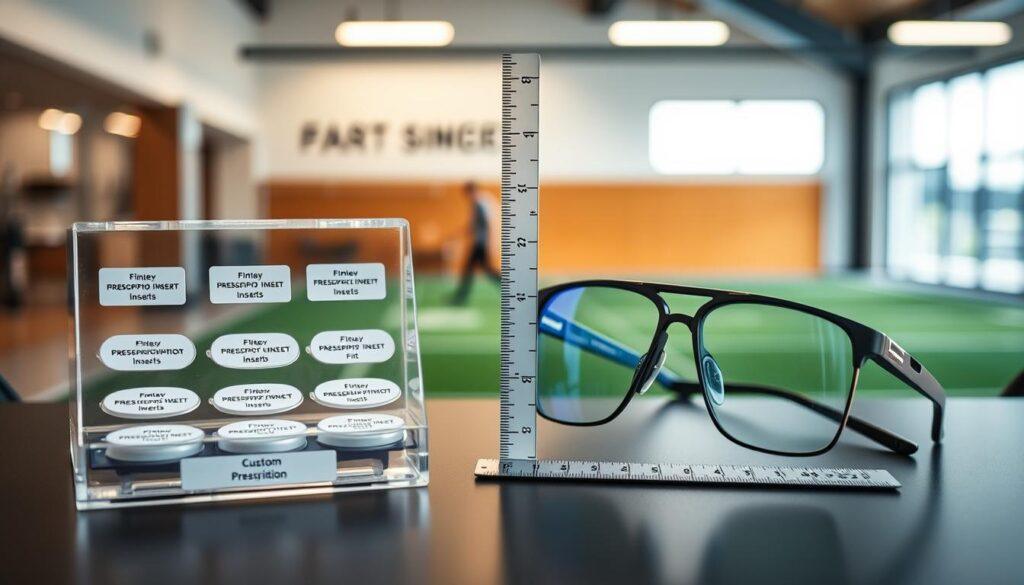
This choice is important because it affects your peripheral vision, weight, and fog management. Get it wrong, and you risk your safety.
| Feature | Prescription Inserts | Custom Rx Lenses |
|---|---|---|
| Concept | Modular add-on behind a shield | Vision correction built into the protective lens |
| Peripheral Vision | Often reduced by the dual-layer setup | Maximized, with a single-lens plane |
| Fogging Risk | Higher (traps air between layers) | Lower (simpler airflow, fewer surfaces) |
| Weight & Balance | Can feel front-heavy or bulky | Generally better distributed and lighter |
| Ideal For | Changing prescriptions, multi-sport use, or budget constraints | High-performance sports, complex prescriptions, and long-term use |
Don’t wear everyday glasses under protective goggles. It’s a safety risk. Standard lenses aren’t made for impact.
So, how do you choose? It depends on your child’s prescription, sport, and growth rate. A ten-year-old soccer player needs different glasses than a varsity baseball pitcher.
Get help from an optometrist who knows sports. They’ll pick the right lens material and coatings for your sport. Polycarbonate or Trivex for impact? Anti-fog for humid conditions? These are important choices.
Here’s your strategic decision framework:
- Choose prescription inserts if: The prescription is changing, you need flexibility for different sports, or the eyewear is shared.
- Choose custom Rx lenses if: The prescription is stable, you need clear vision for your sport, or fogging is a problem.
- The non-negotiable rule: Whatever you choose, it must meet the relevant ASTM or ANSI high-impact standard. Safety comes first.
Protective sports eyewear should let you see clearly. Athletes don’t have to sacrifice vision for safety. The goal is to see everything with clarity, knowing your eyes are protected.
Visibility and color performance lens tints and light transmission targets
Light transmission percentage is more than just a number. It’s what lets your brain see the world. If it’s off, you might as well be watching the game without sound. This number, or VLT, controls how much light your lens tint lets in.
Choosing the right lens tint is about seeing clearly, not just looking good. It’s like picking the perfect music for a key moment in a game. A bright tune for a sunny tennis match or a soft melody for a foggy run? Your lenses set the mood.
So, what’s the perfect mix? For bright days—like tennis or cycling—dark, neutral gray or mirror tints are best. They block glare and cut down brightness without changing colors. This lets you see everything clearly.
But for dim places—like night soccer or indoor courts—clear lenses or wide-vision lenses are essential. They let in lots of light, so you don’t miss out in the dark.
And what about amber or yellow lenses on cloudy days? They’re not just a style choice. They make things clearer by blocking blue light. It’s like making your TV picture sharper.
- Dark Tints (10-30% VLT): Perfect for bright days. Great for sports in the sun.
- Clear Lenses (85-100% VLT): Best for low light. They let in lots of light when it’s dark.
- Yellow/Amber Tints (60-75% VLT): Good for cloudy days. They help see things clearly in flat light.
- Rose/Mirror Tints: Used for changing conditions. They help see ground details in sports like golf or skiing.
Your lens choice is like a filter for reality. It’s the difference between seeing a blur or a clear object. Pick the right VLT for your setting, and you’re not just wearing glasses. You’re improving how you see the world.
Care schedule inspection replacement and storage between seasons
When you put your safety glasses away after practice, you’ve missed the first lesson. They’re not just sunglasses; they’re essential gear. Like any high-tech equipment, they need care, not neglect.
It’s time for a care schedule. Not just a wish, but a strict ritual. Let’s create the manual your eyewear deserves.
Start with a pre- and post-activity inspection. Hold your eyewear up to light. Look for stress cracks around screws and lens edges. Polycarbonate is tough, but it’s not invincible. Check if the strap is stretched and the nose bridge is warped. This quick check can prevent big problems.
Next, follow a cleaning protocol. Your t-shirt is not a good cloth for cleaning. It can scratch your lenses. Use a microfiber cloth, rinse with warm water, add mild dish soap, and air dry. Avoid harsh chemicals and paper towels.
Storage is also key. Don’t store your eyewear in a damp gym bag. Use a hard case to protect them. Store the case in a cool, dry place away from sunlight.
Lastly, know when to replace your gear. Lenses and coatings wear out over time. If your lenses are scratched or damaged, get new ones. Even with good care, eyewear has a limited life. Heavy use means it’s time for a new pair.
| Task | How-To | Frequency | Pitfall to Avoid |
|---|---|---|---|
| Visual Inspection | Check for stress cracks, frame integrity, and strap wear under bright light. | Before & after every use | Assuming “no visible damage” means perfect safety. |
| Lens Cleaning | Rinse, use mild soap, soft fingers, rinse, air dry/lint-free cloth. | As needed, after every use | Using a shirt, paper towels, or harsh chemical sprays. |
| Secure Storage | Always place in a hard, protective case when not in use. | Every time | Tossing loose into a bag, pocket, or on a bench. |
| Deep Storage | Clean thoroughly, store in case in a cool, dry, dark place. | End of season | Leaving in a hot car or damp environment for months. |
| Condition Assessment | Evaluate lens clarity, coating integrity, and overall fit. | Mid-season & pre-season | Ignoring minor scratches or slight frame looseness. |
| Planned Replacement | Replace immediately if damaged; plan for new eyewear annually with heavy use. | As needed / Annually | Using eyewear with compromised lenses for “one more practice.” |
Follow this schedule, and your eyewear will become reliable. It’s simple risk management. Your future self will be grateful.
Team policy template for mandatory eyewear in high risk drills
A team policy on protective eyewear is about culture, not just following rules. It moves from individual to team, making safety a part of the team’s way of life. It’s about leadership, not being a buzzkill.
Why should players wear protective eyewear during high-risk drills? The answer is clear. Studies show that wearing protective eyewear greatly reduces injury risk. Alan Reichow, a professor, says that most injuries can be prevented. Ignoring this is not just tough; it’s negligent.
Think of it this way: one player’s choice to skip eye protection affects the whole team. Your star player can’t play with a corneal abrasion. A team policy makes safety a must, turning personal responsibility into team protection.
So, what makes a good policy? It’s clear, enforceable, and based on what we’ve discussed. Here’s a template for coaches and organizers to use. It explains what, when, and why.
- The What (The Gear): All mandatory eyewear must meet or exceed the ASTM F803 standard. No exceptions, no old goggles.
- The When (The Activity): This policy applies during all contact drills and full-speed scrimmages. It’s in effect during any coach-designated high-risk drills.
- The Why (The Asset): The team’s most valuable asset is its players. Protecting vision and participation is strategic. This policy is to safeguard that investment.
Enforcing this policy is straightforward. No certified safety glasses, no drill participation. Sit out, watch, and think about the team. It’s not punishment; it’s consequence.
Using this template changes the team’s culture one practice at a time. It shows that performance and protection go hand in hand. It turns preventable injuries into a non-issue. That’s not just good policy; it’s smart team management.
Buying checklist sizes certifications and return options for teams
You’ve done the research. Now it’s time to buy protective sports eyewear for your team. This isn’t just a quick online search. It’s a detailed process.
First, look for certifications. They protect you legally. Make sure you have ASTM F803 for sports protection and ANSI Z87.1 as a minimum. A logo alone isn’t enough. You need proof of performance.
For global brands, testing against ISO, EN, and other standards is key. Services like UL’s eyewear safety testing offer that independent check.
Then, tackle the sizing issue. “One size fits none” is true here. You need a supplier with various bridge sizes and temple lengths. Don’t just order one pair for the whole team. Test the fit on different players.
Lastly, check the supplier’s team policy. Do they offer discounts for bulk orders? More importantly, what’s their return or exchange policy for the wrong size? A flexible policy is invaluable. It makes returns easy.
This checklist makes buying easier. Get the right certifications, sizes, and partner. Then, go for it.