Accommodative Training has become a point of interest for families, school coaches, and eye-care teams because it asks a simple question: can repeated near-far focusing practice help young eyes under heavy near-work demands? A systematic review published on August 12, 2026, in Frontiers in Public Health evaluated 13 studies in children and adolescents, roughly ages 6 to 18, and reported that exercise and visual training based on near-far accommodation may slow axial elongation or reduce negative shifts in spherical equivalent refraction, while stressing that the evidence remains limited according to the review abstract.
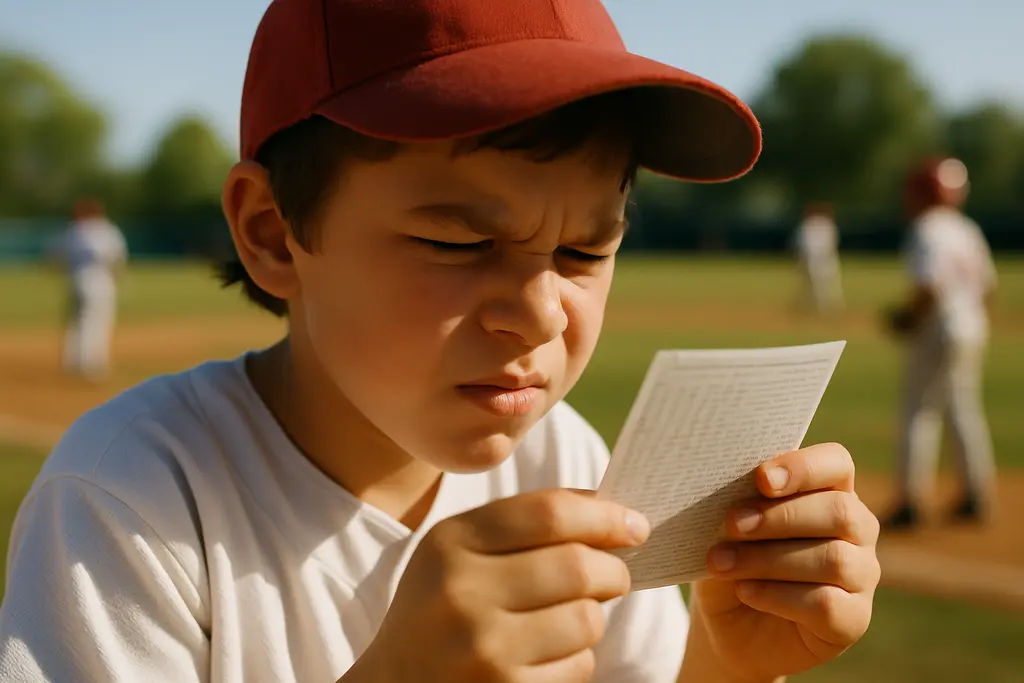
That cautious wording matters. Youth myopia is not only about whether a child can read the board or track a ball across a gym. Progression is often judged by structural and refractive measures such as axial length and spherical equivalent refraction. In athlete terms, this is like separating a sharper practice drill from a proven season-long performance change. A drill may improve a measurable skill, but the harder question is whether it changes the long-term outcome that families and clinicians care about.
What Accommodative Training Shows In Youth Myopia
Near-Far Accommodative Training In The Review
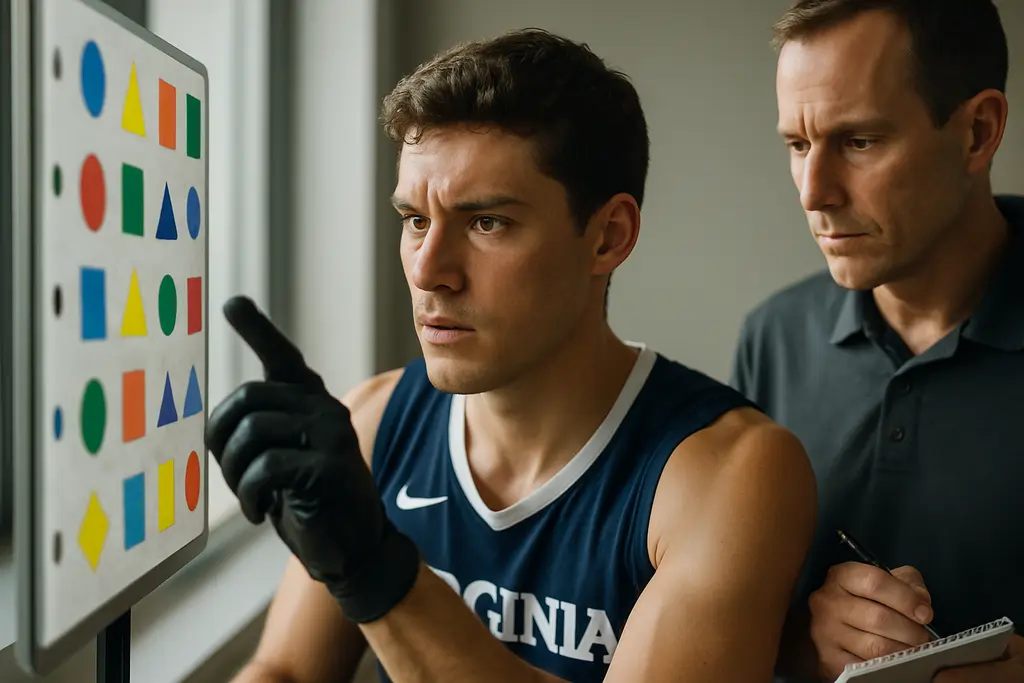
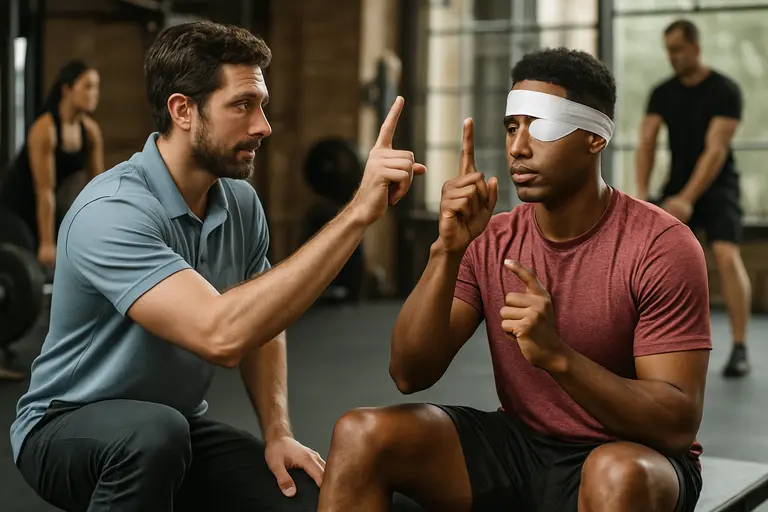
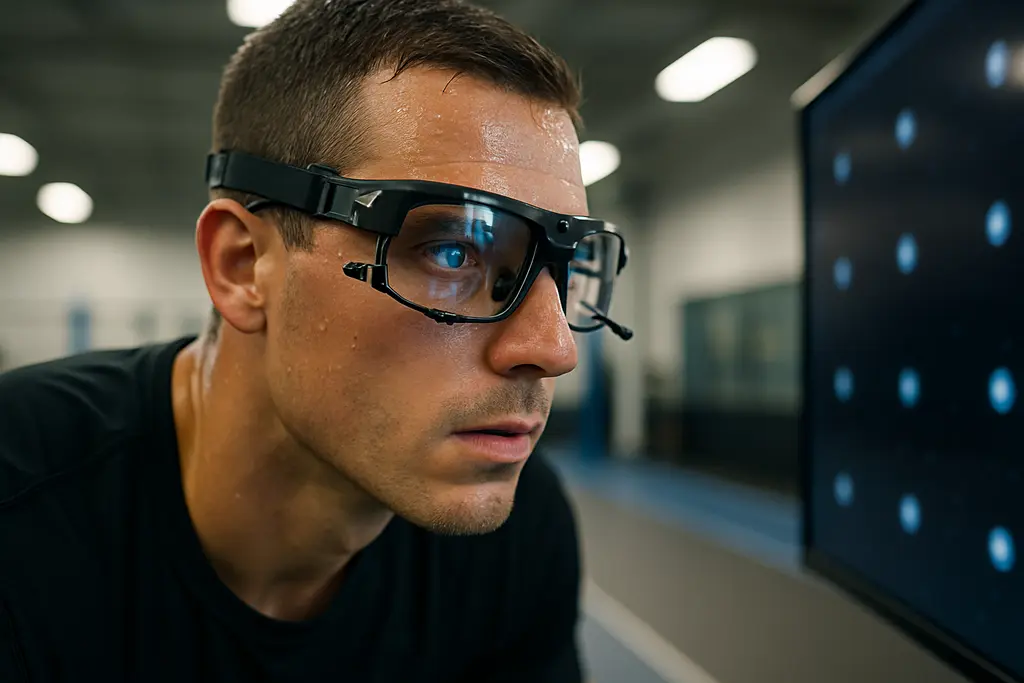
The 2026 review focused on interventions that repeatedly ask the visual system to shift focus between near and far targets. Some were delivered through virtual-reality visual training combined with single-vision spectacles. Others used computerized naked-eye three-dimensional tasks, physiological eye exercises with optical aids, or sport-like activities in physical education. The common feature was repeated demand on the accommodative system, not a passive lens change alone.
Several reported outcomes were small but directionally favorable. In one virtual-reality visual training study paired with single-vision spectacles, the between-group mean difference in axial length change was about −0.033 mm at 3 months. The intervention group increased by about 0.063 ± 0.060 mm, compared with about 0.129 ± 0.060 mm in the control group, with p = 0.037. By 6 months, that difference was no longer statistically significant. A computerized naked-eye three-dimensional training study over 6 months reported axial elongation of 0.176 mm in the training group versus 0.232 mm in controls, a mean difference of −0.056 mm. A two-year program combining physiological eye-exercise training with near-use convex lens prisms reported axial length increases of 0.23 ± 0.21 mm in the intervention group and 0.32 ± 0.19 mm in controls as detailed in the full review.
Measured Changes Were Modest
For families, the practical reading is not that near-far work has been proven to stop myopia. The more accurate interpretation is that some structured programs showed modest slowing of axial elongation or refractive shift in selected study settings. That distinction is central for community sports programs, where a promising drill can spread quickly before the long-term evidence is settled.
The review found more consistent gains in accommodative function measures than in the structural outcomes. Reported improvements included accommodative facility, uncorrected distance visual acuity, kinetic visual acuity, amplitude of accommodation, and reductions in accommodative lag. Those measures may matter for school and sport, especially in activities that require fast focus changes. Yet improved focusing function is not the same as a confirmed long-term reduction in myopia progression for every child.
How The Training Was Delivered
Frequency And Session Length
The studies did not use one shared protocol. Reported training frequency ranged from daily practice to 2 or 3 sessions per week. Typical session lengths were 20 to 40 minutes. Most interventions ran for 3 to 6 months, though some extended as long as 2 years. That spread makes it hard to say what dose is best, or whether the same plan would fit a school day, a sports club, and a child already managing homework, outdoor play, and clinical eye care.
Implementation is not a small detail. A 20-minute daily visual task may sound manageable in a study, but adherence can fall when the routine competes with school transport, team practice, family schedules, and screen-based homework. Technology-based programs may also require equipment, supervision, or controlled settings. The review data cited here do not settle cost-effectiveness, so schools and families should be careful about investing in tools before understanding what outcome they are trying to change.
Sports Drills And Target Switching
One community-friendly angle is the use of physical education activities that demand repeated near-far shifts. The review described small-ball sports such as table tennis and badminton as interventions with moderate positive effects on axial length, accommodative facility, and spherical equivalent refraction. In the table tennis subgroup, children had significantly lower axial length and axial length-to-corneal radius ratio than controls after 6 months.
That finding will catch the eye of coaches, because table tennis and badminton already ask young athletes to switch attention quickly between paddle or racket, ball or shuttle, opponent, and court space. Still, the evidence does not mean those sports should be sold as myopia therapy. They are field-tested in small research settings, not established as a stand-alone medical intervention. For readers who follow the overlap between athletics and visual skills, a related discussion of sports vision training evidence reaches a similar caution: short-term skill changes can be easier to show than lasting transfer to broader outcomes.
Why The Evidence Still Needs Care
Study Quality And Reporting Gaps
The review’s limitations are as important as its positive signals. Across the 13 studies, the total sample was about 1,413 participants, with a mean of roughly 109 per study. Protocols varied widely. Some reports did not consistently include core structural outcomes, especially cycloplegic spherical equivalent refraction and axial length. The review rated the body of evidence as low to moderate in methodological quality.
Those limits reduce confidence in broad claims. If one program uses virtual reality, another uses naked-eye three-dimensional tasks, another uses prisms, and another uses school sport, the results cannot be treated as one uniform intervention. The child’s age, baseline myopia level, accommodative status, adherence, outdoor time, near-work habits, and spectacle correction may all affect results, but the studies did not resolve those questions in a standardized way.
What Families Can Ask Their Clinician
A practical next step is not to self-prescribe an intensive eye-exercise program. Families can ask an optometrist or ophthalmologist whether a child has accommodative lag, binocular vision findings, or symptoms that warrant assessment. They can also ask whether any near-far practice is being suggested as a supportive activity, how progress would be measured, and what would count as a reason to stop or adjust the plan.
Undercorrection should not be assumed to help. The research notes include a two-year randomized trial in Ghana in children ages 10 to 15 with baseline myopia near −1.98 ± 0.50 D that found no significant difference in myopia progression between full correction and +0.50 D undercorrection, and changes in accommodative lag were not significantly associated with progression. That trial points to a key warning: simply changing correction without a structured, monitored plan may not produce the intended effect.
Accommodative Training In Youth Sport Settings
Community Use Without Overclaiming
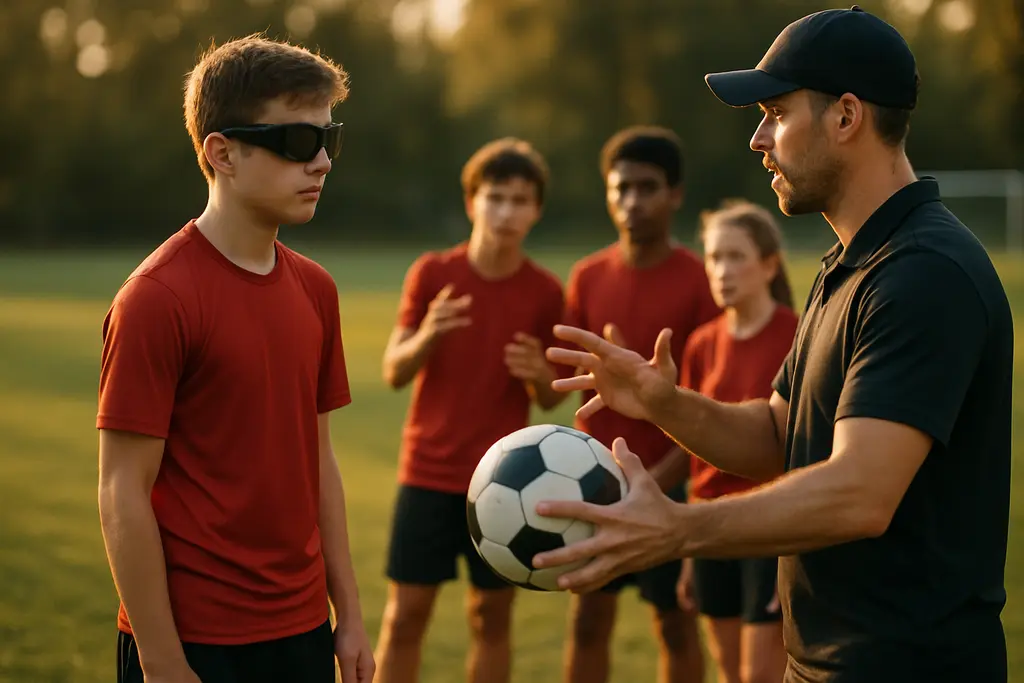
Community sport can support eye-friendly habits without making medical promises. Coaches can build drills that alternate near and far targets, encourage outdoor activity where appropriate, and remind families that routine eye exams are part of youth safety. A table tennis rally, a badminton exchange, or a ball-tracking drill may be useful visual-motor practice. It should not replace evidence-based myopia care from a qualified clinician.
For school and club leaders, the strongest position is measured: structured near-far visual activity appears promising, especially for accommodative function, but the current evidence does not justify certainty about long-term myopia control. Programs should be low-risk, supervised, and paired with clear communication to parents. Any child with headaches, sudden vision changes, double vision, or difficulty with normal school tasks should be referred for professional evaluation rather than pushed through more drills.
As of September 29, 2026, Accommodative Training sits in the category of promising adjunct, not settled treatment. Its best use may be as one part of a broader, clinician-guided plan that respects both the science and the child’s daily life. For additional resources and to explore related topics, SGTT offers expert insights into practical health and safety reporting.